Creative Ads reports and market data
Documents

First-Ever Interview with Head of LEGO Digital Play – Aaron Loeb
LEGO Digital Play represents a strategic pivot toward establishing original, first-party digital experiences that operate independently of the company’s existing licensed gaming portfolio.
- LEGO is establishing a dedicated London-based division to develop original, first-party digital experiences that operate independently of its existing licensed gaming portfolio.
- The initiative is backed by a long-term generational mandate from the Kirk Kristiansen family, which prioritizes brand longevity and emotional resonance over short-term quarterly revenue targets.
- The strategy seeks to differentiate LEGO from entrenched social-hub live service platforms by leveraging artificial intelligence to create novel, creativity-focused play patterns.
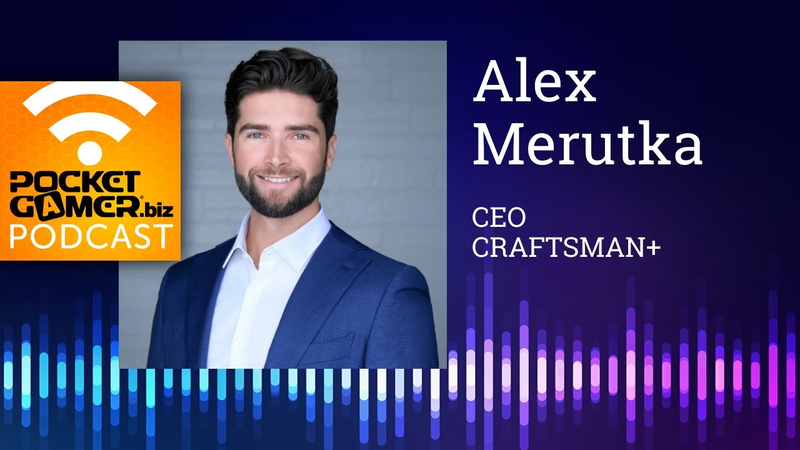
Game of Phones: Alex Merutka on the Battles Shaping Mobile Gaming’s Future
Mobile gaming currently functions as the primary laboratory for user acquisition and advertising technology, where the competitive landscape is defined by a relentless pursuit of marginal monetization gains.
- AppLovin has established a dominant market position by focusing on performance-based ad tech and monetization, creating a 'data moat' that makes it difficult for competitors like Unity to challenge them.
- Playable ads have become the industry standard for user acquisition because they allow users to qualify themselves through interaction, providing deeper behavioral data that compensates for the loss of precise targeting capabilities.
- The mobile gaming ad ecosystem is shifting toward dynamic, context-aware creative that adapts in real-time to variables like weather, time of day, and user environment to improve engagement.
TikTok and Shorts Are Insane for Indie Devs
The indie game development landscape is currently undergoing a shift where long-term, ambitious projects are finding significant commercial success through strategic short-form content marketing.
- Indie developers can effectively market games by posting one YouTube Short or TikTok per week, focusing on sharing small, interesting stories or unique bugs from their development process.
- Content platforms like YouTube and TikTok are not strictly momentum-based; high-quality, standalone videos can achieve viral success even on dormant channels without needing a large existing subscriber base.
- Social media content for games should prioritize authentic storytelling over traditional marketing, as this approach is less labor-intensive and avoids the perception of being 'slimy' to potential players.
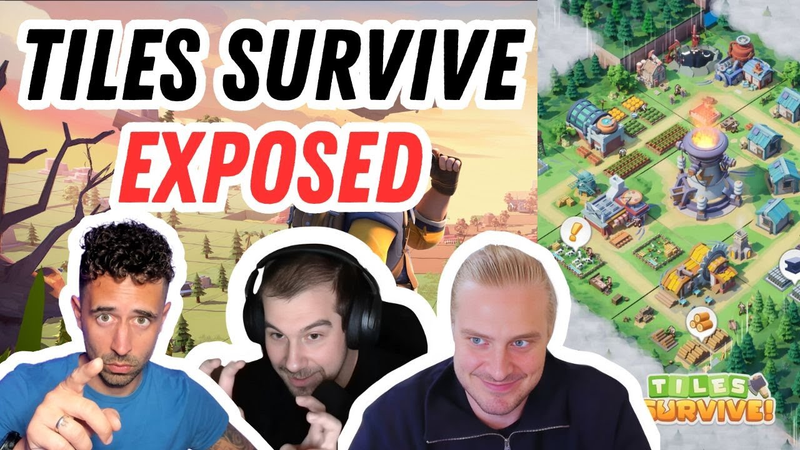
Tiles Survive Breakdown: FunPlus goes full Century Games
FunPlus has initiated a strategic pivot toward a proven, high-efficiency development model, moving away from experimental intellectual property in favor of the simplified, scalable frameworks popularized by Century Games.
- FunPlus's 'Tile Survive' is currently scaling at approximately $50,000 in daily revenue with roughly 60,000 daily downloads since its launch in March.
- The game utilizes a simplified version of the 'Dark War' 4X playbook, focusing on streamlined onboarding, events, and gacha mechanics rather than complex systems.
- Unlike its predecessors, 'Tile Survive' integrates scripted road-collection encounters directly into the core progression, effectively gating player advancement behind specific exploration levels.

Is User Acquisition Really Broken in 2025?
User acquisition in 2025 remains a robust and essential growth engine for the mobile gaming industry, despite widespread perceptions that the sector is in decline.
- AppLovin currently dominates the user acquisition ecosystem by leveraging its MAX mediation platform integrated with the Axon 2 machine learning engine to create a superior data flywheel.
- Modern user acquisition has shifted from aggressive growth hacking to a model defined by incremental profitability, product quality, and sophisticated value optimization.
- Unity is attempting to challenge AppLovin’s market position with its Vector engine, which seeks to utilize in-app purchase data, though it currently faces significant technical and operational scaling hurdles.
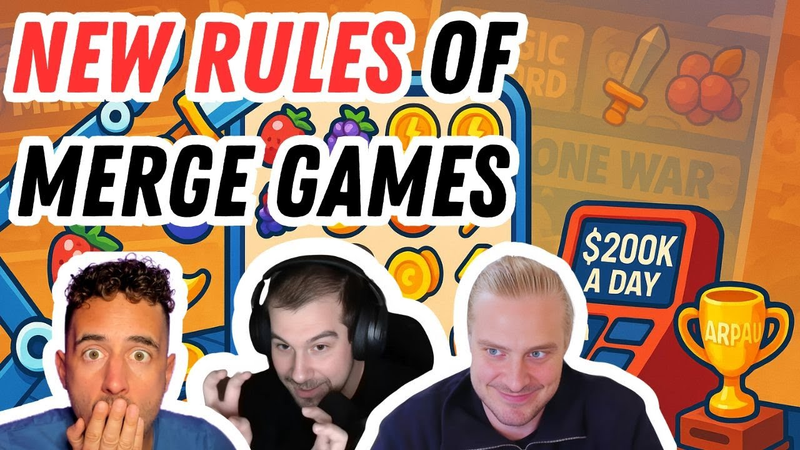
The Real Story Behind Tasty Travels’ Meteoric Rise: Merge, Monetize, Repeat!
The merge game category is currently defined by intense competition and rapid evolution, with established titles like Travel Town and Seaside Escape facing pressure from aggressive newcomers such as Tasty Travels and Merge Cooking.
- Century Games' new title, Tasty Travels, is rapidly scaling toward $200,000 in daily revenue and currently boasts double the ARPDAU of competitor Travel Town.
- The merge game category is experiencing significant growth, with Gossip Harbor generating approximately $1.6 million per day and Travel Town and Seaside Escape each earning roughly $600,000 daily.
- Century Games utilizes an aggressive UA strategy characterized by high-velocity creative iteration, including AI-generated content, fake gameplay hooks, and concepts directly adapted from competitors like Gossip Harbor.
How to Work With An Artist to Get a Good Capsule Artist
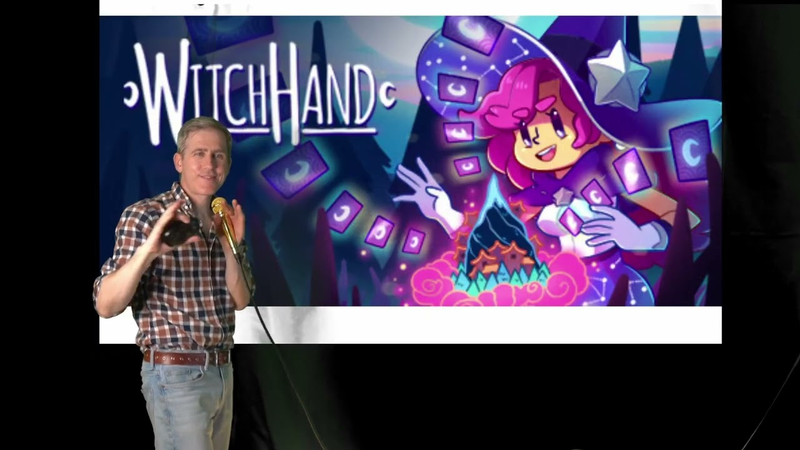
Steam capsule art serves as a foundational marketing asset that directly influences player conversion and streamer engagement.
- Steam capsule art is a critical marketing asset because it serves as the primary visual hook for potential players and is often repurposed by streamers for their own video thumbnails.
- Professional capsule art commissions typically cost between $500 and $1,500, though high-end fantasy illustrators with experience on major titles like Blizzard games can command $3,000 or more.
- To find a suitable artist, developers should browse Steam for games within their genre that feature appealing art, then identify and contact the studios or artists responsible for those specific assets.
Pushing value into a digital ad ecosystem - Ben Jeger from Moloco
Moloco, a demand-side platform (DSP) specializing in user acquisition and ad monetization, has established itself as a significant player in the global gaming ecosystem.
- Moloco’s monetization SDK, launched in early 2024, became one of the fastest-growing in industry history, leading the company to temporarily pause onboarding new publishers to focus on product development.
- Moloco differentiates its monetization offering by leveraging its existing position as a major buyer on ad exchanges, allowing it to drive value to advertisers without acting as a traditional middleman.
- The gaming industry has experienced a recent revenue flattening, with stagnation more prominent on Android while iOS continues to show growth, particularly among high-value payers in the US.
TikTok Advanced Dedicated Campaigns (ADC) for Mobile Apps
Advanced Dedicated Campaigns (ADC) represent a specialized, automated solution for mobile app advertisers on TikTok, specifically designed to navigate the complexities of iOS attribution and tracking.
- Advanced Dedicated Campaigns (ADC) utilize machine learning to optimize ad delivery via SKAdNetwork signals, effectively automating targeting to improve CPI and ROAS for iOS mobile app campaigns.
- The primary trade-off of ADC is a loss of granular audience and demographic data, as the platform prioritizes conversion scale over manual targeting control.
- Campaign performance is heavily dependent on high-volume, native-style creative assets, specifically requiring a consistent rotation of user-generated content (UGC).
2.5 gamers x Live Game Review - Hole People by Rollic Games
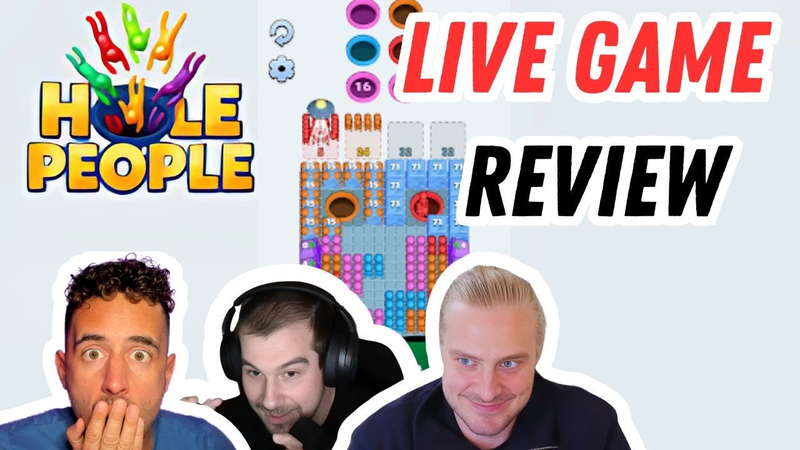
Hole People, published by Rollic Games, exemplifies the current evolution of the hyper-casual market, where deterministic puzzle mechanics are leveraged primarily as vehicles for low-cost user acquisition.
- Rollic Games has shifted its business model from producing many small games to focusing on high-revenue 'hit' titles, with a single successful game like Color Block Jam potentially outperforming the combined revenue of ten smaller projects.
- The game 'Hole People' utilizes a modular development approach where core mechanics—such as the bench system, boosters, and level design—are inserted into established templates, allowing for rapid production with minimal new feature development.
- The 'Hole' theme in 'Hole People' is primarily a strategic choice for User Acquisition (UA) to achieve low CPIs, rather than a core gameplay necessity, as the game mechanics are essentially a variation of existing puzzle-genre templates.
🎬 Creative Trends June 2025: Why AI, ASMR & Copy-Paste Are Redefining Mobile Ads
The mobile gaming advertising landscape in mid-2025 is defined by a strategic shift toward long-form video content and the aggressive iteration of proven creative concepts.
- Mobile gaming ads are shifting toward long-form content ranging from 50 seconds to five minutes to improve user pre-qualification and secure better auction placement.
- AI tools like Topaz AI are now the primary engine for mobile ad production, enabling rapid generation and upscaling of assets to mimic user-generated content styles.
- Developers are increasingly utilizing a 'copy-paste' strategy by re-skinning proven mechanics like resource management and character-saving puzzles to minimize innovation risk.
Stop Ignoring these 6 ad placements in 2025 by Felix Braberg
Effective ad monetization in mobile gaming relies on strategic placement and sequencing to maximize average revenue per daily active user (ARPDAU) and drive engagement from both non-payers and high-volume ad viewers.
- Implement a 'convert-or-die' sequence at natural gameplay breaks by offering a rewarded ad first, defaulting to an interstitial only if the user declines, to train users toward higher-value rewarded engagement.
- Utilize step-offer chains that sequence free items, a rewarded ad, and a paid offer to create a mental ladder that nudges users toward monetization.
- Capture lost revenue from non-payers by triggering a rewarded ad pop-up specifically when a user exits the in-game store without completing a purchase.