Cloud Gaming reports and market data
Documents
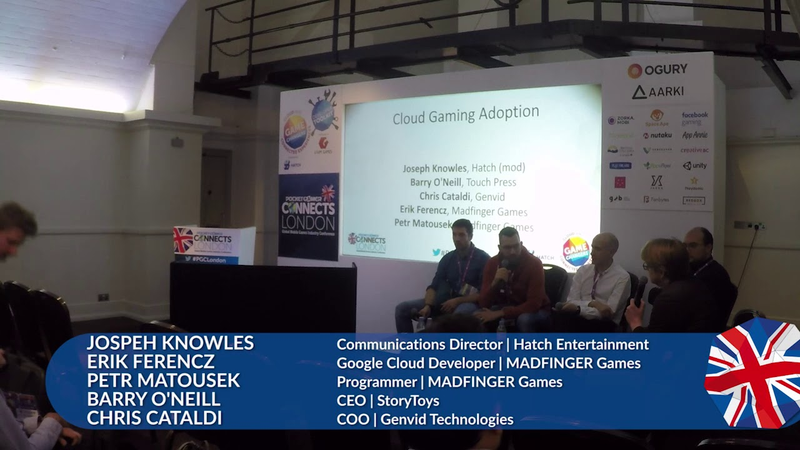
Cloud gaming adoption – The new norm?
Cloud gaming is emerging as a transformative force in the mobile sector, positioning itself as a viable delivery mechanism for high-fidelity experiences that bypass traditional hardware limitations.
- Cloud gaming removes hardware barriers and storage requirements for high-fidelity mobile experiences, while simultaneously protecting intellectual property by keeping binaries centralized on remote servers to prevent hacking and decompilation.
- The industry is moving toward a standard revenue model where developers retain 70 percent of revenue, with cloud hosting expenses capped at approximately five percent of net revenue.
- Centralized backend infrastructure allows smaller studios to deploy complex multiplayer titles without the high costs of building independent server architectures.
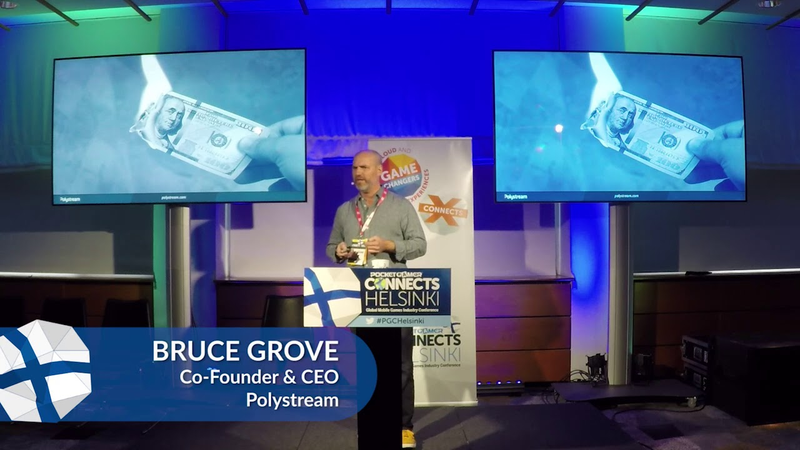
Leaving the lag behind
The evolution of cloud gaming has shifted from a focus on brute-force hardware emulation to a more efficient, distributed model that leverages the processing power of end-user devices.
- Modern cloud gaming has shifted from centralized, brute-force GPU rendering to a hybrid model that offloads final rendering to the user's local device, significantly reducing bandwidth and server costs.
- Early cloud gaming attempts like OnLive and Gaikai failed due to non-elastic infrastructure, high operational expenses, and the inability to scale server-side GPU farms for every concurrent user.
- The current hybrid architecture enables 4K resolution and lower latency by utilizing the high-performance GPUs already present in modern smartphones, smart TVs, and PCs.
Will cloud gaming change our mobile game?
Cloud gaming represents a potential shift in the mobile gaming landscape, particularly for premium developers struggling with visibility and high user acquisition costs in traditional app stores.
- Cloud gaming platforms can significantly boost engagement for narrative-driven titles, with some games achieving 82% higher playtime than platform averages.
- Instant-play functionality removes the technical barrier of large file downloads, helping premium developers overcome visibility and user acquisition challenges in crowded app stores.
- The long-term viability of cloud gaming depends on platforms maintaining a curated library to prevent oversaturation and implementing subscription models that ensure fair creator compensation.

The new reality of cloud gaming
Cloud gaming represents a fundamental paradigm shift that transcends the limitations of traditional download-and-install models and the restrictive nature of free-to-play monetization.
- Cloud gaming shifts the industry toward a subscription-based economy, removing traditional download-and-install friction to prioritize user engagement and creative design.
- 5G infrastructure is the critical technical enabler, reducing network latency to sub-10 milliseconds to support high-fidelity, 60 FPS gaming experiences.
- Centralizing game states on servers simplifies development by treating multiplayer titles as local, multi-controller experiences, which reduces overhead and eliminates complex network synchronization.
Cloud gaming adoption
Cloud gaming represents a transformative shift in the industry, functioning as a primary vehicle for mass-market adoption by decoupling high-fidelity experiences from local hardware constraints.
- Cloud gaming removes hardware constraints by decoupling high-fidelity experiences from local storage and processing, allowing developers to focus on narrative depth and complex multiplayer architectures.
- The shift to subscription-based models is driving longer, binge-style engagement patterns, requiring developers to optimize game design for diverse interfaces across PC and mobile platforms.
- Cloud streaming platforms are moving away from traditional ranking-based storefronts toward social discovery and deep-linking to improve user retention and cross-platform accessibility.

The cloud gamer – Defining the audience
Cloud gaming services address a significant barrier in the gaming industry: the inability of a large portion of the PC gaming population to run modern, high-demand titles due to hardware limitations.
- Approximately 70% of Steam users currently lack the hardware specifications required to run modern AAA titles like Far Cry 5.
- The core cloud gaming demographic consists of males aged 18–34 who use hardware at least five years old, with 50% of these users having never performed a hardware upgrade.
- Cloud gaming business models have shifted from unsuccessful flat-rate subscription services to hybrid models where users pay for virtual PC access while providing their own game licenses.
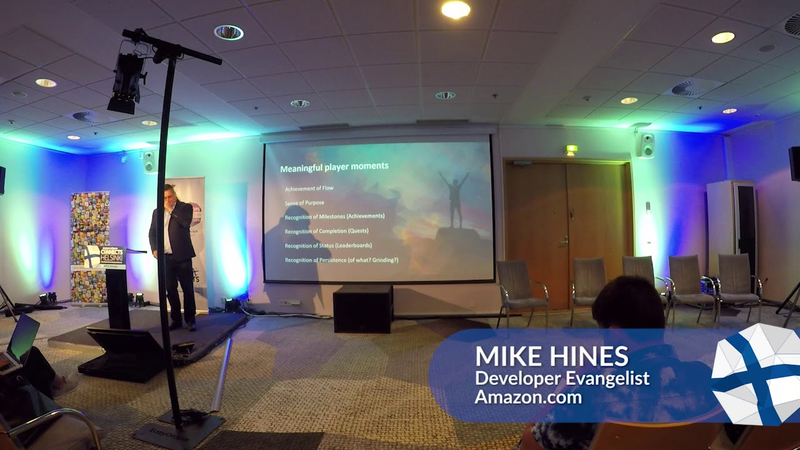
Increasing retention with live game services on Amazon Web Services
This presentation outlines strategies for game developers to improve player retention and engagement through the implementation of LiveOps services.
- Offloading non-differentiated backend infrastructure to managed cloud services allows development teams to prioritize the creation of social and competitive player experiences.
- Server-side management of game variables, such as weapon power and pricing, enables real-time A/B testing and segmentation without requiring client-side updates.
- Retention is driven by engineering 'peak and trough' moments, such as milestone achievements and status rewards, to create memorable player experiences.

Cloud gaming – How new technology can revive game sharing
The primary objective of this presentation is to address the challenges indie game developers face regarding user acquisition and discoverability in an increasingly saturated mobile market.
- Cloud gaming technology enables instant-play web experiences by converting standard APK files, reducing the user acquisition journey from a ten-minute multi-step download to a fifteen-second single-click process.
- The current mobile gaming market is highly saturated, with over 760 new games released daily, making traditional user acquisition costs prohibitive for indie developers.
- By bypassing traditional app store installation friction, developers can leverage social media integration and influencer-led engagement to drive viral growth.

Hatch and the new opportunity of on-demand gaming
The emergence of on-demand, cloud-based gaming represents a significant shift in the mobile industry, mirroring the transition from ownership to subscription models seen in music and video streaming.
- The platform utilizes cloud architecture to stream native Android games, eliminating the need for HTML5 ports and reducing multiplayer prototype development time from months to days.
- The service operates on a dual-revenue model combining advertising and subscriptions, with a commitment to share 70% of generated revenue with content partners.
- The business model shifts mobile gaming from free-to-play monetization loops to a subscription-based, on-demand format that prioritizes premium content quality.

UpCloud on competing in the games industry cloud computing space
UpCloud positions itself as a specialized alternative to major global cloud providers by focusing on high-performance infrastructure and reliability tailored for small-to-medium enterprises.
- UpCloud competes with hyperscale cloud providers by utilizing its proprietary MaxIOPS storage technology, which uses commodity hardware to achieve performance benchmarks exceeding those of major industry leaders.
- The company targets small-to-medium enterprises (SMEs) and technical decision-makers by offering high-performance, cost-effective infrastructure specifically optimized for gaming, SaaS, and media applications.
- Customer satisfaction is a primary business metric, with the company currently maintaining a support satisfaction rate exceeding 90 percent.
Same dream, new inspiration
Alibaba Cloud serves as the technical foundation and primary growth driver for the Alibaba Group, an expansive global ecosystem that integrates e-commerce, logistics, financial services, and digital media.
- Alibaba Cloud is the fourth-largest public cloud provider globally and maintains a dominant market share in China and Asia.
- The company functions as a strategic gateway for international businesses entering Asian markets and for Asian enterprises expanding globally.
- Beyond infrastructure, the platform provides value-added services including marketing, legal, financial support, and publishing channels for gaming and digital media.

Why is Amazon getting into the game engine business?
Amazon Web Services has entered the game development market with the launch of Lumberyard, a free, open-source game engine.
- Amazon launched Lumberyard, a free, open-source game engine based on CryEngine, to integrate game development directly into its existing cloud and streaming infrastructure.
- The engine’s primary value proposition is its native integration with Amazon GameLift, which simplifies backend management for multiplayer session-based games.
- Lumberyard features deep Twitch integration, allowing developers to build mechanics that enable streamers to invite viewers directly into live gameplay sessions.