1 free read left. Create a free account for unlimited reading + AI research.
Create free account
Leaving the lag behind
Key insights
6 takeaways- 01Advancements in 5G and content delivery networks have replaced the need for massive, centralized data centers, allowing for global reach and an elastic delivery fabric.
- 02Early cloud gaming attempts like OnLive and Gaikai failed due to non-elastic infrastructure, high operational expenses, and the inability to scale server-side GPU farms for every concurrent user.
- 03The industry is moving beyond simple video streaming toward integrated, cloud-enhanced gameplay and real-time eSports features by treating games as black-box applications.
- 04Modern cloud gaming has shifted from centralized, brute-force GPU rendering to a hybrid model that offloads final rendering to the user's local device, significantly reducing bandwidth and server costs.
- 05The current hybrid architecture enables 4K resolution and lower latency by utilizing the high-performance GPUs already present in modern smartphones, smart TVs, and PCs.
- 06New cloud gaming technology is developer-agnostic, allowing existing game engines to be deployed across diverse platforms without requiring modifications to the underlying code.
Ask AI about this video
Transcript
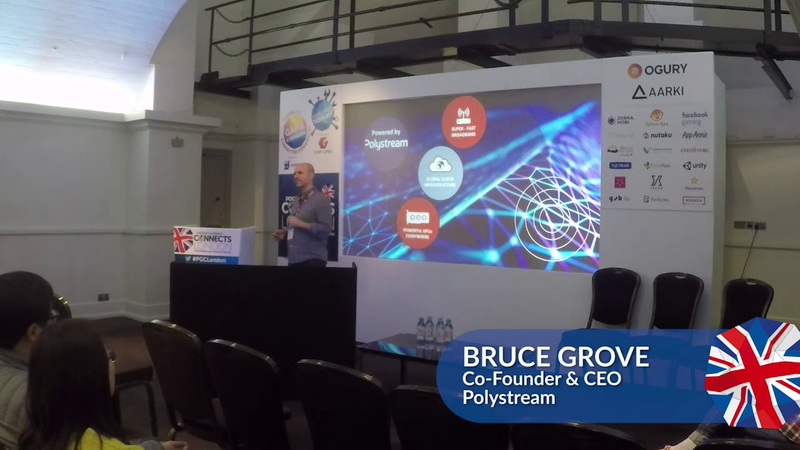
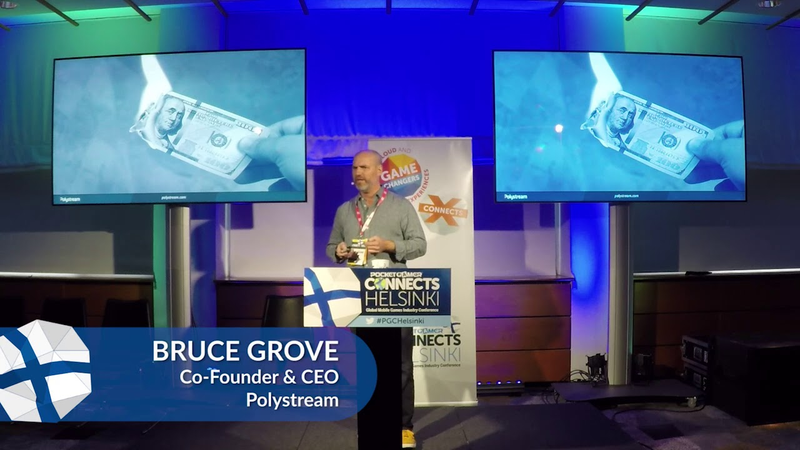
[Music] thank you wow they are bright I am Bruce Grove I'm the CEO and co-founder of poly stream big thank you to PG C for organizing all of this and a huge thank you for Hatch for sponsoring this track as well I have been in cloud gaming for a long time I've been doing this for more than a decade now I have a lot of experience I have a lot of scars johani kindly talked about some of the things that have gone but for some context twelve years ago I was running the team for Dell that was building the world's highest end gaming platforms we were building the world's fastest liquid-cooled gaming machine at the time was an incredible beast dual GPUs absolute monster of a machine and it actually ran crisis it was an incredible incredible machine and then I got this
call from a stealth mode company in Silicon Valley and they said we're doing something a little bit differently we think you should come and take a look at it we'd like you to run our engineering team so this was in 2007 it wasn't until 2009 at GDC that people actually heard the name on live that was when we announced but in 2007 in a tiny little office in Palo Alto I was shown a little business laptop a Dell business laptop and it was running crisis now I just built the world's fastest gaming computer and here was this crappy little laptop running crisis I'm sitting there thinking yeah yeah this really does change everything this is terrifying what does this mean was it mean to actually put all of these games in the cloud and just completely get rid of the idea that we ever need to buy those big gaming rigs again that we ever need to
buy consoles again so there was a huge amount of hype as a result of all of this on live was a real-life unicorn at our peak we were valued at one point eight billion dollars it was massive we were the stars everywhere you walk to the gare the gaming shows everyone was talking about cloud gaming we launched in 2010 at e3 and then the rollercoaster really started it wasn't just as at the time there are a lot of companies chasing this big dream we talked about Gaikai a moment ago we've talked about some of the others that have come along and gone and one of the things that's common with all of these companies you'll notice their names are no longer in the public domain they've all gone they're all part of the first generation of cloud gaming that was pushing really hard to try and deliver something that everyone thought was impossible all of these companies
exited in some form eques hires from page of VentureBeat for all the wrong reasons bought by sony but at the end of it none of them really delivered on the dream of cloud gaming and there's a lot of people talking about what they thought that was why were we not delivering Lag was something that kept coming up latency video quality is always always always about the lag well you go back a decade ago and we talked about lag it starts with your controller now back then an Xbox controller was around 30 milliseconds now most controllers they're using the latest forms of Bluetooth or something there of and they're around about four milliseconds lags almost gone away interestingly mobile funnily enough has a lot more legs still on the screen but it's something that's just being driven down the game pipeline is actually one of the biggest chunks of latency depending how
much you've got in your frame buffer depending on your frame rate you could be running up as high as 96 milliseconds 32 you're really running a very fast game you've got a very fast framerate and you're really pushing things through that frame your video encoder the piece that you're using to compress that game in the cloud to turn it into video to ship down is actually very efficient even back at on our video encoder was only 8 milliseconds then we have our ISP and Internet we talked a little bit about 5 g5g talking about 5 to 10 milliseconds depending on what kind of internet you're on cable DSL fiber if you're going to ping to the local resources the local servers and data centers you're going to typically be within the 20 to 30 millisecond range and then you decode that video again 4 milliseconds and then you output it onto your display now most
of you will have TVs some of you may have gone through your TV settings and found this thing called game mode I guarantee very few of you actually know what game mode does because it doesn't actually do the same thing for all TVs some TVs it turns off all of the magical pre-processing it turns off all of the filtering and that's awesome and it brings your display down to around about 30 to 40 milliseconds some of them just crank the brightness and the contrast up and your display will still be at 100 milliseconds so by the time you look at all of this we've got a round trip of around about 180 milliseconds typically and you'll notice in the middle only a tiny bit of that really is being added on by your encoding and your internet poly stream isn't actually putting GPUs into the cloud so we address a tiny little bit of that in reality we still have a controller we still have a game pipeline
what we're doing running on the server actually happens in sub millisecond time frames we still have ISP and Internet's deal with and then back on your client we're running sub-millisecond we'll talk a little bit about how we're doing that in a moment and then we still have the display so even if we solve for encode and decode and we bring our latency down to 5 milliseconds in the network it's our displays and our pipelines and our inputs that are really the big thing that is causing our problem so what did cause all the problems for all those cloud gaming company is a decade ago well it's not the network it's not the lag because the lag is really we're talking about adding an extra 20 to 30 milliseconds it's not the quality we can deliver 4k if we want to was the cost it was the absolute crushing cost of
filling the cloud with GPUs to stream your games if you've heard of PlayStation now or you've tried PlayStation now and you've streamed a game to your Playstation you're doing that by connecting to a Playstation 3 in a rack now think about that for a second 10,000 players will want to play at once now I need 10,000 PlayStation Friesen racks to connect to my PlayStation 3 this isn't really how we want to build the cloud is it it's really expensive and if you're gonna run high-end games you need a high-end game machine to do that you can't suddenly magically get away from that so we still need these big computers to do it go to somewhere like Amazon to get one of those big computers and you're looking at around about $1 30 per hour per user to stream your game and how do you build a platform or for something like that
the clouds meant to be elastic it is meant to be about using resources where you need them when you need them if I go and try and get an Nvidia grid card and we did this we called up one of the world's largest data center suppliers one of the largest cloud providers you would know their name and we said we'd like to run a hundred concurrent streams in Europe a hundred not 10,000 not a million like pub G is currently running just a hundred and they said we can give you fifty to fifty two concurrent streams from the fourth-largest cloud provider depending which day of the week it is they said if you want to run a hundred we'll ship over some more grid cards from the US but you're going to have to commit to them for a year it's not really elastic is it that's not really the class we want to know and love so as a result you don't have very many of these and
latency is still a factor of distance if I want to get to someone in Perth they're three thousand kilometers away from the nearest Nvidia crib card that's too far to stream I want my cloud to be everywhere I want the big numbers I want to be able to run the pub Gees I want to be able to run the fortnight's and I want to be able to reach globally because that's what the cloud is supposed to be Microsoft's talking about putting data centers all around the coast of Africa by sinking containers you think about it for a second you think that's crazy and then you think actually that's brilliant and all of a sudden Africa is going to be connected all around and it's a brilliant model for reaching the densest population areas there's clouds everywhere you're always within a few hundred kilometers if you're in some kind of population density area so I go back to the Nvidia grids it doesn't matter
really which kind of which cloud provider you use you just end up with crushing costs you figure out your way through for four users per hour a best possible case if I Drive all the costs down I get all the deals in place I don't put a Windows license on it I'm around about $2 an hour at $2 an hour for a thousand concurrent users over the course of a year I start looking at really big numbers and that's scary to build a business off of now you've got to go with massive oversubscription massive oversubscription doesn't work for the publishers because the publishers actually want everyone playing their games all at the same time so if we keep trying to create these models we're creating tension against what the users want against what the gamers actually want we have to think of ways of building this that actually fits with both the needs of the users but also the needs of the publishers and the developers so our best possible case at
the moment and I don't see this changing anytime soon for the simple reason that next year we'll build a bigger game that needs a bigger GPU that needs a bigger GPU in the Claire so our cost is still going to be 50 because that's the cost of power with poly stream we figured out the world looks different now we have intelligent cloud we have intelligent edge we have intelligent devices every one of you has a GPU in your pocket you have smart TVs with GPUs on it your PC has a GPU on it so why do we keep trying to shut the whole thing into the cloud why don't we start abstracting the problem and using the cloud for where it's best use the cloud for the compute use your device for its drawing if you want to draw 4k draw 4k you want draw to a headset draw to a headset for users per hour $2 32 users per hour today for a dollar 18 at 4k and all of a sudden our costs
are crashing through the floor and we've got years of optimization to go ahead of us just go back on the story we're already at 3 cents per user per hour it's because we're thinking about the fabric we're thinking about the fact that 5g is going to take you straight onto the backbone of the Internet we're thinking about the fact that CD ends are going to get faster we're thinking about the fact that we can develop the cloud to work with our devices and work in harmony intelligent cloud intelligent edge is what Microsoft calls it and that's what we believe in we have a global cloud infrastructure of 386 based at the end of 2017 that was the public cisco report we already know that's gone north of 400 a hyper scale data center is where you have hundreds of VMs hundreds of thousands of VMs and they're all over the world we're no longer restricted to just where can I find a
grid card we go wherever those clouds are the problem with streaming was always about cost reach and scale it started with the cost which meant we couldn't build out at scale which meant we couldn't reach many people that was the thing that kept coming back to the earlier the early pioneers in cloud gaming high cost limited reach no scale we don't want to do this for hundreds of concurrent users we want to do this for millions of concurrent users in the same way that we do with YouTube that we do with Netflix that we do with Twitch we want to know that if someone has a Baumgartner event jumping out of a balloon in space and eight million people want to play at once we've got the cloud and the infrastructure to do this and that's what we're doing with poly stream low-cost global reach everywhere the great news is cloud
gaming's back it's good to see it's back we've got the publishers talking about it we've got the platform's talking about it every one of these platforms is either doing something right now or talking about doing something very soon we've got new people come back we're seeing new companies we've just listened from we just talked about hatch hatch sponsoring this we've got ant stream doing retro gaming we've got shadow we've got in video building a solution but it means it's back and people are looking at it again and they're thinking about it differently because the technology is now there to support it we've also got people using the cloud differently spatial OS building giant game engines thinking about infinite size worlds cloud gene thinking about how do you use the cloud for physics how do you take parts of your game not necessarily all of your game and put it into the cloud gen vid talking about
eSports and how do you change the viewer perspective we talked a little bit we asked the question about spectating what does it mean to actually have TV production like controls over your views Oh Toyo is rendering so the cloud is now going mainstream it's part of what we're doing but it's not just about delivering the game it's about the experience the game can now have and at the middle of all of that we have poly stream we're a b2b we're here to help enable all of these platforms to deliver the next generation of doubt cloud gaming we believe that we now can deliver on the promise of 4k we can deliver any of these games to anywhere and we can do that from any cloud thank you so we have time for a few questions if you guys want to ask when she waved a
hand I thought it was a question yes just a second I'm a little unclear about this some of the some of the points you made are in the relationship between like the end users private device and any kind of like remote or cloud processing that happens and could you go into that in a little bit more detail sure you mean from poly streams perspective yeah or well yep whatever whatever works I guess yep so we in generation one of cloud gaming we looked at it as a problem of how do you put the cloud you put the entire game machine into the cloud and then we would turn that into video and we would ship it down as video and that's a very nice solution it works it's just very expensive and it doesn't scale very well
the world has changed in the last 10 15 years thanks to the iPhone and thanks to the ubiquity of basically 3d everywhere all our devices now support great graphics I have a phone in my pocket that can do 4k we have great Smart TVs now everything has a good graphics drawing device in it so what we're looking to do is start using the strengths of all of those devices if we want to run an 80 gigabyte game we still want this cloud realization of launching it in five seconds but what we don't want to do is do it by having to run the world's largest gaming computer in the cloud we can run the game engine in the cloud we can optimize the cloud to do that and we can draw it locally your device and by drawing it locally on your device we completely change the elastic nature of the cloud so now your device can run the game as if it's native your your
machine thinks it's running the game but it's still running in the cloud if you've got a fork a device will draw 4k if it's 720p will draw 720p so it's always going to be built and optimized perfectly to your device and that way you're going to get perfect resolution you're going to get perfect colors perfect graphics and that's all going to be done as if it's running natively yeah very interesting talk question on for a game developer instead what what does take them to utilize your solution so how does it how does it work like do they do you require modifications to the game like how does it all work so there's no modification to the game the games an application and what poly stream is doing is essentially abstracting the device driver and putting it into the cloud and then we apply a whole load of compression and our magic is in about how do we take that firehose of graphics data and turn
it into the Internet but from the application perspective that's a black box to us so we don't care whether it's a game whether it's a visual simulator whether it's some kind of imaging application to us it's just in essence spitting out graphics and then we're taking those graphics and deciding what to do with them when to send them how to send them down the internet but it means the application is completely unmodified but I think to your point is when we think about and when we're now more comfortable with cloud gaming what would we do differently why do we need to run all the textures from right up at the farthest point in the cloud when we could have them closer why do we need to run everything from a server when we can start thinking about peer-to-peer or how we HOT sideways across a 5g network and we can start to think about different experiences and it's really about the first piece of this is don't walk in a room with a new platform and tell all the developers they've got to rewrite their games because developers never like to hear they have to rewrite their games so start with the premise that you
have to do nothing and that we will just put the game onto the platform and make it run for you and from that then once people are happy with what they're seeing what they're getting the experience is right now the smart marketing people the spa smart product people can go hold on a second we can do something completely different here there's an eSports event with a million people watching it what happens if we give them an interactive experience halfway through that market earth through that eSports tournament what happens if we turn the Superbowl adverts into an interactive experience we can now start to think differently about what Instant means and what it is to deliver those games [Music]
Summary
The evolution of cloud gaming has shifted from a focus on brute-force hardware emulation to a more efficient, distributed model that leverages the processing power of end-user devices. Early attempts at cloud gaming, characterized by companies like OnLive and Gaikai, struggled to achieve commercial viability due to the prohibitive costs of maintaining massive server-side GPU farms. These first-generation models required dedicated hardware for every concurrent user, creating a non-elastic infrastructure that failed to scale effectively while simultaneously struggling with latency and high operational expenses.
Modern cloud gaming architecture addresses these historical failures by adopting an intelligent, hybrid approach. Rather than streaming a fully rendered video feed from the cloud, current solutions abstract the graphics pipeline, allowing the cloud to handle heavy computation while offloading the final rendering to the user’s local device. This method utilizes the ubiquity of high-performance GPUs in modern smartphones, smart TVs, and PCs, significantly reducing bandwidth requirements and server costs. By shifting the rendering burden to the edge, providers can achieve 4K resolution and lower latency, transforming the cloud from a costly bottleneck into a flexible, scalable delivery fabric.
This transition is supported by advancements in network infrastructure, such as 5G and improved content delivery networks, which allow for global reach without the need for massive, centralized data centers. Crucially, this new generation of cloud technology is designed to be developer-agnostic, requiring no modifications to existing game engines or applications. By treating the game as a black-box application and abstracting device drivers, developers can deploy titles instantly across diverse platforms. This shift enables new interactive experiences, such as real-time eSports integration and dynamic, cloud-enhanced gameplay, moving the industry beyond simple streaming toward a more integrated, elastic, and accessible gaming ecosystem.