1 free read left. Create a free account for unlimited reading + AI research.
Create free account
Increasing retention with live game services on Amazon Web Services
Key insights
6 takeaways- 01Social engagement can be effectively scaled through leaderboards and tournaments, utilizing both direct player-versus-player combat and indirect competition like high-score challenges.
- 02Game design should leverage psychological concepts like the state of 'flow' to maintain player interest through appropriately balanced challenges and goals.
- 03Retention is driven by engineering 'peak and trough' moments, such as milestone achievements and status rewards, to create memorable player experiences.
- 04Server-side management of game variables, such as weapon power and pricing, enables real-time A/B testing and segmentation without requiring client-side updates.
- 05Offloading non-differentiated backend infrastructure to managed cloud services allows development teams to prioritize the creation of social and competitive player experiences.
- 06AWS tools like GameSparks and GameOn provide scalable infrastructure for global tournament hosting and real-world prize integration, reducing the engineering burden on development teams.
Ask AI about this video
Transcript
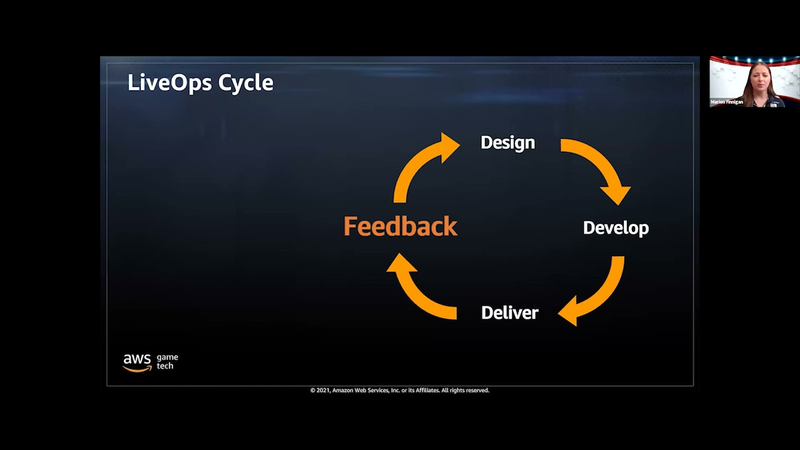
[Music] yeah hey guys how's lunch not bad not bad was for a conference lunch is pretty good isn't it a great introduction I am at a lot of conferences and today I get to talk a little bit about live ops and some of the things that amazon has learned about helping you with your game and live ops now I actually have the best there we go I've actually got the best job at Amazon my job is to fly around the world talking to rooms full of game developers finding out from you guys what is hard what's not working I take that back to Seattle they work on stuff and then I bring stuff back to you and see if you guys are interested in that and today we're gonna talk about three keys to player happiness and okay yes these aren't the only three things but these are things that we can address in a live ops universe and all they're kind of the
three things I chose and we're gonna take a quick look at how you can spend more time building the differentiated parts of your game while taking maybe some of the less differentiated back office stuff some of the back end support and let you know game tech like game sparks take care of things like that so without wasting any more time what are some of these three things well you can read them up here as it is that list is kind of obvious and it's not terribly actionable so what I want to do is I want to break these three things down to get you kind of something that's a little more actionable and we'll start with creating social connections and competition leaderboards most of you guys get leaderboards I'm assuming most of you who how many people here actually write code alright hey you guys have written leaderboards before anyone hands leaderboards alright Lea how many of you who are game designers have designed in leaderboards okay for the hand that
didn't go up either I'm sorry you're shy and I'm picking on you or seriously leaderboards are good and one of the best examples of leaderboards I can think of doesn't even come from a game it comes from TripAdvisor did you know you probably don't know but I'm the number three restaurant reviewer and my small hometown that's right and if I just do five more reviews I'll get to be the number one restaurant reviewer seriously being number one is kind of cool I don't want to be number one in my town and I've only got to do five more reviews that's achievable so look at what this leaderboard has done it's increased my user engagement because now I just have to do five more games I want to do this because number one is desirable and achievable so they've got user retention and user engagement just by implementing a leaderboard that keeps me inspired and make sure it's
achievable if you're you if you're leaderboards can do this fantastic if your leaderboards can't don't worry LiveOps can help take care of this game sparks has a pretty configurable leaderboard system and you can do segmented leaderboards based on anything like zip code player level anyone who's got the vorpal sword you know and anything you can programmatically code you can go ahead and make a leaderboard for a second thing or challenges and tournaments competition is inherently social I mean chess and go have survived for centuries not because of really clever you eight campaigns you know people actually love playing these games with each other and against each other and the same is true of your game even if your game does not support direct competition player versus player you can still support in direct competition we did an experiment with pac-man on
tablets and we were able to get people to be really excited about competing not just for high score but who can clear a level the fastest who can clear a level with a fastest number of points who can get through a certain range of levels with losing the fewest lives anything you can measure programmatically in your game can be a challenge point or a point for petition whether it's direct competition player-versus-player or in direct competition player versus AI or the computer where you compete on some of these other things again game on is a great technology from Amazon that'll help you do that and it'll also help you make winning a very memorable moment more about that later a third is sharing experiences think about your game and think about maybe the competitive potential in your game either direct or indirect and how shareable are those moments when you
beat the boss in level or when you make an achievement how sharable is that try to make that as shareable as you can and if you don't think having shareable moments in your game is a big deal we're gonna play a game right now it's called how many million hours so we're gonna start something pretty easy the Pyramid of Giza how many million hours did it take people to build the Pyramid at Giza any guesses anyone who's seen this presentation before have a guess all right I'll tell you 15 million hours to build sorry 35 million hours about 3-5 million hours to build the Great Pyramid of Giza that's a lot of time except when you compare it to how many hours we spent watching the most popular video on YouTube anyone ever guess what that is really good guess back when I put this chart together the most popular video on YouTube was um
Gangnam time Ya Ya Ya it's been displaced I mean gangnam time was a hundred and forty million hours to watch gangnam time since then it has been displaced by a music video from latin america that has about 210 million hours of viewing how many pyramids could we have built and the time we spent watching that video okay not directly comparable but a split son and we haven't even started talking about competition yet so let's take a look at a modest-sized competition college basketball in the united states okay this isn't even at the level of World Cup soccer this is just collegiate basketball in the United States we call it March Madness how many millions of hours did people spend watching collegiate basketball in the u.s. about 640 million hours but that's just a regular sporting
competition that's not how much time we spent watching other people play video games any guesses how many hours we spent watching other people play video games fair enough about 4.8 billion hours think or the peak moments in your game are the competitive moments in your game shareable because there's an audience out there that's not all just waiting for world Warcraft or League of Legends that's waiting for really entertaining shareable moments from your game so think about making those shareable moments exposed on YouTube on some Twitch and which is kind of the whole point about this is twitch is one of the LiveOps solutions you can get from Amazon most people kind of it don't think of it in the LiveOps sense but in
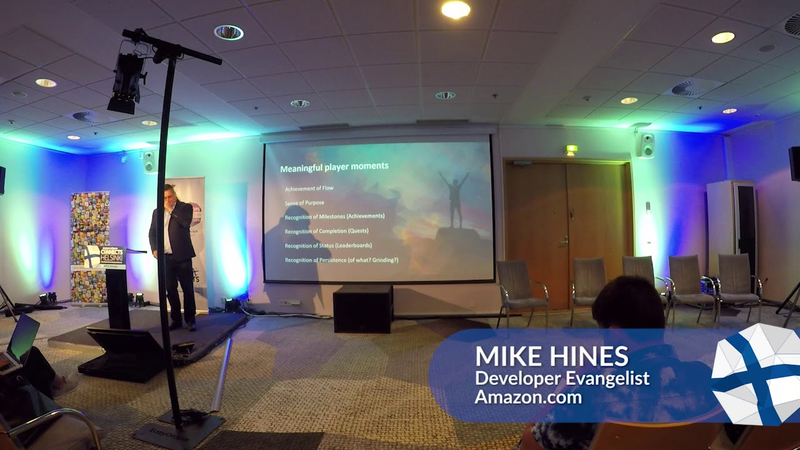
the very live op senses it helps make your game more accessible to more people absolutely consider that alright next we're going to move on to meaningful moments and experiences duh right of course you want gameplay to be meaningful and memorable let me break that down for you at Amazon we've spent a lot of time digging through data on games that are popular games that are fun games to get good user retention games to get good engagement and we look for common themes and trends there are two non industry books that have made the rounds at Amazon that have taught us how to look at the data differently the first one we discovered a long time ago you probably know the book called flow everyone knows kind of what being in a state of flow is well you know sometimes games can achieve that and you know you start playing the game in the afternoon your family says they're going to bed yeah
whatever you get hungry you go down all of a sudden that's like first thing in the morning and your face is on a carton of milk as a missing person yeah you've been in flow so that's great if you don't know flow Mihai csikszentmihalyi okay don't even think about trying to spell that just go to Amazon and look for flow and you'll get it the second book I want to talk about is called the power of moments this gives us an entirely new perspective on how people perceive fun and enjoyable events and games for example if you just came back from a vacation to Disneyland and someone asks you did you have fun at Disneyland you probably didn't think let's see 8 o'clock was about a 7 8 10 was about a 4.5 8:20 was about a 6 nobody does that right what you do is you think oh my gosh that you know part you know those
amazing Pirates of the Caribbean the line was almost as fun as a ride that was an 8 but then I stood in a really long line to get kind of bad food for a whole bunch of money that was definitely a 4 oh but seeing my daughter meet Minnie Mouse total 10 and so these are peak and trough moments in your day in your visit in your gameplay people will remember and experience your game based on these peak and trough moments the nice thing about peak and trough moments you can engineer them you can plan them and design them into your game let me give you an example of some of these obviously achieving a state of flow is something that people get addicted to there's brain chemistry behind getting addicted to states of flow having a sense of purpose makes people feel good and having a sense of purpose is a peak moment it doesn't have to be complicated
you don't have to build a story behind your hyper game think about cut the rope you guys know cut the rope right if you don't okay no I'm kidding cut the rope when you cut the rope and you know Amnon gets a kid he's really happy if he misses it this little adorable sad face shows up and you feel bad for the guy right you want to make sure he gets the candy next time it's it's simple but it's important because think about how popular cut the Rope would have been had you been trying to get the candy into a wastebasket right dull boring where is your sense of purpose that little character gave you that sense of purpose that was super important for the game recognition of milestones achievement systems are good for this hey you just killed a thousand bad guys here's a badge hey sweet that's kind of a nice achievement certainly something you can do with live ops you can manage the chief and systems recognition of
completion this is also important you've started on this quest and now you're an official member of the Thieves Guild here's your Thieves Guild skin okay that's pretty cool that's nice recognition of status again leaderboards being number one in my city rocks I love that status I was number one reviewer on wine.com for about two years and the number of hours I put into reviewing wines to keep that ranking I'm embarrassed to talk about wouldn't you like people to be that way about staying on top of your leaderboard in your game and then recognition of persistence persistence what you want me to like give someone a reward for grinding yeah I do I want you to think about it because what is grinding typically it's a trough experience for a lot of gamers you know before I try the boss at this level I need to grind for a bunch more soft currency or I need to grind to do something to get something where I can progress that can be a trough moment for players if you can find a way to kind of
flatten that out a bit by recognizing hey you've just broken over your broken open your 1000th treasure chest congratulations that can be meaningful and these achievements these moments can be managed and rewarded through your live ops system all you need to do is connect the plumbing in the backend and then that LiveOps take care of how you want to manage their recognition rewards on the front end for example for just competitions you can have tournaments round robins game on an Amazon tech will actually let you reward IP stuff from your catalog or anything that Amazon sells and delivers so you can actually do real-world pricing as well so getting a badge for a thousand bad guys killed is nice getting a badge and a t-shirt with a boss on it that rocks so think about think about the tools you have there a third thing
rapid iteration on making these kinds of peak moments or flattening out your trough moments possible to implement tweaking how you reward or how you make some of these moments memorable and how you get them to stick out deciding that you're going to see if you can't get someone you know more people to buy that blue vorpal sword by either changing its power or changing its price these are all really important things and things that you can do with live ops in your game so step one we need you to instrument this stuff so that it is all variable driven bad guy speed variable driven hit points variable driven power of weapons variable driven price your entire IEP catalog should be variable driven so it can be manipulated by by your live ops team and not bug your engineers okay you're not going to design your next new game and live ops but live ops is going to help you make your current game as good as it can
possibly be if you filtered it enough variables that you can let non-engineers non-programmers basically or maybe your lead game designer if he's not a developer you can let them go ahead and tweak these variables a super powerful part of that is you've noticed something's wrong you're not selling enough boob blue vorpal swords segments your population and try to run some tests try a certain small segment where you make it more powerful try a segment where you make it less expensive try segments where you don't change anything kind of your control group run your tests and then when you find out what's going on a good back-end system a good live op system is going to let you deploy the optimal change to everyone not just people who get the next download I mean it could remember this isn't code that you have to deploy to everyone these are variables that can be grabbed from the server when the game launches its next time it's connected so you can deploy
these changes to all of your players instantly just with one click of a button next time they connect they'll get these new variables so end up being more profitable for you and for your game very cool so segmentation experimenting and then deploying the updates quickly all of this stuff is stuff that you can do with game tech in particular I've talked about game sparks game on which does tournaments and leaderboards and real world prizing and of course Amazon Web Services the requisite boilerplate I'm not going to read these slides to you if you really want this either take a picture I'm okay if you want to do that or go to the website what I want you to take home about game sparks is most of the live ops back-end stuff that you're going to be doing is not going to be noticeably differentiated in your audience so seriously go ahead and use stuff that somebody else has built more importantly stuff that somebody else is going to
maintain because you don't want to spend engineer time building it or maintaining that let somebody else do that we'll go ahead test it we make sure it's scalable and accessible across the world easy enough to do and game sparks is really flexible you can do a whole bunch of stuff from managing in-app purchase catalogs to player matching again go to the website if you want the sales pitch on that game on I like a lot because it makes it possible not just for you to create social competitive experiences for your players it lets your players create competitive experiences for themselves how many people do you know who don't consider themselves competitive gamers because they're worried they're going to get their butts kicked okay I've actually been in that category myself I don't want play cuz I'm gonna get my butt kicked what if I could just set up a competition for my immediate friends group that'd be cool I'd do that if I could just make it for me and my buds I'd play a lot more competitions you'd
get a lot more ad impressions you get a lot more engagement and you might very well even get more IP conversions if I can play with just my select group of friends very powerful being able to do that um think about how this extends to streaming media what if a twitch streamer could invite all of their subscribers to a game to compete against them online and twitch that's powerful what does a twitch streamer want a more consumable entertaining product to get more subscribers right that's their currency if you can give them a game that helps them engage their audience helps their audience become more engaged helps build their audience they're a lot more likely to spend time streaming your game you help them they help you it's it's nice how that works again possible with game on and you can choose to reward any of the competitions that you create with real world prizes quick tip
you don't need to offer anything more than about $35 we did a bunch of experiments in Southern California again with hyper casual games people would stay for hours to stay on top of the leaderboard for for a controller so it doesn't have to be really expensive AWS who in the room is not heard of AWS before okay I really want to talk to you guys later the the quick story of AWS is we do all kinds of stuff in the cloud we'll do computing space in the cloud storage space in the cloud data structures relational databases in the cloud we do real-time analytics in the cloud we go ahead and have edge servers all around the world so you get reduced latency so you can have players matched in Geographic groups if you want to have tournaments across Geographic groups AWS has a worldwide infrastructure that does all of that and for the guys who've never heard of AWS before we have a free tier for all of the AWS services there's
a free lei that lets you do almost all of your development and testing without incurring any costs the only time you ever pay for stuff is when it actually takes off and starts becoming successful at which point you're pretty glad you're paying for the services because it's users that you want to have again aws.amazon.com for your free account and more information hey guys I appreciate your time today if you have any questions about things like key moments and how key moments are going to help define how people feel and talk about your game I'd love to meet up with you outside or later on today I'll be around all day today and tomorrow thank you very much [Applause] [Music]
Summary
This presentation outlines strategies for game developers to improve player retention and engagement through the implementation of LiveOps services. The core thesis posits that developers should offload non-differentiated backend infrastructure to managed cloud services, allowing them to focus on designing meaningful, social, and competitive player experiences. By leveraging backend tools to manage game variables, developers can iterate rapidly without requiring constant client-side updates.
The discussion identifies three primary pillars for enhancing player happiness: fostering social connections, engineering meaningful moments, and enabling rapid iteration. Social engagement is driven by leaderboards and tournaments, which provide achievable goals and competitive outlets. The speaker emphasizes that competition need not be limited to direct player-versus-player combat; indirect competition—such as speed-running or high-score challenges—is equally effective at driving engagement. Furthermore, the presentation highlights the importance of "peak and trough" moments in game design, suggesting that developers can intentionally engineer memorable experiences, such as milestone achievements or status rewards, to increase long-term retention.
Methodologically, the insights are derived from Amazon’s internal data analysis of popular games and behavioral research, including concepts from psychology such as the state of "flow." The speaker advocates for a data-driven approach where game variables—such as weapon power, pricing, and difficulty—are managed server-side. This allows for real-time A/B testing and segmentation, enabling developers to deploy optimal configurations to specific player groups instantly. The presentation concludes by recommending Amazon Web Services (AWS) tools, specifically GameSparks and GameOn, as scalable solutions for managing these backend requirements, including global infrastructure, tournament hosting, and real-world prize integration, ultimately reducing the engineering burden on development teams.