Advertising reports and market data
Documents
Esports - The Brand Opportunity.
The esports industry represents a significant and rapidly maturing opportunity for brands, provided they approach the space with authenticity and long-term commitment.
- The esports audience reached 433 million viewers by 2019, with an additional 1.7 billion people aware of the sector.
- 60% of the esports fan base falls within the 25 to 39 age demographic, which is characterized by high disposable income and a preference for digital platforms over linear television.
- Brands must prioritize adding value to the fan experience through deep integration—such as custom algorithms or interactive content—rather than relying on superficial logo placement to avoid community backlash.
How Does Brand Advertising Fit into Your Monetisation Strategy?
Mobile game publishers can significantly enhance their monetization strategies by integrating brand advertising into their existing revenue models.
- Compliance with supply chain transparency standards—specifically app-ads.txt, sellers.json, and the OpenRTB supply chain object—is now a mandatory prerequisite for accessing brand budgets from major buyers like The Trade Desk and Google.
- Only approximately 30% of top-tier mobile apps are currently compliant with industry transparency standards, leaving a significant portion of the market excluded from brand advertising revenue.
- Publishers should move away from global price floors and instead implement regional pricing tiers to effectively capture demand across diverse international markets.
It’s 2020, Time to Change Your Ad Monetisation Strategies!
The mobile game advertising industry is undergoing a significant shift in 2020, moving away from traditional, inefficient waterfall monetization models toward real-time bidding (RTB) and unified auctions.
- The mobile game industry is shifting from inefficient, legacy waterfall monetization models to real-time bidding (RTB) and unified auctions to better capture the true market value of individual impressions.
- Unified auctions utilize first-price auction mechanics to provide developers with increased pricing transparency and more dynamic competition among ad networks, DSPs, and brands.
- Approximately 35% of surveyed companies have already tested in-app bidding, with an additional 35% planning to implement the technology within the next year.
Superstar Session: Build a UA Strategy Around Affinity With Contextual Ad Targeting
The mobile gaming industry is shifting toward contextual ad targeting as a primary strategy for user acquisition (UA), moving away from a reliance on traditional player data and behavior.
- Mobile user acquisition is shifting toward contextual targeting, which uses granular game metadata rather than personal identifiers to reach players based on their affinity for specific mechanics, art styles, and themes.
- This strategy relies on a framework of 52 distinct sub-genres, developed through expert analysis of major gaming markets including the US, Japan, and China.
- Machine learning models process this qualitative data to generate hundreds of specific data points per game, covering player personas, motivations, and core gameplay attributes.
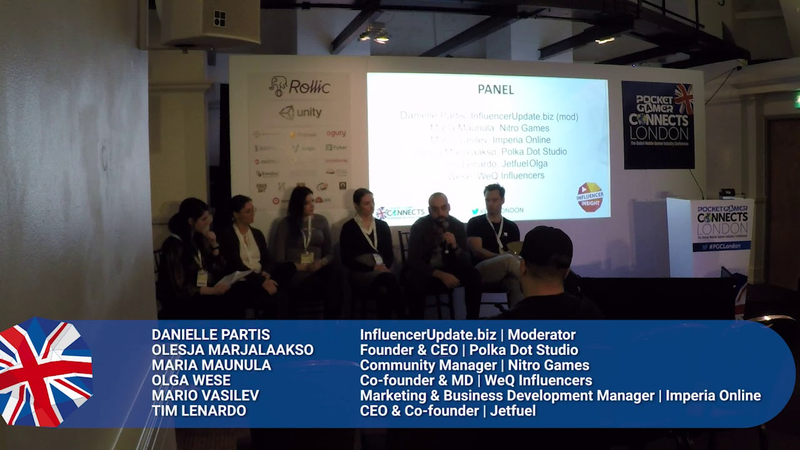
Panel: Maintaining Authenticity: Best Practises to Work with Influencers
This panel discussion from Pocket Gamer Connects London 2020 explores strategies for collaborating with influencers in the gaming industry, focusing on the tension between maintaining brand authenticity and achieving measurable performance goals.
- Prioritize contextual alignment and long-term partnerships over superficial metrics like total follower counts to ensure sustainable influencer marketing success.
- Balance performance-driven user acquisition goals with brand-building strategies by treating influencers as creative partners rather than simple advertising channels.
- Avoid rigid, over-scripted briefs to allow influencers the creative freedom necessary to leverage their personal brand and maintain authenticity with their audience.
Influencer Marketing in Eastern Europe! A Hidden Gem or a Waste of Money?
Influencer marketing in Eastern Europe presents a distinct, high-potential opportunity for game developers, provided they adapt to the region's unique cultural and economic landscape.
- Influencer-led campaigns in Eastern Europe outperform traditional digital advertising by achieving 15% higher engagement rates than Facebook or Google ads.
- Influencer marketing in the region attracts a younger player demographic, averaging 18 years old compared to the 35-year-old average seen in traditional acquisition channels.
- While the region suffers from lower GDP per capita, it offers a high-value opportunity for long-term user acquisition due to significantly lower costs per install and high player retention.
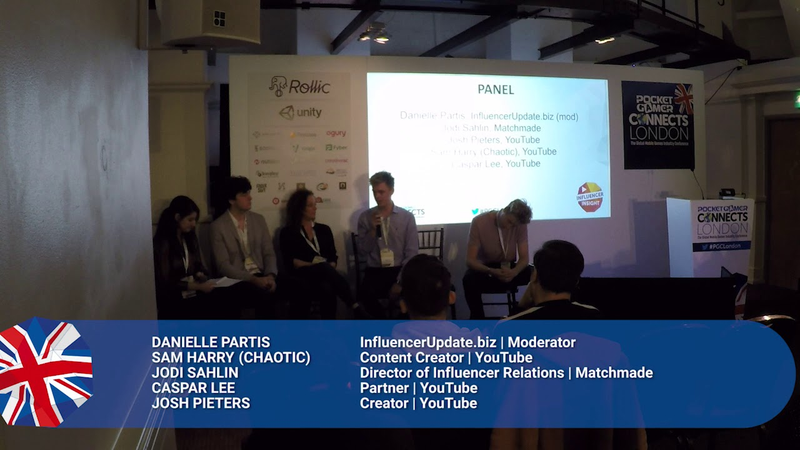
Fireside Chat: Working with Influencers
This discussion from the January 2020 Pocket Gamer Connects London event explores best practices for influencer marketing within the gaming industry.
- Successful influencer campaigns prioritize authentic collaboration and creative freedom over rigid, transactional scripts to maintain audience trust.
- Brands should treat creators as strategic partners by involving them in the creative process, as they possess the best understanding of their specific community's preferences.
- Data-driven platforms should be used for identifying influencer partners to ensure strategic alignment with brand goals, replacing outdated manual outreach methods.
Superstar Session: Influencer Marketing Sucks (and Some Best Practices)
The influencer marketing landscape for mobile applications is currently plagued by inefficiencies, lack of transparency, and poor scalability.
- Transitioning from flat-fee influencer payments to a performance-based, pay-per-install (CPI) model ensures advertisers only pay for verified user acquisition, guaranteeing positive ROI.
- Traditional influencer marketing suffers from low scalability and inefficiency due to manual outreach, reliance on unreliable vanity metrics, and the prevalence of bot activity.
- Integrating mobile measurement partner (MMP) tracking allows for the automation of influencer campaigns, removing the need for manual negotiation and constant oversight.
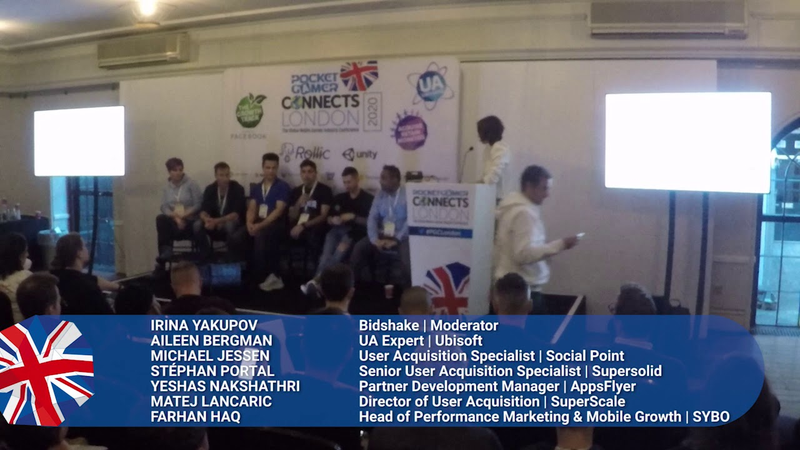
Panel: Leading Tactics in User Acquisition in 2020
Modern user acquisition strategies in the mobile gaming sector have shifted from manual, spreadsheet-heavy processes toward a sophisticated, data-driven discipline.
- User acquisition has transitioned from manual spreadsheet management to a data-driven discipline requiring automated reporting, predictive modeling, and robust data aggregation.
- Effective acquisition strategies now prioritize return on investment and impression-level performance metrics over simple cost-per-install data.
- Success relies on integrating App Store Optimization with granular creative tagging to deconstruct ad assets and identify specific drivers of conversion.
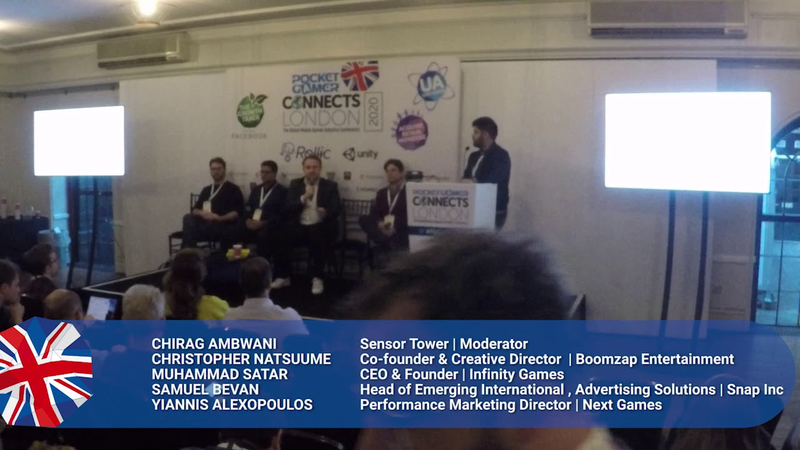
Panel: Tactics for Low CPI and High User Quality
Modern user acquisition strategies in the mobile gaming industry have shifted from prioritizing raw install volume to focusing on long-term Return on Ad Spend and high-quality user retention.
- User acquisition strategies have shifted from prioritizing raw install volume to focusing on long-term Return on Ad Spend (ROAS) and high-quality user retention.
- Creative assets must accurately reflect core gameplay to attract users likely to monetize, rather than relying on high-volume ads that generate low-intent clicks.
- Developers are reducing reliance on the Facebook and Google duopoly by diversifying into platforms like TikTok, Snapchat, and Reddit to achieve more precise targeting and lower costs per install.
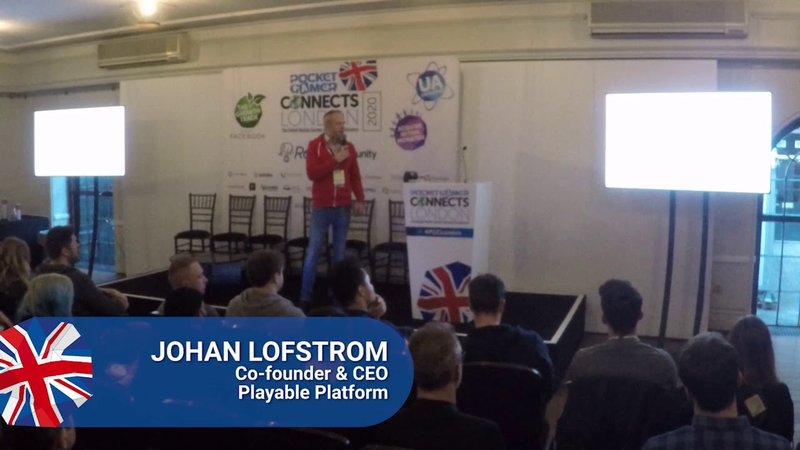
Extract Immense Value from Creative Optimisation
Creative optimization serves as a critical lever for user acquisition managers to improve campaign performance by increasing installs per mille (IPM).
- Creative optimization directly improves campaign performance by increasing installs per mille (IPM), which allows advertisers to win more network auctions or reduce costs while maintaining competitiveness.
- Automated, self-optimizing playable ads use machine learning to conduct real-time iterations of variables like animation speeds, color schemes, and end-cards without manual intervention.
- Shifting from manual A/B testing to automated systems enables rapid performance gains, with some campaigns achieving double-digit percentage increases in click-through rates and IPM within days.

UA Coffee: All About LTV (Life Time Value) and pROAS with Algolift
Predictive Lifetime Value and predictive Return on Ad Spend have emerged as critical metrics for mobile marketers navigating an increasingly competitive landscape defined by rising user acquisition costs.
- Mobile marketers are shifting from short-term metrics like Day 7 ROAS to long-term, user-level predictive modeling to improve bidding precision in auction-based environments.
- Machine learning-based projections for LTV and pROAS outperform traditional retention-curve models by ingesting historical data to account for temporal trends and anomalies.
- Predictive models should be utilized as directional tools for acquisition strategy rather than absolute predictors due to inherent market volatility and fluctuating costs.