Action-Adventure reports and market data
Documents

Recalibrating Our Limits: Lighting on 'Ratchet and Clank: Rift Apart'
The development of Ratchet & Clank: Rift Apart represents a strategic shift toward achieving feature-animation-level visual fidelity on PlayStation 5 hardware.
- Insomniac Games prioritized performance on the PlayStation 5 by mandating that all light sources cast shadows, abandoning previous-generation optimization tactics that sacrificed visual fidelity for performance.
- The lighting team established a consistent baseline by locking exposure and key light intensity as foundational variables, ensuring that all subsequent adjustments to fog, bounce light, and light intensity remained balanced throughout the project.
- To optimize performance and simplify workflows, the team utilized fewer, larger light sources rather than numerous smaller ones, which reduced performance overhead and created more realistic bounce lighting.
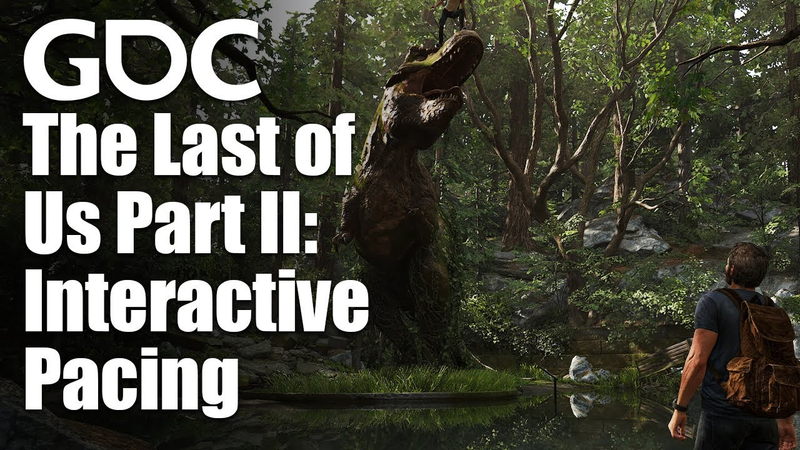
Interactive Pacing from the Museum Flashback in 'The Last of Us Part II'
The Museum Flashback in The Last of Us Part II serves as a masterclass in interactive narrative pacing, prioritizing player agency over rigid, developer-dictated tempo.
- Interactive pacing allows players to set their own tempo by choosing whether to rush through linear narrative beats or linger to engage with optional environmental content.
- The 'Museum Flashback' level in The Last of Us Part II utilizes a three-tiered hierarchy of interactions: focal points (mandatory story beats), prospects (optional, repeatable interactions like quips), and secrets (unexpected, high-effort 'mold-breaking' moments).
- To teach players they can interact with the environment without tutorials, the design introduces two simple, isolated exhibits early on, establishing that interaction is both optional and consistent in scale.
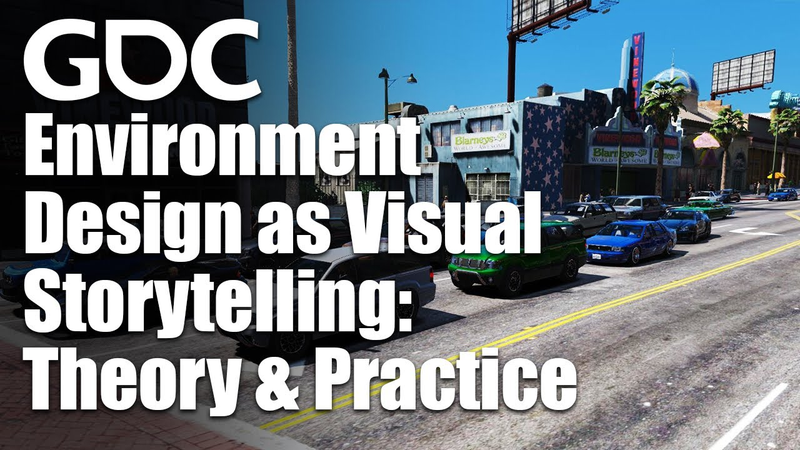
Environment Design as Visual Storytelling: Theory and Practice
Environment design serves as a sophisticated form of visual storytelling where creators act as silent narrators, shaping player experience through the strategic arrangement of space.
- Environment design utilizes 'peak shift'—a psychological principle where the brain prefers exaggerated stimuli over realistic ones—to make visual storytelling and character design more intuitive and readable for players.
- Spatial metaphors allow designers to map social relationships onto physical environments, as the human brain uses the same neural infrastructure to navigate both physical space and social hierarchies.
- Mimesis in environment design relies on 'behavioral traces' and 'affordances,' where the placement of objects like drugs, money, or furniture acts as an index signifier to communicate the history and actions of characters to the player.

Procedural Grass in 'Ghost of Tsushima'
The procedural grass system developed for Ghost of Tsushima was designed to achieve a specific artistic vision: vast, painterly fields of foliage that maintain high visual fidelity while adhering to strict memory and performance constraints.
- Sucker Punch Productions achieved high-density foliage in 'Ghost of Tsushima' by rendering approximately 83,000 individual grass blades per frame, processed in roughly 2.5 milliseconds using a compute-shader-driven pipeline.
- To avoid the limitations of traditional grass cards, the team used a compute shader to generate instance data for tiles, which are then rendered via indirect draw calls to maintain performance while allowing for per-blade wind animation and artist-configurable parameters.
- The system utilizes a clumping algorithm that groups blades based on artist-authored parameters, preventing the uniform, artificial look of standard procedural grass and creating the appearance of a natural, varied field.
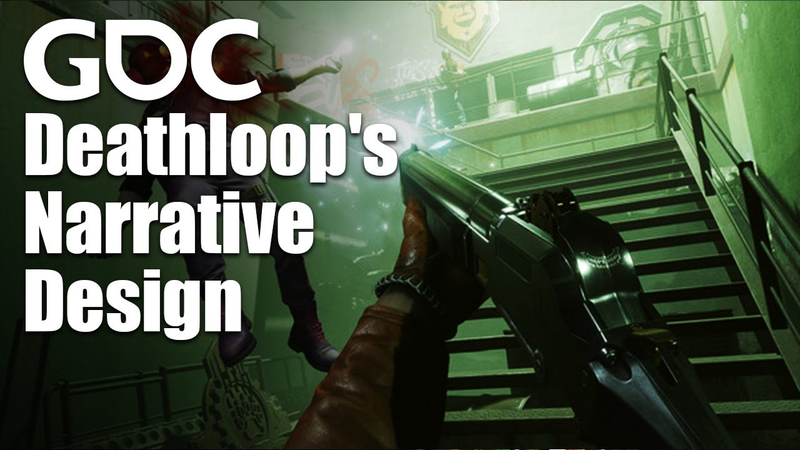
How a Time Loop Influenced 'Deathloop's' Narrative Design
Deathloop centers on the integration of a non-linear time loop structure with player-driven narrative progression.
- To reinforce the theme of being trapped in a cycle, narrative designers categorized content into two types: reactive systems (radio calls, floating messages) that provide a sense of progression through persistent memory, and static content (notes, tapes, overheard conversations) that emphasizes the repetitive, unchanging nature of the loop.
- The game forces players to kill eight visionaries within a single day to break the loop, creating an 'impossible' task that serves as the core narrative driver and justifies the necessity of the time-loop mechanic.
- To ensure players feel the weight of the loop, the team designed the antagonist, Julianna, as a persistent-memory guide and sounding board, allowing for snarky, non-repeating banter that evolves as the player progresses.
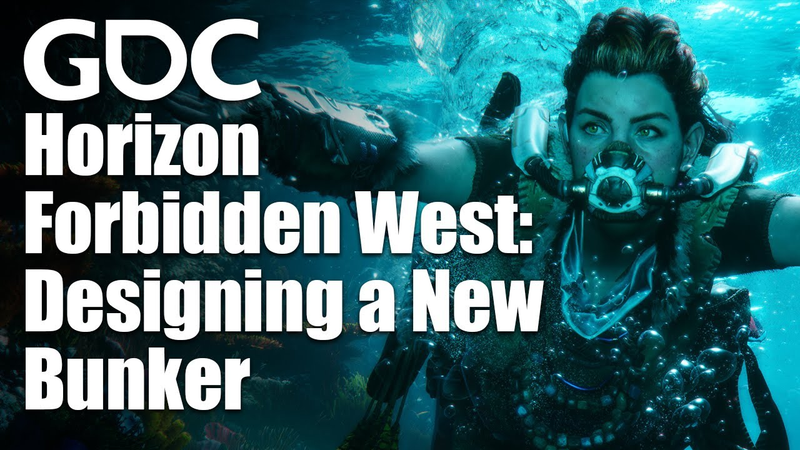
Knocking on Death's Door: Designing a New Bunker for 'Horizon Forbidden West'
The development of the Death’s Door quest for Horizon Forbidden West serves as a case study in iterative level design, emphasizing the necessity of balancing narrative goals with evolving mechanical systems.
- The development team utilized a structured six-phase process over a four-year production cycle to transition from paper prototyping to a final, high-rated level design.
- Designers prioritized environmental puzzles and vertical traversal over humanoid combat to improve upon the bunker environments established in the series' predecessor.
- The ACE (Astonishing, Challenging, and Engaging) framework served as the primary diagnostic tool for identifying and correcting design shortcomings throughout the development process.

Remaking Assassin's Creed Level W/ NO MODELING SKILLS
The process of recreating game environments without advanced modeling skills relies on three fundamental pillars: geometric simplification, color palette management, and strategic asset repetition.
- Environmental design can be achieved without advanced modeling by deconstructing complex architecture into basic geometric primitives like cubes and triangles.
- Strategic asset repetition allows for the efficient scaling of large game worlds by categorizing objects into layers, ranging from background props to high-visibility landmarks.
- Color palettes are essential for environmental storytelling and navigation, as demonstrated by the use of warm oranges for Damascus and teal tints for Acre in Assassin’s Creed.
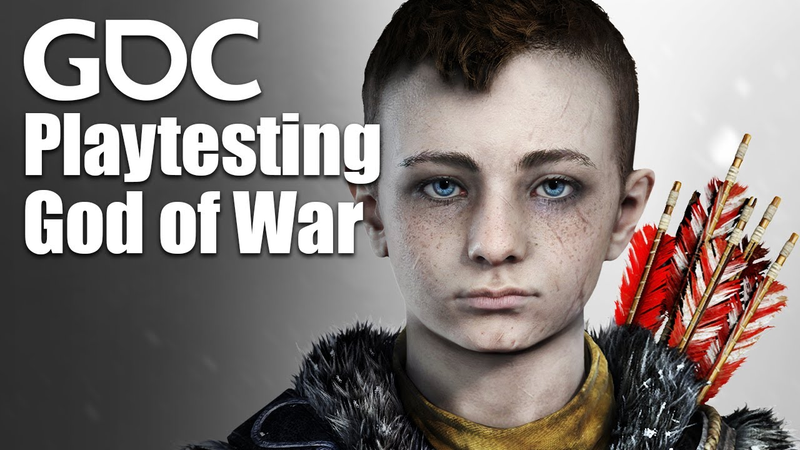
Playtesting 'God of War'
The development of God of War (2018) serves as a case study for integrating rigorous user research into the creative process to overcome significant design uncertainty.
- Establish a consistent playtesting schedule and stick to it, as frequent cancellations create instability and undermine team confidence in the process.
- Categorize playtests into two distinct types: usability tests to validate mechanical function and unguided playthroughs to validate the intended emotional fantasy or player experience.
- Use a combination of undirected feedback (interviews and observations) and directed feedback (explicit questions) to extract actionable data, ensuring the team considers the entire player perspective rather than isolated comments.
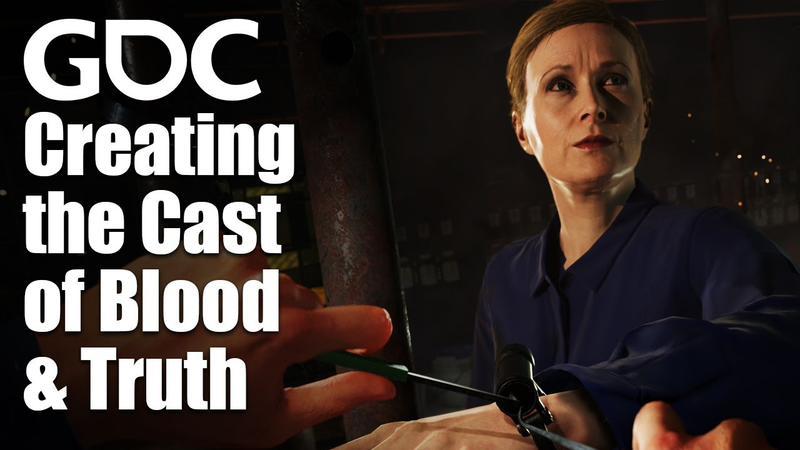
Characters to Get Immersed In: Creating the Cast of 'Blood & Truth'
The development of characters for the PlayStation VR action shooter Blood & Truth focused on overcoming the limitations of virtual reality immersion by prioritizing realistic character interactions and player agency.
- Sony London Studio developed 'Blood & Truth' by prioritizing character interaction and immersion, building on data from 'The London Heist' which showed that direct, physical interactions with NPCs were twice as popular as other VR experiences.
- To maintain high frame rates in VR while achieving realism, the team implemented a two-tier character system: Tier 1 (key characters) featured exact digital doubles with 40,000–50,000 polygons, while Tier 2 (NPCs) used modular, interchangeable parts at 30,000–40,000 polygons.
- The studio utilized photogrammetry and 3D scanning to create digital doubles of actors, partnering with 3Lateral for high-fidelity head scans and specialized facial rigging to meet quality requirements.
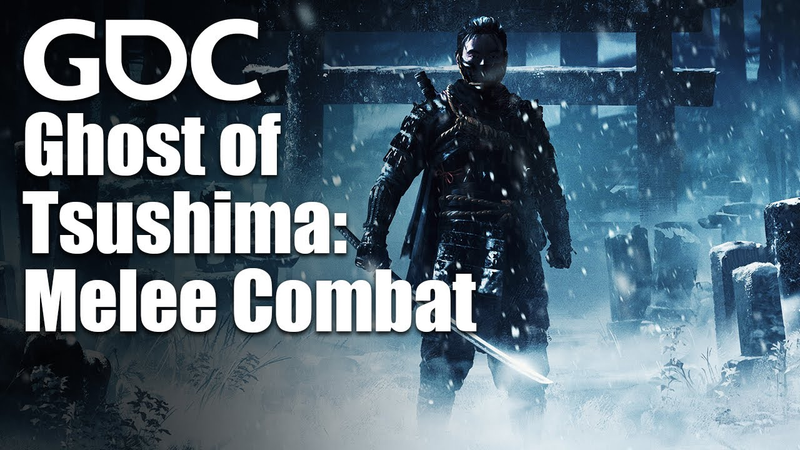
Master of the Katana: Melee Combat in 'Ghost of Tsushima'
The development of Ghost of Tsushima centers on the realization of a precise, skill-based samurai fantasy that prioritizes player discipline and fluid combat.
- Ensure the most effective way to play the game is also the most enjoyable, as players will resent being forced into either ineffective fun or effective drudgery.
- Front-load the best ideas and mechanics in the first 15 to 60 minutes of the game, because if the initial experience is not compelling, players will not reach the end.
- Use 'carrots' instead of 'sticks' to encourage variety; rather than nerfing overused abilities, incentivize the use of underused ones to improve player engagement and satisfaction scores.

Guardians of the Galaxy Disappointing Sales | Games ReCAP
Square Enix has publicly identified the sales performance of Marvel’s Guardians of the Galaxy as disappointing, despite the title receiving significant critical acclaim and winning the Best Narrative award at the 2021 Game Awards.
- Square Enix has officially labeled the sales of Marvel’s Guardians of the Galaxy as disappointing, despite the title winning the Best Narrative award at the 2021 Game Awards.
- Internal financial benchmarks for major AAA titles have shifted, with publishers now frequently requiring 10 to 12 million units sold to justify rising development costs, compared to previous standards of 5 million.
- Square Enix has a recurring history of labeling high-quality titles as commercial failures, including the 2013 Tomb Raider reboot, Marvel’s Avengers, and Outriders.
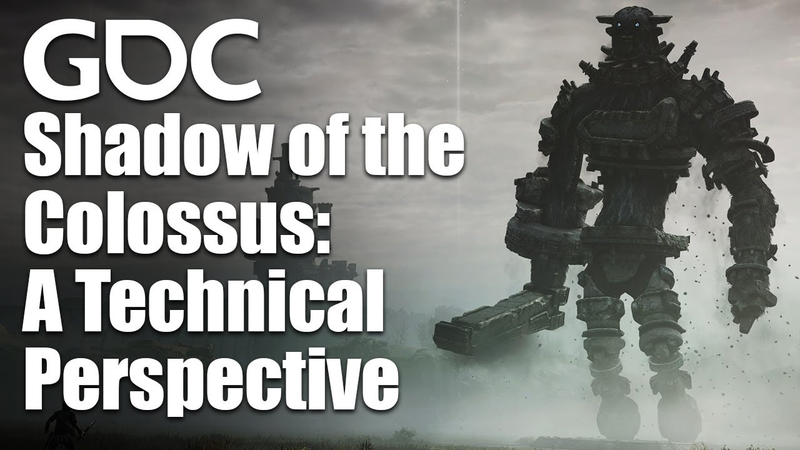
Beyond the Remake of 'Shadow of the Colossus': A Technical Perspective
Modern game remakes require a delicate balance between preserving the original design intent and leveraging contemporary hardware capabilities.
- Successful remakes require migrating legacy game logic into a unified, proprietary engine architecture to decouple the project from outdated pipelines and enable high-fidelity upgrades.
- Developers should implement a component-based task scheduler that treats original game logic as a thread-safe process to improve CPU saturation and eliminate traditional game loop stalling.
- Transitioning legacy titles to 64-bit environments is best achieved using manual address conversion and dynamic, auto-calibrating texture streaming budgets rather than restrictive third-party libraries.