Report25 pages
Video Game Live Streaming Trends Report: Q3 2023
The Q3 2023 Video Game Live Streaming Trends Report provides a comprehensive analysis of the global live-streaming market, covering major platforms including Twitch, YouTube Gaming, Facebook Live, Kick, and AfreecaTV. Utilizing data from a consortium of industry analysts, the findings indicate that the market has entered a period of stabilization. Total viewership reached 7.6 billion hours watched, representing a minor 4% year-over-year decline but remaining 90% higher than pre-pandemic levels in 2019.
A significant shift in the platform landscape is highlighted by the rapid ascent of Kick, which surpassed Facebook Live and AfreecaTV to become the third most-watched platform. Kick’s growth is largely driven by non-gaming content, which accounts for 66% of its viewership, compared to 27% on Twitch. While Twitch maintains a dominant 71% market share, its esports viewership saw an 18% year-over-year decrease. Despite this, mobile titles remain strong, with MPL Indonesia Season 12 ranking as the quarter's top esports event.
The report identifies creator-driven events as a primary engine for high engagement. Events like ibai’s La Velada del Año III and Squeezie’s GP Explorer 2 generated tens of millions of hours watched and record-breaking peak viewership. In the software sector, Grand Theft Auto V reclaimed the top spot for most-watched game, while new role-playing releases Baldur’s Gate 3 and Starfield emerged as the most successful launches of the quarter, collectively generating nearly 100 million hours watched in their first months. The analysis concludes that while overall growth has slowed, the industry is sustained by high-profile creator events and the continued popularity of role-playing and variety content.
- The live-streaming market has stabilized with 7.6 billion hours watched in Q3 2023, a 4% year-over-year decline but still 90% higher than 2019 levels.
- Kick has emerged as the third most-watched platform, surpassing Facebook Live and AfreecaTV, with 66% of its viewership driven by non-gaming content.
- Twitch maintains a dominant 71% market share, though its esports viewership experienced an 18% year-over-year decrease.
- Creator-led events are primary engagement drivers, exemplified by La Velada del Año III and GP Explorer 2, which generated tens of millions of hours watched.
- Grand Theft Auto V reclaimed the top spot for most-watched game, while new releases Baldur’s Gate 3 and Starfield generated nearly 100 million hours watched in their debut months.
+1
Stream HatchetJan 2023
Report15 pages
In-Game Spending: Parents' Supervision of In-Game Spending 2023
The research investigates how parents supervise and manage their children’s in‑game purchases, tracking trends across five European markets—United Kingdom, France, Germany, Spain and Italy—over four survey waves (2018, 2019, 2020 and 2023). Each wave surveyed adult parents or guardians of children who play video games, with sample sizes ranging from 962 in 2018 to 2,808 in 2023, providing a broad cross‑section of the region’s gaming households.
Findings show that three‑quarters of parents consistently report that their children do not spend on in‑game extras, a proportion that has remained stable since 2020. Among the minority who do spend, the average monthly outlay rose from €33 in 2020 to €39 in 2023, reflecting a €6 increase that aligns with inflation. Most spending (64 %) falls within the €1‑20 range, with the most popular items being gameplay‑impacting content (34 %) and decorative or cosmetic items (just under one third). Loot boxes and other unknown‑reward items remain relatively unpopular.
Parental oversight is high: nine‑in‑ten parents of spending children have some form of agreement, half of which are explicit—either seeking permission (38 %) or setting limits (23 %). Preferred monitoring tools include credit‑card bill checks, parental‑control settings, and two‑factor authentication, though 44 % of parents who avoid controls deem them unnecessary and 32 % find them difficult to activate. Awareness of in‑game currency and loot boxes among all players (ages 11‑64) is also limited, with only 9 % having purchased in‑game currency and 4 % having bought loot boxes. The study’s methodology relies on standardized questionnaires administered to representative adult panels in each country, ensuring comparability within each survey year while noting that cross‑year comparisons are constrained by methodological changes.
- Three-quarters of children do not engage in in-game spending, a figure that has remained stable since 2020.
- Average monthly in-game spending among children who do spend increased from €33 in 2020 to €39 in 2023, a rise consistent with inflation.
- The majority of in-game spending (64%) is concentrated in the €1–20 monthly range, with gameplay-impacting content (34%) and cosmetic items (33%) being the most popular purchases.
- Parental oversight is high, with 90% of parents of spending children maintaining some form of agreement, including explicit permission requirements (38%) or spending limits (23%).
- While 44% of parents who do not use parental controls consider them unnecessary, 32% report that they find these tools difficult to activate.
+1
Video Games EuropeJan 2023
Report60 pages
Digital Games' Impact in Denmark
The study evaluates how digital games shape everyday life in Denmark, measuring participation rates, motivations, and social outcomes among a representative sample of gamers. By linking behavioural data with self‑reported wellbeing, it argues that games have become a mainstream cultural activity that delivers measurable, though modest, emotional benefits while also fostering relational ties when played socially.
Among 1,172 respondents, 79 % reported playing a digital game within the past year, with weekly engagement ranging from 62 % of those aged 55‑79 to 74 % of 16‑24‑year‑olds. This high penetration underscores games as a routine leisure pursuit across age groups. Players rate gaming as an “active, rewarding break,” assigning an average relaxation score of 3.9 on a five‑point scale and an immersion rating of roughly 3.6, indicating that the activity is perceived as both soothing and engaging.
The majority of gaming occurs in solitary settings—91 % of participants play at home—and puzzle titles dominate preferences, attracting 65 % of respondents and achieving the highest relaxation scores. Nevertheless, social play, whether with friends, online strangers (12 % of gamers) or one’s own children (11 % of gamers), markedly elevates relational and community metrics; relational scores rise from an overall average of 2.1 to 2.9 for those who game with children, and empathy levels increase especially among action‑ and adventure‑game players. These findings suggest that shared gaming experiences amplify social connection, empathy, and cross‑generational bonding.
Overall, digital games in Denmark generate modest emotional gains while serving as a versatile tool for personal relaxation and, when played together, for strengthening social ties. The results highlight the dual role of games as both an individual stress‑relief mechanism and a catalyst for community cohesion within the Danish cultural context.
- Digital gaming is a mainstream activity in Denmark, with 79% of the population having played a game in the past year.
- Engagement is high across all age groups, ranging from 62% of those aged 55–79 to 74% of those aged 16–24 playing on a weekly basis.
- Puzzle games are the most popular genre, preferred by 65% of respondents and yielding the highest relaxation scores among all game types.
- Gaming is primarily a solitary, home-based activity, with 91% of participants playing at home.
- Social gaming significantly boosts relational metrics, with scores rising from an overall average of 2.1 to 2.9 when parents play with their children.
+2
NIMBI – Danish Institute for Game DevelopmentJan 2023

Report42 pages
Estudio sobre el Consumo de Videojuegos entre la Población Adulta Española y en Familia
The study investigates how video‑games are consumed in Spain, focusing on family interaction, the adoption of parental‑control tools, and the impact of streaming personalities on player behaviour. It draws on data collected in 2022 and compares it with earlier figures from 2015 to illustrate recent trends.
A striking finding is that nearly eight in ten Spanish parents reported playing video games together with their children in 2022, up from just over a third in 2015, indicating a rapid cultural shift toward shared digital entertainment within households. Despite this increase in joint play, only about thirty‑nine percent of gamers employ any form of parental control—seventeen point five percent do so regularly and twenty‑two percent occasionally—while more than forty percent never use such measures and almost twenty percent claim ignorance of them. This gap suggests limited awareness and uptake of safety mechanisms despite heightened parental involvement.
The research also highlights the growing relevance of streamers, noting that many families monitor the content creators their children follow, which further shapes consumption patterns and expectations. Overall, the findings point to a need for broader education on parental‑control options and for policies that address the influence of streaming platforms, as the Spanish gaming market continues to expand across all age groups.
- Shared family gaming in Spain has surged significantly, with nearly 80% of parents playing with their children in 2022 compared to just over 33% in 2015.
- Parental control adoption remains low, as only 39% of gamers use these tools, with 17.5% using them regularly and 22% occasionally.
- A significant portion of the gaming population is disengaged from safety measures, with over 40% of users never employing parental controls and nearly 20% reporting they are unaware of their existence.
- Streaming personalities have become a primary influence on gaming consumption, leading many Spanish families to actively monitor the specific content creators their children follow.
- The rapid cultural shift toward household digital entertainment creates a critical need for increased public education regarding available parental control mechanisms and safety policies.
+1
AEVIJan 2023

Report12 pages
Informe Mundial 2023: Comportamientos e Intereses de los Videojugadores
The 2023 Power of Play survey set out to map the motivations, social impacts and perceived wellbeing benefits of video gaming across a broad international sample. By combining responses from 12,847 active gamers who play at least once a week with findings from ten recent peer‑reviewed studies, the analysis argues that games deliver measurable social, emotional and cognitive value that extends far beyond pure entertainment.
Respondents from twelve markets—Australia, Brazil, Canada, France, Germany, Italy, Japan, Poland, South Korea, Spain, the United Kingdom and the United States—identified “having fun” as the top driver (69 % overall), followed by “entertainment” and “stress relief”. More than half of participants reported regular online play, while a third also engaged in face‑to‑face sessions. Nearly 45 % said they had met a close friend, partner or spouse through gaming, and 67 % believed games help them forge new relationships. Across the sample, 71 % felt games reduce stress, anxiety and isolation, 64 % described gaming as a healthy escape from daily problems, and 83 % reported increased happiness when playing.
Cognitive and creative gains were also prominent: 69 % linked gaming to improved problem‑solving, 65 % to greater adaptability, 60 % to enhanced communication, and 57 % to better linguistic skills. The report cites academic work that documents superior cognitive performance among gamers, reduced depressive symptoms during the COVID‑19 pandemic, and potential protective effects against age‑related memory decline and dementia. Studies of exergames and therapeutic titles further suggest benefits for pain management, motor coordination and social inclusion in clinical populations.
Methodologically, the survey employed an online, quota‑controlled panel designed to reflect each country’s demographic composition, with screening to ensure weekly gaming activity. Data were collected by AudienceNet, a market‑research firm accredited by the Market Research Society and compliant with GDPR standards. The integration of large‑scale consumer data with scholarly evidence provides a comprehensive picture of gaming’s evolving role in mental health, social connectivity and skill development worldwide.
- Gaming serves as a primary tool for emotional regulation, with 83% of players reporting increased happiness and 71% stating that games reduce stress, anxiety, and isolation.
- Social connectivity is a core outcome of gaming, as 67% of players believe games help them forge new relationships, and 45% have met a close friend, partner, or spouse through the medium.
- Players identify 'having fun' as the primary motivation for gaming (69%), followed by entertainment and stress relief as the leading drivers for engagement.
- Gaming is perceived as a driver of cognitive and professional skill development, with 69% of respondents citing improved problem-solving and 65% noting greater adaptability.
- Peer-reviewed academic research supports the survey findings, suggesting that gaming can provide protective effects against age-related memory decline and help manage depressive symptoms.
+1
AEVIJan 2023

Report38 pages
Videojuegos en el Aula: Qué se está haciendo en España
¡Hola! 👋
Veo que has compartido el título del documento y los resúmenes de las tres primeras secciones, pero aún no me indicas qué necesitas exactamente. Aquí tienes algunas ideas de lo que podría hacer por ti:
| Posible tarea | Qué incluye | |---------------|-------------| | Resumen ejecutivo | Un texto breve (≈ 200 palabras) que capture los hallazgos clave del manual y sus implicaciones para docentes y responsables de política educativa. | | Esquema estructurado | Un índice detallado con títulos y subtítulos de todas las secciones y subsecciones, listo para usar como base de un informe o presentación. | | Tabla comparativa | Consolidar la información de los juegos mencionados (título, desarrollador, plataforma, objetivo pedagógico, nivel educativo, financiación, etc.) en una tabla única y fácil de consultar. | | Recomendaciones prácticas | Propuestas de cómo integrar los juegos citados en diferentes áreas curriculares, con ejemplos de actividades y recursos de formación docente. | | Análisis de tendencias | Identificar los patrones más relevantes (p.ej., enfoque en inclusión, sostenibilidad, realidad virtual) y sugerir líneas de futuro desarrollo en España. | | Traducción / adaptación | Convertir el contenido a otro idioma o adaptar el lenguaje a un público específico (directores de centro, padres, estudiantes). | | Otro | Cualquier otra necesidad que tengas (presentación PowerPoint, infografía, guion para taller, etc.). |
¿Qué te gustaría que hiciera?
1. Selecciona una de las opciones de la tabla anterior (o combina varias). 2. Indica el nivel de detalle que prefieres (p.ej., resumen muy breve vs. informe completo). 3. Añade cualquier requisito adicional (formato, longitud, estilo, fecha límite, etc.).
Con esa información podré entregarte exactamente lo que necesitas. ¡Quedo a la espera!
- The provided document does not contain substantive data, statistics, or findings regarding the state of video games in Spanish classrooms. The content is limited to a meta-discussion about potential ways to summarize a report rather than the report itself. Consequently, no factual insights regarding the integration of video games in education can be extracted from the provided text.
+1
AEVIJan 2023

Report20 pages
Pour une Pratique Responsable du Jeu Vidéo: France
The guide presents a comprehensive overview of the French video‑game ecosystem in 2023, emphasizing the need for responsible consumption and the protection of minors. It argues that widespread digital engagement—now a daily habit for two‑thirds of adults and more than half of teenagers—requires coordinated action from industry, parents, and public authorities to ensure safe and balanced play.
Survey data collected from the SELL‑GSD/GameTrack panels at the end of 2021 reveal that 70 % of French residents play video games at least occasionally, with 53 % doing so regularly. Daily play is reported by 68 % of adults and 52 % of children aged 10‑17, while 95 % of parents are aware of parental‑control tools; only 44 % actually use them, and 51 % know of them without applying them. Parental involvement varies: 13 % supervise every session, 22 % select titles, 25 % advise against certain games, and 40 % allow autonomous play without consent. Moreover, 64 % of parents admit to playing with their children at least occasionally, highlighting the family‑oriented dimension of gaming.
The market analysis shows a split between physical and digital sales, with physical units representing 34 % of volume and 40 % of value, while digital formats account for the remainder. PEGI age‑rating labels dominate purchase decisions, being consulted by 67 % of adult buyers and 64 % of parents, and the system’s classification process involves independent bodies (NICAM and VSC) to certify titles across the Pan‑European market.
The publication also details the functionality of console‑based parental‑control systems, online interaction moderation tools, and the educational outreach conducted by the SELL and its partner network PédaGoJeux. Campaigns such as Safer Internet Day and a series of PEGI‑focused awareness drives illustrate the sector’s proactive stance on fostering a safer, more informed gaming environment for all French users.
- Gaming is a mainstream activity in France, with 70% of residents playing occasionally and 53% playing regularly as of late 2021.
- While 95% of parents are aware of parental-control tools, only 44% actively use them, leaving a significant gap between awareness and implementation.
- Parental involvement in gaming is inconsistent: 40% of parents allow children to play autonomously without consent, while only 13% supervise every session.
- The French market remains hybrid, with physical media accounting for 34% of unit volume and 40% of total market value.
- PEGI age-rating labels are a primary consumer tool, consulted by 67% of adult buyers and 64% of parents to inform purchase decisions.
SELL – Syndicat des Éditeurs de Logiciels de LoisirsJan 2023
Report12 pages
Global Report 2023
Power of Play: Global Report 2023 – Executive Summary
1. Scope & Methodology | Item | Detail | |------|--------| | Survey population | ≈ 12,847 active (weekly) gamers, ages 16 +, from 12 countries (Australia, Brazil, Canada, France, Germany, Italy, Japan, Poland, South Korea, Spain, United Kingdom, United States). | | Sampling | Quota‑based, nationally‑representative panels (AudienceNet). Each country ≈ 1,000 + respondents. | | Data collection | Online questionnaire covering motivations, mental‑health impacts, social behaviours, and skill development. | | Academic triangulation | Findings cross‑checked against ~10 peer‑reviewed studies (see References, p. 12). |
2. Why People Play (Top‑3 Reasons – Global)
| Rank | Reason | % of respondents (global) | |------|--------|----------------------------| | 1 | Fun / enjoyment | 69 % | | 2 | Pass the time | 63 % | | 3 | Stress relief / relaxation | 55 % |
Country‑level nuances: “Fun” dominates in every market (≥ 78 % in most). “Stress relief” is especially high in Australia (71 %) and Japan (73 %).
3. Self‑Reported Mental‑Health Benefits
| Benefit | Global agreement (average) | Range across countries | |---------|----------------------------|------------------------| | Reduces stress | 71 % | 55 % – 87 % | | Reduces anxiety | 61 % | 48 % – 78 % | | Reduces feelings of isolation/loneliness | 55 % | 45 % – 73 % | | Provides a healthy outlet for everyday challenges | 64 % | 52 % – 76 % | | Makes me feel happier | 63 % | 45 % – 83 % | | Helps me get through difficult times | 52 % | 33 % – 71 % |
> Interpretation: More than two‑thirds of gamers perceive video games as a stress‑relief tool, and roughly half feel less isolated because of gaming.
4. Social & Relational Outcomes
| Metric | Global % (approx.) | |--------|-------------------| | Play with others online (≥ weekly) | 51 % | | Play with others in‑person (≥ weekly) | 38 % | | Met a good friend, spouse, or significant other through games | 46 % | | Games helped develop deeper relationships | 43 % | | Games helped stay connected to friends/family | 46 % | | Games created lasting memories | 50 % | | Believe there is a game for everyone | 75 % |
> Key insight: Multiplayer and social features are central; almost half of respondents have formed meaningful offline relationships via gaming
- Video games function primarily as a mental health tool, with 71% of global gamers reporting that play reduces stress and 61% noting a reduction in anxiety.
- Fun and enjoyment remain the primary drivers for gaming, cited by 69% of the 12,847 respondents, followed by passing time (63%) and stress relief (55%).
- Social connectivity is a core component of the gaming experience, as 51% of players engage in online multiplayer weekly and 46% have formed meaningful personal relationships, including friendships and marriages, through games.
- Gaming serves as a significant social bridge, with 46% of respondents using games to stay connected with friends and family and 43% reporting that gaming helped them develop deeper relationships.
- The perception of gaming as an inclusive medium is high, with 75% of respondents agreeing that there is a game available for everyone.
+1
IIDEA – Italian Interactive Digital Entertainment AssociationJan 2023

Report15 pages
Misleading (Non-Core) Gameplay Ads Research 2023
The prevalence and perception of non-core gameplay advertisements, often categorized as misleading, represent a significant shift in mobile gaming marketing strategies. Based on a 2023 survey of 5,212 respondents across the United States, Japan, Europe, and Brazil, findings indicate that a vast majority of gamers have encountered these ads. Recognition is highest in the United States at 91%, while other regions range between 71% and 77%. Despite the controversial nature of these promotions, approximately 75% of players in Western markets and 70% in Japan and Brazil admit that the mechanics showcased in these ads are often more fascinating than the actual core gameplay of the advertised titles.
The research challenges the assumption that misleading ads lead to immediate user churn. Between 35% and 46% of gamers reported they would continue playing a game despite the discrepancy, choosing to evaluate the product on its own merits rather than the accuracy of the advertisement. Players generally understand that developers use these tactics to inflate download numbers and revenue or to revitalize interest in older titles. The most appealing elements of these ads are the specific gameplay mechanics and puzzles, while user interface and new features hold the least draw. Notable titles associated with this phenomenon include Hero Wars, various "Scapes" games, and Evony.
Demographic data reveals that the modern gaming audience is maturing, with nearly 10% of U.S. gamers over the age of 60 and less than 2.5% of the global sample under 18. Regional preferences vary significantly; casual titles dominate the U.S. market, while RPGs and complex math-based mechanics are preferred in Japan. In Europe and Brazil, competitive RPG and MMORPG genres lead in popularity. While engagement is high in the West, with many playing over 18 hours weekly, nearly half of Japanese respondents play for less than four hours per week. Ultimately, the industry is seeing a blurring of lines as developers integrate these advertised mini-games into their products to transition from "misleading" to "non-core" content.
- Approximately 75% of Western players and 70% of Japanese and Brazilian players find the mechanics shown in misleading ads more engaging than the actual core gameplay of the advertised titles.
- Between 35% and 46% of gamers continue playing a title despite recognizing that the advertisement does not accurately represent the core gameplay experience.
- Ad recognition is widespread, with 91% of U.S. respondents and 71% to 77% of respondents in other surveyed regions reporting exposure to non-core gameplay advertisements.
- Developers are increasingly integrating these advertised mini-games into their actual products to convert misleading marketing into legitimate non-core content.
- Players identify specific gameplay mechanics and puzzles as the most appealing elements of these ads, while user interface and new features are the least effective drivers of interest.
+1
NextersJan 2023
Report50 pages
Mobile App Trends 2023: Japan Edition
Japan’s mobile app market is undergoing a significant recovery following a downturn in 2022, characterized by a 12% surge in consumer spending to $4.65 billion in the first quarter of 2023. This resurgence is primarily anchored by the gaming sector, which generated $3.14 billion during the same period. Role-playing games and simulation titles remain the dominant forces in the region, leading in both installation volume and user retention. While iOS remains the preferred platform for the majority of Japanese mobile users, accounting for over 60% of gaming and fintech engagement, the market is defined by a unique tension between high engagement and strict data privacy preferences, as evidenced by opt-in rates that consistently trail global averages.
Beyond gaming, the e-commerce and fintech sectors are experiencing robust expansion. Marketplace apps currently command nearly half of all e-commerce installs, contributing to a projected annual revenue of $156.3 billion. Simultaneously, fintech adoption is accelerating, with crypto-related applications seeing a 134% quarterly increase in installs. Despite these growth metrics, developers face persistent challenges regarding user loyalty, as evidenced by declining retention rates and shorter session durations in the e-commerce vertical. This necessitates a shift toward more sophisticated user acquisition strategies that balance personalization with privacy-compliant data aggregation.
The advertising landscape is also evolving rapidly with the rise of Connected TV (CTV) as a critical growth channel. With household ownership of internet-connected televisions reaching 30 million, the CTV ad market is projected to hit 169.5 billion yen by 2025. This medium offers higher audience receptivity and superior ad quality compared to traditional mobile formats. To maintain momentum through 2023 and beyond, marketers must diversify their channel mix and leverage cross-device measurement tools to optimize return on investment across both mobile and television platforms.
- Japan's mobile market recovered in Q1 2023 with a 12% surge in consumer spending to $4.65 billion, driven largely by the gaming sector's $3.14 billion contribution.
- The Japanese advertising landscape is shifting toward Connected TV (CTV), with the market projected to reach 169.5 billion yen by 2025 as household ownership hits 30 million.
- Fintech adoption is accelerating rapidly in Japan, highlighted by a 134% quarterly increase in installations for crypto-related applications.
- Role-playing and simulation games remain the dominant categories for both installation volume and user retention in the Japanese mobile market.
- iOS maintains a dominant position in Japan, accounting for over 60% of gaming and fintech engagement, despite a market-wide trend of low opt-in rates for data tracking.
+1
AdjustJan 2023
Report41 pages
Mobile Growth & Monetization Report 2023
The mobile gaming landscape in 2023 reflects a strategic pivot toward operational efficiency as developers navigate softening in-app purchase (IAP) and advertising revenues. Success currently hinges on capturing player interest within the first 14 days, a critical window where 77% of all conversions occur. To capitalize on this timeframe, monetization strategies emphasize low-friction price points between $1.01 and $5.00, with high-performing assets such as virtual currencies, limited-time bundles, and sales generating over 56% of total IAP revenue.
Beyond direct purchases, the integration of rewarded video ads and offerwalls has become essential for sustaining non-paying user bases. Strategic ad placement between levels or within game lobbies yields the highest engagement, particularly when incentivized by currency or gacha mechanics. Offerwalls, in particular, represent a significant growth lever, contributing 33% of total ad revenue for games utilizing multi-faceted monetization. These tools also serve as powerful retention drivers; players engaging with offerwalls demonstrate a 14% retention rate at Day 90, vastly outperforming the 3% rate seen among non-converters.
From a global marketing perspective, hypercasual advertising remains the most effective conversion engine across the majority of gaming genres. Advertisers are increasingly looking toward high-value Tier-2 markets, noting exceptional click-through rates for sports titles in Japan and trivia games in South Korea. Furthermore, the adoption of Custom Store Pages is emerging as a vital tactic for improving return on investment, particularly within the puzzle, casino, and lifestyle segments. These findings underscore a broader industry trend toward data-driven personalization and diversified revenue streams to maintain long-term player lifetime value.
- 77% of all player conversions occur within the first 14 days, making this initial window the most critical period for monetization.
- Low-friction price points between $1.01 and $5.00 are the primary drivers of in-app purchase revenue, with virtual currencies and limited-time bundles accounting for over 56% of total IAP income.
- Offerwalls are a major retention driver, as players who engage with them exhibit a 14% retention rate at Day 90 compared to only 3% for non-converters.
- Offerwalls contribute 33% of total ad revenue for games that employ a multi-faceted monetization strategy.
- Rewarded video ads and offerwalls are essential for sustaining non-paying users, with the highest engagement occurring when ads are placed between levels or within game lobbies.
+2
UnityJan 2023
Report25 pages
The State of Mobile Gaming in India: A Look at India's Casual, Hyper-Casual, and Real Money Gaming App Industry Trends
This analysis examines the rapid expansion and evolving user behavior within the Indian mobile gaming market, focusing on the casual, hyper-casual, and real-money gaming (RMG) segments. The primary thesis asserts that while the COVID-19 pandemic and increased smartphone penetration triggered a massive "gold rush" in installs and engagement, the industry now faces a critical inflection point. As organic growth stabilized in 2022, the focus for developers has shifted from simple acquisition to sophisticated, insights-led retention and monetization strategies to sustain long-term profitability.
Key findings value the Indian gaming industry at $2.6 billion, with projections to reach $8.6 billion by 2027. Data indicates that India has surpassed the United States in terms of user base, exceeding 300 million gamers. During the 2021 pandemic waves, casual games saw a 90% uplift in installs, while RMG apps experienced significant revenue fluctuations, including a 35% increase in April 2021. However, the data reveals a downward trend in "stickiness" and installs moving into 2022, highlighting a retention crisis where 68% of users engage with an app fewer than ten times.
The scope of the research covers the Indian market from 2021 through the first quarter of 2022, utilizing data from over 100 gaming brands. The methodology relies on a combination of market analysis from MoEngage, AppTweak, and AppsFlyer, incorporating normalized trends in installs, In-App Advertising (IAA), and In-App Purchases (IAP).
The conclusions emphasize that technical optimization and personalized engagement are mandatory for survival. Effective strategies identified include App Store Optimization (ASO) to improve discoverability, RFM (Recency, Frequency, Monetary) segmentation to target "champion" players, and the use of predictive AI to prevent churn. The findings suggest that brands utilizing multi-channel engagement platforms can achieve push notification conversion rates as high as 91%, which is essential for navigating India's highly competitive and maturing digital landscape.
- The Indian gaming industry is projected to grow from $2.6 billion in 2022 to $8.6 billion by 2027, supported by a user base exceeding 300 million gamers.
- The industry is facing a significant retention crisis, with 68% of users engaging with a gaming app fewer than ten times.
- Following a pandemic-era surge where casual game installs rose 90% and RMG revenue grew 35% in April 2021, organic growth stabilized and declined throughout 2022.
- Brands utilizing multi-channel engagement platforms can achieve push notification conversion rates as high as 91%.
- To combat churn and sustain profitability, developers must shift from acquisition-focused models to strategies like RFM (Recency, Frequency, Monetary) segmentation and predictive AI.
+2
MoEngageJan 2023
Report32 pages
Mobile Gaming Loyalty Report 2023
The Mobile Gaming Loyalty Report examines the drivers of player engagement, retention, and spending across the mobile landscape. By combining a longitudinal benchmark of 500 games with a survey of 3,000 mobile gamers in the US and Canada during 2023, the analysis establishes a Loyalty Index based on six key monetization and engagement KPIs. The findings emphasize that while user acquisition remains expensive, maximizing the lifetime value of existing players through loyalty-centric design is essential for sustainable growth.
Role-Playing Games (RPGs) emerge as the most loyal genre, scoring 75 out of 100 on the index due to deep gameplay loops and compounding monetization systems that encourage high-value, frequent spending. Strategy games follow closely, excelling in repeat purchases and session frequency. Conversely, Lifestyle games lead in average sessions per user, utilizing bite-sized tasks and emotional storytelling to drive incremental spending. Data indicates a significant gap between average and top-quartile performers in genres like Casino and Sports, suggesting substantial room for optimization in retention and spender conversion.
Consumer behavior insights reveal a disconnect between play and spend habits; while over 77% of spenders rotate between two to seven games weekly, 53% concentrate their spending on a single title. Progression is the primary motivator for both continued play and in-app purchases, whereas "pay-to-win" mechanics and poorly received updates are leading causes of churn. Notably, 39% of players will abandon a game if a bad update is not corrected within a week. High-value spenders, defined as those spending over $100, exhibit more demanding standards for app store ratings and customer service.
Marketing effectiveness is heavily influenced by authenticity and social proof. Over 71% of gamers demand real gameplay footage in advertisements, and 60% consider app store ratings and reviews crucial for downloads. While digital ads remain the primary discovery tool, word-of-mouth ranks as a top-three acquisition source. Additionally, there is a strong interest in play-and-earn mechanics, with 84% of respondents open to trying games that offer tangible rewards.
- Progression is the primary driver for both retention and in-app spending, while 'pay-to-win' mechanics and poorly received updates are the leading causes of player churn.
- 53% of mobile spenders concentrate their financial investment on a single title, even though 77% of spenders rotate between two to seven games weekly.
- RPGs are the most loyal genre with a 75/100 Loyalty Index score, driven by deep gameplay loops and compounding monetization systems.
- 39% of players will abandon a game if a negative update is not corrected within one week, highlighting the critical need for rapid response to player feedback.
- Marketing effectiveness relies on authenticity, as 71% of gamers demand real gameplay footage in advertisements and 60% rely on app store ratings for discovery.
+3
MistplayJan 2023
Report36 pages
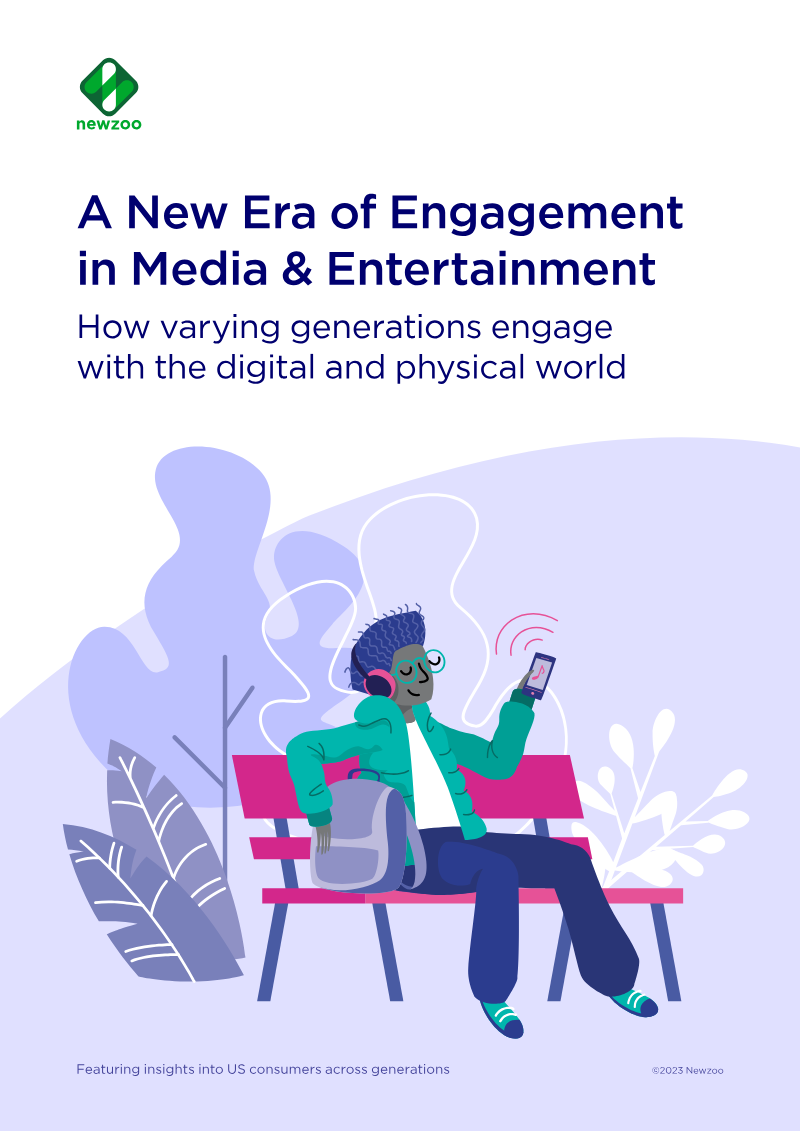
A New Era of Engagement in Media & Entertainment
The media and entertainment landscape is undergoing a fundamental generational shift toward active engagement, characterized by a seamless blend of physical and digital activities. Younger audiences, particularly Gen Z, are leading this transition by prioritizing interactive experiences over passive consumption. For the first time, Gen Z spends more time on video games and virtual worlds, averaging 12.2 hours per week, than on traditional broadcast or subscription television. This demographic also demonstrates a high level of creative participation, with 68% identifying as digital creators and spending three times more hours on user-generated content than Gen X.
Video games have emerged as the primary driver of this engagement, commanding a 72% active participation rate among US consumers. While movies and series still lead in total weekly volume at 17 hours, the gap is narrowing as gaming platforms like Fortnite and Roblox evolve into holistic entertainment hubs. These virtual spaces now serve as venues for socializing, attending concerts, and digital commerce, effectively functioning as early iterations of a persistent metaverse. This shift is further evidenced by the success of transmedia franchises and cross-media intellectual property strategies that bridge the gap between gaming, film, and music.
The future of the industry lies in the convergence of physical and digital worlds through interoperable 3D spaces that foster deeper fandom. Brands are increasingly integrating into these ecosystems through digital collectibles and in-game partnerships to capture the attention of younger consumers. High-profile investments in virtual fashion and NFTs underscore the growing economic value of digital assets within these environments. Ultimately, the industry is moving away from a model of passive viewership toward one defined by persistent, interactive, and creator-driven experiences that unify physical and virtual identities.
- Gen Z now spends an average of 12.2 hours per week on video games and virtual worlds, surpassing the time they dedicate to traditional broadcast or subscription television.
- Video games command a 72% active participation rate among US consumers, narrowing the volume gap with traditional media, which currently averages 17 hours of weekly consumption.
- 68% of Gen Z identify as digital creators, spending three times more hours on user-generated content than Gen X.
- Gaming platforms like Fortnite and Roblox are evolving into holistic entertainment hubs that facilitate socializing, live concerts, and digital commerce.
- Industry growth is increasingly driven by transmedia strategies and the integration of brands into virtual ecosystems through digital collectibles and in-game partnerships.
+1
NewzooJan 2023
Report33 pages
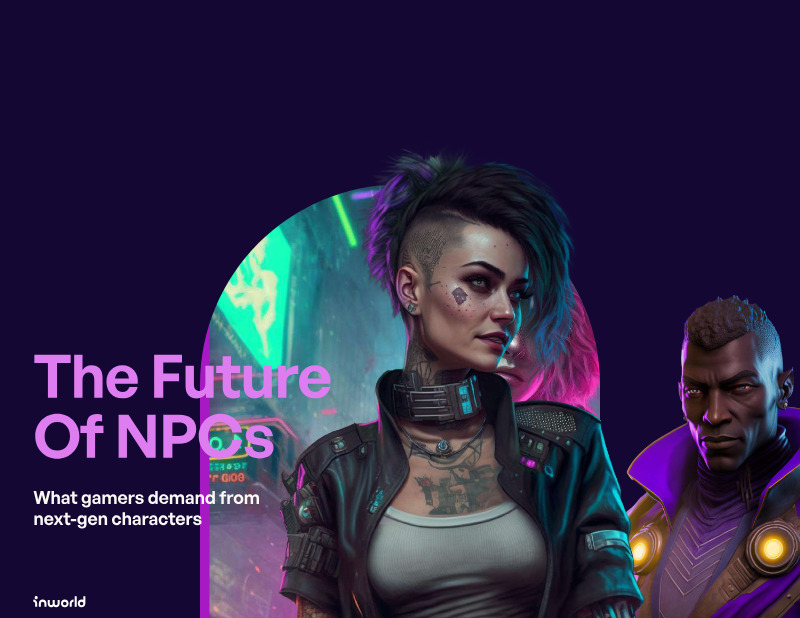
The Future of NPCs
This analysis explores the evolving role of non-playable characters (NPCs) in the video game industry, arguing that while graphical and narrative technologies have advanced, NPC interactivity has remained stagnant. The central thesis posits that integrating advanced AI—specifically large language models and machine learning—is essential for maintaining player immersion and driving commercial growth. By moving away from static dialogue trees toward dynamic, situational awareness, developers can address long-standing player frustrations regarding repetitive behaviors and scripted limitations.
Key findings indicate a significant market demand for sophisticated AI integration. Data shows that 84% of gamers view NPCs as vital to their experience, yet 52% are frustrated by repetitive dialogue. The transition to advanced AI NPCs appears to offer a clear financial incentive: 81% of players expressed a willingness to pay more for games featuring intelligent characters, and 79% stated they would be more likely to purchase a title with such features. Furthermore, 88% of respondents believe advanced AI would improve overall gameplay and immersion, suggesting that these technologies could increase player retention and session length.
The scope of the research focuses on 1,002 U.S.-based gamers aged 16 to 50 who play at least five to eight hours per week across PC, console, mobile, and VR platforms. Methodology involved a 20-minute survey conducted by Bryter Research, which included a demonstration of generative AI NPC capabilities to gauge participant reactions. The findings suggest that while role-playing and sandbox genres stand to benefit most, there is a near-unanimous consensus (99%) among surveyed gamers that advanced AI NPCs represent a positive value add for the industry.
- 99% of gamers view the integration of advanced AI into NPCs as a positive value add for the industry.
- 81% of players are willing to pay more for games that feature intelligent, AI-driven characters.
- 79% of gamers report an increased likelihood to purchase titles that incorporate advanced AI NPC capabilities.
- 52% of players express frustration with current NPC limitations, specifically citing repetitive dialogue as a primary pain point.
- 88% of players believe that advanced AI integration would directly improve overall gameplay and immersion, potentially boosting retention and session length.
+1
Inworld AIJan 2023
Report28 pages
Newzoo’s Global Gamer Study 2023
Gaming engagement in 2023 has evolved into a multidimensional experience that extends far beyond active play to include viewing, socializing, and content creation. Data indicates that 79% of the total online population are game enthusiasts, with over half of all consumers engaging with games in more than one way. This trend is most pronounced among younger generations; 94% of Gen Alpha and 90% of Gen Z are classified as enthusiasts, frequently participating in "other" engagement activities like visiting online gaming communities or attending conventions.
The research highlights a significant shift toward multi-platform play, with 47% of gamers utilizing at least two platforms. A particularly high-value cohort, "tri-platform players" (15% of the player base), averages over 11 hours of play per week and shows a high propensity for spending, with 85% having made in-game purchases in the last six months. While mobile remains the most accessible entry point due to low hardware barriers, console gaming maintains the highest player-to-payer conversion rate, driven by subscriptions and pay-to-play models. Across all platforms, 57% of players are payers, motivated primarily by special offers and the desire to unlock exclusive content or customization options.
Gaming platforms have also emerged as powerful marketing channels. Approximately 50% of players and viewers report discovering new brands through gaming, and players generally hold more positive attitudes toward brands—particularly in the sports, beverage, and technology sectors—compared to non-players.
This analysis is based on Newzoo’s 2023 Global Gamer Study, which utilized Computer-Assisted Web Interviewing (CAWI) between February and May 2023. The methodology involved a representative sample of 74,295 respondents aged 10 to 65 across 36 global markets, covering North America, Europe, MEA, Latin America, and Asia-Pacific.
- Gaming is now a multidimensional ecosystem where 79% of the online population are enthusiasts, with over 50% of consumers engaging through a mix of playing, viewing, socializing, and content creation.
- Younger demographics show the highest engagement levels, with 94% of Gen Alpha and 90% of Gen Z participating in gaming activities beyond just active play.
- Multi-platform gaming is a significant trend, with 47% of gamers using at least two platforms and a high-value 'tri-platform' cohort (15% of players) averaging over 11 hours of play per week.
- Across all platforms, 57% of players are payers, with 85% of tri-platform players having made in-game purchases in the last six months to access exclusive content or customization.
- While mobile remains the most accessible entry point, console gaming maintains the highest player-to-payer conversion rate due to subscription and pay-to-play models.
+1
NewzooJan 2023
Report13 pages
Essential Facts About the U.S. Video Game Industry: Power of Play 2023
The global video game industry, represented by various national trade associations, highlights the multifaceted benefits of gaming beyond mere entertainment. Drawing on a 2023 survey of nearly 13,000 players across 12 countries—including the United States, Brazil, South Korea, and several European nations—the findings demonstrate that video games serve as vital tools for mental health, social connection, and cognitive development. The data is further supported by approximately 15 academic studies that validate player experiences with scientific research on psychological and physiological well-being.
Key findings indicate that while fun remains the primary motivator for play, 71% of global players use games to relieve stress and 62% use them to reduce anxiety. The social dimension of gaming is equally significant; 67% of respondents believe games bring people together, and nearly half have met a significant other or close friend through gaming platforms. Beyond emotional support, players report improvements in creativity, problem-solving, and cognitive skills. Academic research cited in the report corroborates these claims, suggesting that action games can improve reading skills and attention control, while specific titles like Tetris or "exergames" can mitigate trauma symptoms or reduce loneliness in older adults.
The scope of the research is global, covering diverse markets in North America, Europe, Asia, and Oceania. Methodology involved an interactive online survey conducted by AudienceNet, utilizing demographically representative samples of active gamers aged 16 and older who play at least one hour per week. By combining large-scale consumer data with peer-reviewed academic literature, the analysis concludes that video games provide a unique, high-quality environment for social interaction and mental stimulation that is not easily replicated by other forms of media.
- 71% of global players use video games to relieve stress, while 62% utilize them as a tool to reduce anxiety.
- 67% of gamers believe that video games foster social connection, with nearly 50% of players having met a close friend or significant other through gaming platforms.
- The 2023 survey of nearly 13,000 players across 12 countries confirms that fun remains the primary motivator for gaming, followed by significant mental health and social benefits.
- Academic research indicates that action games can improve reading skills and attention control, while specific titles like Tetris or exergames help mitigate trauma symptoms and reduce loneliness in older adults.
- Players consistently report that gaming enhances cognitive development, specifically citing improvements in creativity and problem-solving skills.
Entertainment Software AssociationJan 2023

Report29 pages
Analyzing the Consumer and Market Impacts of Chinese Games Market Policies
China’s gaming market, the largest in the world by revenue and player count, is currently defined by a complex and increasingly restrictive regulatory environment. Primary governmental concerns center on minor protection and the mitigation of gaming addiction, which officials often characterize as a negative social influence. Key mandates include strict playtime limits for users under 18—restricted to one hour on weekend and holiday evenings—and the implementation of mandatory real-name verification systems. While minor spending accounts for less than 2% of revenue for major firms like Tencent and NetEase, these regulations threaten long-term market growth by reducing the future pipeline of engaged players and esports talent.
The administrative process for securing game licenses has become a significant barrier to entry. Following a nine-month freeze on approvals ending in early 2022, the government has adopted a rigorous scoring system that evaluates titles on societal values, cultural propagation, and original design. Foreign entities face additional hurdles, as they must partner with local publishers and navigate an approval process that is often slower than that for domestic titles. Consequently, many developers have shifted focus toward multi-platform releases, as a single license now covers mobile, PC, and console versions, streamlining the path to market.
Despite these restrictions, a robust grey market persists. Players frequently utilize virtual private networks (VPNs) and game accelerators to access international platforms like Steam, while console users often purchase hardware and software from overseas markets to bypass local content limitations. Additionally, some mobile developers utilize ad-based monetization models to operate without formal licenses, though regulators have recently begun cracking down on this practice.
In response to domestic pressures, Chinese gaming giants are aggressively expanding internationally. This strategy involves establishing overseas development studios, acquiring global talent, and launching international publishing labels. By leveraging their expertise in free-to-play mechanics and live operations, Chinese companies are successfully capturing market share in Western and other Asian markets, effectively diversifying their revenue streams away from the unpredictable regulatory landscape at home.
- Chinese gaming giants like Tencent and NetEase are aggressively expanding internationally through studio acquisitions and global publishing labels to mitigate domestic regulatory volatility.
- Government regulations restrict users under 18 to one hour of gaming on weekend and holiday evenings, a policy that threatens the long-term pipeline of players and esports talent despite minor spending accounting for less than 2% of major firms' revenue.
- The game licensing process now utilizes a rigorous scoring system evaluating societal values and cultural propagation, following a nine-month approval freeze that ended in early 2022.
- Foreign developers face significant barriers to entry, requiring local publishing partners and navigating a slower approval process compared to domestic titles.
- Developers are increasingly utilizing multi-platform releases to streamline market entry, as a single license now covers mobile, PC, and console versions.
+1
NewzooNov 2022
Report69 pages
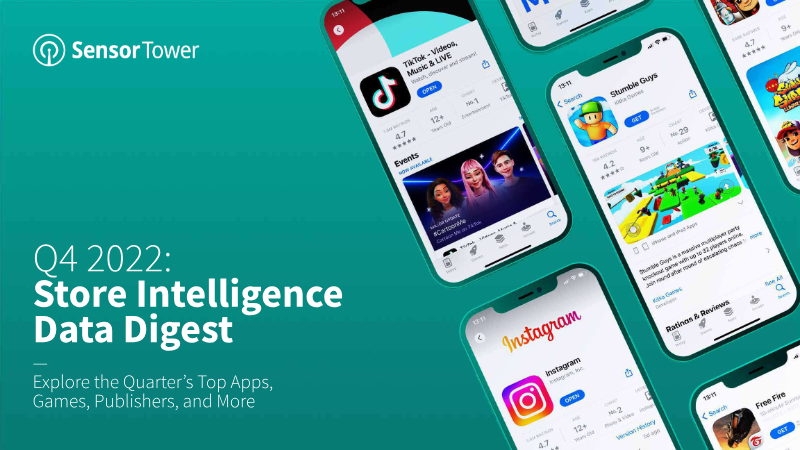
Store Intelligence Data Digest: Q4 2022
The fourth quarter of 2022 delivered a nuanced portrait of the mobile‑app ecosystem, tracking download activity across the world’s two dominant storefronts and highlighting shifts in consumer preference. Global install volume slipped marginally to 35.5 billion, a 0.1 % decline, while the Apple App Store posted a 2.4 % rise to 8.1 billion downloads and Google Play contracted 0.9 % to 27.5 billion. Instagram reclaimed the top‑ranked position worldwide, and Meta’s portfolio occupied half of the top‑ten list, underscoring the company’s entrenched influence. TikTok, CapCut and the newly launched game Stumble Guys emerged as the fastest‑growing titles, signaling continued appetite for short‑form video and casual gaming.
In the Asian market, video‑centric applications remained dominant. TikTok delivered roughly 29 million installs despite a 19 % quarter‑over‑quarter dip, while Instagram led Google Play with more than 116 million downloads, driven largely by India’s sizable user base. The FIFA World Cup spurred a surge in football‑related games, with FIFA Mobile and Soccer Super Star posting 136 % and 112 % QoQ growth respectively. New releases such as Gas (7,102 % QoQ in the United States), Makeover Studio (2,035 % QoQ) and MARVEL SNAP broke into the top‑20, and Ludo King amassed over 36 million Asian downloads.
Meta and Google continued to dominate the download landscape, with Meta recapturing the No. 1 slot on Google Play. Regional spikes, notably Stumble Guys’ peak performance in Indonesia, illustrate how localized trends can amplify global patterns. Overall, the quarter reflects a stable yet evolving market where established platforms retain supremacy while emerging titles and event‑driven spikes reshape the
- Global mobile app installs remained stable at 35.5 billion in Q4 2022, with the Apple App Store growing 2.4% to 8.1 billion downloads while Google Play contracted 0.9% to 27.5 billion.
- Meta maintained significant market influence, with Instagram reclaiming the top-ranked global position and Meta’s portfolio occupying half of the top-ten most downloaded apps.
- The FIFA World Cup drove massive engagement in sports gaming, resulting in quarter-over-quarter growth of 136% for FIFA Mobile and 112% for Soccer Super Star.
- New viral titles saw explosive growth in Q4, led by Gas at 7,102% and Makeover Studio at 2,035% quarter-over-quarter growth in the United States.
- TikTok, CapCut, and the casual game Stumble Guys emerged as the fastest-growing titles, reflecting a sustained consumer appetite for short-form video and casual gaming.
+1
Sensor TowerSept 2022
Report29 pages
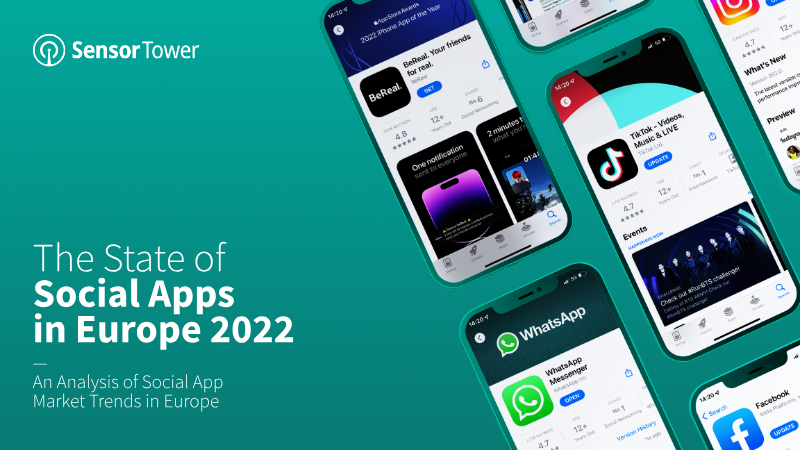
The State of Social Apps in Europe 2022
The European social application market in 2022 was characterized by a significant shift from rapid user acquisition toward aggressive monetization and the rise of niche, authenticity-driven platforms. While overall download volumes stabilized following the 2020 pandemic peak, consumer spending reached a record $830 million in the first ten months of 2022, representing an 86% year-over-year increase. This financial surge was primarily driven by TikTok, which maintained its position as the region's most downloaded app while diversifying its revenue streams through gaming, music, and high-value in-app purchases. Despite this dominance, TikTok’s revenue growth began to decelerate by the third quarter of 2022, signaling a maturing market.
Competitive dynamics within the messaging and social networking subsectors revealed a diversifying landscape. Telegram emerged as a formidable challenger to WhatsApp, nearly closing the download gap and capturing significant market share in Russia. Simultaneously, BeReal disrupted the market by targeting Gen Z with dual-camera, privacy-focused content, forcing established giants like Instagram and TikTok to develop similar features to retain younger demographics. These shifts occurred against a backdrop of lower barriers to entry for new apps, as the download threshold required to reach the top of the App Store rankings declined by 30% compared to 2019.
Despite the emergence of new competitors and shifting consumer preferences, legacy platforms maintained a strong foothold across the continent. Meta-owned applications, particularly Facebook, continued to lead in monthly active users across most European markets, with sustained dominance in Central and Eastern Europe. The industry's evolution reflects a broader transition where established leaders leverage massive existing user bases to pivot toward new monetization strategies, while newcomers focus on hyper-specific engagement models to challenge the status quo in an increasingly fragmented digital ecosystem.
- European social app consumer spending reached $830 million in the first ten months of 2022, marking an 86% year-over-year increase.
- TikTok dominated the European market in 2022 but saw its revenue growth decelerate by the third quarter, indicating a maturing market.
- The barrier to entry for top-tier App Store rankings decreased, with the required download threshold falling 30% compared to 2019.
- Telegram significantly challenged WhatsApp's market share in 2022, nearly closing the download gap between the two platforms.
- BeReal’s focus on authenticity and dual-camera features forced major competitors like Instagram and TikTok to adopt similar functionality to retain Gen Z users.
+1
Sensor TowerSept 2022