Report111 pages
Annual Universe of Positive Gaming Experiences 2024
Stillfront Group’s 2024 fiscal year marks a pivotal transition into a synergy-driven operational phase, characterized by a major geographic reorganization into Europe, North America, and MENA & APAC business areas. This strategic shift aims to drive efficiency and mitigate a 2% organic revenue decline, which resulted in total net revenues of 6,737 MSEK. The financial year was defined by a significant net loss of 7,378 MSEK, primarily driven by a 6.9 billion SEK goodwill impairment in the North American segment due to lower-than-expected growth. Despite these non-cash charges, the group maintained a resilient financial foundation, generating over 1 billion SEK in free cash flow and improving gross margins to 80% through successful direct-to-consumer initiatives.
The group’s portfolio remains focused on free-to-play franchises, with North America and Europe accounting for 71% of player bookings. To reduce dependency on third-party platforms, which still facilitate 54% of revenue, management is prioritizing its internal payment systems and the "Stillops" platform for cost optimization. A comprehensive cost-savings program is underway, targeting up to 250 MSEK in annual savings by late 2025. Leadership has also stabilized under a new CEO and a board that remains fully compliant with the Swedish Code of Corporate Governance, focusing on organic growth and franchise scaling over dividend distributions.
Sustainability and governance have been deeply integrated into the corporate strategy in preparation for the EU’s Corporate Sustainability Reporting Directive. The group achieved Science Based Targets initiative validation, reducing market-based greenhouse gas emissions by 7% and more than doubling its renewable energy share to 37%. While social metrics show a stable workforce with improved turnover rates and high data security standards, challenges remain in gender diversity at the executive level. Executive remuneration is now tied to long-term sustainability targets, including employee satisfaction and data privacy, ensuring that environmental and social governance remains central to the group’s long-term value creation.
- Stillfront Group reported a net loss of 7,378 MSEK for fiscal year 2024, largely driven by a 6.9 billion SEK goodwill impairment in its North American segment.
- Total net revenues reached 6,737 MSEK, reflecting a 2% organic revenue decline that prompted a major geographic reorganization into Europe, North America, and MENA & APAC.
- Despite the net loss, the company generated over 1 billion SEK in free cash flow and improved gross margins to 80% through direct-to-consumer initiatives.
- Management is executing a cost-savings program targeting 250 MSEK in annual savings by late 2025 while prioritizing internal payment systems to reduce reliance on third-party platforms, which currently account for 54% of revenue.
- The company is shifting focus toward organic growth and franchise scaling, with 71% of player bookings currently concentrated in North America and Europe.
+1
StillfrontJan 2024
Report2 pages
The Power of Play: España
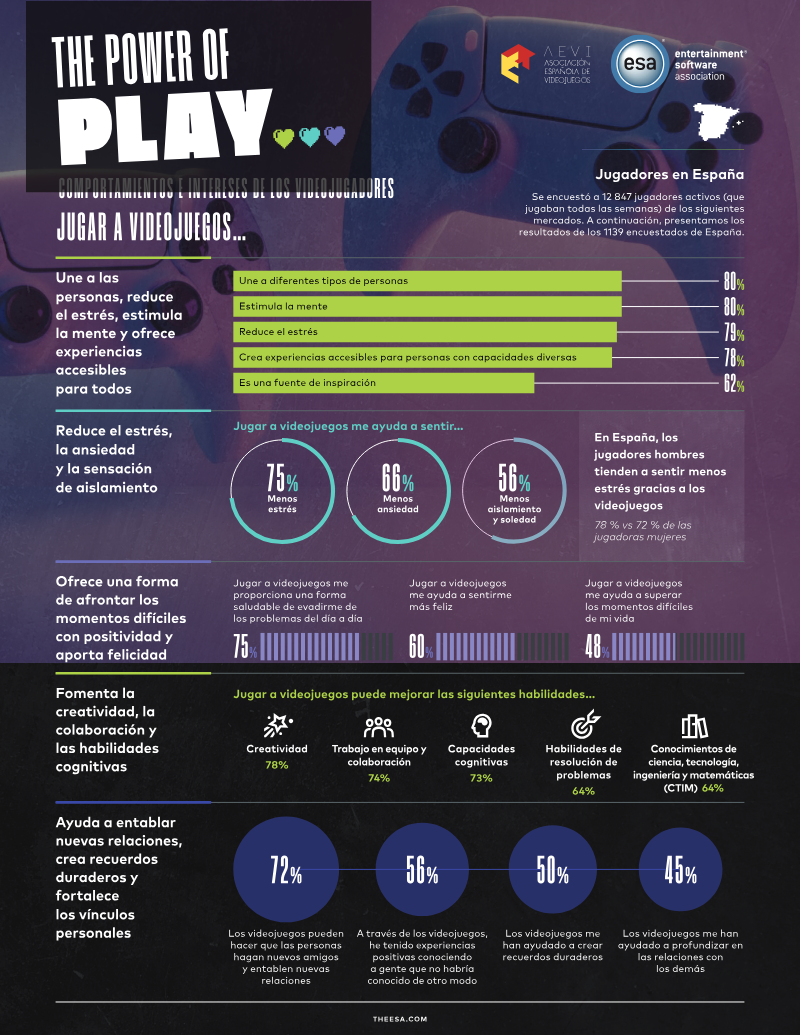
Summary of “The Power of Play: España” (Survey of Spanish Video‑Game Players)
1. Scope & Sample Population surveyed: 12 847 active gamers (play ≥ once a week) across several markets. Spanish subsample: 1 139 respondents (men + women) who answered the questionnaire.
2. Demographic Profile
| Age group (years) | % of Spanish respondents | |-------------------|---------------------------| | 16‑18 | 8 % (men) / 41 % (women) | | 19‑24 | 49 % (men) / 28 % (women) | | 25‑34 | 28 % (men) / 28 % (women) | | 35‑44 | – | | 45‑54 | – | | 55‑64 | – | | 65+ | – |
\The table in the original document mixes gender‑specific percentages; the numbers above reflect the most clearly reported figures.
Gender split (overall): Roughly equal, with a slight male majority in the 19‑24 bracket. Play mode: 8 out of 10 male gamers (≈ 80 %) report playing with other players online. For women, solo play is still the most common, but a sizable minority also play online or in person.
3. Primary Motivations for Playing
| Motivation | % of respondents (overall) | |------------|----------------------------| | Fun / Entertainment | 85 % | | Stress reduction / relaxation | 78 % (men) – 75 % (women) | | Social connection (meeting new people, making friends) | 62 % (men) – 55 % (women) | | Escapism / coping with daily problems | 28 % (men) – 48 % (women) | | Feeling happier / more positive | 75 % (men) – 60 % (women) | | Creating lasting memories | 45 % (men) – 35 % (women) |
Note: The percentages are drawn from multiple overlapping questions (e.g., “Jugar a videojuegos me ayuda a sentir…”, “Reduce el estrés, la ansiedad, el aislamiento”). The highest‑scoring items are fun, stress relief, and social interaction.
4. Perceived Benefits
4.1 Psychological & Emotional Stress & anxiety: 78 % of men and 75 % of women say gaming helps them feel less stressed and less anxious. Isolation: 78 % of men and 72 % of women report a reduction in feelings of loneliness.
- Gaming is primarily used for emotional regulation in Spain, with 78% of men and 75% of women reporting that it effectively reduces stress and anxiety.
- Social connection is a major driver for the Spanish gaming population, with 62% of men and 55% of women citing it as a primary motivation for play.
- Online multiplayer engagement is significantly higher among men, with approximately 80% reporting they play with others online, whereas women show a stronger preference for solo play.
- Gaming serves as a vital tool for combating loneliness, as 78% of men and 72% of women report that playing reduces their feelings of isolation.
- The Spanish gaming demographic is heavily concentrated in younger age brackets, with 49% of male players and 28% of female players falling within the 19–24 age range.
+3
AEVIJan 2024
Report54 pages
Live Streaming Trends Annual Report 2024
The live streaming landscape in 2024 reflects a maturing industry characterized by the stabilization of viewership hours and a strategic shift toward platform diversification. Following the volatile growth cycles of previous years, the current market demonstrates a consolidated ecosystem where Twitch, YouTube Gaming, and Kick represent the primary pillars of audience engagement. While Twitch maintains its dominance in the non-gaming and community-driven sectors, YouTube Gaming has leveraged its integrated VOD ecosystem to capture a larger share of the competitive esports market. Emerging platforms like Kick have successfully disrupted traditional market shares by offering aggressive revenue splits, leading to a more fragmented but competitive talent landscape.
Technological integration serves as a primary driver for growth, with mobile streaming accounting for nearly half of all global viewership. This trend is particularly pronounced in Southeast Asia and Latin America, where mobile-first infrastructure has allowed platforms like TikTok Live to challenge established desktop-centric services. Data indicates that short-form video integration acts as a critical discovery funnel, with creators who utilize cross-platform promotional strategies seeing a twenty percent higher retention rate compared to those relying solely on live broadcasts. Furthermore, the rise of "VTubing" and AI-enhanced avatars has expanded the creator economy, allowing for new forms of interactive entertainment that bypass traditional physical production constraints.
Monetization strategies have evolved beyond simple ad-revenue models to prioritize direct fan support and brand integrations. Virtual gifting and subscription tiers remain the most reliable revenue streams, though sponsored content and affiliate commerce are becoming increasingly sophisticated. The industry is also witnessing a significant push toward "shoppable" live streams, mirroring successful e-commerce trends in Asian markets. As the industry moves forward, the focus remains on enhancing low-latency infrastructure and developing more robust moderation tools to ensure brand safety and community longevity in an increasingly crowded digital marketplace.
- Mobile streaming now accounts for nearly 50% of global viewership, driven by mobile-first infrastructure in Southeast Asia and Latin America.
- Creators using cross-platform promotional strategies that integrate short-form video content achieve a 20% higher audience retention rate than those relying exclusively on live broadcasts.
- Twitch remains the leader in community-driven content, while YouTube Gaming is capturing significant market share in competitive esports through its integrated VOD ecosystem.
- The platform landscape is becoming increasingly fragmented as Kick disrupts traditional market shares by offering aggressive revenue splits to attract talent.
- Monetization is shifting away from simple ad-revenue toward direct fan support, subscription tiers, and the adoption of 'shoppable' live streams for e-commerce.
Stream HatchetJan 2024

Report27 pages
Global Sports Tech Report 2024
I’m ready to craft a comprehensive synthesis, but I’ll need the remaining section summaries to capture the full scope, findings, and conclusions of the Global Sports Tech Report 2024. Could you please provide the rest of the section-by-section summaries?
- The sports tech sector saw record deal-making in 2024, with $86 billion in total deal value across 1,152 deals, including 18 M&A deals over $1 billion and 17 financings over $50 million, and over $6 billion raised by new funds.
- Public markets experienced a rebound in investor confidence, evidenced by a wave of debt refinancings (e.g., Liberty Media, Peloton, Flutter) and follow-on equity rounds (e.g., Liberty Media, Amer Sports), with Canal+ spinning off from Vivendi to list on the LSE.
- Major acquisitions in 2024 included Silverlake's $13 billion acquisition of Endeavor, KKR's $4.75 billion acquisition of Varsity Brands, and Standard General's $4.6 billion acquisition of Bally's Fantasy, Esports & Betting.
- Significant fundraising rounds included ŌURA's $200 million Series D, TOCA Soccer's $100 million Series F, and LOVB's $100 million round, indicating strong investment in health-tracking devices, tech-enabled sports experiences, and new sports leagues.
- Athlete Performance was the top-performing sub-sector with a 52.03% cumulative stock price return, significantly outperforming the S&P 500 (23.31%) and other sports tech categories like Fantasy/Esports/Betting (10.36%) and Digital Media/OTT/Content (5.36%).
+1
Drake Star PartnersJan 2024
Report54 pages
Save Point 2024: Recapping the Year’s Biggest Trends on Live Streaming
The live‑streaming landscape in 2024 was defined by rapid platform diversification and the rise of cross‑platform broadcasting, which together reshaped how audiences consume both gaming and non‑gaming content. Kick surged by 176 % to deliver 1.7 billion hours of viewership, propelled by marquee events such as the 1.4 million‑viewer “Stream Fighters 3.” New entrants from Korea, including Chzzk and SOOP Korea, contributed tens of millions of hours and helped elevate titles like League of Legends and Minecraft to the top of platform charts. Simulcasting became the dominant distribution model, generating concurrent‑viewer gains ranging from 148 % to 491 % for leading creators, while the majority of top streamers now broadcast on multiple services simultaneously.
Co‑streaming emerged as the primary driver of esports engagement, accounting for 44.4 % of all esports viewership and roughly 1.2 billion hours watched. Signature events such as the Twitch Rivals “Hunt & Run” derived nearly all of their watch time from co‑streams, prompting organizers and brands to allocate substantial budgets toward high‑profile personalities who add commentary and community interaction. This collaborative format has become a cornerstone of audience growth and monetisation strategies across the sector.
Creator influence extended beyond traditional gaming, with Kai Cenat’s 185 million‑hour IRL marathon on Kick and IShowSpeed’s 47 million‑hour output highlighting the power of individual personalities. The year also saw a surge in VTuber viewership, exemplified by Usada Pekora, and strong performance from legacy titles such as Dragon’s Dogma 2, which amassed
- Simulcasting has become the industry-standard distribution model, with top creators achieving concurrent-viewer gains between 148% and 491% by broadcasting across multiple platforms simultaneously.
- Co-streaming is now the primary driver of esports engagement, accounting for 44.4% of total viewership and 1.2 billion hours watched.
- Kick experienced significant growth in 2024, surging 176% to reach 1.7 billion hours of viewership, bolstered by major events like the 1.4 million-viewer 'Stream Fighters 3'.
- The rise of new Korean platforms Chzzk and SOOP Korea has successfully driven viewership for major titles like League of Legends and Minecraft.
- Individual creator influence remains a dominant force, evidenced by Kai Cenat’s 185 million-hour IRL marathon on Kick and IShowSpeed’s 47 million-hour output.
+1
Stream HatchetJan 2024

Report47 pages
The Xsolla Report: State of Play (Autumn 2024 Edition)
Mobile gaming is now the dominant segment of the global video‑games market, generating $98.7 billion in 2024, of which roughly two‑thirds ($65 billion) originates from Asian economies. The rapid expansion of smartphones, high‑speed connectivity, and localized content have driven this growth, positioning mobile titles as the primary source of interactive entertainment worldwide.
A pivotal shift is the emergence of direct‑to‑consumer (D2C) web shops as essential revenue channels for mobile developers. Awareness of these storefronts is extremely high, with 81 % of players recognizing them and 77 % having completed at least one purchase. Although only a small “whale” cohort—between two and six percent of the player base—accounts for 95 % of in‑app spending, this segment also delivers superior retention and lifetime value, underscoring its strategic importance for monetisation strategies.
Empirical case studies illustrate the financial upside of integrating D2C web shops. Titles such as Tilting Point’s Warhammer: Chaos and Conquest and Star Trek Timelines achieved revenue lifts of up to 50 % after adding web‑shop functionality, leveraging exclusive content, personalised offers and frictionless payment methods to stimulate repeat purchases. These findings suggest that developers who adopt low‑friction, web‑based commerce can capture a larger share of the whale segment while also expanding overall player spend.
Overall, the data indicate that the mobile gaming ecosystem is maturing into a highly concentrated market where a minority of high‑spending users drive the majority of revenue. Strategic investment in D2C web‑shop infrastructure and targeted offers for whales presents a clear pathway for developers to enhance monetisation, improve player retention, and sustain growth in an increasingly competitive global landscape.
- Mobile gaming is the dominant global segment, generating $98.7 billion in 2024, with $65 billion of that revenue originating from Asian markets.
- A small 'whale' cohort comprising 2% to 6% of the player base accounts for 95% of all in-app spending.
- Direct-to-consumer (D2C) web shops are highly effective, with 81% of players aware of them and 77% having completed at least one purchase.
- Integrating D2C web shops can drive revenue increases of up to 50%, as demonstrated by titles like Tilting Point’s 'Warhammer: Chaos and Conquest' and 'Star Trek Timelines'.
- High-spending 'whale' segments provide superior player retention and lifetime value, making them the primary focus for sustainable monetization strategies.
+1
XsollaJan 2024

Report55 pages
State of Play: Winter 2024
The analysis projects global gaming revenue to reach approximately $205.7 billion by 2026, up from $106.8 billion in 2023, reflecting an average annual growth rate of 3.9 percent. Mobile and cloud gaming are identified as the primary engines of this expansion, with the mobile sector alone expected to generate $111.4 billion in spend and to be bolstered by record app‑download volumes—76.8 billion downloads across iOS and Google Play in the first half of 2023. Consumer spending surged by as much as 60 percent in early 2023 before stabilising within a –10 percent to +20 percent range for the remainder of the year, underscoring the volatility of post‑pandemic demand.
In the United States, women now comprise roughly half of the gaming audience and represent a significant portion of spending power, yet only 26 percent of studios report inclusive hiring practices and 18 percent provide diversity training. This disparity highlights a persistent gap between audience demographics and industry representation, even as iOS‑based role‑playing games alone generated about $1.33 billion in revenue during Q3 2023.
Growth is further driven by financial realignments, the emergence of metaverse, AR/VR, and cloud‑based experiences, and evolving consumer habits that favour direct‑to‑consumer commerce. A mobile‑gaming platform that enables web‑store sales has become a major revenue source, positioning service providers as essential partners for developers seeking funding, marketing, launch, and monetisation across multiple regions. Concurrently, a cultural shift toward greater gender diversity in executive, design, and development roles is expanding the industry’s creative talent pool, reinforcing the sector’s long‑term resilience and innovation potential.
- Global gaming revenue is projected to reach $205.7 billion by 2026, growing at an average annual rate of 3.9 percent from its 2023 baseline of $106.8 billion.
- Mobile gaming serves as the primary industry engine, with the sector expected to generate $111.4 billion in spend following 76.8 billion app downloads across iOS and Google Play in the first half of 2023.
- Consumer spending experienced high volatility in 2023, surging by 60 percent early in the year before stabilizing within a range of –10 percent to +20 percent.
- A significant demographic gap persists as women comprise roughly half of the U.S. gaming audience, yet only 26 percent of studios report inclusive hiring practices and 18 percent provide diversity training.
- Direct-to-consumer commerce and web-store sales on mobile platforms have emerged as critical revenue sources, making service providers essential partners for developer funding, marketing, and monetization.
+2
XsollaJan 2024
Report59 pages
The State of Web3 Gaming 2024
The Web3 gaming market entered a phase of maturation in 2024, marked by a strategic pivot from rapid expansion to ecosystem stability. While new game announcements decreased by 36%, project discontinuations plummeted by 84%, signaling a more resilient landscape. Indie developers currently drive over 90% of new launches, though technical integration remains a significant hurdle, with only 34% of titles successfully incorporating blockchain infrastructure. To combat the inflationary failures of earlier economic models, the industry is shifting toward "Play-to-Airdrop" mechanics to foster more sustainable player engagement.
Geographically, the APAC region and the United States remain the primary hubs for development, collectively hosting the majority of active teams. Genre dominance continues to favor RPG, Casual, and Action titles, which also attract the bulk of stabilized venture capital funding. A notable shift in distribution is underway as Telegram emerged as a powerhouse platform, capturing 21% of new game launches, while the Epic Games Store expanded its Web3 portfolio to nearly 100 titles. This evolution in accessibility is mirrored by a technical migration toward Layer 2 and Layer 3 solutions, which now account for 57% of new game launches.
Infrastructure is becoming increasingly specialized, with 64% of new blockchains designed specifically for gaming. Although the Ethereum Virtual Machine ecosystem maintains its dominance, high-growth frameworks like Arbitrum Orbit and Immutable are driving a record number of migrations as developers seek more efficient environments. Despite a 200% surge in token launches, investors maintain a conservative outlook, prioritizing high-quality game content over foundational infrastructure. This growth occurs against a fragmented regulatory backdrop, where developers must navigate the rigorous enforcement of the U.S. SEC alongside more structured frameworks in Asia and the European Union.
- The Web3 gaming sector is maturing, evidenced by a 36% decrease in new game announcements alongside an 84% reduction in project discontinuations.
- Indie developers now account for over 90% of new launches, though technical integration remains a challenge with only 34% of titles successfully implementing blockchain infrastructure.
- Telegram has emerged as a major distribution channel, capturing 21% of new game launches, while the Epic Games Store has expanded its Web3 portfolio to nearly 100 titles.
- Infrastructure is shifting toward efficiency, with 57% of new games utilizing Layer 2 or Layer 3 solutions and 64% of new blockchains being purpose-built for gaming.
- Despite a 200% surge in token launches, venture capital remains conservative, prioritizing high-quality content in RPG, Casual, and Action genres over foundational infrastructure.
+1
Game7 ResearchJan 2024
Report64 pages
Blockchain Game Alliance: State of the Industry 2024
The blockchain gaming sector is entering a phase of maturation characterized by a strategic pivot from speculative financial models toward high-quality, "fun-first" development. Player asset ownership remains the industry’s primary value proposition, cited by over 71% of professionals for four consecutive years. This shift is bolstered by the entry of traditional gaming giants such as Sony and Ubisoft, which provides necessary credibility to a field where 66.3% of practitioners still identify public misconceptions of scams as a major hurdle. While the industry faces a 42.7% decline in new hiring due to market uncertainty, professional sentiment remains resilient, with over 82% of workers intending to remain in the sector long-term.
Geographically, the industry is expanding its footprint into the Middle East and South America, while Asia and Latin America lead in the adoption of player-reward mechanics. Despite this global reach, the sector continues to struggle with demographic challenges, including a lack of gender diversity and a decline in younger talent entering the workforce. Operationally, the most significant barriers to mainstream adoption are onboarding complexities and poor user experience, though the severity of these concerns has decreased significantly since 2023. Companies currently identify lack of funding and high user acquisition costs as their most pressing internal obstacles.
Looking toward 2025, the industry is moving toward "invisible" Web3 infrastructure to prioritize seamless gameplay over technical complexity. Emerging trends include the rise of fully onchain games, the integration of artificial intelligence for personalized experiences, and the use of social platforms like Telegram to simplify user acquisition. As environmental concerns continue to fade, the focus has shifted toward sustainable "play-and-earn" economies and the consolidation of fragmented infrastructure. This evolution suggests a transition toward a more integrated gaming ecosystem where blockchain serves as a foundational layer for digital property rights rather than a standalone marketing feature.
- The blockchain gaming industry is shifting from speculative models to 'fun-first' development, with 71% of professionals identifying player asset ownership as the primary value proposition.
- Mainstream adoption is being driven by the entry of traditional giants like Sony and Ubisoft, though 66.3% of practitioners still cite public perceptions of scams as a significant barrier.
- Operational barriers like onboarding complexity and poor user experience remain the top hurdles to mainstream growth, despite a notable decrease in the severity of these concerns since 2023.
- Industry hiring has declined by 42.7% due to market uncertainty, yet 82% of current workers intend to remain in the sector long-term.
- Companies are currently prioritizing funding and high user acquisition costs as their most pressing internal obstacles.
+1
Blockchain Game AllianceJan 2024
Report44 pages
State of Performance Marketing for Videogames
The 2024 performance marketing landscape for PC and console gaming is defined by a strategic shift toward high-engagement platforms and the integration of first-party data to combat rising acquisition costs. Meta and YouTube remain the dominant forces in media planning, appearing in 75% and 44% of campaigns respectively, while Twitch has emerged as the conversion leader with a 12% success rate. This recovery period is marked by a rebound in free-to-play retention to 46% and a significant evolution in platform utility. Notably, Reddit has transformed into a high-value retention hub following an overhaul of its advertising infrastructure, and Twitter (X) continues to serve as the primary conduit for reaching the PlayStation demographic.
The industry is increasingly moving toward automation and data-driven targeting to optimize creative assets and audience reach. AI-driven tools such as Google’s Performance Max and TikTok’s Performance Automation are becoming standard, while the utilization of first-party data has proven critical, yielding conversion lifts of up to 63% in Meta-based campaigns. These technological advancements are complemented by the continued growth of influencer marketing, which currently outperforms traditional ad networks with a 4.25% conversion rate and a robust 38.95% Day 7 retention rate.
Despite the effectiveness of creator-led activations, the sector faces logistical hurdles regarding contracting, key distribution, and return-on-investment analysis. To mitigate these complexities, marketers are adopting sophisticated attribution tools to unify performance metrics across paid media and influencer channels. This holistic approach allows for a more precise understanding of player behavior and engagement across the global PC and console segments, ensuring that marketing spend is directed toward the most authentic and high-retention audience segments.
- First-party data integration is essential for efficiency, yielding conversion lifts of up to 63% in Meta-based campaigns.
- Influencer marketing currently outperforms traditional ad networks, achieving a 4.25% conversion rate and a 38.95% Day 7 retention rate.
- Meta and YouTube remain the primary media planning channels, utilized in 75% and 44% of campaigns respectively, while Twitch leads in conversion efficiency at 12%.
- Free-to-play retention has rebounded to 46% as the industry shifts toward AI-driven automation tools like Google’s Performance Max and TikTok’s Performance Automation.
- Reddit has evolved into a high-value retention hub following advertising infrastructure updates, while Twitter (X) remains the primary channel for reaching the PlayStation demographic.
+2
GamesightJan 2024

Report29 pages
Mobile Ad Creative Index 2024
The Mobile Ad Creative Index provides a comprehensive analysis of performance benchmarks and emerging trends within the mobile advertising ecosystem. Covering the period from January 2023 to January 2024, the data is derived from a massive sample of 602 billion impressions, 49.4 billion clicks, and 144 million installs across the gaming, e-commerce, finance, and entertainment sectors. The primary thesis asserts that while traditional formats like banners remain cost-effective for driving specific actions, high-engagement formats such as video, playables, and interstitials are significantly more effective at converting impressions into installs.
Key findings highlight a stark contrast in performance across formats. In gaming, video and playable ads are over 20 times more likely to result in an install than banners, while interstitial ads in the finance sector are 18 times more likely to convert. However, cost-per-install (CPI) varies greatly by platform; for instance, native ads are the most cost-effective on iOS for gaming, whereas playables offer the best value on Android. In e-commerce, native and banner ads excel at driving post-install purchases, achieving install-to-action rates exceeding 30%.
The analysis identifies several pivotal trends for 2024, most notably the integration of generative AI to enhance the speed and scale of creative production, such as automated localization and voice-overs. User-generated content (UGC) remains a dominant force, with optimized UGC ads showing 20% lower CPIs than standard video. Furthermore, there is a measurable shift toward longer, more immersive ad experiences. Spend on long-form video grew by 245% year-over-year, and "triple-page" ads—combining video, playables, and end cards—saw a 355% increase in spend, suggesting that users increasingly prefer transparent, high-quality engagement over short, deceptive creative tactics.
- High-engagement formats like video and playables outperform banners by 20 times in gaming installs, while finance sector interstitials are 18 times more effective at conversion.
- Long-form video ad spend grew by 245% year-over-year, and 'triple-page' ads combining video, playables, and end cards saw a 355% increase in investment.
- Optimized user-generated content (UGC) ads achieve a 20% lower cost-per-install (CPI) compared to standard video creative.
- Native ads are the most cost-effective format for gaming on iOS, whereas playables provide the best value for gaming on Android.
- In the e-commerce sector, native and banner ads remain highly effective for driving post-install activity, maintaining install-to-action rates above 30%.
+3
LiftoffJan 2024
Report48 pages
Mobile App Trends: 2024 Edition
The mobile app industry demonstrated significant resilience throughout 2023, characterized by a global advertising spend of $362 billion and a late-year surge in installations. While the landscape faced challenges such as rising acquisition costs and evolving privacy regulations, the fintech and e-commerce sectors emerged as primary growth engines. Fintech experienced a 42% increase in installs and a 118% surge in in-app revenue, while e-commerce saw a 43% year-over-year rise in installs alongside a 34% increase in revenue. These sectors successfully optimized their acquisition strategies, with banking eCPIs falling from $2.33 to $1.37, allowing marketers to achieve rapid returns on investment within the first week of user acquisition.
The gaming sector navigated a more complex trajectory, ending the year with a 2% annual decline in installs despite a notable recovery in the fourth quarter. This rebound was driven by a 7% year-over-year growth in installs and the emergence of the hybrid casual genre. Although overall gaming sessions dipped, specific subverticals like racing and simulation saw dramatic install spikes of 61% and 53%, respectively. Global gaming stickiness remained stable at 20%, and high-engagement genres like RPG and adventure continued to command strong lifetime value, even as broader retention rates across the mobile ecosystem faced downward pressure.
Future industry success depends on the strategic integration of artificial intelligence and predictive analytics to enhance personalization and automate complex workflows. To achieve sustained growth in 2024 and beyond, developers must diversify their media mixes by expanding into emerging channels like Connected TV and adopting holistic measurement frameworks. By combining incrementality testing with media mix modeling, stakeholders can better navigate the shift toward privacy-centric marketing while capitalizing on the high-potential returns offered by the global mobile marketplace.
- Fintech and e-commerce drove significant market growth in 2023, with fintech seeing a 42% increase in installs and a 118% surge in in-app revenue.
- E-commerce performance remained strong with a 43% year-over-year rise in installs and a 34% increase in revenue.
- Banking sector efficiency improved significantly as eCPIs dropped from $2.33 to $1.37, enabling faster return on investment for marketers.
- The gaming sector experienced a 2% annual decline in total installs, though it saw a Q4 recovery led by a 7% year-over-year growth in installs and the rise of the hybrid casual genre.
- Specific gaming subverticals outperformed the broader market, with racing and simulation genres recording install spikes of 61% and 53%, respectively.
+2
AdjustJan 2024

Report46 pages
The State of Gaming 2024
The global mobile gaming market underwent a significant correction in 2023, characterized by a 10% decline in downloads and a 2% dip in overall revenue. This downturn was primarily driven by escalating user acquisition costs and a post-pandemic stabilization of consumer habits. A distinct shift in player preference emerged as mid-core revenue fell by 9%, while casual and hybrid-casual segments grew by 8% and 30%, respectively. Despite these macro challenges, breakout successes like Monopoly Go! and Royal Match proved that innovative monetization and robust live operations can still yield massive returns in a tightening market.
Marketing strategies have evolved to prioritize high-impact collaborations and mobile advertising, which now commands 67% of global gaming ad spend. The industry is seeing a move toward gender parity in mid-core gaming, while platform-specific engagement has become more specialized, with TikTok attracting core gamers and Facebook remaining a stronghold for the female-skewing casual demographic. To mitigate rising costs, developers are increasingly leveraging intellectual property and transmedia expansions to drive organic discovery and long-term player retention.
Geographically, the industry focus is shifting toward emerging markets such as Latin America and the Middle East, where lower costs per install in countries like Brazil and Saudi Arabia offer new avenues for growth. While external subscription models, such as Netflix Games, experienced a 194% surge in downloads, they currently represent a small and largely unprofitable portion of the total ecosystem. Consequently, the prevailing industry strategy emphasizes the optimization of existing titles through aggressive live operations and brand partnerships rather than relying solely on new user acquisition in saturated Western markets.
- The global mobile gaming market contracted in 2023, with a 10% decline in downloads and a 2% dip in revenue due to rising user acquisition costs and post-pandemic habit stabilization.
- Market segment preferences shifted significantly in 2023, as mid-core revenue fell by 9% while casual and hybrid-casual segments grew by 8% and 30%, respectively.
- Mobile advertising now accounts for 67% of global gaming ad spend, with marketing strategies increasingly relying on high-impact collaborations and transmedia IP to drive organic discovery.
- Developers are pivoting toward emerging markets like Brazil and Saudi Arabia to capitalize on lower costs per install compared to saturated Western regions.
- While Netflix Games saw a 194% surge in downloads, subscription models remain a small and largely unprofitable segment of the overall gaming ecosystem.
+1
Sensor TowerJan 2024
Report13 pages
Rise of the Co-Op Games
Cooperative video games have emerged as a dominant force on the Steam platform, significantly overperforming relative to their total volume of releases. While only six percent of games launched in 2023 featured co-op mechanics, these titles accounted for thirty-six percent of all units sold. This trend has accelerated sharply in 2024, driven by massive breakout hits like Palworld and Helldivers 2. Market data indicates that Palworld alone represented nearly half of the forty million co-op units sold in the first half of 2024, illustrating a high concentration of success among top-tier titles.
The commercial advantage of cooperative play extends across the entire industry spectrum, from major publishers to small independent studios. A typical co-op game sells approximately 40,000 units on Steam, compared to just 5,000 units for non-cooperative titles. Even the bottom quartile of co-op games performs twice as well as their single-player counterparts. For larger publishers, the segment offers substantial scale, evidenced by over one hundred co-op titles surpassing five million lifetime unit sales. This consistent outperformance suggests that social mechanics provide a higher floor and a significantly higher ceiling for commercial viability.
The success of the genre is rooted in organic marketing and player psychology. Cooperative design naturally encourages word-of-mouth promotion, as players actively recruit friends to join their sessions. These games are characterized by high replayability and "memorable" moments that translate well to social media and live-streaming platforms. By creating shareable and streamable content, co-op games generate natural hype cycles that reduce the reliance on traditional advertising. Following a brief normalization period after the initial pandemic-driven surge, the current market trajectory confirms that social, team-based dynamics remain a primary driver of player engagement and revenue growth in the PC gaming sector.
- Cooperative games significantly outperform the market, accounting for 36% of all units sold on Steam in 2023 despite representing only 6% of total releases.
- The average co-op game on Steam sells 40,000 units, which is eight times the 5,000-unit average achieved by non-cooperative titles.
- Market success is highly concentrated, with Palworld alone accounting for nearly half of the 40 million co-op units sold during the first half of 2024.
- Cooperative mechanics provide a higher commercial floor, as even the bottom quartile of co-op games performs twice as well as their single-player counterparts.
- Large-scale commercial viability is proven by the fact that over 100 co-op titles have surpassed five million lifetime unit sales.
+1
Video Game InsightsJan 2024
Report46 pages
The PC & Console Market Gaming Report 2024
The PC and console gaming market reached $93.5 billion in 2023, marking a 2.6% increase even as the industry enters a period of decelerating growth and intensifying competition. While total revenue remains substantial, average quarterly playtime has plummeted by 26% since 2021. This contraction is exacerbated by a heavy concentration of engagement within a small selection of "evergreen" titles and established platforms like Fortnite and Roblox. These games, which are over seven years old on average, now command more than half of all total playtime, creating a challenging environment for new market entrants.
Market dominance is increasingly consolidated among a shrinking group of approximately 30 publishers who control 80% of all monthly active users. In 2023, games six years or older accounted for over 60% of total playtime. Although new releases captured 23% of the market's attention, the vast majority of that share was claimed by annual franchise sequels. This leaves non-annual, original titles to compete for a mere 8% of total playtime, illustrating a significant barrier to entry for innovative or independent intellectual properties in the current landscape.
To navigate this stagnation, the industry is pivoting toward transmedia adaptations and cross-platform expansion. Film and television tie-ins have proven highly effective, driving an average 35% increase in monthly active users for associated titles. Furthermore, expanding established IPs to mobile and cloud platforms is essential for diversifying player demographics and reaching emerging markets in Latin America, Africa, and Southern Asia. Future success depends on capturing multiplayer-first audiences and leveraging cloud technology to bypass traditional hardware barriers, allowing publishers to tap into rapidly growing global player bases.
- The PC and console market reached $93.5 billion in 2023, reflecting a 2.6% growth rate despite a 26% decline in average quarterly playtime since 2021.
- Market dominance is highly consolidated, with approximately 30 publishers controlling 80% of all monthly active users.
- Games six years or older command over 60% of total playtime, while new, non-annual original titles struggle to capture more than 8% of player attention.
- Evergreen titles like Fortnite and Roblox, which average over seven years in age, now account for more than half of all total playtime.
- Transmedia adaptations are a critical growth lever, as film and television tie-ins drive an average 35% increase in monthly active users for associated titles.
+1
NewzooJan 2024

Report10 pages
Toxicity and the Bottom Line: The Impact of Hate and Harassment on Player Retention and In-Game Purchases
Toxicity and harassment in online gaming environments significantly impact player retention and monetization, creating a direct financial incentive for studios to prioritize trust and safety. Research based on a representative survey of 2,408 active gamers across various age groups, genders, and ethnicities indicates that three out of four players consider safety from hate and harassment a high priority. Despite this, approximately 10% of players report feeling actively unsafe, with this figure rising to 23% among bisexual players and 18% among Asian players, highlighting the disproportionate impact on marginalized communities.
The data establishes a clear link between toxic behavior and lost revenue. Approximately 19% of players report spending less money in gaming communities to avoid harassment, while 21% have reduced their overall playtime. Engagement is further eroded by defensive player behaviors: 31% of participants have abandoned matches already in progress, 27% have left lobbies before a match began, and 44% have disabled voice chat entirely to mitigate exposure to abuse. These actions not only decrease individual player lifetime value but also degrade the experience for the broader player base.
Demographic analysis reveals that younger players, particularly those aged 18 to 24, are the most sensitive to these issues. This cohort is the most likely to feel unsafe and the most prone to disengaging or reducing spending in response to toxicity. Because these players represent a core demographic with long-term growth potential, their tendency to "vote with their wallets" suggests that safer gaming environments are fundamentally more profitable. The findings conclude that traditional moderation is currently insufficient, necessitating more robust community guidelines and integrated safety tools to protect both players and the industry's bottom line.
- Toxicity directly suppresses revenue, as 19% of players spend less money and 21% reduce their overall playtime to avoid harassment.
- Safety is a critical player priority, with 75% of the 2,408 surveyed gamers identifying protection from hate and harassment as a high priority.
- Harassment causes significant engagement loss, with 44% of players disabling voice chat, 31% abandoning active matches, and 27% leaving lobbies to avoid abuse.
- Marginalized groups face disproportionate risks, with 23% of bisexual players and 18% of Asian players reporting that they feel actively unsafe in gaming environments.
- The 18-to-24 age demographic is the most sensitive to toxicity, showing the highest propensity to disengage or reduce spending, which threatens long-term industry growth.
+2
Take ThisJan 2024

Report27 pages
Games Market Trends 2024
This analysis examines the 2024 global games market, forecasting a period of recovery and strategic restructuring following the post-pandemic market correction. The primary thesis suggests that while the industry is returning to growth, it faces a "lean year" characterized by cautious investment, workforce reductions, and a pivot away from the oversaturated live-service model toward premium, finite gaming experiences.
Key findings indicate that the market began recovering in 2023 and is projected to maintain a positive Compound Annual Growth Rate (CAGR) of +1.3% through 2026. Despite this growth, the report highlights a significant shift in business strategies. Developers are increasingly favoring established Intellectual Property (IP) and sequels to mitigate risk. Furthermore, the "gold rush" for live-service titles is cooling as 19 games currently command 60% of total playtime, leading companies to return to premium releases. Other major trends include the slowing growth of multi-game subscriptions, the expansion of mobile developers into the PC space to combat rising user acquisition costs, and the anticipated launch of next-generation Nintendo hardware.
The scope of this research is global, covering mobile, PC, and console segments with revenue and engagement forecasting extending from 2021 through 2026. The methodology combines internal data analysis from the Newzoo platform with a qualitative survey of gaming executives and experts from organizations such as Ubisoft, Savvy Games Group, and Iron Galaxy Studios.
Technological and platform shifts also define the 2024 outlook. Generative AI is expected to improve production efficiencies and NPC depth, though it is not predicted to impact game production at scale within the current year. Additionally, the report anticipates increased platform fluidity, specifically noting Microsoft’s intent to launch an Xbox mobile store on Android to challenge existing app store duopolies.
- The global games market is entering a recovery phase with a projected Compound Annual Growth Rate (CAGR) of +1.3% through 2026.
- The live-service market is consolidating, with just 19 titles currently capturing 60% of total player engagement, prompting a strategic shift back toward premium, finite gaming experiences.
- Developers are increasingly mitigating financial risk by prioritizing established Intellectual Property and sequels over new, unproven concepts.
- Mobile developers are expanding into the PC market to offset rising user acquisition costs, while Microsoft is preparing to challenge mobile app store duopolies with a dedicated Xbox store for Android.
- Growth in multi-game subscription services is slowing, signaling a plateau in the adoption of these platforms.
+1
NewzooJan 2024
Report37 pages
State of the Game Industry 2024
The global game industry entered 2024 in a state of profound volatility, defined by a painful market correction following post-pandemic overexpansion. This period of instability is marked by widespread layoffs affecting one-third of the workforce and a surge in studio closures linked to rapid corporate conglomeration. While North America remains the primary hub for development and PC continues to be the dominant platform, the workforce is increasingly preoccupied with job security and the ethical implications of emerging technologies. Generative AI has seen rapid adoption, with nearly half of developers utilizing these tools, yet 84% express deep concern regarding copyright infringement and the potential for further job displacement.
Labor dynamics are shifting as developers react to economic pressures and perceived corporate mismanagement. Support for unionization has climbed to 57%, with particularly high enthusiasm among younger professionals aged 18 to 24 who are grappling with inflation and precarious employment. This desire for collective bargaining coincides with a growing rejection of mandatory return-to-office policies and a decline in confidence regarding corporate diversity and sustainability initiatives. Furthermore, the technical landscape is fracturing; significant dissatisfaction with Unity’s recent policy changes has led one-third of developers to consider switching engines, often favoring open-source alternatives like Godot.
Business models remain centered on digital premium downloads, favored by 51% of the industry, even as marketing strategies face disruption due to overwhelming negative sentiment toward major social media platforms like Twitter/X. Despite the internal turmoil, there is a measurable increase in the implementation of accessibility features, which now appear in nearly half of all projects. However, the industry’s demographic makeup remains largely stagnant, continuing to be predominantly White and male. Ultimately, the current landscape reflects a workforce caught between the necessity of financial stability through consolidation and a growing demand for systemic reform to address ethical, technical, and labor-related grievances.
- The industry is undergoing a severe market correction characterized by widespread layoffs affecting one-third of the global workforce and a surge in studio closures.
- Support for unionization has reached 57%, driven largely by younger professionals (ages 18–24) facing economic instability and dissatisfaction with corporate management.
- While 49% of developers have adopted generative AI, 84% of the workforce reports significant concerns regarding copyright infringement and potential job displacement.
- Technical infrastructure is shifting, with one-third of developers considering engine migrations—often toward open-source options like Godot—following recent policy changes at Unity.
- Digital premium downloads remain the primary business model for 51% of the industry, even as marketing strategies struggle with declining sentiment toward major social media platforms.
+3
Game Developers ConferenceJan 2024
Report33 pages
2024 State of Game Technology Report
The global game technology landscape has reached a critical inflection point in 2024, characterized by the widespread expansion of game engines into non-gaming sectors such as automotive, healthcare, and media. Approximately 50% of developers now utilize these engines for cross-industry applications, with Unreal Engine maintaining a dominant 63% market share, particularly within media and entertainment. Despite this growth, the industry contends with significant structural challenges, including acute funding shortages, personnel deficits, and the technical complexities of managing massive data sets across distributed teams. To mitigate these hurdles, organizations are prioritizing toolset consolidation and robust version control systems, with Perforce Helix Core and Git-based platforms serving as the primary infrastructure for modern development pipelines.
The technical ecosystem remains highly fragmented but is increasingly defined by a shift toward automation and cloud integration. Microsoft Visual Studio and Jenkins continue to lead in the AAA space, though modern alternatives like JetBrains Rider and GitHub Actions are gaining substantial traction. Cloud-based development has become a standard practice for nearly half of the industry, with Amazon Web Services emerging as the preferred provider. Furthermore, generative AI has seen rapid institutional integration, with 65% of organizations adopting the technology to streamline workflows. This technological evolution coincides with a shift in labor dynamics; following widespread industry layoffs, employers now prioritize cross-functional adaptability over narrow specialization, while the workforce increasingly values direct access to leadership and mental health support.
Geographically and industrially broad, these findings reflect a transition toward more agile, cloud-native development environments that must balance aggressive timelines against resource constraints. The move toward indie development and the diversification of game engine utility suggest that the boundaries between traditional gaming and broader digital creation are permanently blurring. Success in this environment depends on the ability to manage increasingly large file sizes and complex collaboration requirements through integrated CI/CD and version control strategies.
- Game engines are expanding beyond gaming, with 50% of developers now applying them to sectors like automotive, healthcare, and media, while Unreal Engine holds a 63% market share.
- Generative AI has reached 65% institutional adoption as organizations integrate the technology to streamline development workflows.
- Cloud-based development is now standard for nearly 50% of the industry, with Amazon Web Services serving as the primary infrastructure provider.
- To combat technical complexities and data management challenges, firms are prioritizing toolset consolidation and robust version control systems like Perforce Helix Core and Git-based platforms.
- Industry labor dynamics have shifted toward cross-functional adaptability following recent layoffs, with employers prioritizing versatile skill sets over narrow specialization.
+1
PerforceJan 2024

Report12 pages
Inside Gaming: It's Personal! 2024
The 2024 Inside Gaming analysis reveals that video games have evolved into a primary medium for identity formation and self-expression, surpassing traditional motivations like competition or time-killing. Based on a global survey of 5,000 entertainment and gaming consumers alongside proprietary first-party data, the findings indicate that 46% of players now prioritize creation and imagination as their primary reason for gaming, marking a 10% year-over-year increase. This shift is driving significant engagement, as players who view gaming as a platform for authenticity are 30% more likely to increase their playtime compared to previous years.
The data highlights a profound psychological disconnect between players' digital and physical lives, with 80% of respondents stating their gaming personality differs from their real-life persona. Furthermore, 64% of gamers find it easier to be themselves with a controller in hand than in person. This desire for authenticity is reflected in gameplay preferences, where 76% of players utilize character personalization and 48% focus on unique gamertags to express themselves. Games that facilitate this expression through in-game customization, vast open worlds, and constant updates see 60% higher engagement than industry norms, a trend exemplified by titles such as Roblox, Fortnite, and The Sims.
There is a significant commercial opportunity for brands to bridge the gap between virtual and physical identities. Nearly half of all players express a desire for their real-life presence to mirror their gaming presence, particularly regarding physical appearance and skill sets. This sentiment is especially strong among marginalized and younger demographics, including women, non-binary individuals, and multicultural players. Consequently, 72% of consumers report they would view brands more favorably if those companies helped them translate their gaming-inspired self-expression into the real world through products, skills, or lifestyle alignments.
- 46% of gamers now prioritize creation and imagination as their primary motivation for playing, representing a 10% year-over-year increase.
- Games that facilitate self-expression through customization, open worlds, and constant updates—such as Roblox, Fortnite, and The Sims—achieve 60% higher engagement than industry norms.
- 72% of consumers report they would view brands more favorably if those companies helped them translate their gaming-inspired self-expression into real-world products, skills, or lifestyle alignments.
- 64% of gamers find it easier to be themselves while gaming than in person, and 80% report that their gaming personality differs from their real-life persona.
- Players who view gaming as a platform for authenticity are 30% more likely to increase their total playtime compared to previous years.
+1
FandomJan 2024