Financial compensation is the primary driver of professional mobility in the gaming industry, largely fueled by the global cost-of-living crisis.
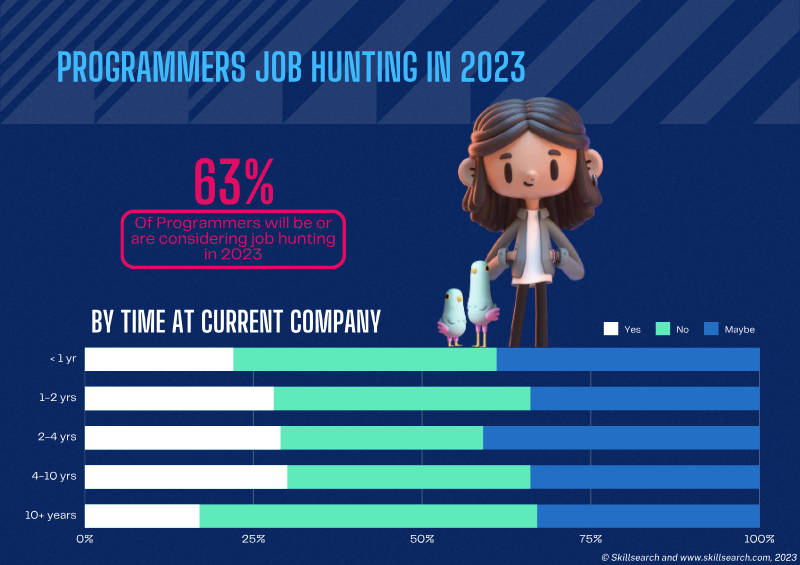
See it on page 2High workforce volatility persists, with programmers and artists showing the highest propensity to actively seek new employment opportunities throughout the year.
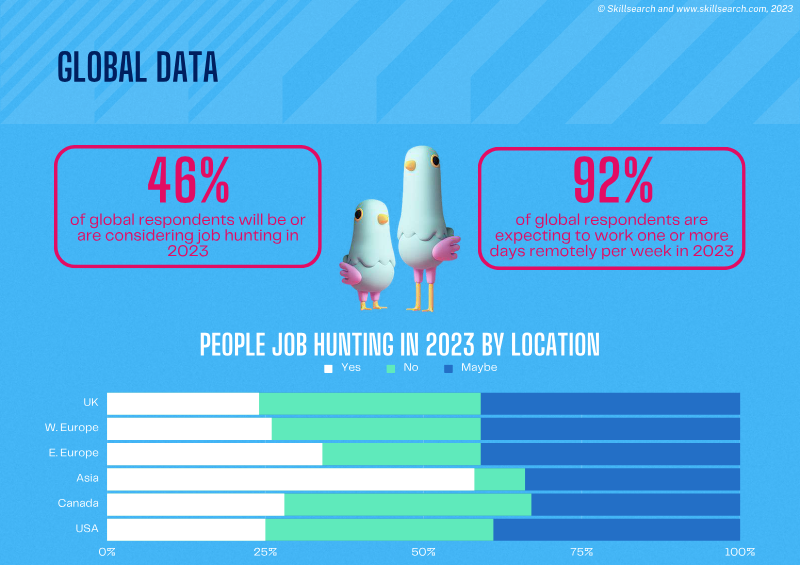
See it on page 50Remote work has shifted from a temporary accommodation to a baseline industry requirement, with the majority of professionals now expecting at least one day of remote work per week.
See it on page 45Project completion cycles are critical retention inflection points, as employees frequently initiate job searches immediately after finishing current assignments.
See it on page 2A significant disconnect exists between employee needs and employer support regarding mental health, neurodiversity accommodations, and financial well-being.
See it on page 14While salary is the dominant factor for mobility, flexible working arrangements, private healthcare, and robust pension schemes are essential for long-term talent retention.
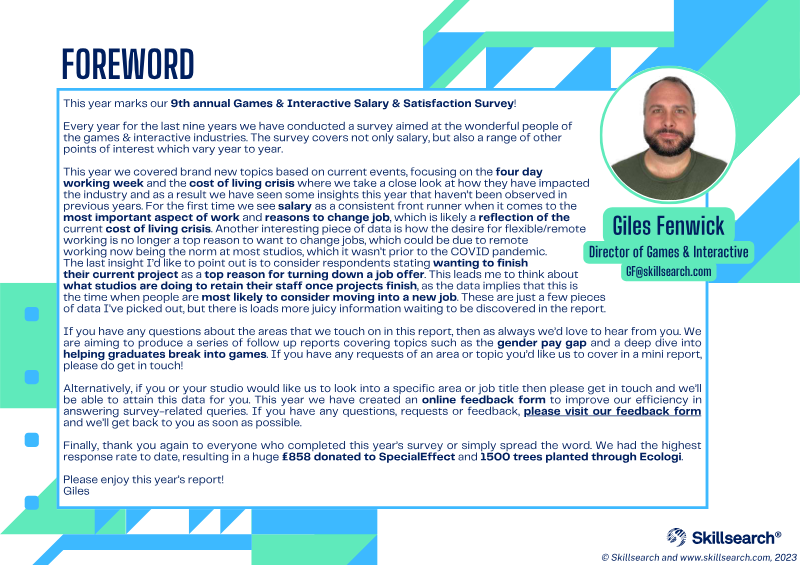
See it on page 30The 2023 Games & Interactive Salary & Satisfaction Survey establishes that financial compensation has emerged as the primary catalyst for professional mobility within the global gaming industry. Driven largely by the prevailing cost of living crisis, employees are increasingly prioritizing salary increases when evaluating career moves. While monetary remuneration remains the dominant factor, non-monetary benefits such as flexible working arrangements, private healthcare, and robust pension schemes are essential for talent retention. The data indicates a high degree of industry volatility, with a significant portion of the workforce—particularly among programmers and artists—actively considering new employment opportunities throughout the year.
Geographically focused on the UK, Europe, and broader global markets, the findings underscore a fundamental shift in workplace expectations. Remote work has transitioned from a temporary accommodation to a standard requirement, with the vast majority of professionals now expecting at least one day of remote work per week. Despite this, a disconnect persists between employee needs and employer support. Many workers report inadequate institutional backing regarding mental health, neurodiversity accommodations, and financial pressures. Furthermore, project completion cycles serve as a major inflection point for retention, as employees frequently initiate job searches immediately following the conclusion of their current assignments.
Ultimately, the industry faces a complex retention landscape where high mobility is tempered by a desire for stability and work-life balance. Although a large percentage of the workforce is open to changing employers, many candidates decline offers that fail to meet specific salary thresholds or project-based interests. To remain competitive, organizations must reconcile the demand for flexible, remote-first environments with the necessity of addressing the financial and psychological well-being of their staff, particularly as project-based turnover continues to threaten long-term team cohesion.
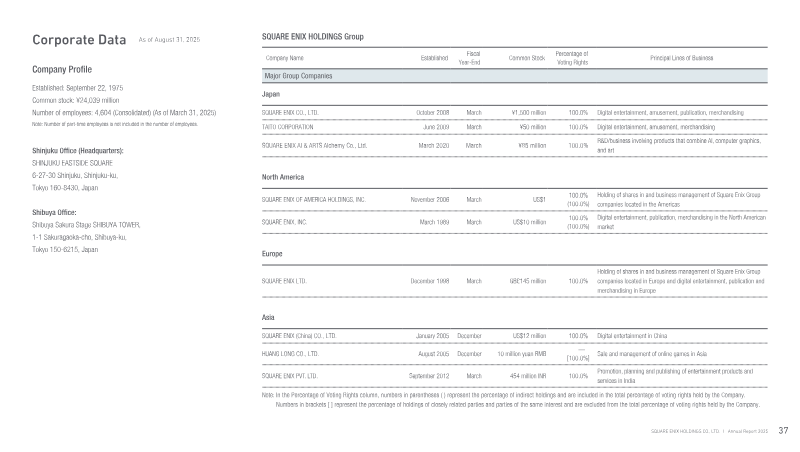
The Square Enix Holdings Group maintains a robust global infrastructure centered on digital entertainment, amusement, publication, and merchandising. As of August 31, 2025, the organization operates with a consolidated workforce of 4,604 employees and a common stock valuation of 24,039 million yen. The corporate structure is defined by a series of wholly owned subsidiaries that manage regional operations across Japan, North America, Europe, and Asia, ensuring a localized approach to publishing and service management. The Japanese core consists of Square Enix Co., Ltd. and Taito Corporation, which handle the primary development and amusement sectors, alongside specialized entities like Square Enix AI & Arts Alchemy. This latter subsidiary focuses on research and development at the intersection of artificial intelligence and computer graphics. International operations are segmented by geography, with Square Enix of America Holdings and Square Enix Ltd. overseeing the North American and European markets, respectively. These entities manage the distribution of digital content and physical merchandise while providing business management for their respective territories. Expansion into Asian markets is facilitated through dedicated branches in China and India. Square Enix (China) Co., Ltd. and Huang Long Co., Ltd. manage digital entertainment and online game sales within the Chinese market, while Square Enix Pvt. Ltd. focuses on the promotion and publishing of entertainment services in India. This organizational framework demonstrates a strategic commitment to global diversification, utilizing a network of 100% voting right subsidiaries to maintain strict brand control while scaling operations across diverse regulatory and consumer landscapes.