Report5 pages
Nexon Releases Earnings for Fourth Quarter and Full-Year 2025
Nexon reported record-breaking financial results for the fiscal year ended December 31, 2025, driven by a strategic IP growth initiative that balanced the expansion of legacy franchises with successful new global launches. Full-year revenue reached ¥475.1 billion, a 6% increase year-over-year, while operating income remained stable at ¥124.0 billion. The fourth quarter saw a significant revenue surge of 55% to ¥123.6 billion, although net income declined 66% to ¥10.9 billion, primarily due to fluctuations in foreign exchange gains compared to the previous year and higher-than-anticipated costs related to performance bonuses and platform fees.
The growth was spearheaded by the launch of ARC Raiders, which sold over 14 million units within 15 weeks and achieved a peak of 960,000 concurrent users. Simultaneously, the 22-year-old MapleStory franchise delivered its highest annual revenue in history, growing 43% year-over-year. This performance offset a 21% decline in the Dungeon&Fighter franchise, despite a strong recovery in its PC segment in China and Korea. The period was also marked by a significant player trust initiative regarding MapleStory: Idle RPG; a coding error led Nexon to offer full refunds, resulting in a ¥9 billion reduction in Q4 revenue.
Geographically, the results reflect Nexon’s successful diversification beyond its traditional Asian strongholds into Western markets via console and PC platforms. Looking ahead to the first quarter of 2026, the company expects revenue growth between 32% and 44%, supported by sustained momentum from new titles and major updates to core IPs. Nexon remains committed to aggressive shareholder returns, doubling its dividend and completing a ¥100 billion share buyback program during the fiscal year.
- Nexon achieved record full-year 2025 revenue of ¥475.1 billion, a 6% year-over-year increase, with operating income holding steady at ¥124.0 billion.
- The new title ARC Raiders was a major growth driver, selling over 14 million units within 15 weeks and reaching a peak of 960,000 concurrent users.
- The 22-year-old MapleStory franchise reached record annual revenue with 43% year-over-year growth, helping to offset a 21% decline in the Dungeon&Fighter franchise.
- Q4 net income dropped 66% to ¥10.9 billion due to foreign exchange fluctuations, increased platform fees, and performance bonuses.
- A player trust initiative following a coding error in MapleStory: Idle RPG resulted in a ¥9 billion revenue reduction in Q4 due to full customer refunds.
+3
NEXON Co.Feb 2026

Report114 pages
Vietnam Innovation and Private Capital Report: 2025
Vietnam’s 2025 Innovation and Private Capital Report positions the country as a rapidly ascending tech‑investment hub in Southeast Asia, underpinned by steady macro growth and decisive policy support. A 6 % annual real GDP expansion, a $36 B digital economy, and the landmark Resolution No. 57‑NQ/TW collectively create a macro‑environment that attracts both domestic and foreign capital. Private‑capital activity in 2024 totaled $2.3 B across 141 deals, with buyouts dominating but early‑stage venture capital rebounding sharply in the second half of the year. High‑tech sectors—particularly AI, AgriTech, Green Tech, semiconductors, and data centers—experienced multi‑fold funding surges, reflecting a shift toward technology‑driven value creation.
The labor market fuels consumer and industrial demand: Vietnam ranks second in Southeast Asia for workforce size, with a growing middle‑affluent class projected to exceed 45 % of the population by 2030. Strong education outcomes and a youthful, tech‑savvy demographic drive growth in retail, e‑commerce, digital health, and edtech. Tier‑2 cities such as Bac Ninh, Can Tho, and Da Nang emerge as new growth poles, supported by government investment in transportation, renewable energy, and digital infrastructure.
Resolution No. 57 sets ambitious 2030–2045 targets—30–50 % GDP share from digital and high‑tech exports, 80 % cashless transactions, and 2 % of GDP allocated to R&D (60 % private). It outlines strategic actions in AI, 6G, talent development, and digital governance to attract at least five global tech giants for R&D and manufacturing. Projected economic gains from AI alone could reach $120 B by 2040, while renewable energy and climate‑tech investments are already reshaping the power sector through flexible PPAs and green‑credit programs.
Overall, Vietnam’s coordinated policy framework, expanding talent pool, and maturing private‑capital ecosystem converge to make the country a compelling destination for long‑term value creation across high‑growth technology, green infrastructure, and consumer markets within Southeast Asia.
- Vietnam’s digital economy has reached a valuation of $36 billion, supported by a 6% annual real GDP growth rate.
- Private capital investment in 2024 totaled $2.3 billion across 141 deals, with a notable rebound in early-stage venture capital during the second half of the year.
- Resolution No. 57-NQ/TW mandates that by 2030–2045, digital and high-tech exports must account for 30–50% of GDP, with 2% of GDP allocated to R&D.
- The middle-affluent class is projected to exceed 45% of the total population by 2030, driving significant demand in retail, e-commerce, digital health, and edtech.
- AI integration is projected to generate $120 billion in economic gains for Vietnam by 2040, supported by strategic government initiatives in 6G and digital governance.
+1
Boston Consulting GroupFeb 2026
Report13 pages
Aream & Co. Gaming CEO Survey 2025
The survey, conducted by Aream & Co., gauges executive optimism regarding consumer spending on gaming in 2025 across multiple channels and functional areas. Overall, 49 % of respondents view spending as “more optimistic,” another 49 % see it as unchanged, and only 2 % are less optimistic. When broken down by platform, mobile spending is perceived as more optimistic (49 %) while PC and console views are split between “more” (15–33 %) and “about the same.” In‑app purchases are viewed as more optimistic (80 %) versus in‑app advertising (41 %).
Key challenges identified include content saturation and over‑supply, with 33 % citing these as concerns; marketing environment issues affect 49 %, and macro conditions are a worry for 17 %. Despite these, 54 % anticipate more new games in 2025, and 37 % expect higher average budgets. Marketing spend is expected to rise for 48 %, while engineering and game development are seen as more optimistic (71 % and 42 %).
The survey also highlights a strong appetite for mergers and acquisitions, with 71 % expecting more M&A activity. Advanced integration across multiple functions is viewed as more optimistic (49 %) but limited implementation remains a concern.
The data derive from a global sample of gaming CEOs, reflecting perspectives across mobile, PC, console, and various functional departments. The findings suggest a cautiously optimistic outlook for 2025, tempered by supply‑side pressures and marketing challenges.
- Industry sentiment for 2025 is largely stable or positive, with 98% of CEOs reporting that consumer spending will be either unchanged (49%) or more optimistic (49%).
- M&A activity is expected to accelerate, with 71% of executives anticipating an increase in deal-making throughout 2025.
- In-app purchases are the primary revenue driver, with 80% of respondents optimistic about growth compared to only 41% for in-app advertising.
- Investment in development remains a priority, as 71% of CEOs are optimistic about engineering budgets and 42% about game development, with 37% expecting higher average project budgets.
- Marketing remains a critical pain point, with 49% of executives citing the current marketing environment as a major challenge despite 48% planning to increase their marketing spend.
+4
Aream & CoFeb 2026

Report12 pages
Connecting Digital Investments and Real Estate: Malaysia’s Competitive Advantage
The analysis establishes that Malaysia’s competitive edge stems from the tight integration of digital investment flows with commercial‑real‑estate development, positioning the country as a regional hub for high‑value technology activities. By concentrating the majority of foreign digital capital within a narrow geographic corridor, the nation creates a synergistic environment where advanced infrastructure and specialized real‑estate assets reinforce each other, driving sustained economic benefits.
Data reveal that 95 percent of approved digital‑investment projects, amounting to RM 342.6 billion, are located in the Klang Valley, Johor and Penang, with the Klang Valley alone accounting for roughly three‑quarters of total digital foreign direct investment. This region hosts a diversified portfolio that includes data‑centre and cloud services, fintech platforms, artificial‑intelligence applications, and global‑business‑services/KPO operations, collectively generating RM 13.9 billion in digital‑sector employment value. Johor’s contribution is anchored in large‑scale hyperscale data‑centre campuses, while Penang’s niche lies in semiconductor‑linked activities, offering targeted opportunities for developers.
A streamlined MDLR framework, co‑created with the Malaysia Digital Economy Corporation, reduces digital‑real‑estate standards to four core criteria, shifting focus to building‑level attributes such as robust digital infrastructure, connectivity, energy resilience and security. This refined approach equips developers and investors with clear benchmarks to align property supply with the evolving demands of the digital economy, ensuring that real‑estate assets remain adaptable and future‑proof across the identified clusters.
- Malaysia has attracted RM 342.6 billion in approved digital investments, with 95 percent of these projects concentrated in the Klang Valley, Johor, and Penang.
- The Klang Valley serves as the primary digital hub, accounting for approximately 75 percent of the nation's total digital foreign direct investment.
- Digital-sector employment across these investment clusters generates a total value of RM 13.9 billion.
- Regional investment is specialized, with Johor focusing on hyperscale data-centre campuses and Penang concentrating on semiconductor-linked activities.
- The MDLR framework standardizes digital real estate into four core criteria: digital infrastructure, connectivity, energy resilience, and security.
Malaysia Digital Economy Corporation (MDEC)Feb 2026
Presentation8 pages
Major Organizational, Operational and Portfolio Reset to Reclaim Creative Leadership and Restore Sustainable Growth
Ubisoft has initiated a major organizational and operational reset designed to reclaim creative leadership and restore sustainable growth in an increasingly selective AAA market. This strategic pivot addresses rising development costs and the competitive challenges of establishing new intellectual properties. The transformation is built upon three primary pillars: the implementation of a new operating model, a refocused game portfolio with a revised three-year roadmap, and a significant rightsizing of the global organization to improve agility and reduce fixed costs.
The new operating model decentralizes production into five distinct Creative Houses supported by a centralized Creative Network and Core Services. These houses are specialized by genre and business model, focusing on billionaire brands like Assassin’s Creed and Far Cry, competitive shooters such as Rainbow Six and Ghost Recon, live-service experiences, immersive narrative universes, and casual family-friendly titles. To support this focus, Ubisoft has discontinued six games—including the Prince of Persia: The Sands of Time remake and four unannounced titles—while allocating additional development time to seven other projects to ensure higher quality standards.
Financial restructuring is a critical component of this reset, with the company targeting a total reduction in fixed costs of approximately €500 million by March 2028 compared to FY23 levels. This includes the closure of studios in Halifax and Stockholm, alongside restructurings in Abu Dhabi, RedLynx, and Massive. For FY26, the group anticipates net bookings of approximately €1.5 billion and a non-IFRS EBIT loss of around €1 billion, largely due to a €650 million one-off accelerated depreciation from canceled and delayed titles. Moving forward, the group aims to reach a run-rate fixed cost base of €1.25 billion by 2028, prioritizing robust cash generation and a more disciplined approach to capital allocation.
- Ubisoft is targeting a €500 million reduction in fixed costs by March 2028 compared to FY23 levels to restore sustainable growth.
- The company is restructuring into five specialized Creative Houses to focus on core franchises like Assassin’s Creed, Far Cry, and Rainbow Six while improving operational agility.
- Ubisoft has canceled six projects, including the Prince of Persia: The Sands of Time remake and four unannounced titles, while extending development timelines for seven others to prioritize quality.
- The company projects an FY26 non-IFRS EBIT loss of approximately €1 billion, driven by €650 million in one-off depreciation charges from canceled and delayed games.
- To achieve a target run-rate fixed cost base of €1.25 billion by 2028, Ubisoft is closing studios in Halifax and Stockholm and restructuring operations in Abu Dhabi, RedLynx, and Massive.
+1
UbisoftJan 2026
Report21 pages
2026 US Venture Capital Outlook
The 2026 US venture capital outlook projects a cautiously optimistic landscape, driven largely by an explosive surge in early‑stage activity and the continued dominance of artificial intelligence (AI) startups. AI firms now command 65 % of venture capital, fueling near‑record first‑financing counts and setting a high bar for late‑stage valuations. While liquidity remains the primary constraint—exit values are projected below $300 billion and limited LP enthusiasm persists—the emergence of improved secondary markets and a potential rebound in initial public offerings are expected to alleviate pressure. Multistage firms that focus on seed rounds are poised to sustain growth across both early and later stages, yet emerging managers may face fundraising challenges that could curtail diversification.
A widening gap between AI‑focused, high‑growth startups and their slower‑moving peers is evident. In Q3 2025 the United States hosted 830 active unicorns with a record $3.9 trillion post‑money valuation, yet many of these firms are liquidity‑constrained and struggle to secure follow‑on funding. AI companies dominate late‑stage deals, with median Series C and D+ valuations reaching $838 million; AI rounds exceed non‑AI deals by roughly 26 % at Series D+, underscoring investor confidence in the AI boom while highlighting potential risks if public AI valuations contract.
Fundraising is projected to rebound to $100‑$130 billion in 2026, largely driven by recycled distributions that are expected to account for roughly 70 % of new commitments. Strong exit activity through 2025 and renewed interest in AI‑focused funds—such as a $10 billion Andreessen Horowitz vehicle—underpin this outlook. However, risks remain: a potential liquidity reversal or recession‑induced sentiment decline could keep commitments below $100 billion, tempering the projected recovery.
- AI startups currently command 65% of all venture capital, driving record-high median valuations of $838 million for Series C and D+ rounds.
- The US venture capital market is projected to see a fundraising rebound to $100–$130 billion in 2026, with approximately 70% of new commitments expected to come from recycled distributions.
- As of Q3 2025, the US hosted 830 active unicorns with a combined post-money valuation of $3.9 trillion, though many face significant liquidity constraints and difficulties securing follow-on funding.
- AI-focused late-stage deals currently command a 26% valuation premium over non-AI counterparts, creating a widening performance gap between high-growth AI firms and slower-moving peers.
- Liquidity remains a primary market constraint, with total exit values for 2026 projected to remain below $300 billion despite anticipated improvements in secondary markets and IPO activity.
+2
PitchBookJan 2026
Report24 pages
China WeChat Mini Games Industry Report 2026
The WeChat Mini Games industry in China has emerged as a dominant, high-growth sector within the broader digital ecosystem. As of 2026, the market is characterized by a rapid shift from simple casual titles toward mid-to-hardcore genres, including strategy, RPG, and tower defense games. This evolution is underscored by a significant increase in paid user acquisition, with over 51,000 games actively running advertisements in 2025, a figure that substantially outpaces traditional mobile game growth.
Market data indicates that the Mini Games sector generated RMB 53.535 billion (approximately $7.65 billion) in 2025, representing a 34.39% year-over-year increase, with projections exceeding RMB 70 billion for 2026. Revenue is primarily driven by in-app purchases, which account for 68.11% of total earnings, while advertising monetization contributes the remaining 31.89%. WeChat maintains a leadership position among competing platforms, boasting a 51.5% penetration rate and an industry-wide monthly active user base of 571 million as of August 2025.
User engagement remains high, with the average daily playtime exceeding 60 minutes and a daily session frequency of approximately 5.1 times. The core demographic is aged 24–40, with a majority residing in tier-3 cities or below. Successful titles increasingly utilize hybrid gameplay mechanics, such as combining MMORPG elements with idle or strategy features, to maintain player retention.
For international developers, the market presents significant opportunities but requires navigating complex regulatory and technical barriers. Successful entry necessitates partnering with local Chinese publishers to manage ISBN licensing, payment integration, and platform-specific performance optimizations. Technical requirements are stringent, as games must typically load in under 10 seconds and adhere to strict package size limits, often requiring the use of specialized engines like Cocos or Laya to ensure compatibility within the WeChat environment.
- The WeChat Mini Games market reached RMB 53.535 billion in 2025, a 34.39% year-over-year increase, with projections exceeding RMB 70 billion for 2026.
- WeChat dominates the sector with a 51.5% platform penetration rate and 571 million monthly active users as of August 2025.
- Revenue is primarily driven by in-app purchases (68.11%), supplemented by advertising monetization (31.89%).
- The industry is shifting toward mid-to-hardcore genres like RPG and strategy, supported by over 51,000 games actively running paid advertisements in 2025.
- Core user engagement is high, averaging over 60 minutes of daily playtime across 5.1 daily sessions, primarily among users aged 24–40 in tier-3 cities or below.
+2
Meridian PlayJan 2026

Report18 pages
Leveling Up for the New Reality: The Gaming Report
The report examines the global gaming market’s evolution from 2017 to 2028, highlighting a post‑pandemic correction that has shifted growth expectations from double‑digit rates to modest expansion. Global revenue by type rose 1 % CAGR (2017–2023), with mobile, PC, and console segments contributing $1.2 trillion in 2023; cloud/VR sales remain niche but are projected to grow at 5 % CAGR (2023–2028). Emerging platforms such as cloud AR/VR and user‑generated content show market sizes of $939 million (2024) to $1.75 billion (2028), yet infrastructure constraints limit mass adoption.
Development economics reveal a widening gap: AAA development budgets increased 360 % (2012–2023 average) while sales and marketing costs rose 220 %, yet the number of AAA titles released fell by 73 %. Mobile publishers mirror this trend, with development costs up 54–92 % and releases declining. Console revenues are projected to outpace AAA budgets, with a 5 % CAGR in development spending versus 8 % in console revenue growth (2017–2028). Survey data indicate that most publishers expect to maintain or modestly increase budgets, with only 5–10 % planning reductions.
Monetization shifts are pronounced in consoles: subscription services and premium digital sales will dominate, while mobile revenue increasingly relies on in‑app advertising (up to 31 % of mobile share). Consumer willingness to accept ads varies by platform, with over half of core PC/console gamers open to advertising in premium titles. Geographic analysis shows Chinese players exhibit the highest willingness to pay, and emerging‑economy gamers spend more time playing than their developed‑economy counterparts. Age segmentation reveals younger cohorts favor action/adventure, whereas older players gravitate toward puzzles and casual games. The report concludes that technological advances, particularly generative AI, may enable cost efficiencies but will likely be leveraged to fund larger, higher‑quality titles rather than reduce overall budgets.
- AAA development budgets surged 360% between 2012 and 2023, while the volume of AAA title releases dropped by 73%, signaling a shift toward fewer, more expensive productions.
- Global gaming revenue grew at a 1% CAGR from 2017 to 2023, reflecting a post-pandemic correction that has moved the industry from double-digit growth to modest expansion.
- Mobile revenue is increasingly driven by in-app advertising, which now accounts for up to 31% of the segment's total share.
- While cloud and VR remain niche, they are projected to grow at a 5% CAGR through 2028, with emerging platforms like cloud AR/VR and user-generated content expected to reach $1.75 billion in market size by 2028.
- Console revenue is projected to grow at an 8% CAGR through 2028, outpacing the 5% CAGR in development spending for the same period.
+2
InvestGameDec 2025

Report112 pages
Square Enix Next: That Excitement Once Again
Square Enix’s recent performance review exposes a persistent decline in revenue growth and profitability over the past three years, with operating income falling 32 % and ROE dropping 61 %. The downturn is driven primarily by weak margins in both high‑definition (HD) and small‑dungeon (SD) game segments, excessive portfolio fragmentation, sub‑optimal product design and promotion, and escalating development costs. While the MMO licensing arm remains the sole growth driver (+11 %), overall gaming revenue has slipped, with HD and SD titles declining 4 % and 5 % respectively. Operating margins for these segments hover around 35–40 %, noticeably higher than the industry average of 28 % but still lagging behind competitors, indicating inefficiencies that are not being adequately addressed.
The company’s medium‑term “Reboots” plan offers only high‑level directions without concrete key performance indicators or quantitative targets. Critical gaps include a lack of clear business‑portfolio strategy, insufficient disclosure on non‑core business rationales, and no defined mechanisms for monitoring progress or maximizing shareholder value. Capital allocation disclosures are similarly weak: cost‑of‑capital calculations, ROE and ROIC targets, and hurdle rates are absent, while share‑buyback authorization remains unused despite a sharp price decline. SG&A costs exceed peer norms by 5–6 ppt, driven largely by an oversized sales force, further eroding profit margins.
Geographically, SD game revenue is almost entirely domestic; the Japanese market has contracted 2 % annually since 2020, and overseas growth remains only 3 %. The company’s global SD strategy is inert, with a 7 % overseas expansion rate falling short of projected growth and flagship titles such as FFVII Ever Crisis deriving 70 % of revenue from Japan. Non‑core Amusement and Publishing businesses are undervalued, with a significant conglomerate discount relative to peers and declining sales and margins. Limited cross‑synergy between game and publishing arms further hampers value creation.
In summary, Square Enix faces a multifaceted challenge: declining core game performance, weak strategic direction and KPI setting, high SG&A costs, and an underperforming non‑core portfolio. Addressing these issues through tighter cost control, clearer performance metrics, aggressive overseas expansion, and potential portfolio optimization is essential to restore corporate value and achieve sustainable growth.
- Square Enix has experienced a significant financial decline over the past three years, marked by a 32% drop in operating income and a 61% decrease in return on equity (ROE).
- Core gaming segments are underperforming, with HD and SD game revenues falling 4% and 5% respectively, while MMO licensing remains the only growth driver at +11%.
- Operating margins for HD and SD segments remain inefficient at 35–40%, and SG&A costs exceed industry norms by 5–6 percentage points due to an oversized sales force.
- The company's 'Reboots' medium-term plan lacks concrete KPIs, quantitative targets, and clear capital allocation strategies, such as defined hurdle rates or ROIC goals.
- Square Enix’s SD game revenue is heavily reliant on the contracting Japanese market, with flagship titles like 'FFVII Ever Crisis' generating 70% of their revenue domestically.
+2
InvestGameDec 2025
Presentation19 pages
Wyniki Finansowe 3Q25
This financial analysis details the third-quarter 2025 performance of PCF Group S.A. (People Can Fly), a global game development studio. The primary thesis centers on a strategic pivot toward financial stability following a period of reorganization and disappointing performance from self-published titles. The scope covers the group’s global operations, including studios in Warsaw, Montreal, Newcastle, and Dublin, with a specific focus on the nine-month period ending September 30, 2025.
The financial data reveals a significant net loss of 117 million PLN for the first nine months of 2025, compared to a 33.3 million PLN loss in the same period of 2024. This deficit is largely driven by substantial non-cash write-offs totaling over 100 million PLN. Key impairments include a 92 million PLN write-down for the project Lost Rift (Victoria) following its Early Access launch on September 25, 2025, which failed to meet sales and player reception expectations. Other write-offs include 6 million PLN for PCF Chicago goodwill and 5 million PLN for Unreal Engine licenses. Despite these losses, revenues increased to 152.1 million PLN from 131.9 million PLN year-over-year, bolstered by work-for-hire (WFH) projects such as Delta, Zulu, and Echo.
The group’s methodology emphasizes "adjusted EBITDA" to illustrate underlying operational health, reporting a corrected EBITDA of 6 million PLN for the first nine months of 2025. Following a reorganization that left the workforce at 756 employees, the company is shifting its strategy to prioritize cash flow. Future objectives include securing at least one new WFH contract by the end of 2025, scaling back the Lost Rift team to achieve self-funding by 2026, and halting investment in new self-published projects until the group generates positive cash flow. Current active partnerships include ongoing projects with Microsoft, Krafton, and Sony.
- PCF Group S.A. reported a net loss of 117 million PLN for the first nine months of 2025, a significant increase from the 33.3 million PLN loss recorded in the same period of 2024.
- A 92 million PLN write-down for the project 'Lost Rift' (Victoria) following its September 25, 2025, Early Access launch was the primary driver of the group's financial deficit.
- Despite the net loss, total revenue grew to 152.1 million PLN in the first nine months of 2025, up from 131.9 million PLN in 2024, driven by work-for-hire projects including Delta, Zulu, and Echo.
- The company reported an adjusted EBITDA of 6 million PLN for the first nine months of 2025, which management uses to demonstrate underlying operational health despite total losses.
- PCF Group is halting investment in new self-published titles until the company achieves positive cash flow and is prioritizing securing at least one new work-for-hire contract by the end of 2025.
+1
PCF GroupDec 2025
Report104 pages
Integrated Report: Value Creation Story
DeNA entered a transformative "Second Founding" phase in FY2024, marked by a significant financial recovery and a strategic pivot toward company-wide AI integration. Revenue reached 164.0 billion yen with a Non-GAAP operating profit of 32.9 billion yen, driven primarily by the global success of Pokémon Trading Card Game Pocket. While the Game Business remains the core profit engine, the organization is diversifying its portfolio across Live Streaming, Healthcare, and a record-performing Sports segment to mitigate the volatility of hit-driven cycles. The company has established a FY2026 Non-GAAP operating profit target of 15.0 billion yen, emphasizing sustainable, structural growth over short-term gains.
Central to this evolution is the "AI-ALL-IN" strategy, which aims to double productivity and launch approximately 10 AI-native products. This transition is supported by a robust human capital framework, including the DeNA AI Readiness Score (DARS) to track employee literacy and a shift toward market-linked, performance-based compensation. To manage development risks, the Game Business has adopted a "soft launch strategy" focused on iterative testing. Meanwhile, the Sports segment achieved 40 billion yen in revenue, and the Healthcare division is pivoting toward medical digital transformation despite facing recent impairment losses.
Governance and sustainability are integrated into this value creation story through a board composed of 50% independent directors and a rigorous risk management framework. DeNA maintains high standards for data security and has committed to a 58.8% reduction in Scope 1 and 2 emissions by FY2033. By balancing aggressive AI adoption with disciplined capital allocation—including strategic share sales and increased dividends—the organization seeks to harmonize social value with long-term profitability across its diverse digital and physical business ecosystems.
- DeNA achieved 164.0 billion yen in revenue and 32.9 billion yen in Non-GAAP operating profit in FY2024, largely fueled by the global performance of Pokémon Trading Card Game Pocket.
- The company is executing an 'AI-ALL-IN' strategy targeting a 100% increase in productivity and the launch of approximately 10 AI-native products.
- The Sports segment has become a major revenue pillar, generating 40 billion yen in the last fiscal year, helping to diversify the company away from hit-driven game cycles.
- Management has set a conservative FY2026 Non-GAAP operating profit target of 15.0 billion yen, prioritizing structural, sustainable growth over short-term volatility.
- To improve operational efficiency, the company implemented the DeNA AI Readiness Score (DARS) to track employee literacy and transitioned to a market-linked, performance-based compensation model.
+1
DeNA Co.Oct 2025

Report80 pages
Sega Sammy Holdings Integrated Report 2025
Sega Sammy Holdings’ 2025 Integrated Report details a transformative strategic shift aimed at establishing a more balanced and resilient business portfolio. Historically reliant on the volatile Pachislot & Pachinko market, the Group is transitioning to a three-pillar structure: Entertainment Contents, Pachislot & Pachinko, and a newly formed Gaming Business. This "Welcome to the Next Level!" plan focuses on global expansion and transmedia integration to drive long-term growth through 2030.
The Entertainment Contents segment remains the primary revenue driver, contributing ¥321.5 billion of the Group’s ¥428.9 billion in FY2025 net sales. This growth is fueled by a "mille-feuille" revenue model that leverages major intellectual properties like Sonic the Hedgehog, Persona, and Like a Dragon across games, film, and licensing. Meanwhile, the Pachislot & Pachinko segment is being repositioned as a stable cash generator. To combat a shrinking domestic market, the Group is introducing innovative modular cabinet systems to reduce costs for operators and improve player engagement.
The most significant strategic development is the establishment of the Gaming Business as a third pillar, targeting the North American iGaming and B2B casino solutions markets. This expansion is underpinned by the major acquisitions of Rovio, GAN, and Stakelogic, totaling over ¥130 billion, alongside the divestment of non-core assets like the Phoenix Seagaia Resort. Financially, the Group reported a robust FY2025 performance with a profit of ¥45.1 billion and an ROE of 12.2%. Looking ahead, the Group targets a cumulative adjusted EBITDA of over ¥230 billion by FY2027, supported by a commitment to shareholder returns including a 50% total return ratio and a 3% dividend on equity. Sustainability and governance also remain central, with goals for carbon neutrality by 2050 and enhanced diversity within its global workforce.
- Sega Sammy is restructuring into a three-pillar business model comprising Entertainment Contents, Pachislot & Pachinko, and a new Gaming Business to reduce reliance on volatile domestic markets.
- The Entertainment Contents segment generated ¥321.5 billion of the Group's ¥428.9 billion total FY2025 net sales, driven by a transmedia strategy utilizing IPs like Sonic, Persona, and Like a Dragon.
- The company is aggressively entering the North American iGaming and B2B casino markets through over ¥130 billion in acquisitions, including Rovio, GAN, and Stakelogic.
- The Group reported a robust FY2025 financial performance with a profit of ¥45.1 billion and an ROE of 12.2%.
- Management has set a target of over ¥230 billion in cumulative adjusted EBITDA by FY2027, supported by a 50% total return ratio and a 3% dividend on equity.
Sega Sammy HoldingsOct 2025
Presentation17 pages
Wyniki Finansowe 1H25
This financial summary details the performance of PCF Group (People Can Fly) for the first half of 2025, reflecting a period of organizational restructuring and portfolio transition. The group operates across two continents with a total workforce of 756 people as of June 30, 2025, a slight decrease from 2024 levels. This team is distributed primarily across studios in Warsaw, North America, and various European satellite locations, following the merger of PCF Chicago into PCF US.
Financial results for 1H 2025 show a significant recovery in profitability compared to the previous year. Revenue for the first half of 2025 reached 115.3 million PLN, a substantial increase over the 76.3 million PLN reported in 1H 2024. EBITDA improved from a loss of 11.3 million PLN in 1H 2024 to a positive 2.9 million PLN in 1H 2025. Despite these operational improvements, the group recorded a net loss of 21.3 million PLN for the period, though this represents a narrowing of the 33.3 million PLN net loss seen in the prior year. Key drivers for these results include the increased contribution of Project Echo, the inclusion of Project Delta in financial reporting, and accounting write-offs related to goodwill and licenses following the Chicago studio merger.
The group’s product strategy highlights a shift in its VR segment managed by Incuvo. While Green Hell VR continues to receive updates, including a successful co-op mode launch, the upcoming title Tracked: Shoot to Survive (Project Bison) is scheduled for a Q4 2025 release. This title will mark the final VR game published by PCF Group as it refines its long-term development focus. Quarterly revenue trends indicate a stabilization in the 50-60 million PLN range per quarter throughout late 2024 and early 2025, supported by a mix of work-for-hire projects and internal IP development.
- PCF Group revenue grew to 115.3 million PLN in 1H 2025, up from 76.3 million PLN in 1H 2024.
- EBITDA turned positive at 2.9 million PLN in 1H 2025, recovering from an 11.3 million PLN loss in the same period last year.
- The company narrowed its net loss to 21.3 million PLN in 1H 2025, compared to a 33.3 million PLN loss in 1H 2024, despite accounting write-offs from the Chicago studio merger.
- PCF Group is exiting the VR segment, with the Q4 2025 release of 'Tracked: Shoot to Survive' (Project Bison) serving as its final VR title.
- Quarterly revenue has stabilized in the 50-60 million PLN range, supported by a combination of work-for-hire projects and internal IP development.
+1
PCF GroupSept 2025
Report20 pages
Global Gaming Report Q3 2025
The third quarter of 2025 underscores the continued premium placed on hardware and platform players within the global gaming ecosystem, as investors assign a wide spectrum of valuation multiples that reflect divergent growth narratives and market positioning. Enterprise‑valued firms such as Dell and HP trade near a 1‑times EV/EBITDA ratio, indicating modest expectations for earnings expansion, while high‑growth entities like Nvidia and AppLovin command multiples exceeding 25‑times, with the latter reaching 42.8‑times, highlighting the market’s appetite for cutting‑edge processing power and mobile advertising integration. Across the board, most companies in the segment posted double‑digit year‑over‑year revenue increases, confirming robust demand for both traditional PC hardware and emerging cloud‑based gaming services.
Equity performance further illustrates the split between established hardware manufacturers and platform‑centric developers. Roblox delivered the strongest year‑to‑date appreciation at 136.9%, driven by expanding user engagement and monetization initiatives, while Unity recorded a 77‑percent gain, reflecting its pivotal role in cross‑platform development tools and the growing adoption of real‑time 3D content. These returns contrast sharply with the more muted trajectories of hardware‑only firms, suggesting that investors are rewarding firms that blend hardware capabilities with scalable software ecosystems.
Overall, the data portray a gaming market in which valuation is increasingly tied to the ability to integrate hardware performance with platform services, and where growth‑oriented companies enjoy markedly higher multiples and stock appreciation. The findings span a global landscape, covering major North American, European, and Asian players, and focus on the quarter ending September 2025, offering a snapshot of valuation dynamics and performance trends that are likely to shape strategic investment decisions throughout the remainder of the year.
- Investors are heavily favoring platform-centric companies over traditional hardware manufacturers, with high-growth firms like AppLovin and Nvidia commanding EV/EBITDA multiples exceeding 25x, compared to roughly 1x for legacy hardware firms like Dell and HP.
- Roblox led equity performance with a 136.9% year-to-date appreciation, driven by successful user engagement and monetization strategies.
- Unity recorded a 77% year-to-date gain, underscoring the market's high valuation of cross-platform development tools and real-time 3D content adoption.
- AppLovin reached a 42.8x EV/EBITDA multiple, reflecting strong market confidence in the integration of mobile advertising with gaming ecosystems.
- Most gaming companies reported double-digit year-over-year revenue growth in Q3 2025, confirming sustained demand across both PC hardware and cloud-based gaming services.
+1
Drake Star PartnersSept 2025
Presentation37 pages
Consolidated Financial Results Briefing Materials: FY3/26 Q1
Akatsuki Inc. experienced a challenging start to the fiscal year ending March 2026, reporting a 44% year-over-year decline in consolidated sales to ¥2,313 million and an operating loss of ¥1,698 million for the first quarter. This downturn was primarily driven by a 52% revenue contraction in the core Games business, resulting from a reactionary fall following a strong prior quarter, strategic title withdrawals, and heightened development costs associated with the upcoming global launch of Kaiju No. 8 The Game. While total operating expenses decreased by 18% due to a 42% reduction in research and development spending and a streamlined portfolio, these savings were insufficient to offset the revenue decline and typical seasonal fluctuations.
Despite the volatility in gaming, the IP Solutions and Comics segments demonstrated robust growth. IP Solutions sales surged 168% to ¥298 million, bolstered by the consolidation of CRAYON, Inc. and the rapid expansion of the Slash Gift online lottery service. Simultaneously, the Comics segment broadened its international footprint through the MANGA MIRAI service in the United States, integrating high-profile titles such as One Piece and Naruto. The company also accelerated its expansion into new business domains through the full acquisition of the creator agency Natee Co., Ltd. and realized ¥1.2 billion in investment proceeds following the IPO of LIFE CREATE Co., Ltd.
The financial position remains liquid with ¥33.2 billion in cash and deposits, providing a stable foundation for ongoing strategic investments despite a slight decrease in total assets to ¥50.9 billion. The current fiscal trajectory reflects a transition period as the company rebalances its portfolio, shifting focus toward high-potential global IP launches and diversified digital entertainment services to mitigate the inherent cyclicality of the mobile gaming market.
- Akatsuki Inc. reported a 44% year-over-year decline in consolidated sales to ¥2,313 million and an operating loss of ¥1,698 million for Q1 FY3/26.
- The core Games business revenue contracted by 52% due to title withdrawals, a reactionary decline from the previous quarter, and high development costs for the upcoming 'Kaiju No. 8 The Game'.
- IP Solutions revenue grew 168% to ¥298 million, driven by the consolidation of CRAYON, Inc. and the expansion of the Slash Gift online lottery service.
- The company maintains a liquid financial position with ¥33.2 billion in cash and deposits, despite total assets decreasing to ¥50.9 billion.
- Operating expenses fell by 18% overall, supported by a 42% reduction in research and development spending and a streamlined game portfolio.
+1
AkatsukiAug 2025

Report104 pages
Annual Report 2025
Annual Report 2025 details a landmark financial year for Games Workshop, characterized by record-breaking growth and the company’s promotion to the FTSE 100. For the 2024/25 period, total revenue rose to £617.5 million, with profit before taxation reaching £262.8 million. This performance was driven by a 14.2% increase in core sales—particularly within the trade channel and North American markets—and a near-doubling of licensing operating profit to £49.5 million, bolstered by the exceptional success of the Space Marine 2 video game.
The company continues to leverage a vertically integrated model, expanding its global footprint to 570 retail stores across 24 countries and an independent retailer network spanning 71 nations. To support this growth, significant capital investments are underway, including the construction of a fourth manufacturing facility by 2026 and a comprehensive IT systems overhaul slated for completion by 2029. While navigating macroeconomic challenges such as projected tariff impacts and supply chain disruptions, the Group maintained a robust liquidity position with £132.6 million in cash and distributed a record £20 million in profit-sharing to its workforce.
Strategic priorities have shifted toward long-term value alignment, evidenced by a new remuneration policy that introduces share-based compensation for executives and a "Triennial Share Award" linked to revenue and profit targets. Sustainability remains a core focus; despite a rise in total emissions driven by global freight, the company surpassed its 2032 reduction targets for Scope 1 and 2 emissions through facility electrification. Looking forward, the Group is prioritizing internal talent development, digital engagement through Warhammer+, and a potential media partnership with Amazon to further scale the brand's global reach.
- Games Workshop achieved record financial results for 2024/25 with £617.5 million in revenue and £262.8 million in profit before taxation, leading to its promotion to the FTSE 100.
- Licensing operating profit nearly doubled to £49.5 million, largely driven by the commercial success of the Space Marine 2 video game.
- Core sales grew by 14.2%, fueled by strong performance in the trade channel and North American markets.
- The company is scaling infrastructure with a fourth manufacturing facility scheduled for 2026 and a major IT systems overhaul targeted for 2029.
- Management has implemented a new executive remuneration policy featuring share-based compensation and a Triennial Share Award tied to specific revenue and profit targets.
+1
Games Workshop GroupAug 2025
Report1 pages
Video Game Industry Inspection Mission: Canary Islands
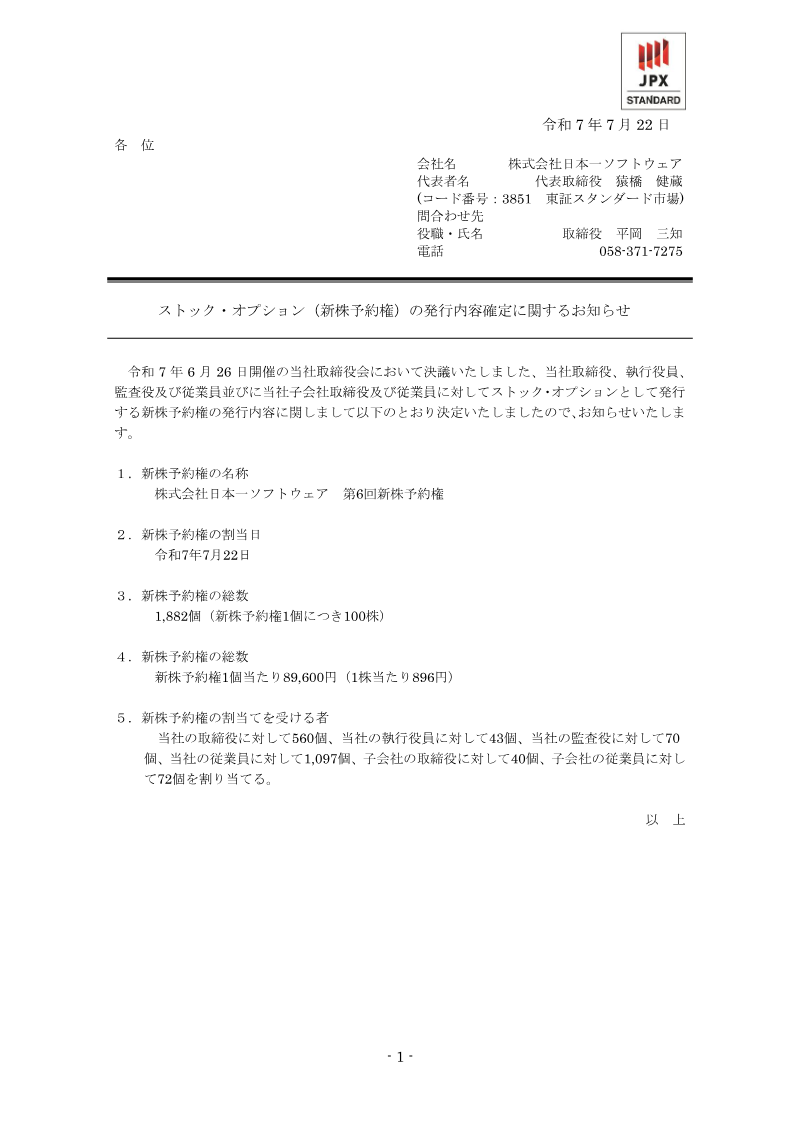
The announcement serves to formalize the issuance of a new series of stock options by Nippon Ichi Software Co., Ltd., a listed entity on the Tokyo Stock Exchange Standard Market. Following a board resolution on 26 June 2025, the company will allocate 1,882 stock options, each representing 100 shares, with an exercise price of ¥89,600 per option (equivalent to ¥896 per share). The allocation date is set for 22 July 2025, and the distribution targets internal stakeholders across the corporate hierarchy and its subsidiaries.
The breakdown of the allocation assigns 560 options to company directors, 43 to executive officers, 70 to auditors, and 1,097 to employees. Within the subsidiary structure, 40 options are designated for subsidiary directors and 72 for subsidiary employees. This distribution reflects a strategic effort to align the interests of management and staff with shareholder value, reinforcing incentive structures within the organization.
Contact details for inquiries are provided, listing Director Hiraka Mitsuchi as the point of reference, with a telephone number for direct communication. The notice underscores compliance with corporate governance standards and aims to ensure transparency regarding equity compensation for all eligible participants.
- Nippon Ichi Software will issue 1,882 stock options on 22 July 2025, with each option representing 100 shares.
- The exercise price for the new stock options is set at ¥89,600 per option, or ¥896 per share.
- The allocation targets a broad range of internal stakeholders, including 560 options for company directors and 1,097 for employees.
- Subsidiary staff and directors will receive a combined total of 112 options as part of the incentive program.
- Executive officers and auditors are allocated 43 and 70 options, respectively, to align internal interests with shareholder value.
PROEXCAJul 2025

Report34 pages
Llibre Blanc de la Indústria Catalana del Videojoc 2024
I’m ready to combine the section summaries into a cohesive overview, but I’ll need the remaining sections to capture the full scope, key data points, and conclusions of the 2024 Catalan video‑game industry analysis. Could you please provide the rest of the section summaries?
- The Catalan video game industry generated €756 million in 2023, representing 53% of Spain's total revenue and a 6.6% increase from 2022. It employed 5,174 professionals, accounting for 50% of the national total.
- The industry is projected to reach €893 million by 2027, with an estimated compound annual growth rate (CAGR) of 4.3% for 2023-2027, despite an anticipated stagnation in 2024.
- In 2024, there were 262 video game studios in Catalonia, with 161 formally constituted as companies, a 10% increase from the previous year.
- Catalan studios primarily focus on original intellectual properties (91%), with self-publishing (54%) and third-party development (39%) being other popular activities. Serious games development increased to 22%.
- Digital premium sales are the main revenue source (40%), followed by outsourcing (16%) and service sales (14%). 74% of games developed in Catalonia include a Catalan language version.
+3
Direcció General d’Innovació i Cultura DigitalJul 2025
Presentation17 pages
Financial Results Q1 2025
The financial results for the first quarter of 2025 detail the operational and fiscal performance of PCF Group S.A., a global video game developer. The data reflects a period of strategic transition, characterized by rising quarterly revenues alongside shifting profitability margins. Total revenue for the first quarter of 2025 reached 63.0 million PLN, an increase from 56.9 million PLN in the same period of the previous year. Despite this growth, the group reported a net loss of 3.9 million PLN for the quarter, compared to a narrow loss of 0.9 million PLN in the first quarter of 2024. Adjusted EBITDA also saw a decline from 11.0 million PLN to 1.7 million PLN year-over-year.
The financial performance was influenced by several key operational factors, including the integration of PCF Chicago into PCF US and the inclusion of new projects such as Project Delta and Project Echo. Conversely, profitability was impacted by lower revenues from Project Gemini and the recognition of costs related to Project Bifrost within the cost of goods sold. The group’s workforce remained stable at 675 employees as of March 31, 2025, with a significant concentration of developers in Warsaw and North American studios.
In the virtual reality segment, the subsidiary Incuvo continues to manage Green Hell VR, which saw a successful co-op mode launch in late 2024. The group plans to release Project Bison in the fourth quarter of 2025, which is intended to be the final VR title published by PCF Group. Geographically, the group maintains a strong presence across Europe and North America, with its primary development hubs located in Poland and Canada. The methodology relies on consolidated financial data and internal project tracking as of the end of the first quarter of 2025.
- PCF Group S.A. reported Q1 2025 revenue of 63.0 million PLN, an increase from 56.9 million PLN in Q1 2024.
- The company recorded a net loss of 3.9 million PLN in Q1 2025, widening from a 0.9 million PLN loss in the same period last year.
- Adjusted EBITDA fell significantly year-over-year, dropping from 11.0 million PLN to 1.7 million PLN.
- Profitability was negatively impacted by lower revenues from Project Gemini and the recognition of costs associated with Project Bifrost.
- The group maintains a stable workforce of 675 employees, with primary development operations concentrated in Poland and North America.
+2
PCF GroupJun 2025
Report1 pages
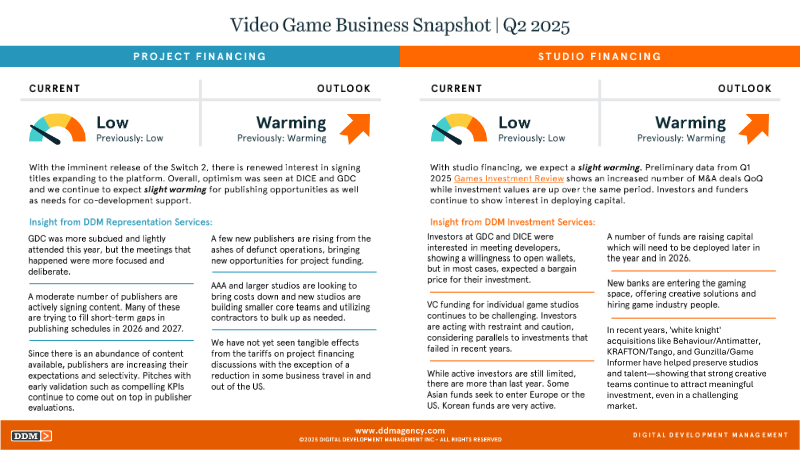
Video Game Business Snapshot: Q2 2025
The second quarter of 2025 highlights a strategic shift in the video game industry’s mergers and acquisitions landscape, characterized by a rise in rescue-style investments often referred to as white knight acquisitions. These transactions involve established global entities stepping in to acquire studios or media outlets that might otherwise face closure or significant downsizing. Notable examples include KRAFTON’s acquisition of Tango Gameworks, Behaviour Interactive’s absorption of Antimatter, and Gunzilla Games’ involvement with Game Informer. These moves suggest that despite broader economic volatility and a contraction in traditional venture capital, high-quality creative talent and established intellectual properties remain highly valuable assets for diversified gaming conglomerates.
The current market environment reflects a transition where strategic preservation is prioritized over speculative growth. Large-scale publishers are increasingly focused on securing proven development teams to bolster their long-term pipelines, viewing these acquisitions as opportunities to integrate specialized expertise at a time when independent sustainability is difficult. This trend underscores a broader industry sentiment that while the capital market remains challenging, the underlying value of experienced human capital continues to drive significant deal flow. These developments indicate that the industry is moving toward a more consolidated but stable structure, where the survival of key creative hubs is facilitated by the strategic interests of larger market players.
- Q2 2025 is defined by a surge in 'white knight' acquisitions, where major conglomerates are purchasing studios facing closure or downsizing to preserve creative talent and intellectual property.
- Notable rescue acquisitions this quarter include KRAFTON’s purchase of Tango Gameworks, Behaviour Interactive’s absorption of Antimatter, and Gunzilla Games’ involvement with Game Informer.
- The industry is shifting away from speculative growth toward strategic preservation, as large publishers prioritize securing proven development teams to stabilize long-term production pipelines.
- Despite a contraction in traditional venture capital and broader economic volatility, experienced human capital remains a high-value asset driving deal flow.
- The current market environment is trending toward a more consolidated industry structure, where the survival of independent creative hubs is increasingly dependent on the strategic interests of larger market players.
+1
DDMJun 2025