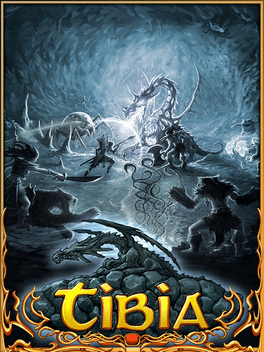
Tibia
GameBy CipSoft · Released Jan 9, 1997
One of the earliest and most successful massively multiplayer online role-playing games (MMORPGs) in history, Tibia is a two-dimensional tile-based game set in a fantasy world with pixel art graphics and a top-down perspective.
Connections
Each row is a game or company named alongside Tibia, each column a document, oldest first. A mark means that document names it. Select a row to see those documents.
About the game
- Released
- Jan 9, 1997
- Developer
- CipSoft
- Genres
- Role-playing (RPG), Adventure
- Platforms
- Linux, PC (Microsoft Windows), Mac
- Links
- Official site, Wikipedia
Game data from IGDB.com
Documents about Tibia
Hilmar Petursson on Building Games That Last Forever
The longevity of EVE Online, which has generated over $1 billion in revenue over 22 years, serves as a blueprint for creating persistent, player-driven digital universes.
- EVE Online has maintained a single, persistent universe for 22 years, generating over $1 billion in lifetime revenue and attracting 25 million players since its 2003 launch.
- CCP Games operates with a total staff of 400, with approximately 100 employees dedicated to EVE Online and a lean team of 50 focused on the new blockchain-powered spin-off, EVE Frontier.
- The studio utilizes unique operational KPIs to monitor game health, including tracking transactions per second on Microsoft SQL Server and real-time data on player deaths within the game's solar systems.
Game Dev Recap: Should You Make an MMO?
Developing a Massively Multiplayer Online (MMO) game as an independent developer is a high-risk, high-reward endeavor that requires a fundamental shift in design philosophy.
- MMOs offer a path to consistent, predictable cash flow that breaks the cycle of constant funding rounds, as evidenced by CipSoft’s 'Tibia,' which has been operating since 1997 and currently generates $25 million in revenue with $10 million in profit.
- Persistent worlds are more resilient than session-based multiplayer games because they do not suffer from a 'death spiral' when player counts drop; the game remains playable for individuals even with a smaller active population.
- Developing an MMO requires a 'funnel-based' design mindset, where developers continuously test and optimize user acquisition, retention, and progression metrics—often through early advertising—long before the game is fully released.
Make An Online Game That Lasts 30 Years
The longevity of online gaming services depends on a disciplined transition from hobbyist development to professional business operations, prioritizing long-term sustainability over short-term gains.
- Online service games offer superior long-term revenue stability compared to single-player titles, which typically experience a sharp decline in sales after the initial launch week.
- The free-to-play model allows developers to capture a wider range of player value by enabling high-engagement users to spend more than a fixed purchase price while still allowing lower-budget players to participate.
- Rigorous stage-gate processes, which require ideas to be evaluated and validated against defined criteria before proceeding, are essential to avoid wasting resources on features that lack player appeal.
Tibia’s Resurgence: How Streamers Revitalized a Classic MMORPG
The enduring MMORPG Tibia has experienced a notable resurgence in player engagement, demonstrating the capacity for legacy titles to maintain relevance through active community cultivation.
- Tibia, a 26-year-old MMORPG developed by CipSoft GmbH, saw a significant resurgence in engagement between September 24 and October 23, 2023, climbing 23 places in game rankings.
- Portuguese-speaking creators were the primary drivers of this growth, accounting for 63% of the total hours watched for the game during the one-month period.
- Six of the top ten streamers for Tibia during this spike originated from the Portuguese-speaking community, highlighting the impact of localized content on niche game longevity.
The Cheating Assemblage in MMORPGs: Toward a Sociotechnical Description of Cheating
This paper reframes cheating in massively multiplayer online role-playing games (MMORPGs) as a sociotechnical assemblage rather than a simple set of player actions that confer unfair advantage.
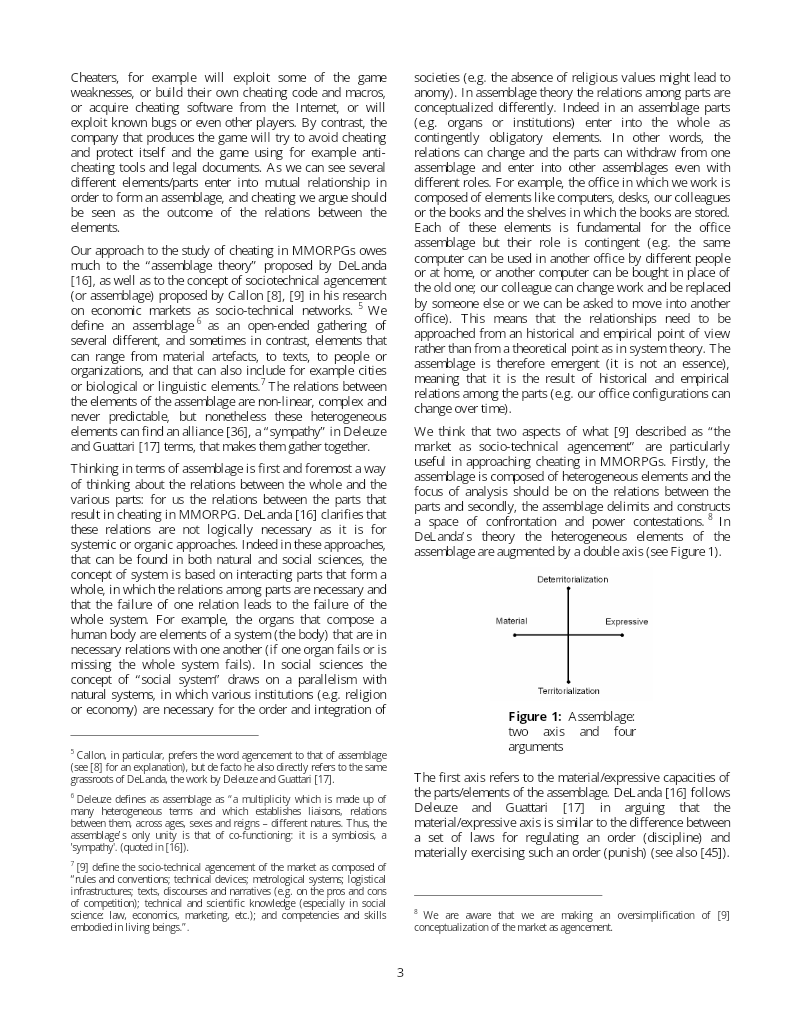
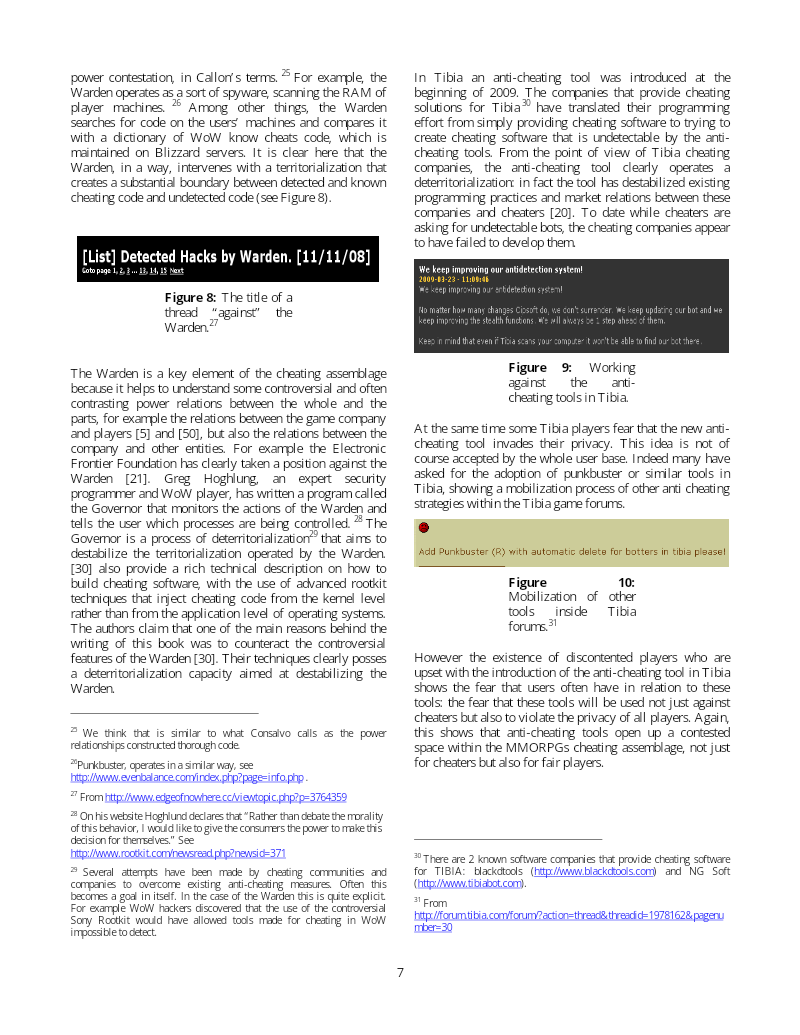
- The paper reframes cheating in MMORPGs as a sociotechnical assemblage, drawing on DeLanda and Callon, in which players, EULAs, anti-cheating tools, forums, server and client code, and gameplay design interact non-linearly rather than cheating being a simple set of player actions.
- The authors argue cheating should be analyzed through multi-level relationships rather than solely through technical prevention, positioning the work as a bridge between technical anti-cheating literature and media literature that treats cheating as intentional play.
- The empirical basis is qualitative: a pilot study of Tibia (roughly 300,000 players, September to November 2008), participant observation, forum posts, and the EULAs and Terms of Service of several MMORPGs including World of Warcraft, with no quantitative findings reported.