1 free read left. Create a free account for unlimited reading + AI research.
Create free accountWhitepaper DiGRA
1 free read left. Create a free account for unlimited reading + AI research.
Create free accountWhitepaperDiGRA
The paper reframes cheating in MMORPGs as emerging from players, EULAs, anti-cheating tools, forums, server and client code, and gameplay design.
This paper reframes cheating in massively multiplayer online role-playing games (MMORPGs) as a sociotechnical assemblage rather than a simple set of player actions that confer unfair advantage. Drawing on assemblage theory from DeLanda and Callon, the authors argue that cheating emerges from the interaction of heterogeneous human and non-human elements, including players, end-user license agreements, anti-cheating tools, forums, server and client code, and gameplay design. The central thesis is that cheating should be analyzed through multi-level, non-linear relationships rather than solely through technical prevention, positioning the work as a bridge between technical literature focused on anti-cheating solutions and media literature that treats cheating as intentional play.
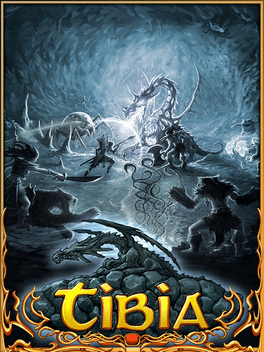
The empirical grounding is qualitative. The study draws on a pilot investigation of Tibia, which had roughly 300,000 players during September through November 2008, combined with ongoing participant observation, forum posts, and the EULAs and Terms of Service of several MMORPGs, including World of Warcraft. The analysis rests on four interrelated elements: game architecture, code, legal documents, and gameplay. It reports no quantitative findings.
Several conclusions stand out. The master-slave server architecture used by World of Warcraft and Tibia enables developers to validate client requests on the server, and Tibia's relocation of invisible-creature data from client to server illustrates how such design choices reduce cheating opportunities. Anti-cheating software such as Blizzard's Warden and cheating proxies such as BlackD Proxy are shown to both territorialize and deterritorialize player action. Licensing clauses, particularly World of Warcraft's "Consent to Monitor," function as obligatory passage points that make acceptance of surveillance a precondition for play. The authors ultimately conclude that cheating is contextually and historically situated rather than a fixed, purely harmful behavior.
Each row is a game or company this document names, each column a document, oldest first. A mark means that document names it. Select a row to see those documents.
DiGRA · 2016
DiGRA · 2016
DiGRA · 2016



DiGRA · 2016



DiGRA · 2016



DiGRA · 2016



DiGRA · 2016



DiGRA · 2016



DiGRA · 2016

DiGRA · 2015



DiGRA · 2015



DiGRA · 2015
DiGRA · 2009