The Sims 2
GameBy Maxis · Released Sep 2004
In The Sims 2, your Sims will be more lifelike, more responsive, and more complex than ever before. You'll be able to control your Sims over their entire lifetimes, taking them from their first steps to their golden years.
Connections
Each row is a game or company named alongside The Sims 2, each column a document, oldest first. A mark means that document names it. Select a row to see those documents.
About the game
- Released
- Sep 2004
- Developer
- Maxis
- Publishers
- Aspyr Media, Electronic Arts
- Genres
- Role-playing (RPG), Simulator, Strategy
- Platforms
- PC (Microsoft Windows), Mac
Game data from IGDB.com
Documents about The Sims 2
Game Mechanics and Dynamics of Social Actions in a Prototype Multiplayer Game World
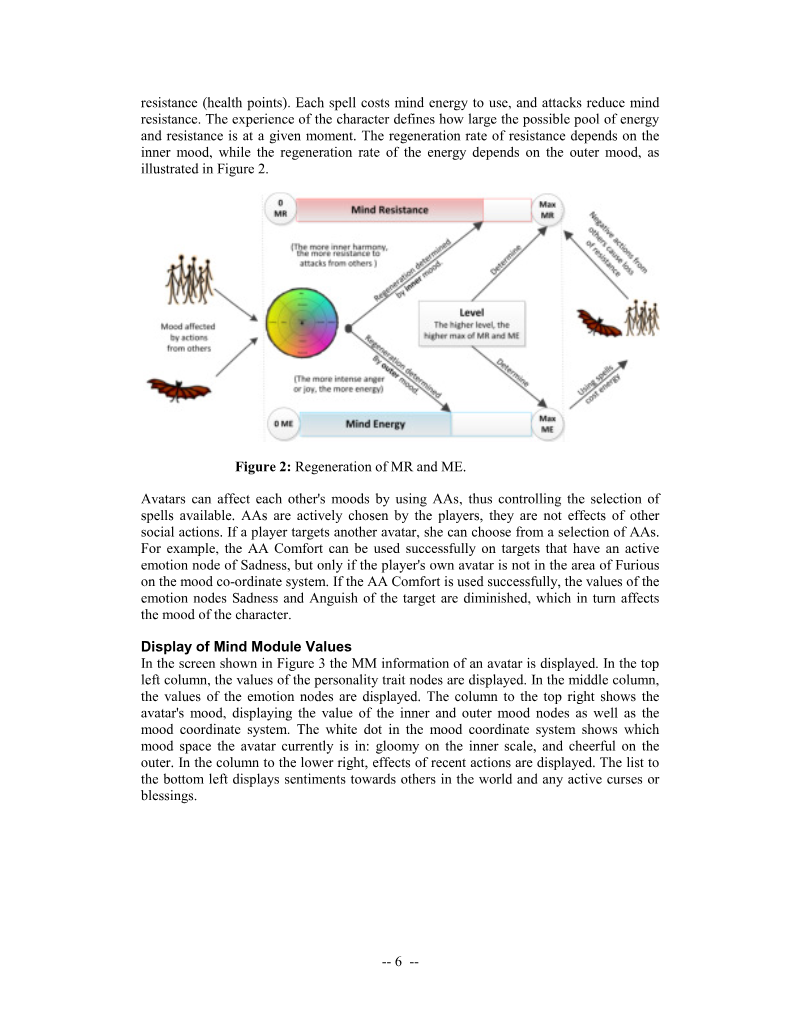
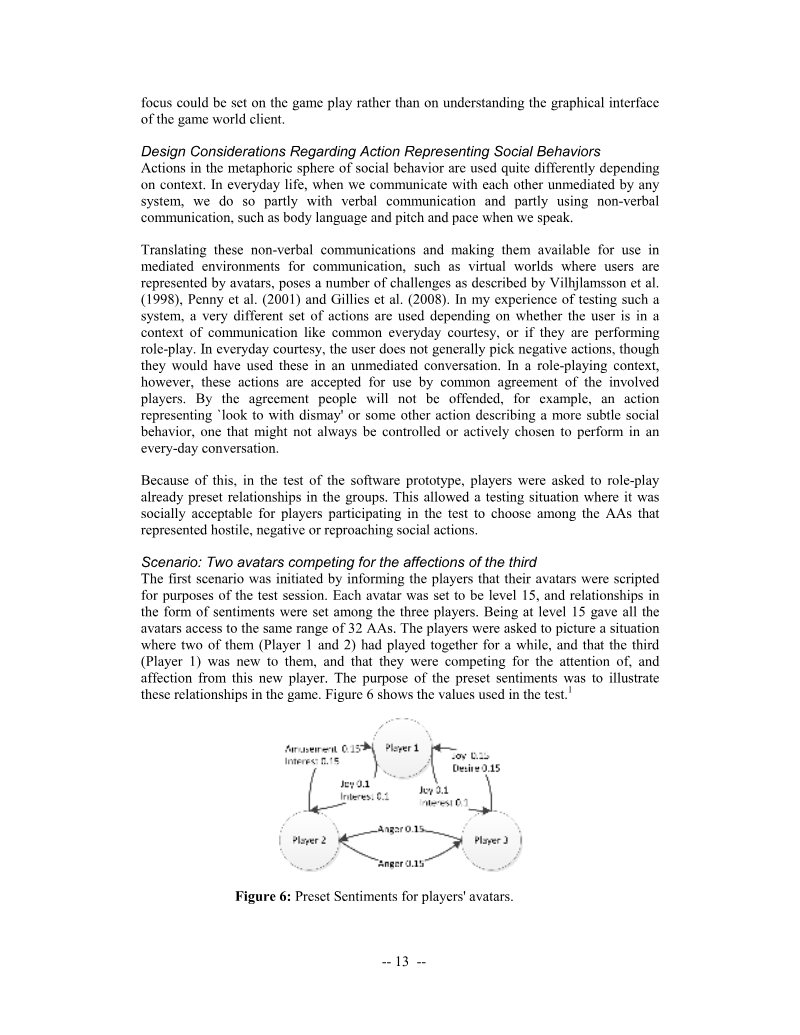
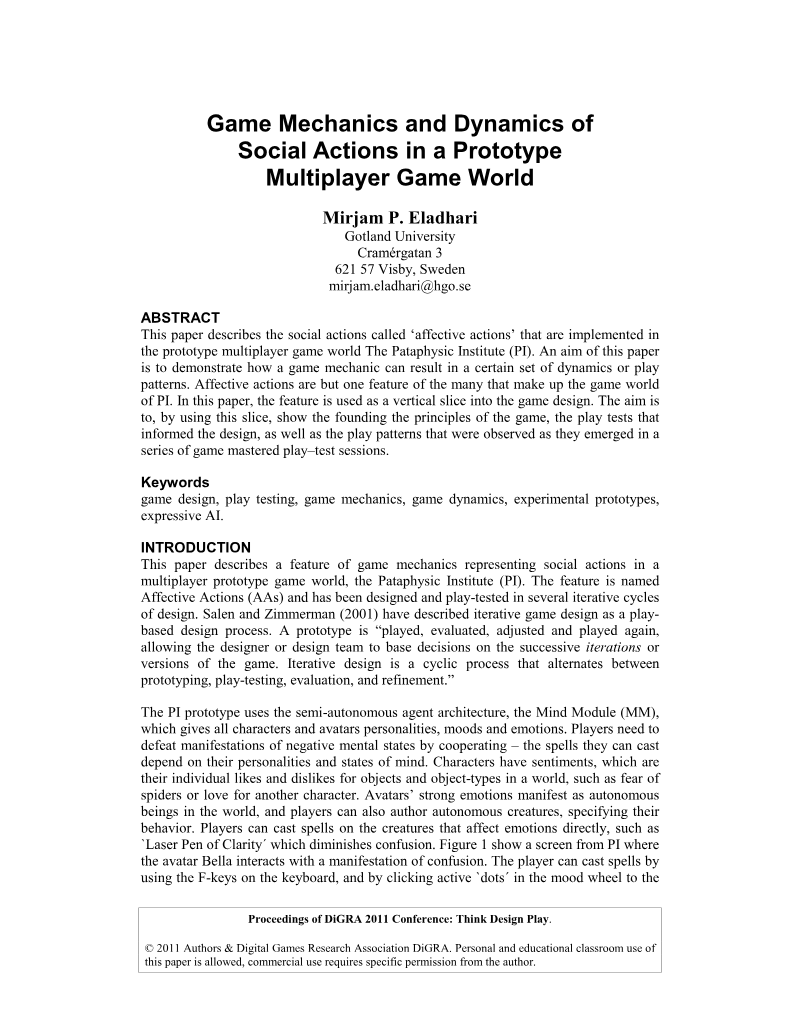
The paper examines the Pataphysic Institute (PI), a prototype multiplayer game world in which "affective actions" (AAs), social actions that shift avatars' emotional states, serve as a vertical slice demonstrating how a single game mechanic generates play dynamics.
Playing, Dashing, and Working: Simulated Productive Play in the Diner Dash Games
The document under consideration is a collection of four papers from the DiGRA 2009 conference proceedings, all exploring how gender, productivity, and leisure intersect in digital play.
- Simulated Productive Play, as introduced in the first paper, describes games such as Diner Dash and its spin-offs that stage domestic labor like serving, cleaning, and cooking, often reflecting women's anxieties about leisure time.
- The first paper frames these dynamics using sociological concepts of the "leisure gap" and the "second shift," linking game design to the unequal distribution of leisure and household work.
- A survey of female gamers who are also mothers finds their play is pragmatic, oriented toward family needs, relaxation, and short time slots rather than mere entertainment.
"I'm Overburdened!": An Empirical Study of the Player, the Avatar, and the Gameworld
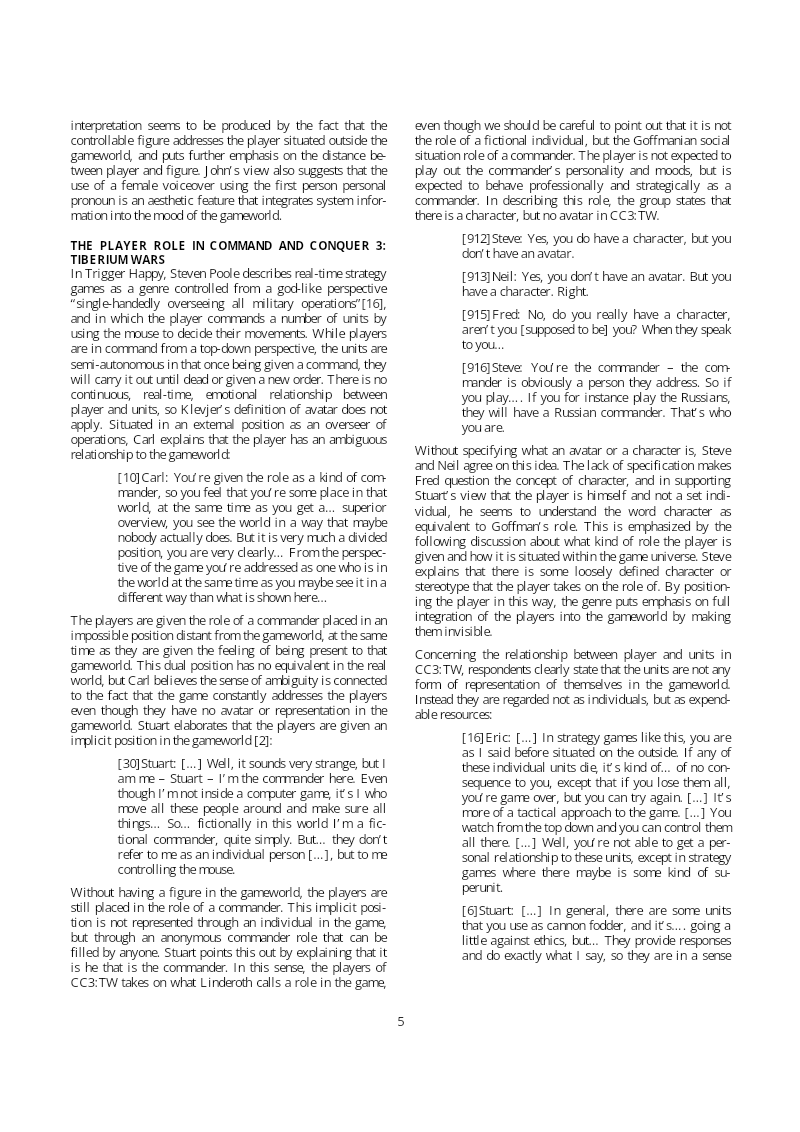
Jørgensen's study investigates how players understand their relationship to controllable figures within video games, challenging the adequacy of existing terminology such as "avatar" and "character" to describe that relationship.
- The study is based on interviews with 22 respondents (17 individual interviews and one five-person group interview) across four games: Crysis, Diablo 2, Command & Conquer 3: Tiberium Wars, and The Sims 2.
- The central distinction it draws is between a direct, one-to-one relationship between player and figure and an indirect, mediated one, which it argues existing terms like 'avatar' and 'character' fail to capture.
- Only Crysis's first-person perspective consistently led players to merge with their figure, experiencing player and character viewpoints as unified and identifying most strongly with the avatar.
If Power Gamers Aren't Fans, Who Are?
Wirman's paper challenges a long-standing assumption in game culture: that productivity, whether in the form of forum contributions, walkthroughs, or extensive participation in massively multiplayer games, reliably signals fandom.
- Productivity in games (forum contributions, walkthroughs, heavy MMO participation) does not reliably signal fandom: power gamers who produce heavily may not identify as fans at all, exposing conceptual ambiguity between the two categories.
- Wirman distinguishes instrumental texts that serve efficient play, such as walkthroughs, community databases like Thottbot, and cheat listings, from expressive texts like fan fiction, poetry, and machinima, which align more closely with traditional fan practice.
- Informal surveys of World of Warcraft forums found that most respondents self-identified as fans while power gamers were less likely to do so, with a gendered dimension evident in these self-identifications.
Simulating the Storytelling Qualities of Life: Telling Stories with the Sims
Satu Heliö's paper, presented at the DiGRA 2005 conference, addresses the long-running ludology versus narratology debate in game studies by proposing that the "narrative mindset" and social schemas offer a more useful framework for understanding player motivation than a strict divide between stories and games.
- Heliö argues that narrativization is a deeply embedded human cognitive tendency, drawing on cognitive psychology research into narrative schemas and scripts, and that certain game forms amplify it rather than games being inherently narrative.
- The paper proposes the 'narrative mindset' and social schemas as a more useful framework than a strict ludology-versus-narratology divide for understanding player motivation.
- The Sims (2000) and The Sims 2 (2004) are identified as 'borderline cases' in Jesper Juul's taxonomy and are presented as especially suited to storytelling, with their god-like external perspective inviting a third-person narrator's interpretive stance.
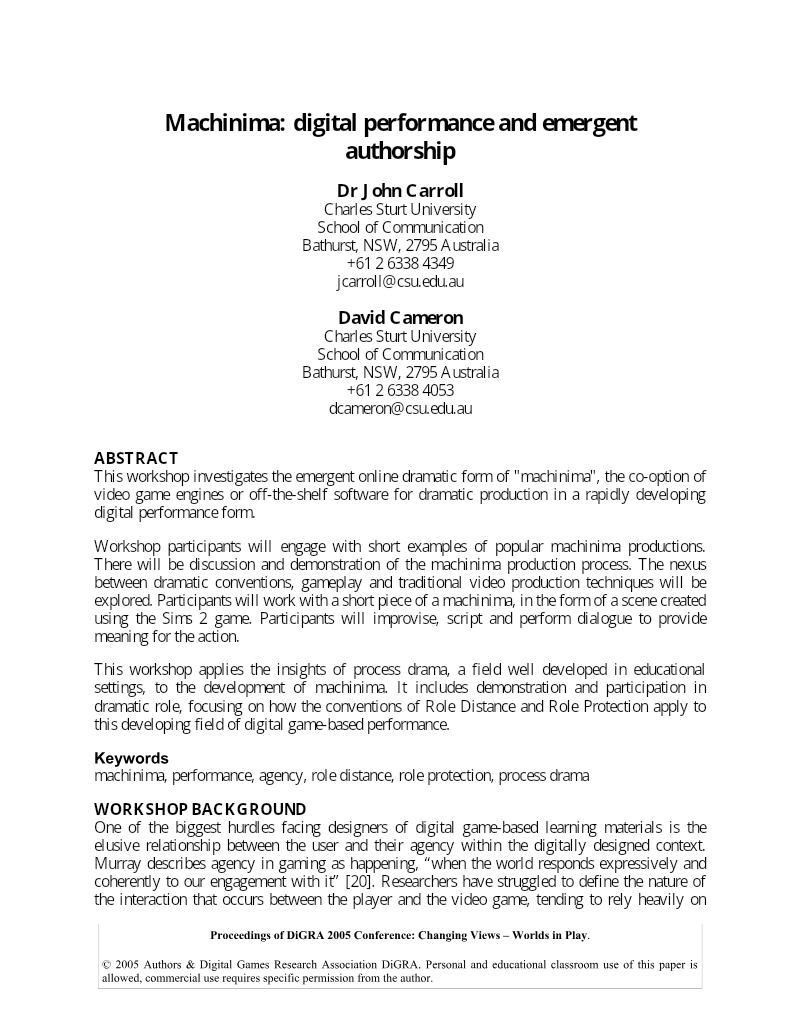
Machinima: Digital Performance and Emergent Authorship
This workshop paper, authored by John Carroll and David Cameron of Charles Sturt University, examines machinima, the practice of repurposing video game engines and off-the-shelf software such as Halo and The Sims 2 to produce dramatic works.
- Machinima repurposes video game engines and off-the-shelf software such as Halo and The Sims 2 to produce dramatic works, which the authors, John Carroll and David Cameron of Charles Sturt University, argue is an emergent form of digital performance and authorship.
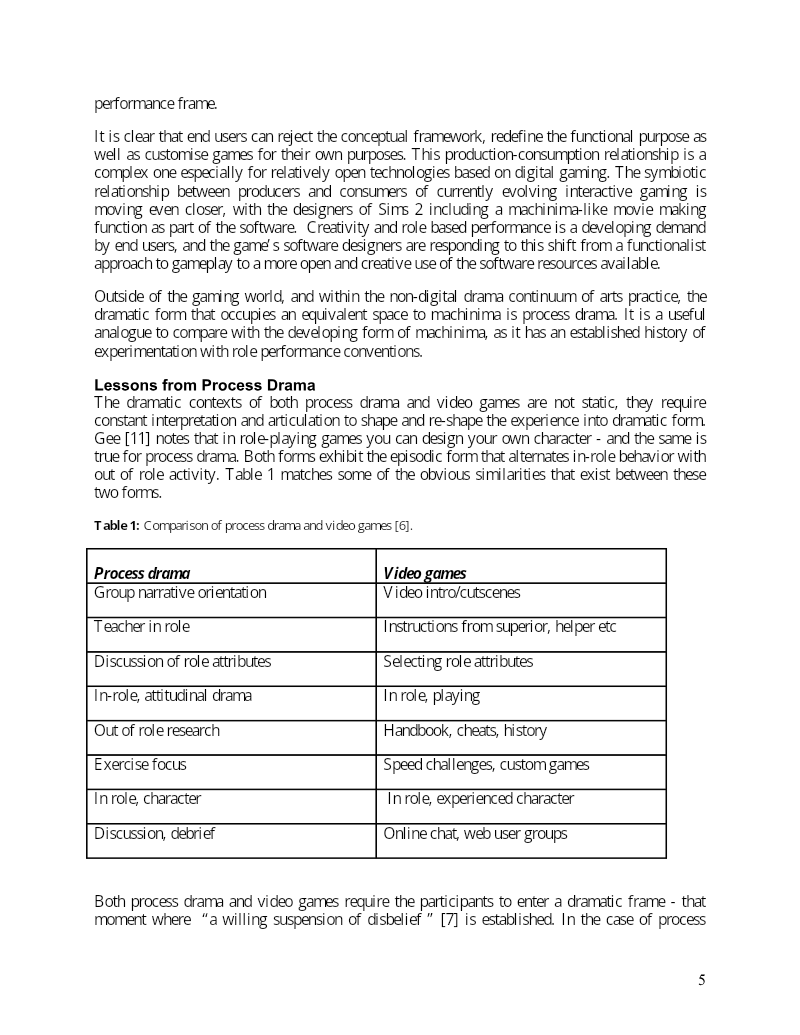
- The authors frame machinima through process drama conventions, particularly role distance and role protection, as a way to understand player agency in game-based performance.
- The history of machinima is traced to recording modes introduced in id Software's DOOM in 1994, which let players capture and share gameplay and later evolved into scripted parodies and episodic productions.
Challenge Balance and Diversity: Playing The Sims and The Sims 2
Sara Mosberg Iversen's paper uses the concept of challenge to examine The Sims (2000) and The Sims 2 (2004) as dynamic systems that motivate player activity, rather than as the ideological or cultural artifacts that much prior scholarship has focused on.
- The paper treats The Sims (2000) and The Sims 2 (2004) as dynamic systems that motivate player activity through challenge, rather than as ideological or cultural artifacts as much prior scholarship has done.
- The author classes these people-simulation games as 'borderline' games under a classical definition because they lack clear overall goals or winning conditions, yet argues challenge is a productive framework for understanding them and could support a broader definition of games.
- Challenge is defined experientially as a situation of resistance that calls for transformative action and requires non-trivial effort or has an uncertain outcome.
Making Right(s) Decision: Artificial Life and Rights Reconsidered
This paper, a DiGRA 2005 conference contribution by Juyun Kim, examines whether artificial life (A-life) and artificial intelligent robots raise genuine questions about rights and moral standing, using the popular simulation game The Sims as its primary case study.
- The paper argues that as machines become more socially interactive and emotionally expressive, the boundary between human and machine becomes less fixed, calling for a reconsideration of what rights mean for artificial life.
- The author's central evidence is qualitative analysis of public forums about The Sims and the robotic pet AIBO, where players described deliberately cruel treatment of their Sims (such as drowning or confining them) while also expressing guilt and reluctance to harm characters resembling family or friends.
- Research on AIBO users cited in the paper found people were attached to robotic pets yet seldom attributed moral standing to them, showing a gap between emotional attachment and moral consideration.