1 free read left. Create a free account for unlimited reading + AI research.
Create free accountWhitepaper DiGRA
1 free read left. Create a free account for unlimited reading + AI research.
Create free accountWhitepaperDiGRA
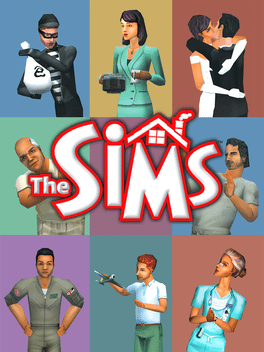
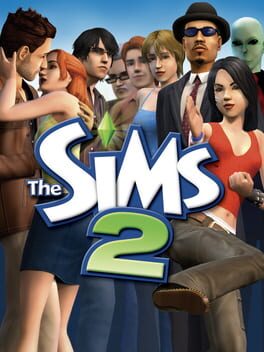
The practice uses software such as Halo and The Sims 2 to produce dramatic works. The authors call it an emergent form of digital performance and authorship.
This workshop paper, authored by John Carroll and David Cameron of Charles Sturt University, examines machinima, the practice of repurposing video game engines and off-the-shelf software such as Halo and The Sims 2 to produce dramatic works. The authors argue that machinima represents an emergent form of digital performance and authorship, and that the conventions of process drama, particularly role distance and role protection, offer a useful framework for understanding player agency within game-based performance. The paper is framed as a practice-led DiGRA 2005 workshop in which participants improvise and script dialogue for a short Sims 2 scene.
The authors trace the history of machinima to recording modes introduced in id Software's DOOM in 1994, which allowed players to capture and share gameplay and gradually evolved into scripted parodies and episodic productions. They position works such as Red vs. Blue and The Strangerhood, both produced by Rooster Teeth Productions, as examples in which human performers manipulate in-game characters and camera movements, with voice-over and editing added in post-production. The paper also draws a structural comparison between process drama and video games, presenting a table matching features such as teacher-in-role with non-player characters, out-of-role research with game handbooks, and debrief with online user communities.
Drawing on the social shaping of technology framework, the authors argue that determinist critiques of video games overlook the production of meaning by users. They illustrate this with the example of a student-designed ecological game, Save the Platypus, which players subverted into a search-and-destroy game, and with Sims 2's inclusion of movie-making tools as evidence of a growing producer-consumer symbiosis. The evidence is primarily anecdotal and observational, drawn from the authors' own experience playing EverQuest and analysing machinima, rather than from survey or quantitative data.
The paper concludes that machinima and process drama both occupy an intermediate space between linear narrative and game play, and that the spectactor position from process drama may inform the development of game-based learning materials. The authors present the work as an interdisciplinary contribution situated at the intersection of drama education, game studies, and digital culture.
DiGRA · 2016



DiGRA · 2016
DiGRA · 2007