1 free read left. Create a free account for unlimited reading + AI research.
Create free accountWhitepaper DiGRA
1 free read left. Create a free account for unlimited reading + AI research.
Create free accountWhitepaperDiGRA
The study asked how players understand their relationship to controllable figures in video games. It drew on 17 individual interviews and one five-person group interview.
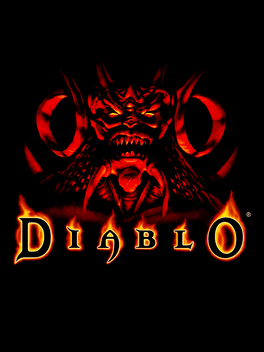
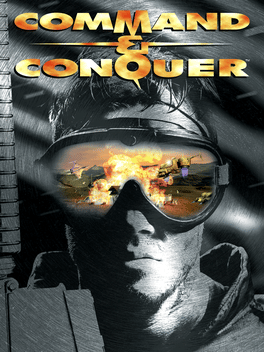
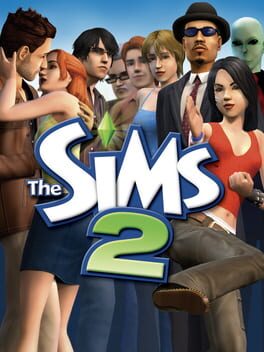
Jørgensen's study investigates how players understand their relationship to controllable figures within video games, challenging the adequacy of existing terminology such as "avatar" and "character" to describe that relationship. Drawing on interviews with 22 respondents, comprising 17 individual interviews and one five-person group interview, the research examines four games: Crysis, Diablo 2, Command & Conquer 3: Tiberium Wars, and The Sims 2. Its central claim is that these titles differ substantially in how the player's role connects to the gameworld, and that the critical distinction lies between a direct, one-to-one relationship and an indirect, mediated one.
The findings show that the first-person perspective of Crysis is the only setting in which players consistently merge with their figure, identifying most strongly with the avatar and experiencing the viewpoints of player and character as unified. By contrast, indirect, point-and-click control in Diablo 2, Command & Conquer 3, and The Sims 2 fosters distance. In Command & Conquer 3, players adopt a distant commander role without an avatar, while The Sims 2 positions the player in a godlike, dollhouse-style vantage over autonomous characters. Diablo 2 proves an exception to the pattern, with respondents describing a diffuse role and a sense of alienation rather than identification with their figure.
The study also finds that players readily accept interface elements such as the heads-up display, even when these are framed as non-naturalistic overlays, provided they aid comprehension of the game. An avatar that speaks autonomously, however, can disrupt the sense of alignment between player and figure. Players appear to tolerate the paradox of being simultaneously outside the gameworld and acting within it, treating this as a communicative convention rather than an obstacle.
Interpretation is shaped by both design and individual style. Players' readings depend on how each game presents its figure and on their own playing habits. Those who focus on narrative tend to interpret controllable characters in terms of intentions and personality, suggesting that the player's understanding of their role is as much a product of engagement style as of the game's mechanics.
DiGRA · 2016
DiGRA · 2016
DiGRA · 2009