1 free read left. Create a free account for unlimited reading + AI research.
Create free accountArticle DiGRA
1 free read left. Create a free account for unlimited reading + AI research.
Create free accountArticleDiGRA
The paper argues that power gamers may not identify as fans at all, which exposes a conceptual ambiguity between the two categories.
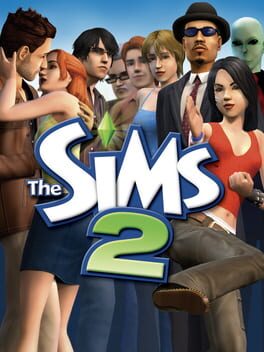
Wirman's paper challenges a long-standing assumption in game culture: that productivity, whether in the form of forum contributions, walkthroughs, or extensive participation in massively multiplayer games, reliably signals fandom. The central argument is that "power gamers" who produce heavily through play may not identify as fans at all, exposing conceptual ambiguity between these categories. Drawing on fandom theory from Fiske, Jenkins, and Abercrombie and Longhurst, the analysis contends that productivity in games takes distinct forms, including playing as textual productivity, reconfiguration, and construction, that differ from the fan-text production traditionally examined in media fandom. Examples drawn from World of Warcraft and The Sims 2 anchor the case for redefining fandom within game studies.
A key finding distinguishes instrumental texts, such as walkthroughs, community databases like Thottbot, and cheat listings, which serve efficient play and goal achievement, from expressive texts like fan fiction, poetry, and machinima, which align more closely with traditional fan practice. Informal surveys of World of Warcraft forums suggested that most respondents self-identified as fans, while power gamers were less likely to do so, with a gendered dimension evident in these self-identifications. The conclusion is that textual productivity alone cannot define game fandom, and that more precise definitions must separate instrumental from expressive player output.
The paper's final argument reframes game fandom around player productivity and co-creation rather than loyalty to a console or brand. Highly productive power gamers may approximate the "prosumer" ideal, blurring the line between consumer and producer. The analysis cautions, however, that player-created texts remain largely dependent on mass-marketed games, that only a small share of players contribute, and that all such work proceeds within corporate economic and legal constraints. Fan theory should therefore treat fans and consumers as overlapping identities, and computer game players should be understood as always already producers.
DiGRA · 2018
DiGRA · 2014