1 free read left. Create a free account for unlimited reading + AI research.
Create free accountWhitepaper DiGRA
1 free read left. Create a free account for unlimited reading + AI research.
Create free accountWhitepaperDiGRA
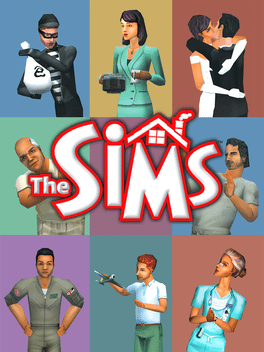
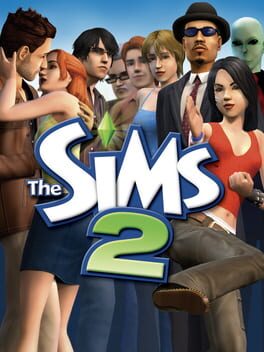
This paper instead treats The Sims and The Sims 2 as dynamic systems that motivate player activity.
Sara Mosberg Iversen's paper uses the concept of challenge to examine The Sims (2000) and The Sims 2 (2004) as dynamic systems that motivate player activity, rather than as the ideological or cultural artifacts that much prior scholarship has focused on. The author argues that these people-simulation games are "borderline" games under a classical definition, since they lack clear overall goals or winning conditions, yet challenge provides a productive framework for understanding them and may serve as a basis for a broader definition of games. Challenge is defined experientially as a situation of resistance that calls for transformative action and requires non-trivial effort or has an uncertain outcome.
The analysis organizes the games' challenges into three types: competitive, explorative, and constructional. Competitive challenges arise from time pressure, as sims' needs grow and, in The Sims 2, sims age and die, and from the wants and fears system introduced in the sequel, where fulfilling wants yields rewards and fulfilling fears incurs penalties. Explorative challenges emerge from the games' hidden rules, which players uncover through experimentation and collaborative investigation, and from modding communities that extend the software. Constructional challenges, the dominant category, are driven by building, buying, and storytelling tools, with players setting their own aims such as recreating real houses, optimizing for gameplay, or pursuing aesthetic goals.
The paper's central contrast concerns challenge management. Unlike many games, neither title forces challenges on the player, and the player largely decides which challenges to take on. In The Sims 2, the game system initiates new wants and fears dynamically, while the original leaves more initiative to the player. The author concludes that The Sims 2 moves closer to a classical game through stronger competitive and explorative elements, plausibly reflecting Maxis's response to the first game's experience with a broader player base. The study is conceptual and analytical rather than empirical in the survey sense; its evidence comes from close reading of the games' affordances and from player discussions drawn from community forums and fan sites.
DiGRA · 2018
DiGRA · 2009