Squad Busters
Game
Documents about Squad Busters
Mobile Gaming Pulse: May 2024
The mobile gaming landscape in May 2024 was defined by the high-profile launch of Supercell’s Squad Busters and a significant surge in the popularity of anime-themed titles.
- Supercell’s Squad Busters reached 44.3 million global downloads and $28 million in consumer spending within days of its May 29, 2024, launch, supported by massive digital ad spend across major social platforms.
- Dungeon & Fighter Mobile, published by Tencent in China, generated over $100 million in iOS consumer spending in May 2024, securing the top spot for worldwide revenue growth.
- Anime-themed games dominated the May 2024 breakout charts, accounting for three of the top ten breakout downloads and eight of the top ten breakout revenue earners.
Squad Busters: Revenue and Metrics Analysis
Squad Busters, the first global release from Supercell since 2018, has demonstrated strong initial market performance.
- Squad Busters generated $10.6 million in total lifetime revenue as of its post-launch period, with $9.16 million earned during its first week following the May 29, 2024, global release.
- The game achieved 5 million downloads faster than any previous Supercell title, reaching approximately 30 million lifetime installs to date.
- The United States is the primary revenue driver at 37% of total earnings, while Google Play accounts for 71% of total downloads despite the Apple App Store generating 68% of revenue.
Supercell Struggle: Navigating Market Saturation in Mobile Gaming
This analysis examines the strategic challenges facing major mobile gaming entities, specifically focusing on Supercell’s recent performance and the broader implications for its parent company, Tencent.
- The mobile gaming market has reached a saturation point where traditional user acquisition is becoming prohibitively expensive due to identical playtime patterns across major global markets like the US and China.
- Supercell’s 65 percent revenue growth between November 2023 and June 2024 was driven by aggressive marketing rather than organic expansion.
- The launch of Supercell’s first new title in five years, Squad Busters, primarily cannibalized the existing player bases of Clash of Clans and Brawl Stars instead of attracting new audiences.
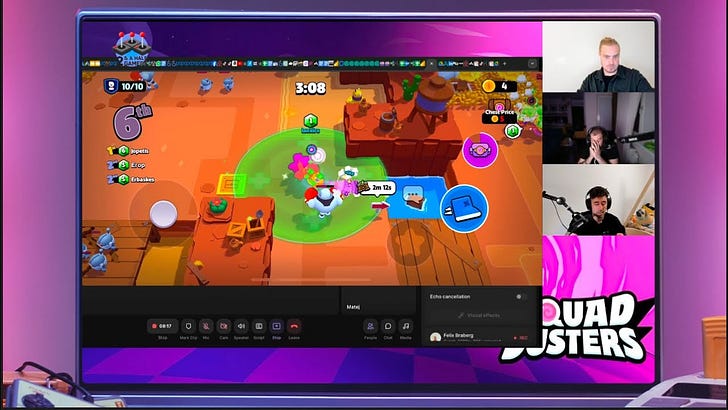
Squad Busters is Pay to Win: True or False?
This analysis evaluates the competitive design and monetization framework of Supercell’s Squad Busters ahead of its global launch.
- The integration of purchasable, consumable mega units provides significant statistical advantages that create a distinct pay-to-win dynamic in Squad Busters.
- Supercell’s monetization strategy for the game is specifically tailored to align with Asian market standards, where pay-to-win mechanics are more widely accepted.
- Despite concerns regarding competitive integrity, the game demonstrates a robust foundation evidenced by high retention rates and strong day-30 performance metrics.

Supercell's High Bar Is Starting to Look Insurmountable
Supercell’s internal development strategy is increasingly characterized by a rigorous, high-stakes greenlight process that appears to be making the release of new titles more difficult than ever.
- Supercell has implemented a rigorous new gauntlet-style greenlight process for internal and external development teams, making it increasingly difficult to bring new games to market.
- The company recently cancelled the game Clash Mini, though it plans to integrate elements of the title into Clash Royale, similar to the strategy used for the previously cancelled game Everdale.
- Supercell has not released a major new global hit since Brawl Stars five years ago, despite maintaining a high-bar philosophy focused on creating industry-shaking titles.
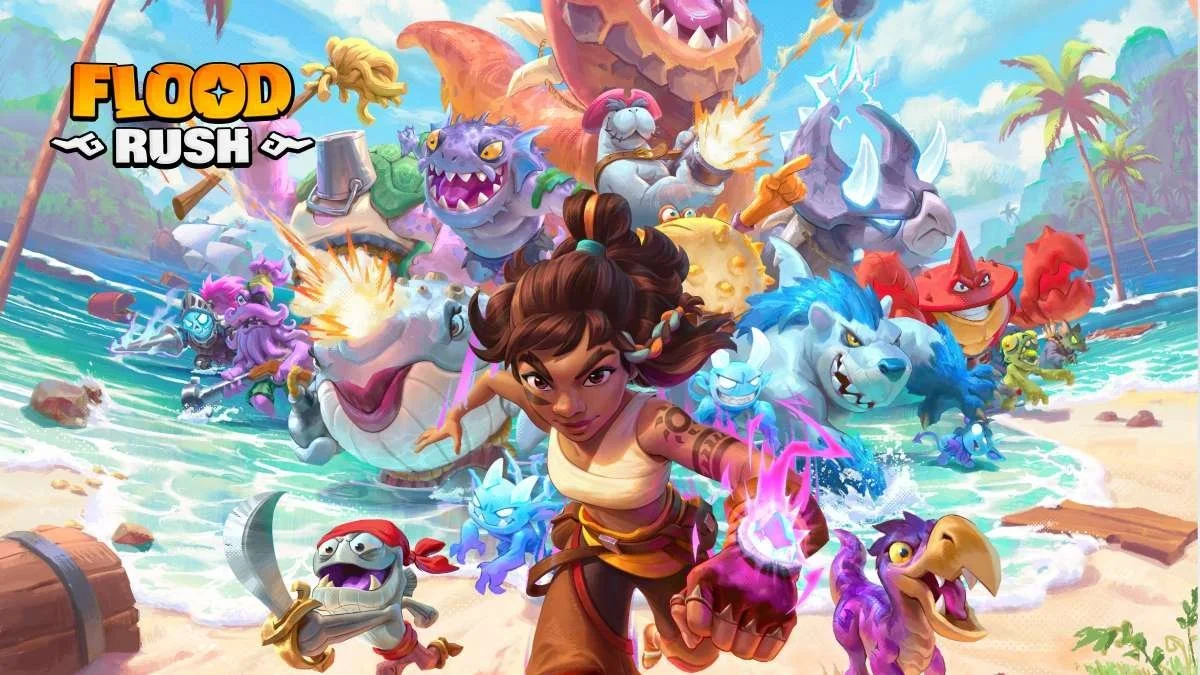
Supercell’s Floodrush: A Preview
Floodrush, a mobile title developed by Supercell, represents a recent entry into the competitive battle royale genre.
- Supercell’s Floodrush is a battle royale title featuring four-minute matches where players collect resources to command automated minion armies.
- The game currently suffers from significant design flaws, including passive combat, a lack of tactical depth, and a counterintuitive tap-to-move control scheme.
- A lack of rubberbanding mechanics in the game design frequently leads to snowballing, where early-game advantages become impossible for opponents to overcome.
Titanfall 2: The Titan That Almost Was
The gaming industry underwent a period of profound transformation between 2022 and 2026, characterized by shifting monetization models, the integration of generative AI, and significant volatility in user acquisition.
- Mobile gaming success is increasingly driven by older, established titles, requiring developers to focus on long-term retention and quieter, sustained growth strategies rather than explosive launches.
- Performance marketing strategies frequently collapse at scale, often due to a failure to adapt creative assets to a privacy-centric environment where traditional targeting is less effective.
- Studios founded by alumni from major companies like Activision, Blizzard, and King possess a distinct competitive advantage in launching and scaling new gaming startups.
Managing and Avoiding Content Treadmills
The gaming industry is currently navigating a period of profound structural transformation, characterized by the integration of generative AI, shifting monetization models, and a tightening investment climate.
- Supercell's 'Squad Busters' failed to meet expectations despite a $150 million budget, the use of Hollywood talent, and a strategy that bypassed traditional soft launching.
- Mobile game marketing is shifting toward AI-driven ad creative with costs under $10 and an increased reliance on loyalty programs to drive retention and revenue.
- LiveOps strategies in mobile gaming, such as those implemented by 'Clockmaker', remain a critical lever for growth and can be significantly improved through structured, player-centric updates.
Indie Dimepiece: Super Tribes
The gaming industry has undergone a profound transformation between late 2021 and mid-2026, characterized by shifting monetization models, the integration of artificial intelligence, and a volatile investment climate.
- AppLovin has established itself as the dominant force in mobile ad tech by rewriting industry rules and creating a dependency model that forces competitors to rely on its infrastructure.
- Microfun successfully scaled 'Gossip Harbor' to the second-highest position in the US merge game market, demonstrating that significant growth is still achievable in highly competitive genres.
- Leading game studios are increasingly integrating AI to maintain live service operations, as evidenced by InnoGames using AI to extend the lifecycle of 'Sunrise Village'.
Companies behind it

As the documents state it.