Key insights
6 slides
What changed
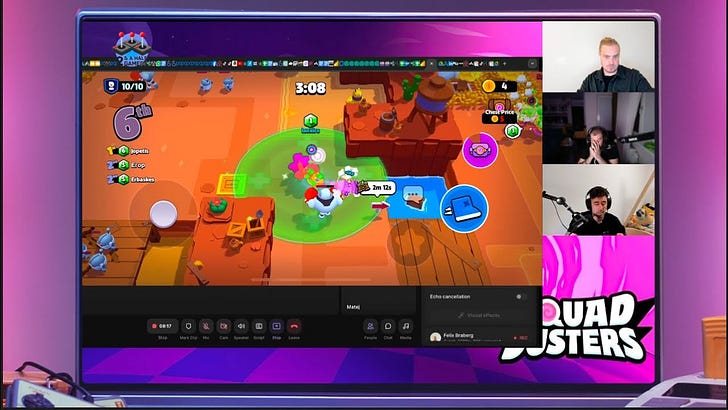
Squad Busters moved toward a shard and consumable progression system.
The game evolved through several iterations. Its current design relies heavily on shards and consumable items.
Key number
Purchasable mega units provide significant statistical advantages in combat.
These consumable units create a distinct pay-to-win dynamic. They impact the game's competitive integrity.
significant
Statistical advantage provided by purchasable mega units
Market fit
Monetization is tailored to Asian markets where pay-to-win is accepted.
The strategy aligns with regional standards. Pay-to-win mechanics are more widely accepted in these markets.
Regional strategy. Supercell’s monetization strategy is specifically tailored to align with Asian market standards.
Retention data
High retention and strong day-30 metrics show a robust foundation.
The game demonstrates strong performance metrics.
Marketing plan
Long-term success depends on balancing monetization with influencer marketing.
The strategy relies on influencer partnerships on platforms like TikTok. It also uses targeted advertising across major social channels.
Success factors. Long-term success for the title depends on balancing these monetization tactics with influencer-led marketing campaigns.
Competitive challenge
Paid units challenge the PvP objectives of a casual design.
The game is designed to be more casual than Brawl Stars. Paid units create challenges in maintaining competitive integrity.
1 / 6
Ask AI about this report