
P.T.
GameBy Kojima Productions · Released Aug 12, 2014
P.T. (Playable Teaser) is a first-person interactive teaser directed by Hideo Kojima and developed by Kojima Productions under the alias of "7780s Studios". It is a psychological survival horror that combined simplicity with an anxiety-inducing environment.
Connections
Each row is a game or company named alongside P.T., each column a document, oldest first. A mark means that document names it. Select a row to see those documents.
About the game
- Released
- Aug 12, 2014
- Developer
- Kojima Productions
- Publisher
- Konami
- Genres
- Puzzle, Adventure
- Platforms
- PlayStation 4
- Links
- Wikipedia
Game data from IGDB.com
Documents about P.T.



Aesthetics of Holarchic Narrative Design: Participatory Pleasures of Game Storyworlds
Holarchic Storytelling (HS) is presented as an aesthetic approach to narrative design in which games fragment their stories into self-contained yet interconnected units, or "holons," such as notes, recordings, and sub-stories.
- Holarchic Storytelling fragments a game's narrative into self-contained but interconnected units called 'holons' (notes, recordings, sub-stories) that work both as standalone experiences and as contributions to a unified storyworld, drawing on Arthur Koestler's holon theory and James Dalby's 'holarchic media.'
- The approach is framed as a response to commercial pressure on player retention and the rise of open-world design, both of which favour participatory and interpretive engagement over passive reception.
- The author argues that players shift from consumers to active meaning-makers, a relationship termed 'creatorship,' in which player agency and authorial intent occupy opposing poles.
Living Games and Digital Decay: Curating as Temporal Practice
This paper examines the challenge museums face as they increasingly collect video games whose identities shift through updates, expansions, and community activity.
- Living games such as Minecraft, Fortnite, and World of Warcraft resist fixed identity because they function as ongoing networked processes shaped by updates, expansions, and community activity, so museum preservation must shift from the artifact to its temporality.
- The paper's central argument is that preserving living games requires attending to their entropic dimension: systemic decay, obsolescence, and infrastructural fragility built into platform-based existence.
- Games depend on server continuity, patch cycles, licensing arrangements, and corporate ecosystems, so earlier versions, features, and worlds are routinely superseded or made inaccessible.
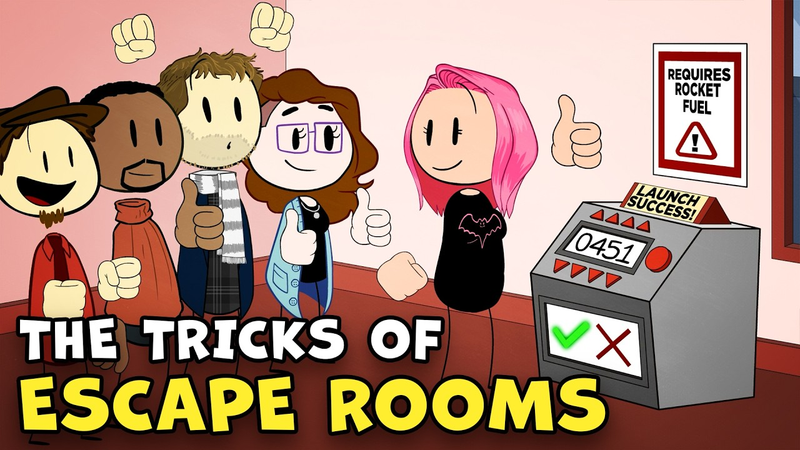
Escape Rooms: Manipulation for Fun and Profit! | Extra Credits Gaming
Modern escape rooms function as sophisticated psychological environments designed to immerse participants in a narrative while guiding their behavior through subtle game design techniques.
- The modern escape room industry originated with Takao Kato’s company SCRAP in 2007, and has since expanded to an estimated 50,000 rooms across at least 44 countries.
- Designers utilize the 'magic circle' concept to foster immersion, employing themed introductions and 'endowments'—such as specific titles or physical props—to help players adopt a role and suspend disbelief.
- Lighting is used as a non-verbal tool to guide player movement and focus, such as dimming lights in one area to encourage migration to a brighter room or using soft pulses to highlight puzzle components.
What Lurks in the Margins: The Ill-Known Short Horror Video Games
This extended abstract, authored by Bernard Perron and Jean-Charles Ray of the Université de Montréal's LUDOV research group, introduces a research program examining short horror video games produced by indie and homebrew developers at the margins of the mainstream industry.
- The paper is an exploratory extended abstract (DiGRA 2023) from Bernard Perron and Jean-Charles Ray of the Université de Montréal's LUDOV group, framed as a foundation for future study rather than completed findings.
- It argues that the survival horror genre may be renewed most meaningfully on the fringes of the industry, in indie and homebrew short horror games, rather than in Triple-A franchises like Resident Evil and Silent Hill.
- Hideo Kojima's P.T. (2014) is credited with launching a trend of shorter, minimalist psychological horror experiences, including Layers of Fear and Evil Inside.
The Play of Stillness: Designing Experiential Play Spaces
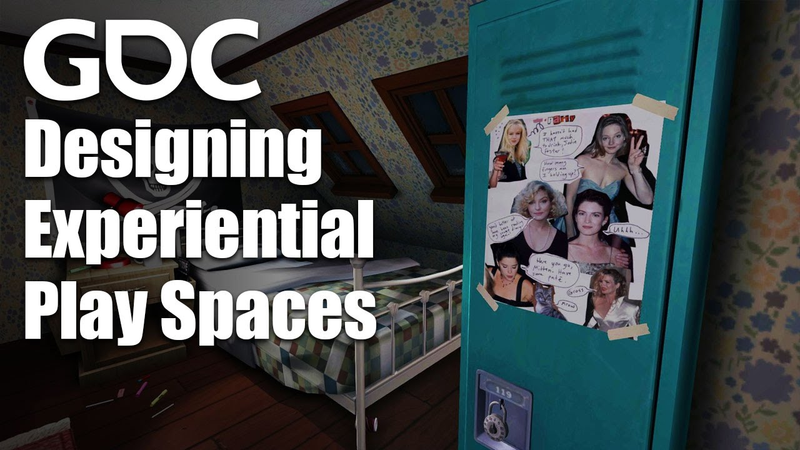
Game design often suffers from an over-reliance on constant interactivity, mistakenly treating mechanical input as the primary source of player engagement.
- Designers should prioritize experiential spaces that foster mental activity and interpretation over constant mechanical input or feedback loops.
- Deep emotional resonance is achieved by balancing predictability with uncertainty, which compels players to construct their own internal models of the game world.
- Minimalist design approaches, as demonstrated in titles like 30 Flights of Loving and P.T., use sparse information to force players to project personal meaning onto the environment.
Companies behind it

As the documents state it.