1 free read left. Create a free account for unlimited reading + AI research.
Create free accountArticle DiGRA
1 free read left. Create a free account for unlimited reading + AI research.
Create free accountArticleDiGRA
The authors argue that the genre may be renewed most meaningfully in indie and homebrew short horror games rather than in Triple-A franchises such as Resident Evil and Silent Hill.
This extended abstract, authored by Bernard Perron and Jean-Charles Ray of the Université de Montréal's LUDOV research group, introduces a research program examining short horror video games produced by indie and homebrew developers at the margins of the mainstream industry. The authors argue that while Triple-A franchises such as Resident Evil and Silent Hill dominate the genre's visibility, the genre may be renewed most meaningfully in these fringes. The project is presented as a Proceedings of DiGRA 2023 contribution, positioned as a foundation for further study rather than a set of completed findings.
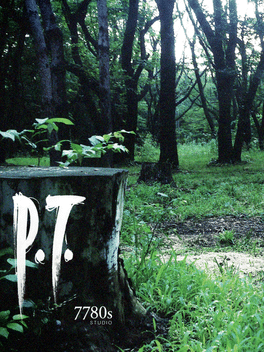
The research takes its inspiration from Hideo Kojima's P.T. (2014), which the authors credit with launching a trend of shorter, minimalist psychological horror experiences, including Layers of Fear and Evil Inside. Drawing on Joshua Bycer's concept of "microhorror," the authors define the subject as games lasting from a few minutes to roughly an hour, and they propose comparing these works to the early twentieth-century Grand-Guignol theater tradition, which André de Lorde called "terror pills." The authors' preliminary observations note that many sub-two-hour indie titles reuse retro graphics or stage a mise en abyme of unstable software, suggesting a corpus that reinvests gaming history as a source of unease.
The scope centers on games no longer than two to three hours, and the methodology is framed around formal analysis using the Historical-Analytical Comparative System and Perron's earlier framework on videoludic horror. The guiding questions concern whether these works develop distinct parallel subgenres, whether they employ the same "scare tactics" as conventional survival horror, and how they might refine existing theory. No quantitative sample or survey data is reported, and the paper is explicitly exploratory in nature.
Each row is a game or company this document names, each column a document, oldest first. A mark means that document names it. Select a row to see those documents.

DiGRA · 2026

DiGRA · 2026



DiGRA · 2026
DiGRA · 2026