
P.T.
GameBy Kojima Productions · Released Aug 12, 2014
Documents about P.T.
Extra Credits18 min
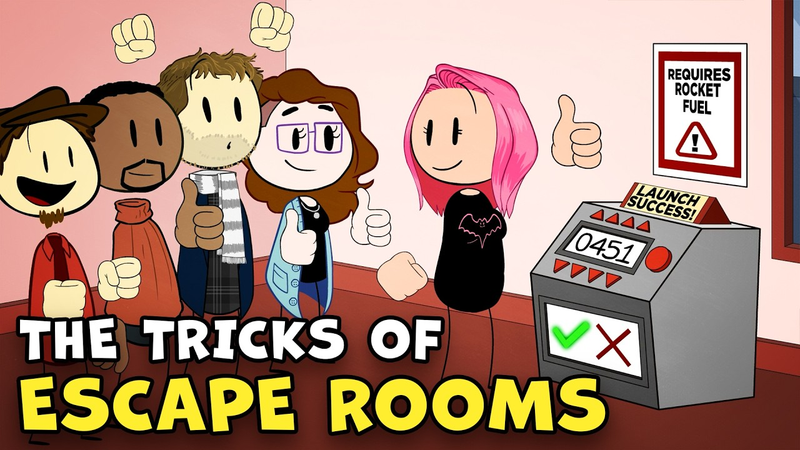
Escape Rooms: Manipulation for Fun and Profit! | Extra Credits Gaming
Modern escape rooms function as sophisticated psychological environments designed to immerse participants in a narrative while guiding their behavior through subtle game design techniques.
- The modern escape room industry originated with Takao Kato’s company SCRAP in 2007, and has since expanded to an estimated 50,000 rooms across at least 44 countries.
- Designers utilize the 'magic circle' concept to foster immersion, employing themed introductions and 'endowments'—such as specific titles or physical props—to help players adopt a role and suspend disbelief.
- Lighting is used as a non-verbal tool to guide player movement and focus, such as dimming lights in one area to encourage migration to a brighter room or using soft pulses to highlight puzzle components.
Extra CreditsOct 2025

Game Developers Conference65 min
The Play of Stillness: Designing Experiential Play Spaces
Game design often suffers from an over-reliance on constant interactivity, mistakenly treating mechanical input as the primary source of player engagement.
- Designers should prioritize experiential spaces that foster mental activity and interpretation over constant mechanical input or feedback loops.
- Deep emotional resonance is achieved by balancing predictability with uncertainty, which compels players to construct their own internal models of the game world.
- Minimalist design approaches, as demonstrated in titles like 30 Flights of Loving and P.T., use sparse information to force players to project personal meaning onto the environment.
Game Developers ConferenceApr 2017
Companies behind it

As the documents state it.