1 free read left. Create a free account for unlimited reading + AI research.
Create free accountWhitepaper DiGRA
1 free read left. Create a free account for unlimited reading + AI research.
Create free accountWhitepaperDiGRA
The approach is presented in response to commercial pressure on player retention and the rise of open-world design. Both favour participatory and interpretive engagement over passive reception.
The document, "Aesthetics of Holarchic Narrative Design: Participatory Pleasures of Game Storyworlds," posits that Holarchic Storytelling (HS) is an increasingly prevalent and effective narrative design approach in video games, particularly within complex, open-world environments. The central thesis is that HS enhances player engagement and retention by making player interpretation a core aesthetic experience. This approach leverages fragmented, self-contained "story holons"—such as notes or recordings—which collectively contribute to a larger, coherent storyworld, drawing on Arthur Koestler's holon theory.
The rise of HS is attributed to both technological advancements enabling detailed open-world games and commercial pressures on developers to deepen player involvement. Modern hardware and software facilitate "storyworld-telling" over traditional linear storytelling, emphasizing player cognitive autonomy in constructing meaning. HS capitalizes on this by distributing narrative information across interdependent holons, compelling players to engage in both inductive and deductive reasoning to piece together the overarching narrative, akin to an escape room. This process fosters a sense of "creatorship," where player agency significantly shapes their understanding of the experience.
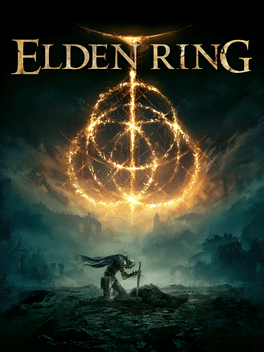
Ultimately, HS is presented as an aesthetic system where narrative meaning is actively co-created by players through discovery, organization, and reconstruction of fragmented elements. The balance between narrative fragmentation and an underlying coherent system encourages deep interpretive processes, often extending to collective player discussions. The model is flexible, accommodating various cognitive demands, from inductive reasoning in certain titles to deductive processes in others, thereby offering a versatile framework for enhancing participatory pleasures in game storyworlds. The analysis focuses on contemporary video games, illustrating its concepts with examples like Alan Wake II, Elden Ring, Inscryption, and Nobody Wants to Die.
Each row is a game or company this document names, each column a document, oldest first. A mark means that document names it. Select a row to see those documents.

DiGRA · 2026

DiGRA · 2026



DiGRA · 2026
DiGRA · 2025