Moshi Monsters
Game
4 documents in the library are about Moshi Monsters, from writers such as PocketGamer.biz, Deconstructor of Fun and DiGRA. Each has a summary and key insights with the page they come from.
Connections
Each row is a game or company named alongside Moshi Monsters, each column a document, oldest first. A mark means that document names it. Select a row to see those documents.
Documents about Moshi Monsters

Segmentation Is Over. Long Live Personalization!
Traditional manual segmentation has become an obsolete framework for modern game development, failing to address the complexities of global scale and evolving privacy regulations.
- Manual segmentation is being replaced by machine learning-driven personalization, which uses contextual multi-armed bandits to create thousands of unique, real-time player journeys.
- Automated personalization systems typically increase player lifetime value by 8% to 15%.
- These automated growth strategies are most effective for titles that have reached a threshold of 25,000 to 30,000 daily active users.

Week in Mobile Games E57 - The solitaire gold rush and Finland's new immigration rules bite
The mobile solitaire genre has undergone a period of rapid expansion, with global player spending climbing to $470.2 million in 2023, nearly double the figures recorded in 2019.
- The SAG-AFTRA strike in the games industry has ended with a deal that includes a 15.17% pay increase, guaranteed minimums for digital replica use, and protections regarding AI-generated voice and performance work.
- Mobile solitaire games generated $470.2 million in gross player spending in 2024, a figure that has roughly doubled since 2019 despite a slight decline from the 2023 peak of $564.7 million.
- Disney Solitaire has significantly outperformed Candy Crush Solitaire in revenue, generating $25 million compared to $8 million despite both titles sharing a similar download volume of approximately 7.7 million.
The Toy Is the Message: Materiality, Imagination and Play Objects
Commercial play, games and media culture is undergoing rapid change in which the line between toys as physical objects and toys as virtual or networked media is eroding.
- The toy is argued to be a distinct, theoretically underexplored element of play culture that should be studied in its own right rather than subsumed under game studies.
- Hybrid developments such as videogame characters with physical peripherals, virtual pets, augmented-reality smartphone games, and the emerging Internet of Toys are blurring the boundary between physical toys and digital media.
- Journalistic, parental, and academic responses to these hybrid shifts tend to be anxious, often fearing that imaginative play is being narrowed by mechanistic, commodified products built around stereotyped characters and scenarios.
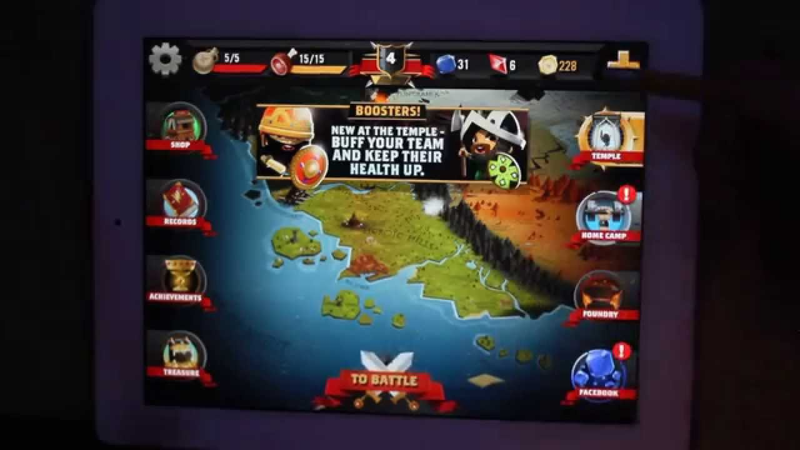
Monetization of World of Warriors
World of Warriors, a mobile title developed by a dedicated team within Mind Candy, utilizes a multifaceted free-to-play monetization model centered on a complex in-game economy.
- World of Warriors utilizes a hybrid free-to-play model built on a card-based collection system, shifting away from the subscription-based structure used in Mind Candy's Moshi Monsters franchise.
- The game's economy is driven by a dual-currency system, featuring gold as soft currency and 'wild stones' as the primary premium currency.
- Premium wild stones are sold in bundles ranging from $3 to $100, with an intentionally low exchange rate designed to prioritize perceived value over the inflated currency figures common in competing mobile titles.
Companies behind it
As the documents state it.