Transcript
And multi-arm bandaids are in things in which we can have multiple variants where it's constantly checking which variant is performing better and adjusting every day. It could be even more granular every hour. What is the right traffic allocation for uh for that particular time? But contextual multiarm bandits means we actually look at individual players. What sort of a player is she or is he? And now we look at the features, the properties of the player. And therefore, it's not about finding one winner or even one traffic allocation sequence. But what is good for Mitchka? What is what would be the right allocation for Phil in that particular time in a way that increases a certain goal metric? It could be conversion, it could be engagement, it could be retention, whatever it might be. It could be a blended set of metrics. So we we try to at Medicica have the most cutting edge machine learning tech when it comes to this area.
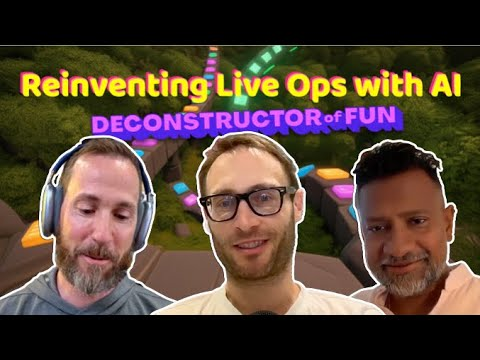
[Music] Welcome everybody to the Deconstructor Fun podcast. I'm your host Mishki Katkov and I have three really really strong co-founders here on the uh on this week's episode. Uh, we have Justin Stolenberg, previously a co-founder of Phoenix Games and Phoenix and Flare Games, currently co-founder of Medica. Justin, welcome to the podcast. Straight from Pakistan.
That's right. Straight from Pakistan. Thank you for having me. Very excited to be here.
You don't look like you're straight from Pakistan, but uh we'll we'll take your word for it. Then we have Phil Moore, previously co-founder of Data Tiger and co-founder of Comifi. currently co-founder of Medica and CEO of Medicica. Phil, welcome to the podcast.
Thank you, Mishka. Thanks a lot for having us. Um, I mean, we've known each other for quite a while now, but it's amazing to uh have finally graduated to the point where we can we where we can
have a great chat.
Oh, to graduated to recorded calls.
Yes. Yes.
Okay. And and Phil, you're joining us from London.
Yes. From our office in London. And uh and last but not least, Puly Lyanna Gama uh also a co-founder of Medica and co-founder previously of Data Tiger and Comifi just like Phil joining directly from Barcelona. Welcome Py.
Good to see you guys. How's it going?
Awesome. So you guys are everywhere at the same time and uh I wanted to set the scene of what we're talking about or who we're talking about. So your company Medicica is a little bit old, little bit more than three years old at the moment. Uh some people have heard of it, more people are hearing about it now. Uh when I heard first about it, I was really impressed. And it feels like Medicica is the same company that you've been building before. So before that it was data tiger. Before that it was Comify. It's you're still in data analytics. So
your two previous companies, first was acquired by King. So you worked at king through that and then the second one you start up again data analytics company and that was acquired by Apple and you work at Apple get your learnings and then for the third time you're like what kind of company we should build data analytics and now you're building it once once more so the same story but Phil this is what I'm seeing from the outside what's the uh what's the real story behind behind metica
yeah so I think the the biggest point about that is um you know and I we've been working about for 20 years now um we met during our PhDs and um I've tried to get rid of him ever since but it kind of hasn't happened. So we thought we'll just um start a business. Um and we started Commi actually in the sort of kids gaming space. So the times of Club Penguin, Moshi Monsters, Panfu at the time. Um enabling companies to you know engage understand um what's actually
going on in the game. Um, for instance, we had one of the first AI chat bots in 2008 and everyone told us we're crazy. Um, so that was the starting point. Then it moved on to Facebook gaming um, working um, with King at the time. So that was even before Candy was on mobile and King became one of our c biggest customers and um, I mean everyone's obviously aware of the growth curve and um, how Candy and all the other games went through the roof. um we were helping them um engage customers, understand um yeah what was going on um and optimize um payments um LTV already because at Facebook times there was so much data out there and that's how we really got into the data angle um and with candy scaling through the roof um you know some of you guys might know the
beginnings of Amazon Redshift um we're the biggest user. We crashed their cluster because Candy went to sort of over a billion players in the database at some point. Um and that's really how our sort of big data journey started at the time. Working with King was amazing. Um but they were scaling heavily. Um and we already knew Ricardo from way before they um even launched Candy. Um so we had a great relationship with him and at some point he asked us if we actually want to come in house um and help them build out the CRM platform. Um we then also helped build um some key parts of the first live ops platform within King. Um so a big topic was segmentation at the time. How do you actually engage customers um in a more meaningful um and personalized way? Paulie can say a little bit about that maybe in a bit more detail in a minute. Um but segmentation was was the big challenge and the thing but what we really found was you know at the
beginning it was a super simple problem. Um it's I don't know male female players or players in the US or in Germany or in Finland and at the beginning it's really easy but at the end we had over 15,000 segments in Candy Crush at which point you just don't know what's going to happen anymore to a player because everything was overlapping. Um so and these are challenges we found you're only facing once you scale above a certain size. Um and that then led us um after we spent quite a bit of time at King um to start Data Tiger cuz a lot of lessons learned um at scale and we realized you know things can be done better for a better player experience. at which point we sort of told turned the whole segmentation on its head and started building out player journeys where one player is being put in a journey and then gets a consistent treatment over longer periods of time.
Um, at this point we're working with companies like Supercell and quite a few others. Um, but then Apple came along. Um, and they at the time were scaling all of their services businesses. So, Apple TV, music, fitness plus, app store, iCloud and they were still sort of doing big billboard advertising over here while competing with um Spotify, Netflix, who were digital first, amazing performance marketing. Um and then we joined Apple to actually help them optimize all of that and allow um the customers to get much more personalized um content um communication from Apple. But there we also then transitioned really into payments. So optimizing pricing, price plans um when we were there um Apple won um the bundling um of
different services was introduced. um family plans, hardware bundling, all of that. So again here we learned like how do you actually do pricing in a fair but scalable manner and do this across two billion devices. Um so again that was um incredible learning. Um I mean maybe Bully you want to explain a little bit more about the technical challenges we had and what sort of learnings we we took from that. Yeah, I mean just to add on what Phil was saying, you know, at we learned a lot at Apple on how to do things. U but perhaps um just as importantly how not to do things as well. Um and um the main sort of IP we we built and we worked on was the question of as Phil said, how do we do personalization at scale for billions of um users across all of these Apple services? That's Apple Music, TV Plus, podcast, arcade, fitness plus, and
a bunch of others that's not even released yet, iCloud, etc. Um, and how do we do that in a way which also handles privacy uh in a in a good way. Um so we had to build new techniques um uh that you know and expand on techniques like federated learning ondevice learning um build techniques to get analytics without actually sending data um to um Apple uh and doing things on device really u because you know and and you know consistently in our journey we've always believed personalization and privacy can be done together without compromising uh each of as well. So doing that quite quite a lot of that at scale at you know crazy amounts of events a second in real time making decisions uh was a challenge and uh we um did that and I think uh you know the kind of value that Apple got out of it
and continue to get every on an yearly basis is very high. Um and uh but there was a lot of things we learned on how to use machine learning in the right way and quite a lot of those things are directly applicable to the gaming sector. Um so that was our sort of journey towards Metaica and why we started Metica to to some extent.
Yeah, this is interesting. So starting off with with that big data journey. So segmentation was when was that? Back in 2010 you were kind of started 101.
Exactly.
When all of that came in
the rise of Facebook gaming and then moving on to segmentation becoming almost like building a circuit boards for live operations where nobody could really figure out how to how to operate them. Then you move into looking at player journeys rather than the segments. And that leads you to personalization at scale. And then being an Apple personalization at scale in privacy setting which helps you to
with monetization
with with monetization with yeah bundling and pricing which kind of leds to Medica. So what what is Medicica then? Like what's the what's the third stage of this startup building that you've been doing since uh since PhD studies?
Do you want to take this one Justin? Yeah, I kind of take the outside perspective first. Um because I've observed and used all that stuff that Phil and Pulley have been cooking since 2008. Um my first startup was
Yeah. So Justin was was the was actually customer of every iteration of what we've ever done.
Um and that was not for personal loyalty, but just because they did amazing uh products that arguably were ahead of their time in in many many ways. Um so we learned uh kind of alongside each other the benefits of stuff like segmentation and experimentation um at scale but also the drawbacks. Um and then in the last uh 24 months a lot of things have happened in
the games industry that accelerated a few things and you could almost call it like the the perfect storm was increasing competitive pressure because more and more increasingly professional and and um really quick really large company produced games. You had at the same time an improvement on life operations where a lot of the games that were launched a few years ago became so sticky that those took a larger and larger share of share of attention and wallet for players. So more games pushed into the market. More time spent on the best games in the market. Uh privacy changes that uh many of us call kind of the IDFA apocalypse. uh where suddenly use acquisition was much much harder adding to the competitive pressure um and to the kind of uh disadvantage against existing life operations products and then a lot of details in in how products are monetized like for example the deprecation of uh
waterfall optimization that has happened in particular in the last 12 and 18 months. So you take these these kind of headwinds from west, east, north, and south uh all together and you have that perfect storm that makes it incredibly hard for even established companies to launch new games. And I've suffered from this many many years now. It's much easier I find to continue expanding an existing product comparing to launching and establishing and then scaling a new product. Um and so the question in the industry uh also that I I personally faced as a co-founder of a game publisher was how do you actually future proof in such an environment? Um and the belief that I arrived at was the same that drove Phil and Pulley to first create Meta was a to bring together user acquisition and product which in too many companies for too many uh years and iterations of companies have been separated and B to have a uh kind of
faster and more effective approach to experimentation in particular utilizing all of these new technologies um that allow automation um of experimentation at scale because if you look at a beautiful game that you build really promising early KPIs you start scaling it um at that point in time a lot of attention and time is spent on AB testing what the right what's the answer for a question like should I show an ad or an IP to a certain user you start building out your segments and you test the exact right treatment but once you go 10x or 100x as many games aim to do and some games do achieve. Those AB test results just don't hold up anymore. And I'm sure that all of us have experience that at some point you go back to a test finally after 12 months and suddenly it's kind of very different distributions. Um so using machine learning um and automation approaches was something that very very obviously
looked like the future. Segmentation is being talked about very often but segmentation is actually the past. We've been doing this for a decade plus. um all of us game operators right um so what's next and we believe that is uh uh experimentation at scale so bringing together UA and product experimenting on on kind of one dimension and then leveraging automation to to uh segment and experiment on steroids it's the story of Metica from in and outside
and this is what we what we call the growth loop so it's really bringing the different elements together Because when we've been speaking um to a lot of um gaming companies um publishers everyone says you know big challenge is UA in terms of actually understanding which channel to use performance then it's LTV how do we actually um make more money and as as Justin said you know particular with blended rowas campaigns
being so effective you do need to distinguish between IP monetization ation ads quite early on to use that really effectively. Um, AppL has been amazing. Um, but we believe there is actually a lot more that can be done um with with their traffic. And then thirdly, we hear all the time UA funding. We just need more and I know you you you had quite a lot of um discussions with with others on on this topic. Um, but that's something we we've also started to provide to really complete the growth loop. Um, so that's that's what Metica focuses on. And one other reason why we're doing the growth loop also is, you know, in the past, I think there were so many providers um that were selling games the dream. It was like you do this little tiny thing and it's 30% uplift because if I don't promise you 30% uplift, you don't want to talk to me. Um, but then I know already I can't deliver it. So, everyone is disappointed at the end of the day. And I feel a lot of companies got really
burned um with that. And that's why from day one we've said we take a really holistic approach to um optimizing and helping games grow
web stores. You've seen what good looks like but have you seen great app charge is the direct to consumer platform backed by the likes of Supercell and built by monization pros from Moonactive Platika Huge Games and others. People who know the difference. App charge powers over half a billion dollars in transaction a year for top studios optimizing every detail. Deeply personalized web store offers, custommade design, industryleading monetization features, in-game payments SDK, and more. 70% of top grossing games already have a web store, but the one scaling fastest, they're doing it with Appcharge. Learn more at appcharge.com. Game devs, we know that great gameplay
is what players love. But integrating metagame features like challenges, progression, rewards is crucial for retention and monetization. However, coding them is a tedious and timeconuming process. That's why top studios have turned to Hero. Hero provides a complete suite of battle tested metagame features that are quick to implement, letting you spend more time on the core gameplay experience. Ready to ship fully featured engaging games? Check out Hero Today by clicking the link below.
Yeah, it's it's really interesting because like the current situation, if we're just talking about the growth loop and when you go to Medicica's homepage, like that's the first thing is you advertise the growth loop where you're helping both on increasing the LTV and well, not not decreasing the CPI but growing the uh the rorowass essentially through that. Um and and in the current market especially with with Apple's privacy changes what we were seeing is the um there was you know UA targeting for what over 10 years were driving the
uh the revenue growth and then with the IDFA deprecation it kind of drastically reduced the access to the data that was imperative for targeting and attributing of different ads and of course you have been operating in this privacy environment a little bit longer time than the others but with that limited targeting ability people had or companies had less access to data. That means less targeted ads. That means less effective marketing spend which means you lower down your payback periods which means you lower your marketing budget which means in the environment that the quality and the quantity of downloads reduced which means that you get lower amount of revenue and uh and that was kind of the challenge but I think it has bounced back a little bit like we're seeing some growth not the level of 20% compound annual growth rate as before but maybe you know that nice 5 to 6% % still and and it is sort of a value optimization renaissance if you will in in the sense
that it's a winner takes all market. It's not anymore the market where you can grow along with it by just holding to your percentage but now you have to be ever more competitive. And that's I think the uh the lot of discussion that is happening on the UA front is that the CPIs are just too high. It's very difficult to compete. It's it's the push against the LTV all the time. It's the focus on creative that can decrease your your CPI. So, um Justin, maybe you can talk a little bit about how Medicica's solution fits the uh the current market dynamics.
Yeah, I think fundamentally the uh pressures that you describe are very real and still felt even though more and more people have found ways to still grow. Um for us it's particularly exciting and that's one of the reasons why why am I calling from Pakistan we're here in the office of one of our clients a company called game district who has been particularly effective at kind of identifying market opportunities but then what a company needs to accomplish is that
once you make your luck you find a game that hits um you really need to ride that wave um and that's where Metica comes in kind of in multiple fronts Um, on the one hand, the kind of preparedness um, for experimentation and data analytics at scale um, because you absolutely don't want to have a game that gets a million downloads a day and breaks along the along the way. Um, you also don't want to work with robust predictions that turn out to be wrong because your life operations team kind of can't keep up. So, this readiness for scale is incredibly important. you get lucky every once in a while. You can make your luck to some degree, but then you need to ride the wave. Um, and in particular, I would say that um, this kind of graduation from handcrafted journeys and experiences, that's very important in the beginning. We're not arguing to automate that bit. Gaming
game making very much is is an art form and the tasteful choices make or break a game. But then kind of adding to it segmentation and AB testing uh during early testing at smaller scales which graduates as you st scale more aggressively into the automated way um where if you use a solution like Metica you basically have everything in one uh continuation you don't need to switch tools while you're scrambling to keep your game server running um and what is really important is this mindset of uh UA and product uh embracing that that experimentation together. Um if you're doubling or tripling or quadrupling your spend um but the product team is preparing a very risky AB test and you don't know about that because you're not in the same kind of growth loop organizationally then that can be very damaging and can be very risky um and really take out the momentum. Um, so I
think as a game operator and that's why I switched sides, um, I need to be prepared for scale and that's what Metica tries to to accomplish this kind of leveling of the playing field taking all of the learnings of companies at incredible scale to companies who tomorrow will have incredible scale so that they are ready for the next 10x 100x. One thing if I may add to that is that in the one of the aspects of this perfect storm which Justin talked about earlier is what's happening with AI. Um and uh as all of us know the way in which games are done fundamentally has changed over the last couple of years in multiple aspects right um and I think in that world where sort of things are sort of moving shifting towards sort of from a in the past a sort of static rule-based systems towards more adaptive learning. um we have to start sort of
treating players as individuals rather than sort of these buckets or of or averages so to speak and and I think that's where we want our sort of machine learning vision to connect. Uh there's a lot to be done and there's a lot of money that's left on the table um in uh in in the old school way of doing things. Um and and and I think there's a lot more uh to be gained from an experience perspective, from a player experience perspective, but also from a monetization perspective uh in using intelligence uh in the right way.
Yeah, I think that's a that's a great point. It was I was actually talking to to one of our clients. They were, you know, thinking about moving to segmentation after AB testing is like what that could be. And I don't know if I used the uh the right analogy. There's a good test here because I said like
well when you're doing AB testing you're essentially let's say you because I'm in Spain now. It's it's like you're running a kio like a gelato shop and you would be testing now you have your strawberry gelato you got your chocolate gelato you got the vanilla and 65% of the people choose vanilla. So you decide to serve only vanilla because it's the best, but that's not it's it's the best option if you would be able to serve only one, but it's not the best option for everybody. You need, you know, you need the the mango gelato as well, the sarto and everything so that you can personalize and recoup a larger share of revenue because you're able to provide to everybody what they actually want and not what is the second or third best option for um a big portion of your your audience. So the way I understand personalization is like segmentation is is trying to do that by hands by trying to predict is like when the player does X Y and Z we put them into this segment because they're most likely to get this out of it. But as you said when you're
operating with data at scale it becomes that circuit board. I've seen live ops tools where they are building segment after segment after segment and then they reduce it back to 10 segments like okay now the revenue improved because we made it much more simpler. We couldn't even operate what we had built. And then personalization is using machine learning and now you always have to say AI to essentially which is the same thing in many cases but it's the it allows the um to the the the options to be u well personalized changed by by based on users behavior rather than these strictly coded um hypothesis of segments. Is is that the way of thinking?
Absolutely. I think like you know I think there's a place for segmentation. So we're not saying segmentation is in itself is not useful right uh the the the real thing is that as as you were saying Mishka you know the well it used to be human defined hardcoded segments and there were two problems with it one is the way at time at which the segment
is evaluated used to be sort of real-time batches that you evaluate and then you apply those segments action on them at a different time. So in games in particular, things change very quickly. Um and and you that's not the world we live in. Um and so now that was addressed by, you know, and also you had these problems of inconsistent treatments, right? You have this this campaign doing this, another campaign doing that. So connecting all of these things into a coherent uh use player experience um was a major problem. uh that was addressed by what Phil was saying earlier and what we did in back in 2016 like real time user journeys which sort of connects these things into one sort of um real time treatment sequence but even there the the the actual rules of what is u determining a specific journey is defined by a human and there's nothing wrong with it but the problem is that within that single
journey there they could coexist thousands of micro journeys uh which would actually yield better results and that is impossible for a human only system to scale. Uh so you need to bring in the right kind of statistical learning um uh techniques to be able to scale that to real personalization. Um so reducing that one sort of massive bucket into thousands of different journeys uh which are acting in the best interest of the game.
And how do you use AI in in in medical? Because like sometimes when talking to Phil in our unrecorded talks like you've you've talked about things of of like using an LLM essentially that allows you to ask and even command certain type of uh uh behavior and tuning from from your
live ops tool which sounds amazing from a non-technical person like myself when I was a PM I kind of hated using Tableau R. Don't even talk to me about it. It's like a and and um SQL please I try to to get out of all those meetings where they would be teaching that and if there would be an LLM I know exactly what needs to happen but I don't want to use the uh the day of analyzing before that. Um that's that's just one of the things of of using LLM but but please like how how are you approaching the uh AI as a as a part of of medical? Um yeah can I can I take that if I may like so there's few few things we use so like there are you know when the word AI or machine learning is you know overused in uh the current world right it means you know people use it to mean so many things so if I may be be specific we use a combination of techniques um in uh what what we call machine learning right but the so I guess the more potent and the
more um the sort thrust of our uh IP is uh something in the um academic world called the contextual multi-arm bandits. So those are um you know treatments where instead of doing things in an AB testing way where you actually run a specific AB test for a certain period of time to get to statistitical confidence without peaking because you're using frequentist methods etc. And then you look at the outcome of that. Um and then an analyst would need to pull that data, do the analysis, inform the product team. This is what has happened. Uh this treatment is better between A, B, C and D. And therefore, let's roll out that to the the total population which takes a huge amount of time and huge amount of effort. And at the end of it you you end up with one massive treatment a winner one winner right uh and multi-arm
bandaids are in things in which we can have multiple variants where there it's constantly checking which variant is performing better and adjusting every day. uh it could be even more granular every hour. what is the right traffic allocation uh for uh for that particular time. But contextual multi-arm bandits means we actually look at individual players. what sort of a player is she or is he and we now we look at the the features the properties of the player and therefore it's not about finding one winner or even one traffic allocation sequence but what is good for Mitchka what is what would be the right allocation for Phil in that particular time right in a way that increases a certain uh goal metric uh it could be conversion it could be um uh you know engagement it could be retention whatever ever it might be it could be a blended set of metrics. So whatever that
metric is our job this what the bandits contextual bandits and we actually produce um uh quite a lot of this tech um and we publish in academic circles as well with KDD Rexis and quite a lot of other academic cir journals. Um we we try to at Medicica have the most cutting edge machine learning tech when it comes to this area. Um and that's our sort of major point. We should not be doing as you said Mishka AB testing and segmentation but instead think about personalization uh and uh you know you know optimization uh rather than uh the the old world. So it doesn't mean that the old world is not relevant, but you're not achieving your full potential uh in the game if you're doing just that,
especially in the current market where you really have to compete for LVP uh LVP LTV LV, you could be competing for
LVP financing as well, but but for for your LTV uh in in just keep your LTV growing in order to be able to invest more and more user acquisition. But I wanted to uh kind of take it more on a practical level. So, you work with several companies. I mean, going into your web page, you're seeing a bunch of different companies, Game District included. Uh, so was recently on the podcast and talk briefly about the help that you're providing. Would it be possible to kind of get a little bit of a um concrete examples of what Medica does because we have been on more theoretical level uh but like what is it in practice for um publisher like game district which is hybrid casual publisher. So
it's a very
it's a very very good question because ultimately you know it's not about the technology it's about what problems we're solving. The technology can solve a lot of problems. Um but what we've seen is a couple of clear use cases are crystallizing and they're normally the ones where
integration is really fast because you can do a lot of things and it might take a long time but it's really about value time to value. So one clear use case um I touched on earlier a little bit is blended rows. So it's really about picking up the player at the point of install and optimizing very quickly should they see more APS or more ads. That's a simple decision. Um but the bandits can optimize that. So that's one clear use case that can be implemented really quickly. Another big use case um in the ads in-game ads world is about interstitial cooldown. So ad frequency again super simple integration um that drives I don't know we're seeing between 15 and sometimes 28% sort of in that range uplift by optimizing um the interstitial cooldowns. And the third one um which is sort of a very
clear use case which is quite a hot topic at the moment. There are quite a few other companies getting into it is around bit optimization. So um with um as Justin said um the waterfall being deprecated um and a lot of games being on Apple and Max there is actually a lot of opportunity to optimize bid floors and we think this is in particular really exciting area because it's not about changing or you know doing something with the player themselves but much more about algorithm against algorithm. So, it's really telling and informing Max, okay, we think Me Mishka is worth, I don't know, $250 ECBM, whereas Phil is a cheap bastard, only 15. So, that's, you know, I think a really clear clear topic. Um, and something, you know, we we started integrating with quite a lot of companies. Um, so we're live with quite
a few and we've got about 30 companies lined up over the next six, seven weeks um to go live with. And if I add to that maybe the kind of practitioner perspective because sometimes it sounds scary right automation will take away all the jobs. Um but what we've seen now in practice is that a lot of the work that is automated then frees up time to do much more meaningful and very very impactful additional work. So if you take these questions should I show an ad or not you yeah could build this massive segmentation tree and test a lot of the underlying hypothesis. um or you set up the boundaries. You design kind of the best and and worst experience if if you want to say um set up the context and let the machine optimize and then that gives you probably 50% of your day free whereas before you had a lot of this monkey work uh filling your day to research new types of ad placements for example to think deeply about the economy impact and the implications what kind of rewards to design. Um so it really
levels up monetization managers and gives back a lot of um mean time to do meaningful work. Um and what we envision is quite similar actually to the uh changes in the last decade in user acquisition. If you if you look back at how granular campaign setups looked like um you you had to set up hundreds of campaigns and now AppL and Google Ads and Meta, Tik Tok have done such a fantastic job at um reducing the surface area of stuff that you need to dial in. Um and that allows basically this revolution of focusing on the creative and focusing on the product. Um there was no time to work on creatives as much 10 years ago. And we uh not only envision but see in practice now that teams on a automated experimentation stack uh have a capability to test new variants, design and test new variants
much much quicker in the same way that they test new creatives on user acquisition. And that's not a coincidence by the the same kind of family of algorithms that these ad networks use um that Metagas technology has also built on.
Today's podcast is brought to you by Appsfly, inviting you to dive into their new firstofits-kind report, the state of creative optimization 2025 edition. It's not about how to make creatives. It's about understanding what makes users actually stop scrolling and what emotional and psychological triggers drive performance. Based on over a million creative variations and nearly $2 and a half billion dollars in ad spend, the insights in the report will help you develop a winning creative strategy. Check out the link in the podcast description below or go to appslier.com and search the state of creative optimization. That's appslier.com. Attention app and game developers. Are
you ready to unlock the secrets behind the world's top performing apps and games? With Sensor Tower, you get the ultimate competitive edge. Whether it's breaking into new markets, fine-tuning your UA strategies, or boosting monetization, dive into data like never before, track global trends across app stores, analyze market leading inapp purchase and inapp ad strategies, and benchmark your performance with realtime insight. The best part, Sensor Tower doesn't just deliver data. It helps you turn it into action with intuitive tools and expert analysis. It's everything you need to make smarter, faster decisions. Thousands of app and game studios from indie creators to global giants trust Sensor Tower to help them win. So why not you? Start your free trial today at sensortowwer.com. That is sensortow.com.
Got it. So, so in short the way as I'm stupid myself would understand is by using solutions like Medica which is machine learning driven it helps you to it helps the game to optimize both your user acquisition as well as LTV by making some smart decisions when to surface to whom what kind of a offers what kind of um maybe not the level difficulty yet but more of the uh the monization offers and that allows the team to focus more on how to uplift their LTV of their game as a whole by improving the product by focusing on on the larger improvement sets rather than than you know minmaxing certain smaller options that that would take a lot of their time. And it would also allow the game team or the in this case the growth team to focus on the only real variable that is left in UA which is the creative and the creative strategy. And that that is the one that requires the most
testing and the most um well creativity in in in doing those creatives and and publishing them. uh because again it's tied to the MMP, it's tied to to your your UA stack that it automates that for you so you can spend more time on the bigger impact elements. So that also means that it that meta is in a way it's not a substitution to what you have currently whether it's your live ops stack or whether it's the UA tools. It's more like an add-on, just like any kind of a AI add-on that I've purchased over the time, whether it's the thumbnail makers or whatnot, helps me to with search engine optimization and so forth. It's like a it it just reduces a lot of the time and and and load that I would go into this, as you said, monkey work in figuring things out,
provide you infrastructure at the same time. I think that's quite important. Yeah.
Um so if you look at what we're providing, so one is a I would argue you know very scalable data layer. So we can
take that away from you. Um provide ways of running machine learning models. So we've got our own but we are saying you know if your internal team is really good at building churn models or better PLTV predictions than than we do because we obviously need to do that across the board. um and your team is probably better building them for yourself. But what we then do is we help operationalize them.
So we surface them that the whole business can actually make use of the great machine learning work without having to worry about scale running them every day, them crashing and so on.
Exactly. Yeah. And that that separates you in the marketplace where a lot of times when you're talking to different tools providers, you essentially have to let go of an existing tool. But that's like doing a hard transplant. Like if you already have, you know, Satori integrated with with all the heroic tech stack and as as just as an example, it's it's not that easy to just switch
around. Even if it's a live ops tool, it's much easier to use the uh the elements of of the one provider throughout your tech stack. And and this is kind of helping to optimize. And of course with your UA funding arm, that's another element that that the company is always open to is like how to scale up their their user acquisition by accessing more funds. So uh my question around this is like when is the right time for developers to adopt Medicica? like do they have to be already a scaling company that is kind of you know pretty maximized in ter in terms of LTV in terms of their OS and they're looking for that next step and and they they start using you or is it early on when you're launching a product you already put in Medicica so you can uh be more effective from the get- go.
So the answer is all of the above. So we have customers that have put us in from day one. So we're working very closely with Tom from the um experimentation
group for instance and he has some very early games and he can already see you know where they're heading and what they will need. So he's asked them to put meta in literally on day one. Um so the data is being collected um and they can start doing AB tests better tests going forward. Um but admittedly the real power comes at a certain scale. So because of all the learning and everything that needs to be done, we're looking normally a rule of thumb is around 25 to 30,000 paos is when the machine can start optimizing quickly and you start seeing a lot of value. But then also all the way to you know your likes of triple dot who are already extremely sophisticated but want to go the extra mile. Um, yeah. So, it it it really is across the board
and it's a pretty easy sale argument like talked to many developers. If you're saying, well, we could probably, you know, boost your LTV between 8 to 12
to 15%, that's normally seeing, it's kind of like a no-brainer for most companies, uh, especially at those phases where they are putting tremendous amount of work to find how to continue growing their LTV. H um well talking about medical like you recently raised 9 million in seed funding um to for the growth loop and expand your UA tooling. What's next on the road map? Maybe what I'm asking is like where do you see personalization in gaming heading?
It's a very good question. So I think it's across the growth loop. Um and as I said earlier, we we really want to help games holistically with their growth. um where I would argue we're already you know very sophisticated is on the what's happening inside the game optimizing LTV bid floors all of that where we're doubling down is on the UA side what we're doing at the moment is predicting
PLTV on a cohort level so we can help you understand um how each individual um campaign will perform um we split that into cohorts So we do forecasting um and then we connect that already the new installs with what's happening inside the game. Um but Justin um when he joined us one of the really big areas um we we wanted him to focus in is more on the UA side because admittedly Pulley and I are not as experienced on that side as Justin was. So maybe you want to explain what's happening going to happen on the UA side because that's sort of a big big topic we're we're focusing on at the moment.
Yeah. If we look at the short and medium term um we want to take the same principle that applied to Olaf and Py's previous company as well um and go away from just observation and prediction to the actual action. Um so one of the key things we have been working on is um
making transparent to teams how much they should be spending. That has two components. It's very easy to overscale a campaign but it's also very easy to kind of overlook an opportunity. Um so that's you could almost imagine that like a spend co-pilot um in the same way that you that you use a lot of co-pilots when you code or write or whatever you do. So it takes the same uh idea of automating things so that it's easier to scale and that it's safer to scale all for this phase where you go from 20,000 DAU to 200 to 2 million DAU. Um so that's one big component. Um and then we had already mentioned the funding aspect where we have now started um deploying the first funds um with the of course very selfish interest uh of having more data to then accelerate the learning. Um so I would say it's really about um enabling teams to spin the
wheel faster. You have a core loop that has stickiness and that has the expandability. Um and then you start deploying life operations and content. um you start experimenting and as you become uh more successful if if you see your lifetime value increase your UA campaign stick you kind of get more traffic which allows you to expand your team etc and accelerating that wheel um from both angles uh is what we see as priority in the next six months
and what type of companies like what type of platforms do you prefer working like I know you work with mobile companies that's given I mean you're on this podcast but But Roblox, I've heard you worked with Roblox companies. Do you have web 3, uh, console, PC? Is it what type of companies are you looking at?
So, the focus at the moment is is mobile gaming. Um, because clear integrations, um, you can either have a very straightforward backend integration or an SDK. Um, and it's also admittedly
where we have the most experience, but you're quite right, the platform is applicable across the board. Um we do work with some Roblox companies. Um we're also doing web 3. So um our friends from Goat Gaming in Singapore for instance. Um but these are sort of opportunities where we see it really fits because they have the scale. Um often we have a relationship to be perfectly honest. Um and and there it fits. Um and then we work with them. But the current focus is more on mobile gaming but we do want to expand across the board but um we feel sometimes we're already doing quite a lot um when it comes to the growth loop. So um yeah so we do need to focus a little bit as well. So any any anybody who's in free-to-play space essentially or running games as a service is is the target. But you're starting off with the most difficult one which is the uh the highly saturated, incredibly
competitive, privacy written mobile gaming sector.
Yes. No challenge there. No challenge there. But if you succeed, then the rest should be a little bit easier at least.
Absolutely. Yeah.
Well, thank you guys for coming on the podcast. like we've been discussing outside the podcast as as we said multiple times and I think your your service is really a standout and it's uh it's been fun to recommend it to multiple different companies who are looking to you know to boost their LTV and it truly stands out um stands out in the market and doesn't replace anybody who is in the market so it's easy easy to test uh easy to see the value and uh easy to adopt through that
Mishka thank you so much for having Yeah.
Thank you.
Thanks everybody for listening and hope Justin your belly gets better.
All right. Thank you everybody.
Thanks for listening to the full episode. Now, did you know that
Deeconstructor of Fun isn't just your favorite industry podcast? We're also a bit of a consulting powerhouse. Now, whether you're launching your next hit, scaling your live ops, or betting your next acquisition, we've got you covered. From market research and go to market strategy to live operations tuning and due diligence, our team of experts works with top names as well as the rising stars of the industry. So if you are building, publishing or buying, don't do it alone. Do it with us. Email consulting deconstructorofund.com and let's build smarter together.
Auto-generated captions from YouTube — names and numbers may be misheard.


















Comments