Moon Hunters
Game
10 documents in the library are about Moon Hunters, from writers such as Game Developers Conference and DiGRA. Each has a summary and key insights with the page they come from.
Connections
Each row is a game or company named alongside Moon Hunters, each column a document, oldest first. A mark means that document names it. Select a row to see those documents.
Documents about Moon Hunters
Mythic Alternatives: Mythological Mechanics Beyond Violence
The document, "Mythic Alternatives: Mythological Mechanics Beyond Violence," explores how mythological video games can incorporate non-violent mechanics to represent mythic narratives, challenging the prevalent reliance on combat in the genre.
- Violence is the default mechanic in mythological video games, a pattern the authors tie both to mainstream gaming trends and to the violent episodes found in many myths themselves.
- The paper argues that games can move beyond combat by translating mythic motifs into core mechanics, and it surveys five categories: metamorphosis, heroism, extraordinary movement, dying and rising, and interactions between gods and mortals.
- Heroism is modeled through systems such as the kleos meter in Warriors: Legends of Troy and the aristeiai in A Total War Saga: Troy, which represent the exceptional, exemplary hero.
Four Day Workweek: We Did It! What Now?
Independent game studios are increasingly adopting a four-day, 32-hour workweek to combat systemic burnout and enhance recruitment competitiveness.
- Independent game studios are adopting a 32-hour, four-day workweek to combat systemic burnout and improve talent retention.
- Productivity remains stable or increases under the four-day model as teams optimize workflows, prioritize high-impact tasks, and utilize asynchronous communication.
- Successful implementation requires rigorous production planning, flexible scheduling, and a fundamental shift in organizational culture.
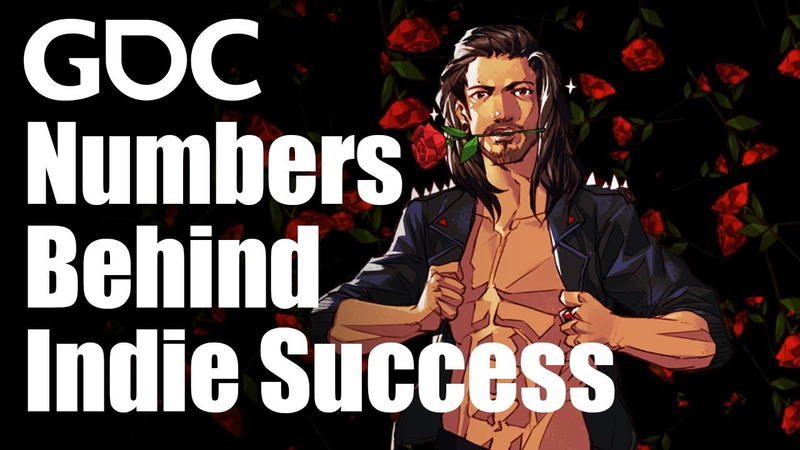
$0 to $1 Million: The Raw Numbers Behind Indie Success
Independent game development success relies on balancing creative vision with rigorous financial discipline, as there is no singular blueprint for studio longevity.
- Indie studios can adopt two distinct financial models: Kitfox Games utilizes a diversified portfolio approach with multiple concurrent projects to mitigate risk, while Clever Endeavour Games focuses on a single, long-term project (Ultimate Chicken Horse) to maximize depth and community engagement.
- Revenue streams for independent studios are heavily concentrated on PC platforms, with Kitfox Games reporting that approximately 91% of their total revenue is derived from Steam sales.
- Financial sustainability requires aggressive diversification of funding sources beyond initial game sales, including government grants, incubators like Execution Labs, Kickstarter campaigns, and work-for-hire contracts to cover lean periods.
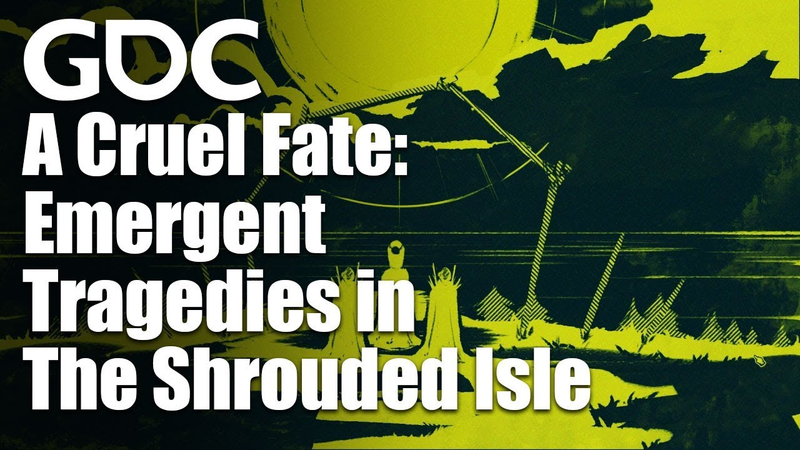
A Cruel Fate: Emergent Tragedies in The Shrouded Isle
The Shrouded Isle redefines dystopian game design by replacing conventional resource management with a focus on psychological variables and character-driven interactions.
- The Shrouded Isle shifts resource management from traditional technological progression to psychological variables, focusing on maintaining faith and political loyalty.
- The game forces players into a Machiavellian framework where regime survival requires the sacrifice of individual villagers, creating emergent tragedies through unpredictable human variables.
- Information progression is a core mechanic that limits player knowledge, forcing a transition from optimization-based gameplay to a survivalist strategy centered on calculated power maintenance.

Why Fashion in (Most) Games Sucks, and Why You Should Care
Fashion serves as a sophisticated, underutilized language within game design, functioning as a critical tool for storytelling, character development, and world-building.
- Developers should decouple aesthetic choices from functional gear statistics to allow players to express personal identity without compromising gameplay performance.
- Fashion should be treated as a core gameplay mechanic rather than a static asset, using examples like Hitman or Love Nikki to integrate clothing into active player experience.
- Intentional fashion design serves as a critical tool for storytelling and world-building, communicating a character’s history, cultural identity, and personality.
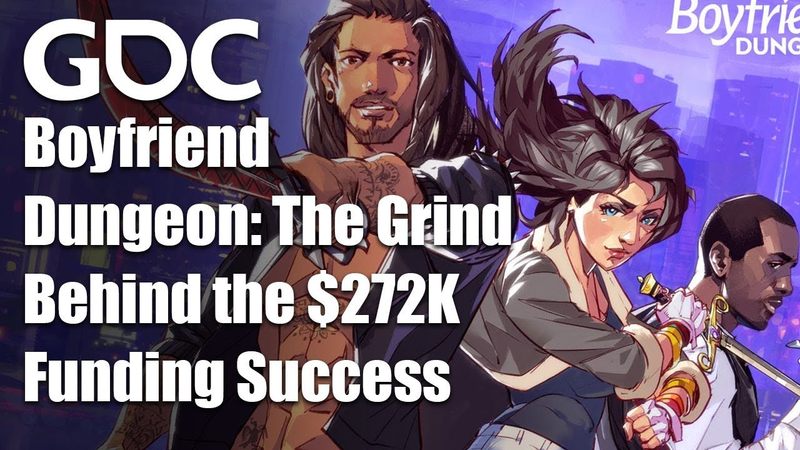
Game Discoverability Day: NOTICE ME: The Grind Behind the $272K Funding Success of Boyfriend Dungeon
The successful crowdfunding of the indie title Boyfriend Dungeon, which raised $272,000 against a $65,000 goal, serves as a case study for effective game discoverability and community-driven marketing.
- Boyfriend Dungeon achieved 418% of its funding goal, raising $272,000 against a $65,000 target by prioritizing community-driven engagement over paid advertising.
- Twitter served as a critical conversion engine, driving 17% of total pledges—a rate significantly higher than the industry average of less than 1%.
- A high-conversion hook must be immediately understandable, utilizing a clear 'one-sentence' pitch that combines distinct genres, such as the game's 'dating sim meets dungeon crawler' premise.

Writing Modular Characters for System-Driven Games
System-driven games often struggle to move beyond repetitive, procedurally generated characters that lack depth.
- Prioritize trait orthogonality by ensuring character traits function independently to maximize the variety of combinations and prevent repetitive, generic outcomes.
- Shift from simple data stacking to higher-order meaning by designing systems where disparate traits coalesce into coherent and memorable personalities.
- Broadcast character identity across multiple distinct channels—such as visual posture, UI elements, and dialogue—rather than relying on a single narrative stream.
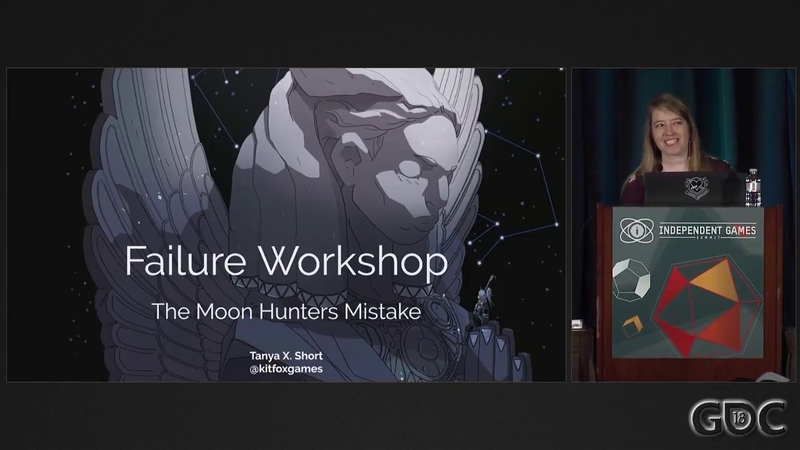
The 2018 Failure Workshop
The independent game development sector frequently suffers from a culture that prioritizes rigid production schedules over product quality, leading to avoidable commercial failures and significant psychological distress.
- Prioritizing rigid production schedules over product quality leads to avoidable commercial failures, negative community sentiment, and significant psychological distress for development teams.
- The case of Moon Hunters illustrates that rushing unfinished, buggy software to meet arbitrary deadlines results in immediate revenue loss and necessitates extensive, burnout-inducing post-launch support.
- Developers should shift focus toward long-term sustainability by prioritizing core gameplay quality over release efficiency, as flawed launches can be salvaged through consistent updates and transparent communication.
Advanced Entrepreneurship: Avoiding Total Studio Disaster
Independent game studios achieve long-term sustainability by reconciling creative vision with rigorous business acumen.
- Achieve long-term studio sustainability by treating business development with the same intentionality and structured methodology as game design.
- Replace reactive, hope-based strategies with lean startup frameworks that utilize market research and audience analysis to validate project viability.
- Implement a scaffolding strategy where each game project serves as a foundation for future technological and intellectual growth rather than a standalone effort.
6 Techniques for Leveraging AI in Content Generation
Procedural generation and artificial intelligence serve as powerful tools for scaling game content while deepening narrative immersion.
- Developers should employ a hybrid design approach that balances high-level manual control over critical choke points and map layouts with automated generation for room-specific content.
- To ensure player readability of complex AI systems, designers must prioritize overt behavioral cues and dynamic character evolution to make subtle agent traits interpretable during gameplay.
- Systematizing world objects into shared data structures allows AI agents to reference and propagate information, creating a more cohesive and reactive environment.
Companies behind it
As the documents state it.