Haven
GameBy The Game Bakers
Documents about Haven

Deconstructor of Fun67 min
Golden TWIG 2025: Gaming's Real Awards Show
The gaming industry in 2025 is defined by a stark divergence between the scaling success of platform-based ecosystems and the systemic instability of traditional high-budget publishing.
- Roblox has become a primary industry growth engine, recording a 70% year-over-year increase in daily active users and challenging traditional high-budget publishing models.
- Established publishers including Ubisoft, Warner Bros. Games, and Amazon Game Studios are experiencing significant commercial and reputational erosion, while high-budget titles like Concord and Splitgate 2 have failed to meet modern player expectations.
- Market success is increasingly driven by smaller-budget titles with innovative mechanics, such as Clover Pit and Animal Company, rather than the speculative, high-capital models that led to instability at firms like Forte, Bungie, Dream Haven, and TheoryCraft.
Deconstructor of FunDec 2025
Gaming Founders Podcast57 min
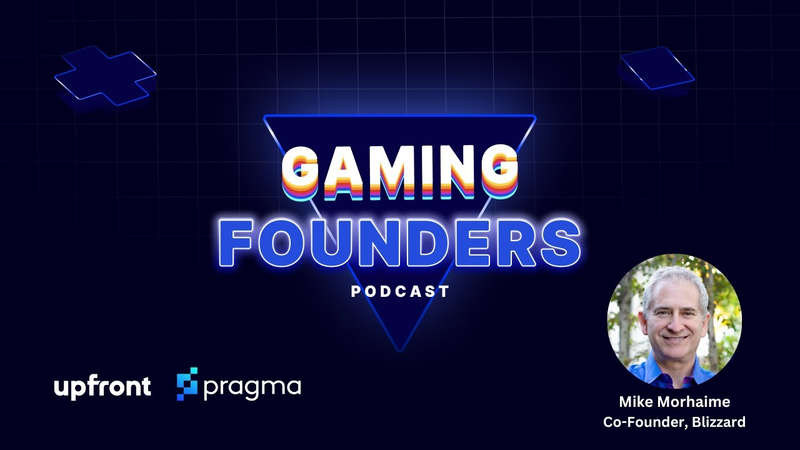
Mike Morhaime on Blizzard's Iteration Culture that Built Starcraft, Warcraft, and Diablo
The core philosophy driving long-term success in the gaming industry centers on an iterative development process that prioritizes execution and gameplay quality over rigid adherence to initial concepts.
- Blizzard’s success was driven by an iterative development culture where few games followed their original plan, proving that 90% of success relies on execution rather than initial concepts.
- The transition from Warcraft I to Warcraft II resulted in an order-of-magnitude increase in success, achieved by adding features like fog of war, naval units, and higher resolution graphics.
- Blizzard’s early growth was fueled by a $25,000 initial investment—$15,000 borrowed from a grandmother and $10,000 from a graduation gift—before the company was eventually acquired by Davidson and Associates.
Gaming Founders PodcastAug 2025
GameMakers27 min
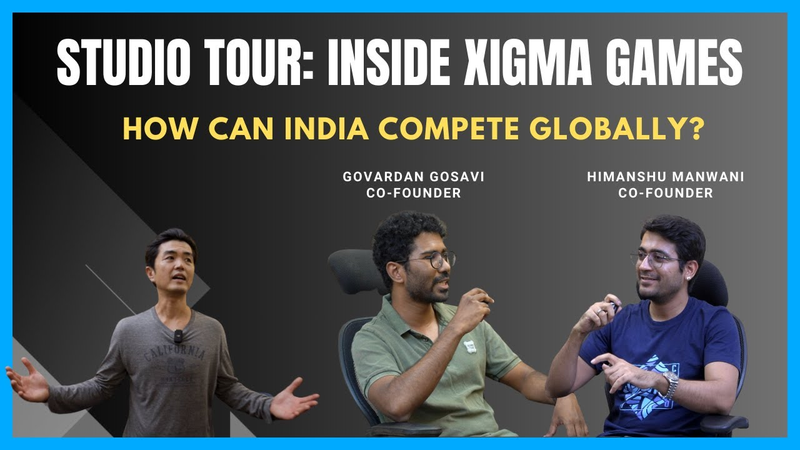
Inside Xigma Games: The Indie Studio Making Waves in Bangalore!
Xigma Games, a Bangalore-based independent studio, provides a case study in the evolution of the Indian game development ecosystem.
- Founded in 2016, Bangalore-based Xigma Games has operated for nine years as a bootstrapped studio, evolving from small-scale premium titles like 'The Bonfire' series to their current large-scale, free-to-play 4X strategy game, 'Metal Haven'.
- The studio maintains a lean, cross-functional team of nine employees, utilizing a product-driven culture that balances creative freedom with sustainable development practices to avoid burnout.
- Xigma Games’ growth trajectory demonstrates a scalable model for Indian indie studios, moving from an initial $10,000 prize-funded start to developing complex, globally competitive mobile strategy titles.
GameMakersJun 2024

Deconstructor of Fun65 min
TWIG #175 Bored Ape Yacht Club raises $450M for an MMO 🤯
The global gaming industry is currently navigating a period of significant structural transition, marked by aggressive capital investment, technological shifts, and evolving operational models.
- Yuga Labs secured $450 million for a metaverse project, while FRVR raised $76 million for browser-based gaming, signaling continued investor appetite for large-scale digital ecosystems.
- The removal of IDFA and other tracking identifiers has rendered traditional mobile user acquisition methods ineffective, forcing developers to prioritize organic growth and broader market appeal to combat rising costs.
- Studios are facing significant operational challenges, with skepticism surrounding the ability of teams to manage complex MMO macroeconomics or successfully pivot to live-service models.
Deconstructor of FunApr 2022