Frog Fractions
Game
6 documents in the library are about Frog Fractions, from writers such as Carnegie Mellon University, DiGRA and ETC Press. Each has a summary and key insights with the page they come from.
Connections
Each row is a game or company named alongside Frog Fractions, each column a document, oldest first. A mark means that document names it. Select a row to see those documents.
Documents about Frog Fractions
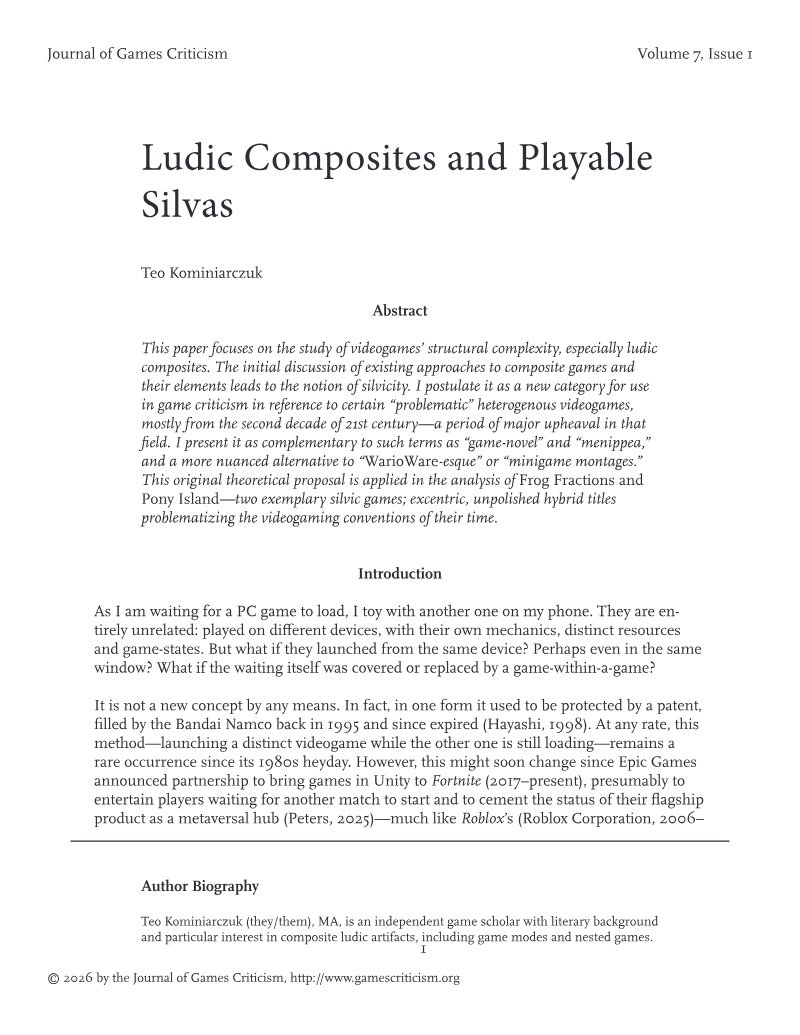
Ludic Composites and Playable Silvas
Silvicity functions as a critical framework for analyzing heterogeneous videogames that resist traditional classification as simple minigame collections.
- The term 'silvicity' defines a category of heterogeneous, non-linear videogames that function as complex composites rather than simple minigame collections.
- Games such as 'Frog Fractions' and 'Pony Island' exemplify this design philosophy by utilizing fragmented, anti-mimetic, and self-conscious structures to reject traditional rule sets.
- A distinct surge in these transgressive, meta-commentary-heavy titles occurred between 2012 and 2016, coinciding with the rise of independent development and the casual gaming revolution.
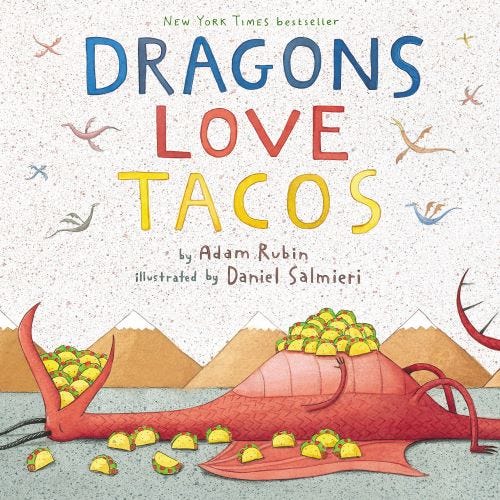
What 'Dragons Love Tacos' Taught Me About Game Discoverability
Using the children's book Dragons Love Tacos as a starting point, this February 2020 newsletter essay from game industry veteran Simon Carless examines why some creative works break out and how developers can make their games stand out in a crowded market.
- Game discoverability requires balancing an immediate, high-concept hook with a substantial, feature-rich core to ensure both initial interest and long-term engagement.
- An 'instant hook' must pass a two-second reaction test, using absurd or high-concept premises to capture attention in a crowded market.
- The 'anchor' provides the foundational genre elements and features necessary to justify the game's price point and reassure players of its value.
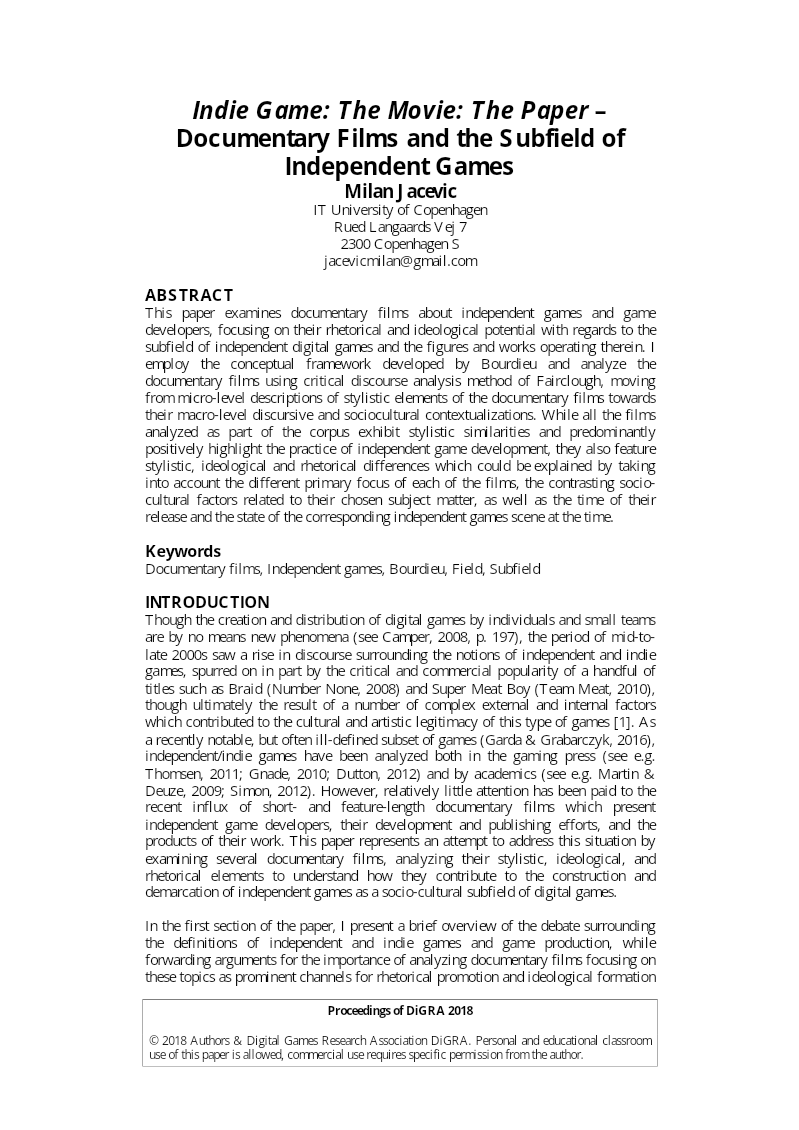
Indie Game: The Movie: The Paper - Documentary Films and the Subfield of Independent Games
This paper examines documentary films about independent game developers, arguing that such films play a significant role in constructing the cultural meaning of "indie" games, a term that remains ill-defined in both popular and academic discourse.
- The paper argues that documentary films about independent game developers play a significant role in constructing the cultural meaning of "indie" games, a term that remains ill-defined in both popular and academic discourse, drawing on Bourdieu's field theory and Fairclough's critical discourse analysis.
- The analysis rests on a corpus of four documentaries released between 2012 and 2017, selected for variety in subject matter, distribution, and release timing, and the author frames these films as contributing to the symbolic capital of independent developers and delimiting indie games as a space of heightened artistic value.
- The films consistently portray independent developers as passionate, creatively driven auteurs while casting major commercial studios in a negative light.
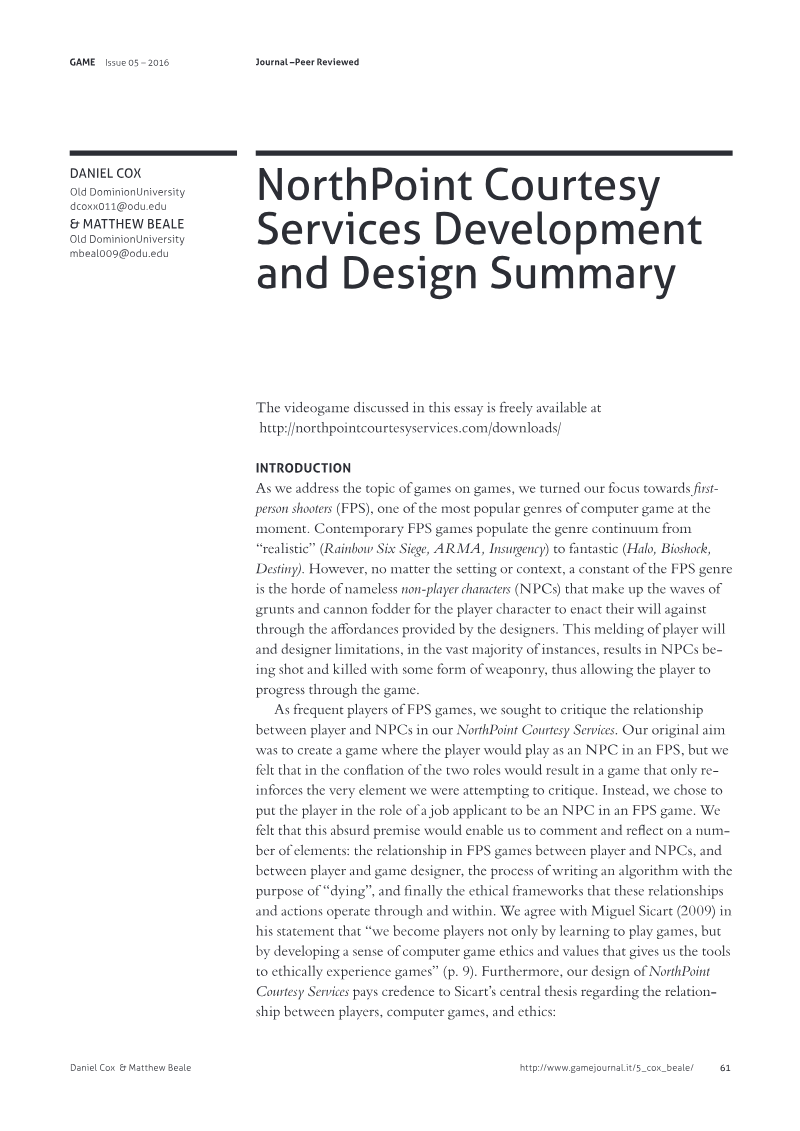
NorthPoint Courtesy Services Development and Design Summary
NorthPoint Courtesy Services is a critical design essay and accompanying freely downloadable game by Daniel Cox and Matthew Beale of Old Dominion University, published in a 2016 peer-reviewed games journal issue.
- NorthPoint Courtesy Services, a 2016 experimental indie game by Daniel Cox and Matthew Beale of Old Dominion University, inverts the first-person shooter by casting the player as a job applicant who is revealed to be an NPC awaiting execution by another player.
- The game critiques the ethics embedded in FPS design and the subservient, algorithmic position of the nameless enemies players routinely destroy, drawing on Miguel Sicart's writing on computer game ethics.
- The design privileges inaction over action, drawing on Alexander Galloway's concept of the "ambience act" and Mckenzie Wark's reflections on boredom to argue that most game code waits in a state of readiness for the player.

Well Played: A Seriously Weird Special Issue
The collection of analyses presented in Well Played: A Seriously Weird Special Issue explores the intersection of unconventional game design and the "Weird"—a thematic framework characterized by psychological dissonance, subversion of genre tropes, and the disruption of traditional player agency.
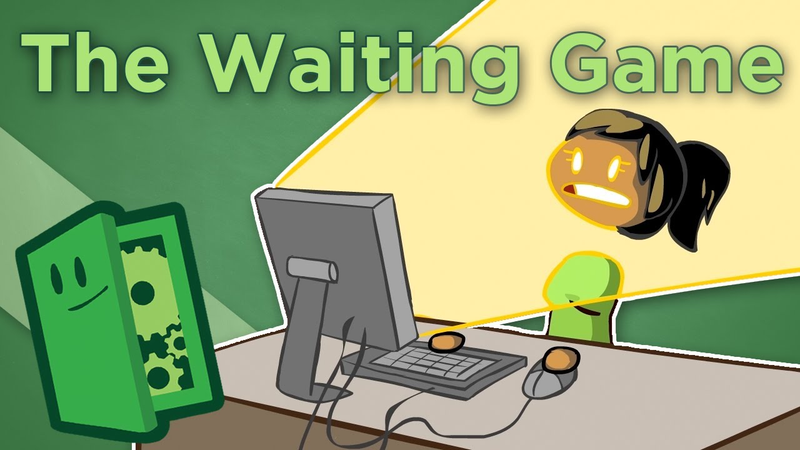
The Waiting Game - Why Weird Games Become Cult Hits - Extra Credits
The emergence of unfolding games, such as Candy Box, Frog Fractions, and A Dark Room, represents a significant departure from traditional AAA game design.
- Cult hits like Candy Box, Frog Fractions, and A Dark Room succeed by using gradual revelation rather than the high-octane, immediate hooks typical of AAA game design.
- Developers can leverage intentional simplicity or boredom to create a sharp contrast, making the introduction of unexpected, complex mechanics feel more impactful and magical.
- Strategic use of time-based delays and waiting periods builds player tension, functioning as a psychological trap that sustains long-term curiosity.