Carnegie Mellon University
7 reports, presentations and talks by Carnegie Mellon University in the Game Industry Library, the newest “Journal of Games, Self, & Society: Vol. 3, No. 1” (2022).
Documents
Journal of Games, Self, & Society: Vol. 3, No. 1
Game design serves as a transformative medium for fostering empathy, resilience, and social connection, particularly among adolescents navigating critical developmental stages.
- Intentional game design, characterized by ethical mechanics and pedagogical alignment, transforms interactive media into essential infrastructure for fostering empathy, resilience, and social connection.
- Games like 'Resilience' demonstrate that developers can address complex humanitarian issues by using science fiction settings to abstract real-world trauma, thereby avoiding exploitation while maintaining systemic accuracy.
- The concept of 'Digital Biedermeier' in titles like 'Animal Crossing: New Horizons' frames domestic, care-based gameplay as a vital sanctuary that provides players with agency and communal support.

Well Played: A Special Issue on Meaningful Play and Games for Social and Emotional Learning
Video games possess significant, underutilized potential as intentional tools for social and emotional learning (SEL).


Well Played: A Seriously Weird Special Issue
The collection of analyses presented in Well Played: A Seriously Weird Special Issue explores the intersection of unconventional game design and the "Weird"—a thematic framework characterized by psychological dissonance, subversion of genre tropes, and the disruption of traditional player agency.
Well Played: Special Issue on Learning and Games (2015)
Video games serve as powerful, multimodal active-learning tools capable of translating complex academic content into engaging, narrative-driven experiences.
Well Played: A Journal on Video Games, Value and Meaning, Vol. 1 No. 3
This collection of analyses explores the intersection of game design, player agency, and the cultural significance of interactive media.
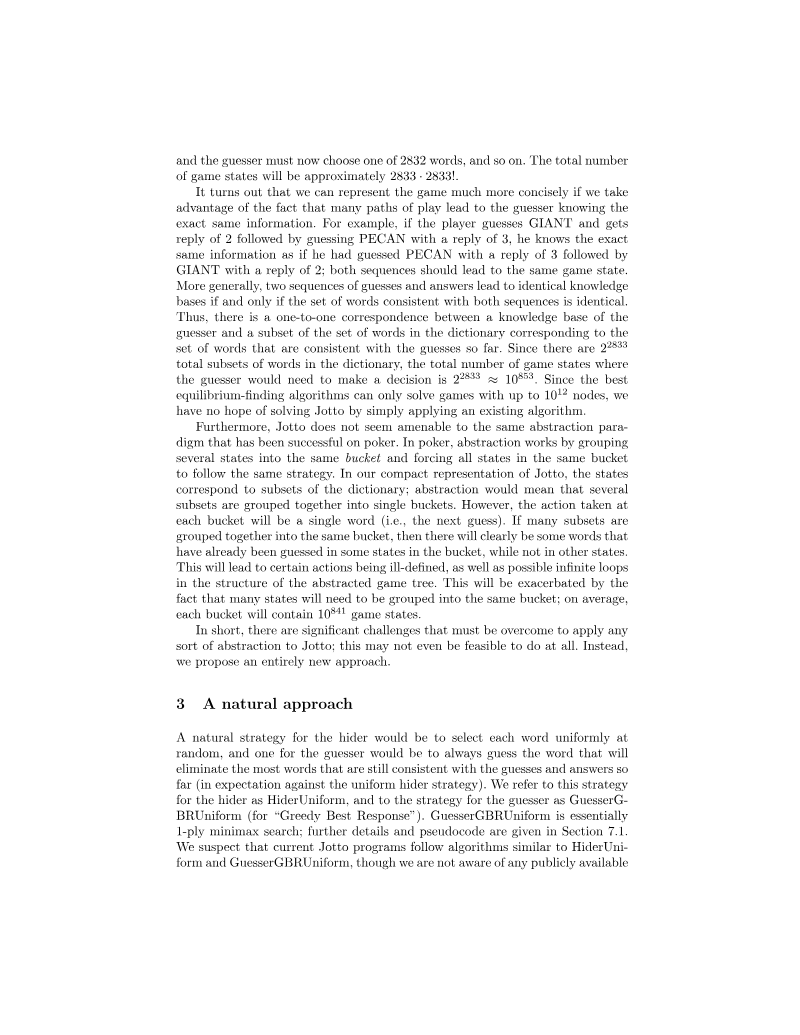
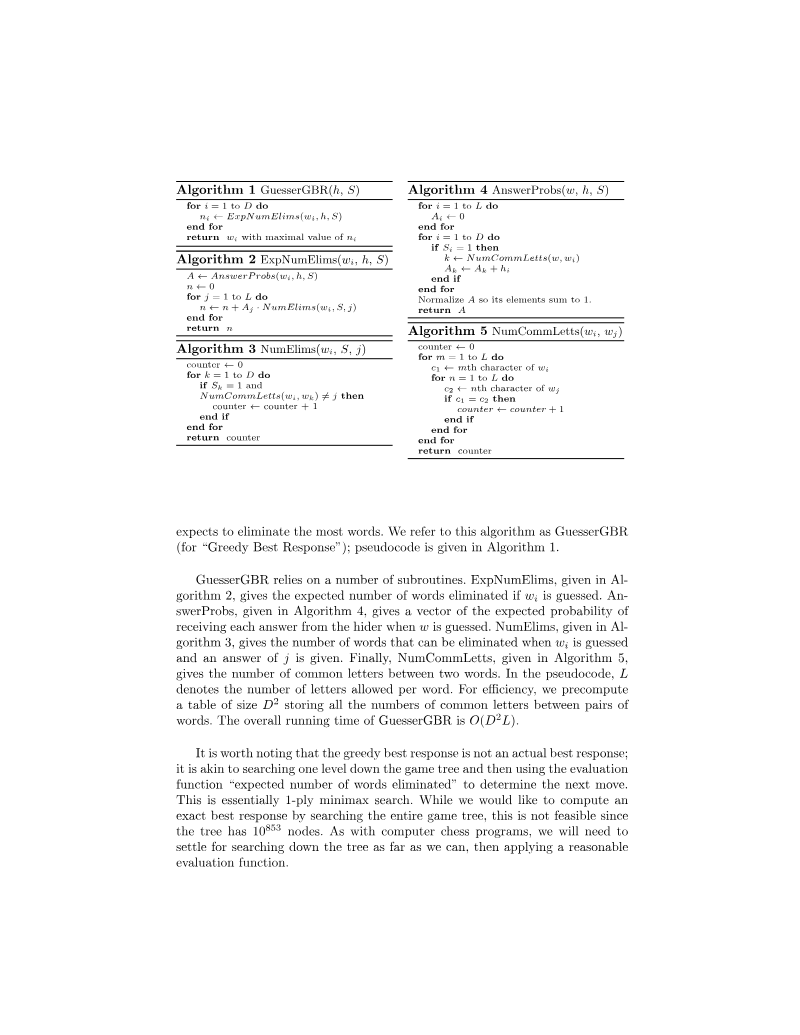
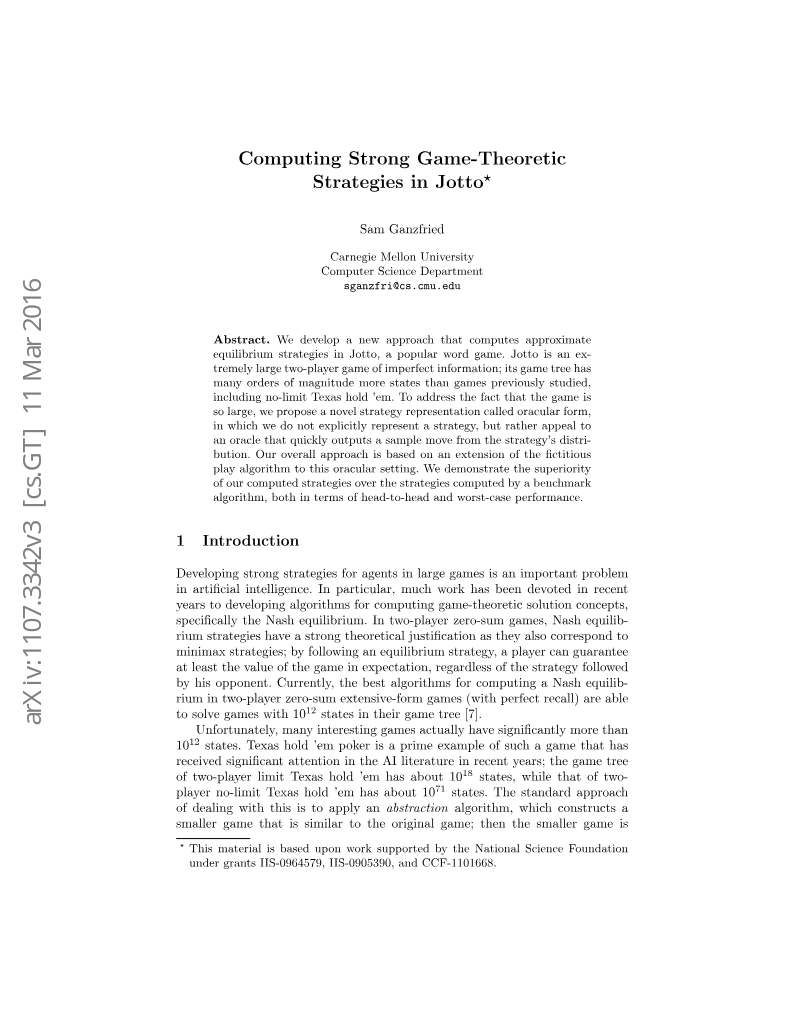
Computing Strong Game-Theoretic Strategies in Jotto
Computing approximate Nash equilibrium strategies in the word game Jotto presents a significant computational challenge due to a state space exceeding 10^853, which renders traditional abstraction techniques ineffective.
- The researchers successfully computed approximate Nash equilibrium strategies for Jotto, a game with a state space exceeding 10^853, by replacing explicit strategy tables with an oracular form representation.
- Using an oracular approach allows for the implicit storage of strategies and the generation of sample moves on demand, enabling the application of smoothed fictitious play to massive, asymmetric strategy spaces.
- The oracular method consistently outperformed standard greedy benchmarks in experimental testing, achieving lower epsilon values and superior head-to-head payoffs.
Well Played: A Special Issue on Post-Mortems of AR & VR Games
The development of immersive media requires a fundamental shift in design philosophy, moving away from traditional gaming paradigms toward solutions that prioritize physical presence and spatial embodiment.
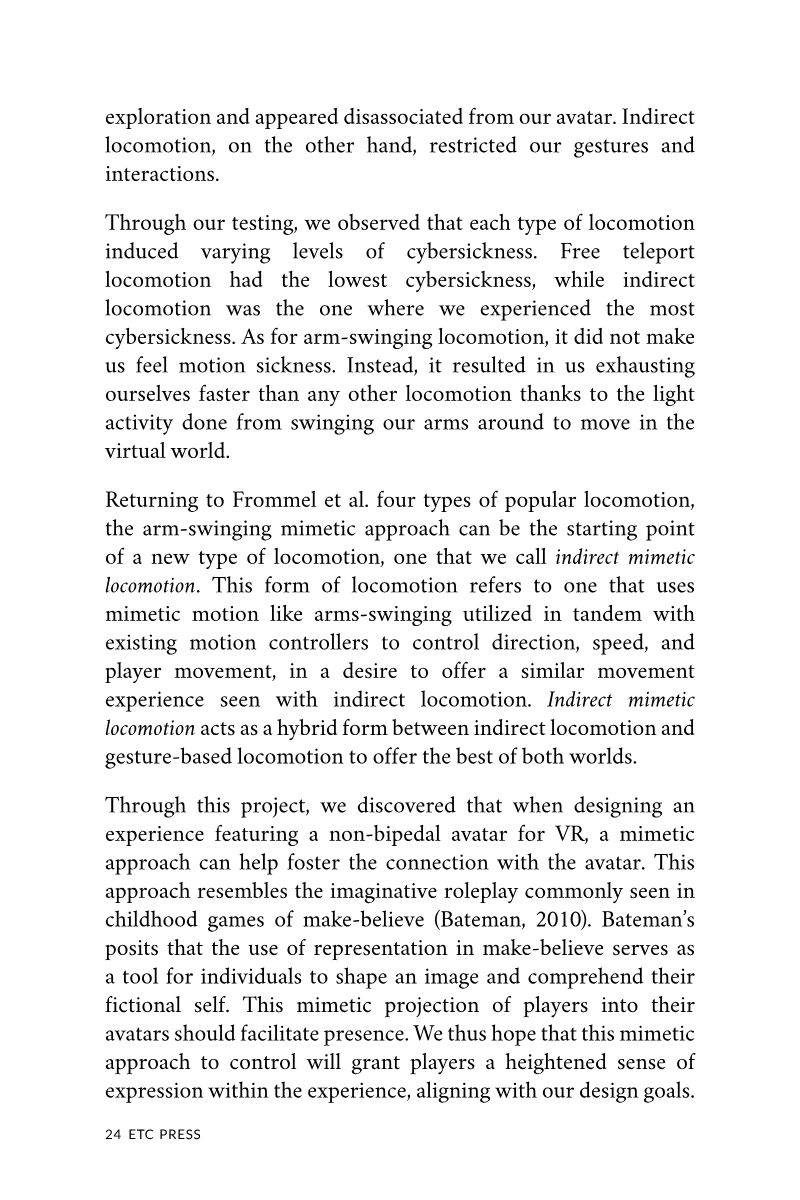
- Successful immersive design requires aligning control schemes with the avatar's physical constraints, such as using mimetic arm-swinging locomotion for quadrupedal characters to reduce cybersickness.
- Reinforcement learning should replace deterministic animation to create reactive, non-scripted AI opponents that behave more organically.
- Developers must prioritize iterative playtesting and qualitative research to manage the unique challenges of player fatigue and varying skill levels in VR environments.
Do you work at Carnegie Mellon University? Get a free report of how these documents are read and cited here.