Doom
Documents about Doom

Global Mobile Game Market Performance: March 2023
The March 2023 global mobile game landscape was dominated by anniversary celebrations and IP-driven releases, driving significant spikes in revenue, downloads, and advertising activity.
- Anniversary events and IP collaborations drove massive revenue spikes, exemplified by Uma Musume Pretty Derby’s 303.6% App Store revenue growth and PUBG Mobile’s 32.1% month-over-month increase on Google Play.
- Casual and puzzle games dominated the advertising landscape, accounting for 66.45% of total ad spend on mini-game platforms.
- High-volume creative strategies remain critical, with titles like Mighty Party utilizing video for over 90% of their thousands of deduplicated ad creatives.

my game is at GDC and it's broken..
The development of the indie game Father serves as a case study in the practical realities of preparing a vertical slice for a major industry event like GDC.
- The development of the indie game Father relies on a hybrid asset strategy, combining Unity Asset Store environment packs with custom-modeled landmarks to balance production speed with visual identity.
- The demo currently suffers from significant performance degradation, including frame rate drops and inefficient asset loading, largely due to an over-reliance on post-processing effects like bloom and fog.
- The project's visual fidelity is partially 'faked' to mask simplistic underlying geometry, creating a tension between the need for a polished GDC-ready presentation and a performant, stable build.

Shooter Games
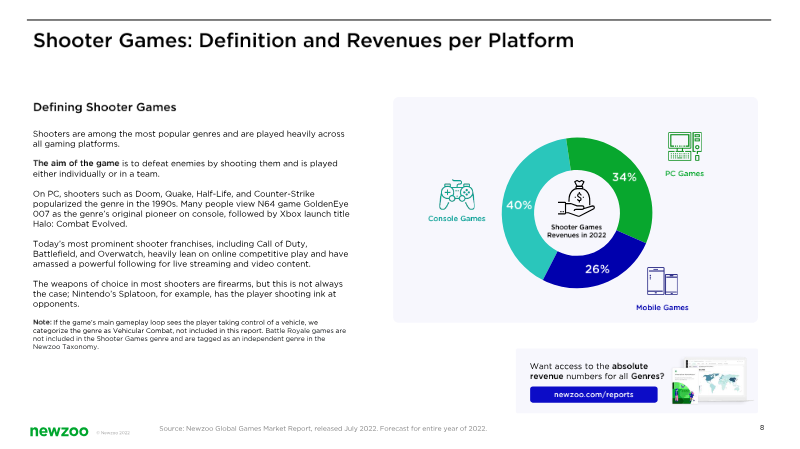
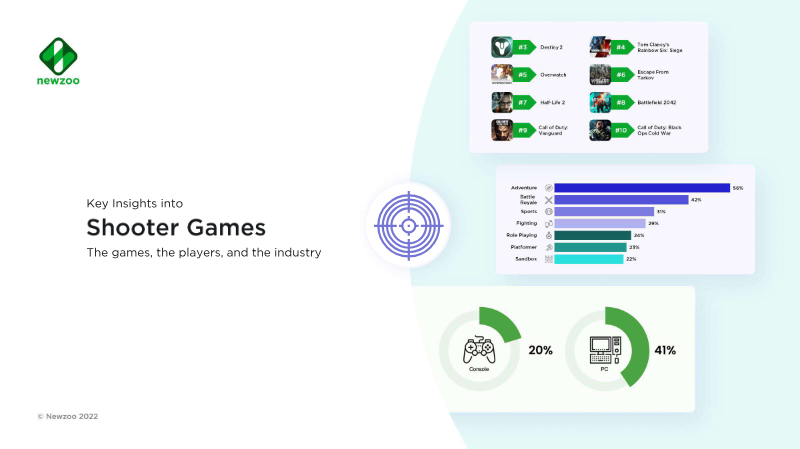
Shooter games represent the fifth highest-revenue generating genre globally as of 2022.
- Shooter games are the fifth highest-revenue generating genre globally, maintaining a massive footprint across PC, console, and mobile platforms as of 2022.
- Monetization is heavily driven by microtransactions, with 97% of players engaging in titles that feature in-app purchases.
- The player base is predominantly male (63%) and young, with 38% of players falling within the 10 to 20 age demographic.

NoPixel and The New Creator Auteurs
NoPixel, a prominent role-play server for Grand Theft Auto V, serves as a case study for the evolution of user-generated content (UGC) and the rising influence of "creator auteurs."
- NoPixel represents a significant evolution in user-generated content (UGC), transforming an eight-year-old game into a complex, player-driven ecosystem with custom economies, legal systems, and professionalized roles.
- The modding industry has shifted from hobbyist projects to a professionalized 'Creator Economy,' where mod teams like Hypixel Studios and PUBG Corp. have leveraged their success to secure acquisitions or independent scaling.
- Operating independent, high-scale modding projects is costly and technically fragile; for example, the NoPixel server incurs monthly operating costs of approximately $10,000 and remains susceptible to frequent client-side crashes.

No Single Player in Battlefield 2042
The decision to omit a single-player campaign from Battlefield 2042 highlights an ongoing industry debate regarding the necessity of narrative modes in predominantly multiplayer-focused franchises.
- Battlefield 2042 is the first entry in the franchise to launch without a single-player story mode.
- Historical sales data for Call of Duty: Black Ops 4, which also lacked a single-player campaign, shows it performed competitively against subsequent titles like Modern Warfare and Black Ops Cold War in six tracked European territories.
- Despite the commercial viability of multiplayer-only models, major publishers like Activision have continued to include single-player campaigns in recent Call of Duty releases.
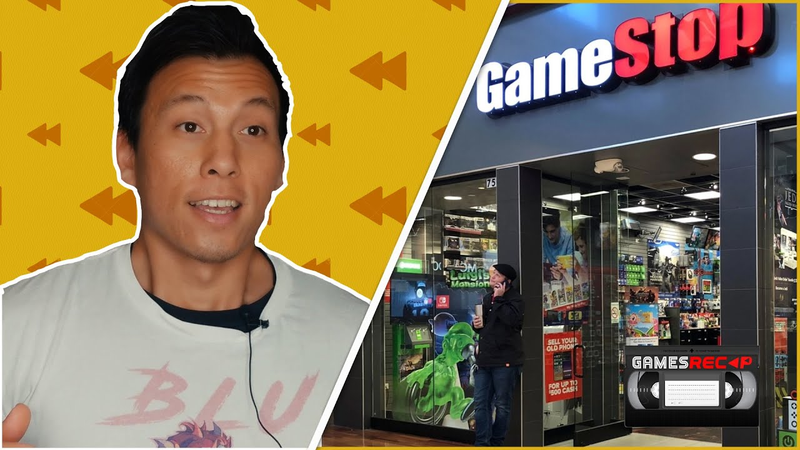
GameStop is an Essential Business? | Games ReCAP
The retail landscape for video games faced significant disruption during the early stages of the COVID-19 pandemic, highlighted by the controversial operational decisions of GameStop.
- GameStop faced severe financial instability entering the pandemic, reporting a negative free cash flow of nearly $500 million in fiscal 2019 and struggling to compete with digital distribution models.
- During the early pandemic, GameStop attempted to classify its physical storefronts as 'essential businesses' to remain open, a move that triggered widespread backlash from employees and lawmakers.
- Internal directives instructed staff to resist local law enforcement closure orders and use makeshift protective gear, such as plastic bags, leading to significant criticism regarding the prioritization of profit over employee safety.
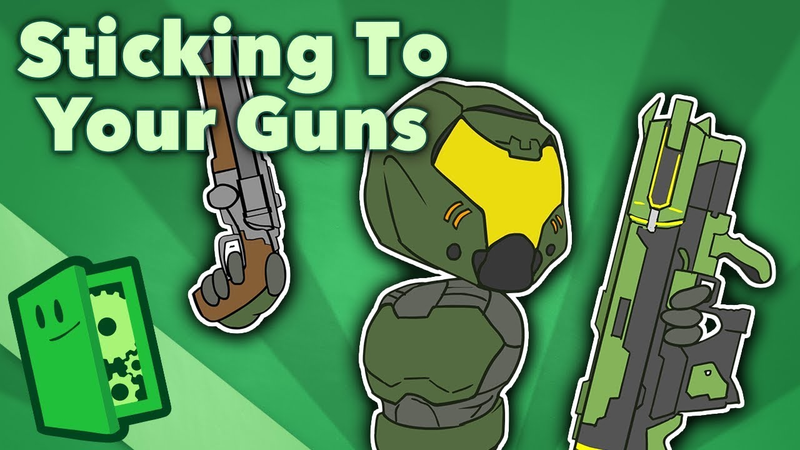
Sticking to Your Guns - How the Doom and Dragon Quest Franchises Modernized - Extra Credits
Successful franchise modernization relies on a disciplined commitment to core mechanics rather than the indiscriminate adoption of industry trends.
- Successful franchise modernization requires a disciplined commitment to core mechanics rather than the indiscriminate adoption of industry trends.
- The 2016 Doom reboot and 2017 Dragon Quest XI succeeded by refining their original identities—visceral combat and accessible turn-based narratives—for contemporary audiences.
- Developers should avoid forcing popular features like cover-based systems or action-heavy combat into established franchises, as these additions often dilute the unique value proposition of the series.
Games You Might Not Have Tried - ep 21 - Game Jam "Cycles" Edition! - Extra Credits
Game jams serve as a vital incubator for experimental game design, providing developers with a constrained timeframe—often around 100 hours—to prototype and refine unique mechanics.
- Game jams function as effective incubators for experimental design by forcing developers to prototype and refine unique mechanics within constrained timeframes, typically around 100 hours.
- The 'Cycles' theme demonstrates how developers translate abstract concepts into diverse genres, including puzzle-platformers, precision-based challenges, and social commentary.
- Limited development windows do not preclude high-quality output, as jam submissions frequently feature polished mechanics, effective tutorials, and cohesive aesthetic experiences.

The Early Days of id Software
The founding of id Software marked a pivotal shift in PC gaming, driven by a breakthrough in smooth, pixel-by-pixel scrolling that enabled the creation of the Commander Keen trilogy.
- Between the early 1990s and mid-1990s, id Software produced 28 games in five and a half years, including industry-defining titles like Wolfenstein 3D, Doom, and Quake.
- The studio pioneered the modern game engine licensing model, which was catalyzed by a technical breakthrough in smooth, pixel-by-pixel scrolling used in the Commander Keen trilogy.
- Development efficiency was maintained by a strict policy of not reusing code between major projects, ensuring every title was built on a fresh, optimized foundation.
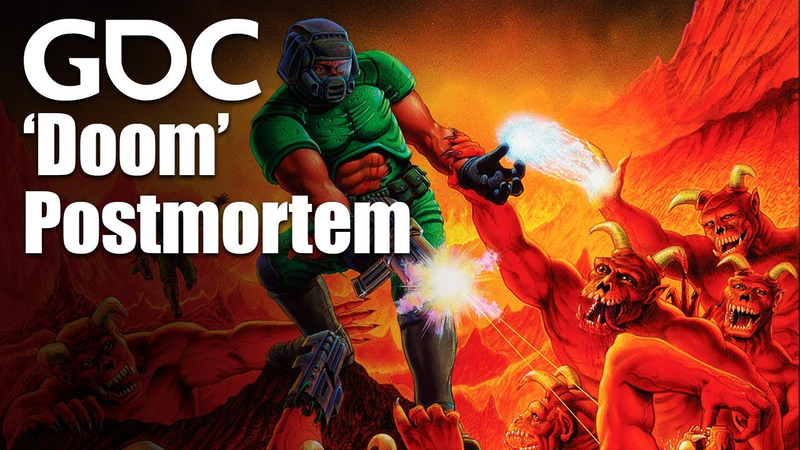
'Doom:' A Classic Game Postmortem
The development of Doom, initiated in late 1992, represents a pivotal evolution in first-person shooter design, transitioning from the rigid, military-themed architecture of its predecessor, Wolfenstein 3D, toward a more abstract and atmospheric aesthetic.
- Released on December 10, 1993, 'Doom' revolutionized the first-person shooter genre by shifting from the rigid architecture of 'Wolfenstein 3D' to complex, non-orthogonal environments enabled by Binary Space Partitioning trees.
- The development team prioritized high-speed, skill-based gameplay over complex narrative or inventory systems, utilizing NeXT workstations to achieve technical performance that exceeded contemporary hardware limitations.
- The project was defined by a lack of formal pre-production and significant internal creative friction, which led to key personnel changes and the abandonment of external collaborations like a proposed 'Aliens' project.
Meaningful Choice in Game Level Design
Meaningful choice in game level design functions as the primary driver of player engagement, regardless of whether a game follows a linear or open-ended structure.
- Meaningful choice is driven by systemic agency, which allows players to make discernable, integrated decisions that satisfy the psychological needs for competence, autonomy, and relatedness.
- Effective level design balances predictability with complexity, creating a 'sweet spot' that encourages pattern recognition while requiring active learning to achieve mastery.
- Games like Doom, Dead Space, and Halo utilize orthogonal unit differentiation to force players to evaluate surroundings and adapt mental schemas in real time, preventing repetitive gameplay.