
Divinity: Original Sin
GameBy Larian Studios · Released Jun 30, 2014
Documents about Divinity: Original Sin
Article
Top Games by Copies Sold: H1 2026
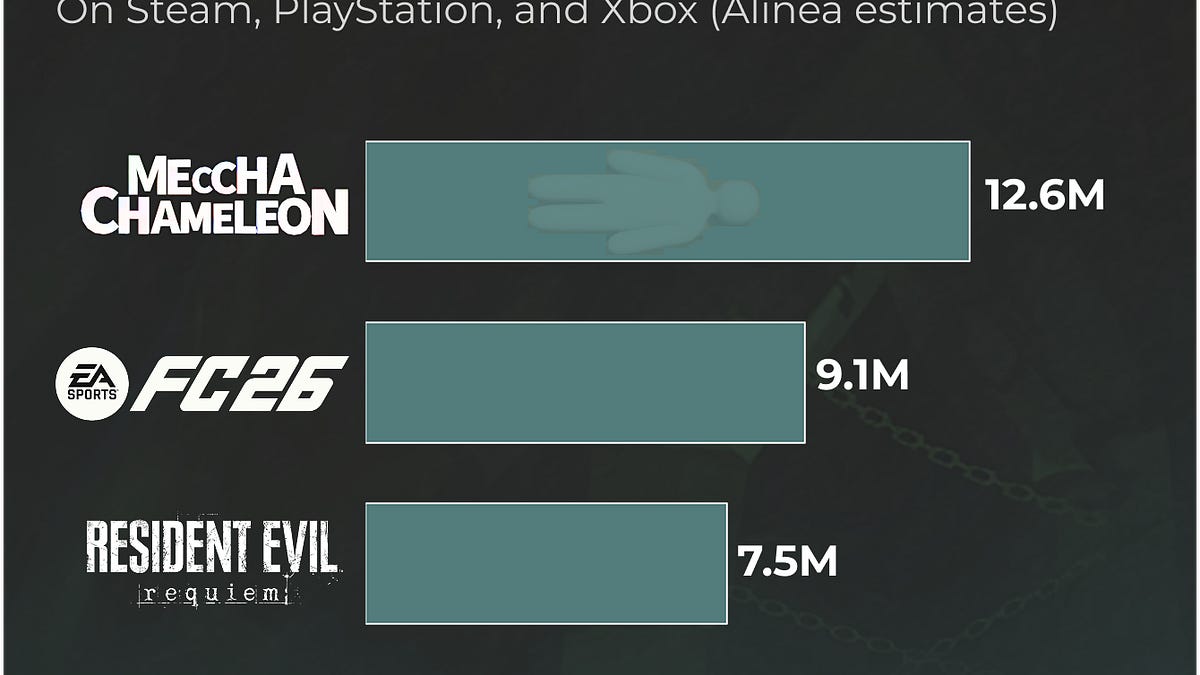
Alinea Analytics' mid-year estimates of 2026's best-selling games across Steam, Xbox, and PlayStation put Meccha Chameleon in first place.
- Meccha Chameleon is 2026's top game by copies sold across Steam, Xbox, and PlayStation combined, with nearly 13 million units sold despite being Steam-only and launching three weeks ago. Its $5 launch price (later $6) resulted in over $58M in gross revenue, making it the #18 game by Steam revenue this year.
- Sony has announced that new PlayStation games will be digital-only starting January 2028, eliminating physical discs. This move is driven by Sony's desire for greater control over pricing and revenue, as disc resales and rentals do not generate income for the platform holder.
- Resident Evil Requiem has sold 7.6 million copies across PS5 (46%), Steam (45%), and Xbox (9%), nearing half a billion dollars in gross revenue. It continues to sell well, with almost 400,000 copies sold last month alone, contributing to Capcom's catalog revenue.
Alinea AnalyticsJul 2026
Article
The Rogue Needs a City: Role-Playing Game Cities and Their Literary Background
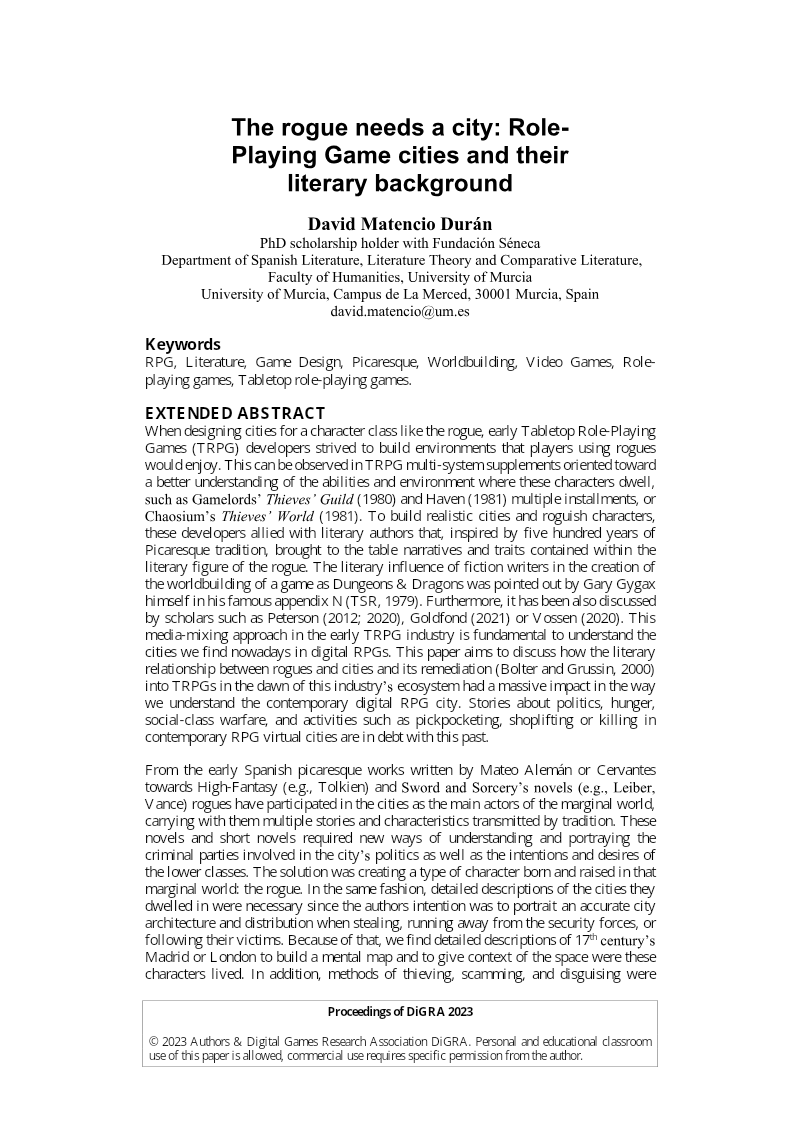
The paper examines how literary depictions of the rogue and the city shaped the design of role-playing game cities, tracing a lineage from Spanish picaresque fiction through early tabletop supplements to contemporary digital RPGs.
- The paper traces a lineage from Spanish picaresque fiction (16th–17th centuries), with its marginal urban settings and witty criminal protagonists, through early tabletop supplements such as Thieves' Guild, The Free City of Haven, and Thieves' World, to modern digital RPGs.
- The central claim is that rogue-oriented city design is a two-way process: cities are built to host roguish activities like pickpocketing, shoplifting, and scamming, and those activities in turn generate mechanics (such as percentage- or skill-based thieving systems), NPCs, shops, and narrative branches.
- The author argues that narrative concepts can motivate roguish mechanics, not only the reverse, so story can drive how thieving systems and urban spaces are designed.
DiGRAJun 2023
Article
Select Your Instrument: Musical Character Customization in Divinity: Original Sin II
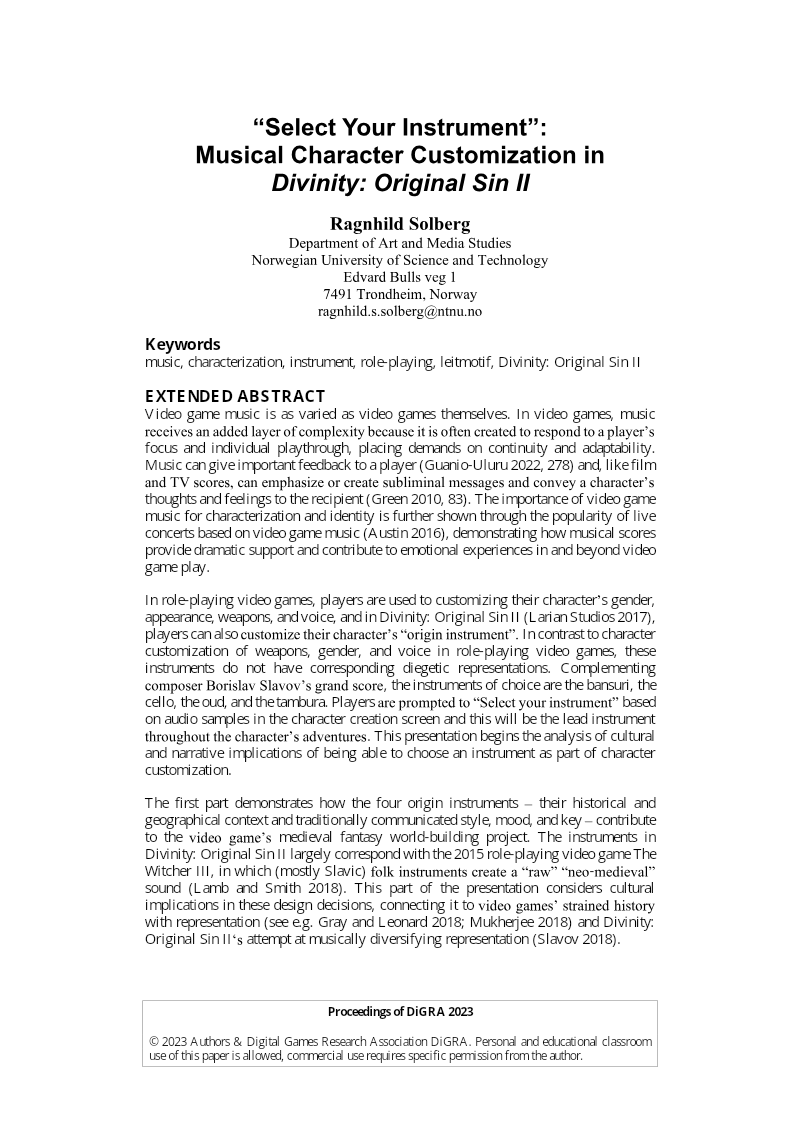
This work-in-progress paper by Ragnhild Solberg examines the musical character customization feature in Divinity: Original Sin II (Larian Studios, 2017), in which players select a lead "origin instrument" during character creation.
- The paper argues that the musical origin-instrument choice in Divinity: Original Sin II (Larian Studios, 2017) is more than cosmetic: it shapes world-building, the characterization of the player's avatar, and the player's sense of identity.
- The four selectable instruments are the bansuri, cello, oud, and tambura, each analyzed for its historical and geographical context and its traditionally associated styles, moods, and keys.
- The instrument-choice mechanic reflects the game's narrative of individuals ascending toward godhood, while the pastoral, bard-like associations of the melodic material cast the player character more as a storyteller than a deity.
DiGRAJun 2023
Companies behind it

As the documents state it.