1 free read left. Create a free account for unlimited reading + AI research.
Create free accountArticle DiGRA
1 free read left. Create a free account for unlimited reading + AI research.
Create free accountArticleDiGRA
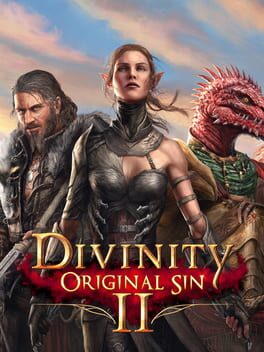
In Divinity: Original Sin II, players select a lead origin instrument during character creation. The paper treats this choice as more than cosmetic.
This work-in-progress paper by Ragnhild Solberg examines the musical character customization feature in Divinity: Original Sin II (Larian Studios, 2017), in which players select a lead "origin instrument" during character creation. The paper's central argument is that this choice is more than a cosmetic option: it shapes the game's world-building, its characterization of the player's avatar, and the player's sense of identity. The author positions this analysis within existing scholarship on video game music, interactivity, and musical identity, and frames it as an expansion of current conceptualizations of video game characterization.
The paper's analysis is organized into two parts. The first considers the four selectable instruments, the bansuri, cello, oud, and tambura, in terms of their historical and geographical contexts and their traditionally associated styles, moods, and keys. It argues that these choices contribute to the game's medieval fantasy world-building and compares them with the folk-inflected "neo-medieval" sound of The Witcher III. The second part examines how origin instruments function within gameplay, noting that the instrument becomes a leitmotif tied to the character, and that each instrument receives distinct solo material suited to its stylistic and historical character. The adaptive music system, which shifts between major and minor keys in response to play, is discussed alongside this continuity.
A preliminary finding is that the instrument-choice mechanic reflects the game's narrative of individuals ascending toward godhood, while the pastoral, bard-like associations of the melodic material position the player character as less a deity than a storyteller. The author notes that the solo melodies stand out from the orchestration in ways that could be read as disruptive, yet the score avoids interfering with gameplay. The paper also engages with questions of cultural representation in game music, situating the game's musical diversification effort within broader critiques of representation in video games. The analysis is supported by transcriptions prepared by the author, though the paper is presented as preliminary rather than a complete study.
DiGRA · 2026
DiGRA · 2018