Counter-Strike: Global Offensive
Documents about Counter-Strike: Global Offensive
Counter Strike GO | BackSeat Gamer Episode 002
Counter-Strike: Global Offensive maintains its status as a premier tactical shooter by prioritizing mechanical precision, deliberate movement, and strategic team coordination over the fast-paced, aggressive gameplay found in many contemporary titles.
- Counter-Strike: Global Offensive differentiates itself from modern arena shooters by prioritizing mechanical precision, deliberate movement, and team-based strategic coordination over aggressive, reflexive gameplay.
- The game’s high skill ceiling is defined by the mastery of complex recoil patterns, disciplined economy management, and acute map awareness.
- Success in the game’s single-life-per-round format relies on technical fundamentals such as optimal crosshair placement, minimizing exposure by hugging walls, and utilizing audio cues to track enemy movement.
How Counter Strike Can Sell a Single Skin for $61,000
The success of Counter-Strike: Global Offensive in generating significant revenue through digital weapon skins is rooted in a sophisticated ecosystem that leverages scarcity, social visibility, and a robust secondary market.
- Valve’s integration of the Steam Marketplace allows for a player-driven economy that removes price ceilings, enabling individual digital skins to sell for as much as $61,000.
- The 'Weapon Wear' system uses procedural generation to assign a unique floating-point value to every item, creating thousands of permutations for a single skin and driving long-term scarcity.
- CS:GO utilizes a three-variable RNG system for case openings—skin rarity, wear value, and StatTrak status—which exponentially increases the difficulty of obtaining 'perfect' items.

One Fourth of All German Internet Users Play Multiplayer Games
Multiplayer gaming serves as a significant social and cultural pillar within the German digital landscape, engaging a substantial portion of the population.
- Approximately 18 million German internet users aged 16 and older, representing 27% of that demographic, engage in multiplayer gaming.
- About 21% of German internet users, totaling 14 million people, dedicate up to 50% of their total gaming time to multiplayer experiences.
- Multiplayer gaming preferences are split between online play (8.4 million users), local/same-room competition (4.7 million users), and a mix of both (4.9 million users).
Building the Content that Drives the Counter-Strike: Global Offensive Economy
The Counter-Strike: Global Offensive economy functions as a highly scalable, community-driven ecosystem designed to maximize player engagement without compromising competitive integrity.
- Valve launched the 'Arms Deal' update for Counter-Strike: Global Offensive to build an economy with a small team of two artists by leveraging community-generated content through the Steam Workshop, which eventually grew to over 30,000 user-authored weapon finishes.
- To scale content production efficiently, Valve implemented procedural coloration and shader-based techniques like hydrographic-style texturing and anodization, allowing for a high volume of aesthetic variety without requiring unique assets for every item.
- Valve discovered that players valued 'paint gun' aesthetics over realistic military camouflage, proving that the game's economy is driven by its identity as a competitive sport rather than a military simulation.
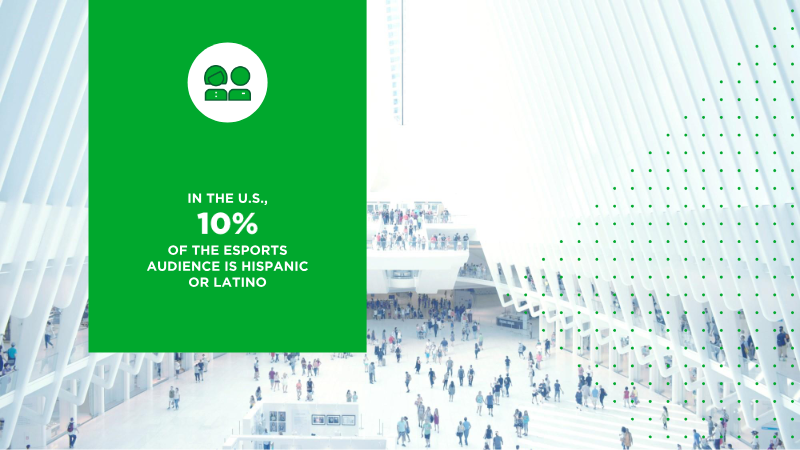

Esports in the Americas: Sports, Spanish, and Spending
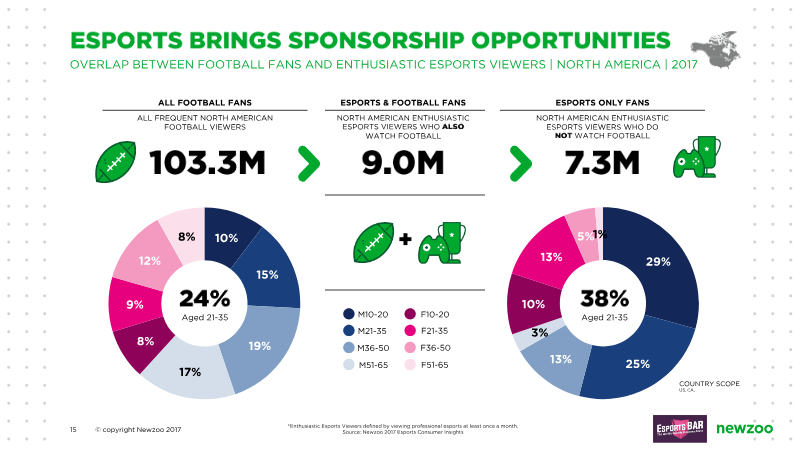
The Americas represent a critical hub for the global esports industry, accounting for 25% of the worldwide audience and 40% of total industry revenues.
- The Americas represent a major global esports hub, accounting for 25% of the worldwide audience and 40% of total industry revenues.
- Nearly 50% of the regional esports audience speaks Spanish or Portuguese, necessitating localized strategies rather than a unified approach for North and Latin American markets.
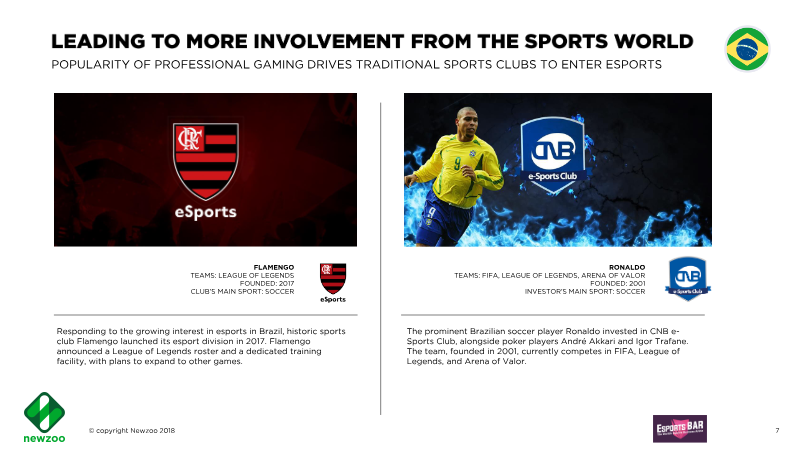
- Traditional sports organizations are increasingly acquiring esports teams to diversify fan engagement and reach younger demographics across both continents.
Esports in Brazil: Key Facts, Figures, and Faces
Brazil has emerged as a global powerhouse in the esports industry, ranking third worldwide with 7.6 million esports enthusiasts as of 2018.
- Brazil is a top-tier global esports market, ranking third worldwide with 7.6 million enthusiasts as of 2018 and a projected audience growth to nearly 30 million viewers by 2020.
- The Brazilian gaming market is supported by a large base of 75.7 million gamers out of a 210.9 million online population, generating $1.5 billion in total game revenues.
- The audience is exceptionally young, with 43% of enthusiastic viewers falling within the 10 to 20 age demographic.
Counter-Strike vs Valorant Viewership: Tactical FPS Esports Metrics
The analysis compares early-2026 viewership of Counter-Strike: Global Offensive and Valorant across S-tier tournaments, focusing on hours watched, peak viewers, and weighted average viewers.
- Counter-Strike outperformed Valorant in early-2026 S-tier viewership, generating 205 million hours watched compared to Valorant’s 130 million.
- Counter-Strike achieved a peak viewership of 1.38 million, more than double Valorant’s peak of approximately 650,000.
- Counter-Strike demonstrated higher audience density, maintaining a weighted average of 292,000 viewers versus 141,000 for Valorant.
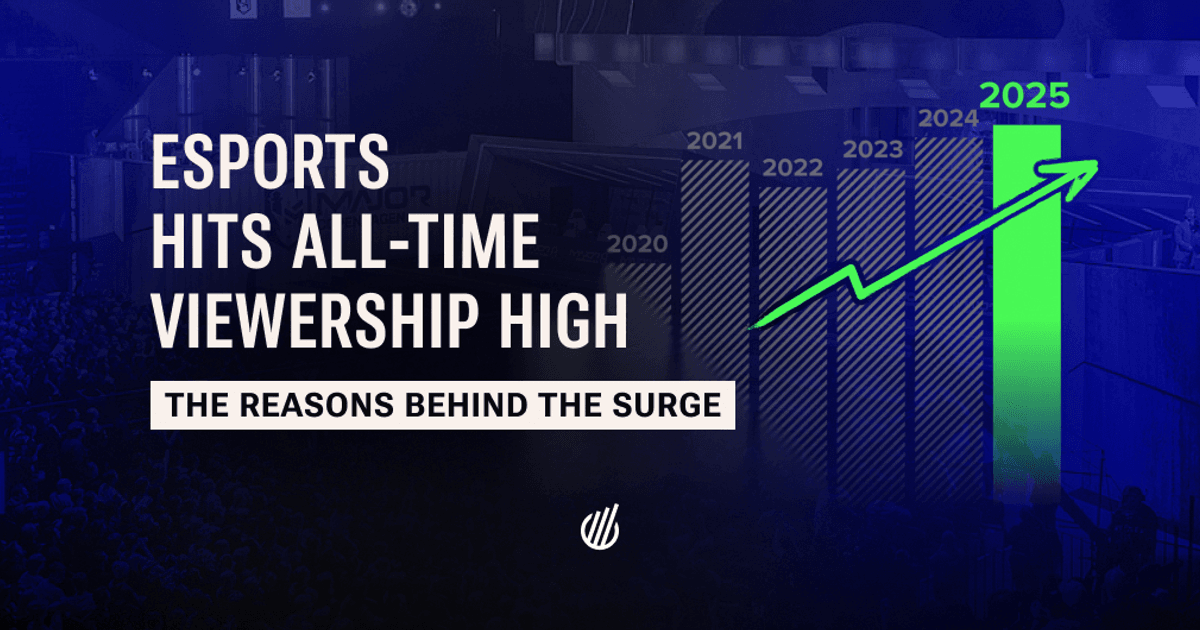
Esports Sets New Record: 3.3B Hours Watched in 2025
Esports viewership reached a new milestone in 2025, with total yearly hours watched climbing to 3.3 billion—a record high that reflects the medium’s growing mainstream acceptance and expanding commercial potential.
- Esports viewership reached a record 3.3 billion hours watched in 2025, representing a 1.5% increase over 2024.
- League of Legends, Dota 2, Valorant, and Counter-Strike: Global Offensive collectively accounted for over 60% of total viewership.
- Counter-Strike: Global Offensive experienced a 33% year-over-year increase in hours watched and a $9 million rise in prize money.