Card Game
Game
Documents about Card Game

Gaming in 2027 Just Got Worse, EA Now A Foreign Asset & FFXIV Gets Classy | Games For Breakfast
The global gaming industry is currently navigating a period of significant structural instability, characterized by severe hardware supply constraints, shifting corporate ownership models, and evolving regulatory challenges.
- Electronic Arts (EA) has been sold to Saudi Arabian interests, a move analysts predict will lead to long-term cultural decline and financial instability for the company.
- The gaming industry is experiencing significant labor instability, with current estimates suggesting a 50% reduction in workforce volume across the sector.
- A new financial support fund, the United Video Game Workers fund, has been established to assist developers impacted by industry layoffs, though it is currently restricted to North American residents in the US and Canada.

Google's €890m EU fine and why Netflix's gaming figures mean nothing | Week in Mobile Games podcast
The European Commission has imposed an €890 million fine on Google for violating the Digital Markets Act, specifically targeting anti-steering practices and self-preferencing within the Google Play Store.
- The European Commission has fined Google €890 million for Digital Markets Act breaches, consisting of €460 million for self-preferencing its own services and €430 million for restricting developers from directing users to alternative, cheaper purchase channels.
- Tencent is reportedly in talks to acquire the mobile game developer SuperPlay from Playtika in a deal valued at up to $1.5 billion.
- Netflix’s claim of a 600% increase in mobile game engagement is considered a 'vanity metric' by industry analysts because the company fails to provide standard health metrics like Daily Active Users (DAU) or Monthly Active Users (MAU).

Google and Epic upend Android mobile game monetisation | Week in Mobile Games podcast E71
The mobile gaming landscape is undergoing a structural transformation driven by significant legal settlements and shifting consumer engagement patterns.
- A Google and Epic Games antitrust settlement mandates a new Android fee structure through 2032, capping fees at 9% for cosmetic items and non-game apps while imposing a 20% fee on gameplay-impacting purchases and loot boxes starting in late 2025.
- Pokémon Trading Card Game Pocket has achieved significant market success, reaching 150 million installs and generating $1.3 billion in its first year through nostalgia-driven content.
- The Nintendo Switch 2 has set a new industry sales benchmark, selling 10.36 million units in 118 days and outpacing the launch trajectories of both the original Switch and the PlayStation 5.

Week in Mobile Games E70 - Squad Busters shuts down and Google Play's transformative changes
The mobile games industry is currently navigating significant shifts in development strategy, platform regulation, and corporate restructuring.
- Supercell is shutting down Squad Busters, which launched in May 2024, after the game failed to meet internal performance expectations despite generating over $100 million in lifetime revenue. In-app purchases will be disabled on October 30, 2024, and the game will receive its final update in December.
- Following an injunction in the Epic Games vs. Google case, Google Play in the US is now required to allow alternative payment methods and permit developers to communicate pricing options outside of the Google Play billing system as of October 29, 2024.
- Amazon is cutting approximately 14,000 corporate jobs, with significant layoffs impacting its games division, specifically in the San Diego and Irvine offices, alongside the closure of the game New World.

Week in Mobile Games E54 - Fortnite’s Epic return and the challenges of launching a game in 2025
The mobile gaming landscape is currently defined by a volatile intersection of regulatory shifts and extreme market saturation.
- Pokémon Trading Card Game Pocket reached $1 billion in gross player spending in 204 days, outpacing Pokémon Go, which took 282 days to achieve the same milestone.
- Epic Games is currently blocked from releasing Fortnite on the US App Store, as the company refuses to exclude the US market from its update while Apple maintains restrictions on alternative payment links.
- Industry experts agree that launching a mobile game in 2025 is increasingly difficult due to heightened competition and the dominance of established titles that capture the majority of player time.
Hasbro Management Crit Fails, Videogame Workers Union Debuts & Minecraft Live | Games For Breakfast
The gaming industry is currently navigating a period of significant structural tension, defined by the friction between aggressive corporate monetization strategies and the practical needs of player communities.
- The video game industry has seen the debut of a nationwide union supported by the Communications Workers of America, a move intended to combat crunch culture and unsustainable profit cycles following widespread layoffs.
- Hasbro reduced its Project Sigil virtual tabletop team by 90% after failing to successfully integrate a standalone, profit-driven platform into the existing Dungeons & Dragons ecosystem.
- The rapid shutdown of live-service titles like Seekers of Sky Veil highlights the increasing fragility of digital-only distribution and the resulting challenges for long-term game preservation.

Week in Mobile Games E42: Brawl Stars' highs, Squad Busters' struggle, & AppLovin's $900m games sale
Supercell has achieved a significant financial turnaround in 2024, reporting €2.78 billion in non-GAAP revenue as every title in its portfolio experienced year-over-year growth for the first time in a decade.
- Supercell reported €2.78 billion in 2024 non-GAAP revenue, marking the first time in a decade that every title in its portfolio achieved year-over-year growth.
- AppLovin is divesting its apps business for $900 million to focus exclusively on its high-growth advertising division, signaling a strategic retreat from direct game development.
- DeNA experienced an 8,000% quarterly profit surge driven by the strong market reception and high player retention of Pokémon Trading Card Game Pocket.

Week in Mobile Games E41 - How Scopely made $10bn, and 2025's big stories to watch
The mobile gaming industry is currently defined by a tension between established giants achieving record-breaking scale and a volatile market environment that demands constant innovation.
- Scopely reached $10 billion in lifetime revenue, a milestone driven by the seven-year development cycle and strategic refinement of Monopoly Go.
- Established intellectual property remains a primary monetization driver, evidenced by Pokémon Trading Card Game Pocket generating $400 million in its first ten weeks.
- Major gameplay overhauls can drive significant revenue spikes, as seen with Zenless Zone Zero reaching $8.6 million in daily revenue following content updates.

Week in Mobile Games E39 - Mobile's hot new releases and the loot box investigation unpacked
The mobile gaming industry is currently undergoing a structural transformation defined by the rise of high-fidelity, cross-platform titles that bridge the gap between mobile and console experiences.
- Nexon’s 'Dungeon and Fighter Mobile' generated over $1 billion in iOS revenue in China within six months, highlighting the massive financial potential of successful mobile titles.
- The mobile industry is shifting toward high-fidelity, cross-platform experiences like 'Infinity Nikki' and 'Delta Force' that emphasize cross-progression to bridge the gap between mobile and console.
- Investors are increasingly prioritizing daily active user counts over traditional retention metrics, seeking shorter return on investment windows of two to three years.

Week in Mobile Games E37: Pokémon Trading Card Game Pocket's blockbuster launch & Royal Kingdom hype
The mobile gaming industry is currently navigating a period of significant volatility, characterized by a shift away from traditional performance-based user acquisition toward brand-centric development and long-term intellectual property cultivation.
- Pokémon Trading Card Game Pocket generated over $120 million in its first three weeks, demonstrating the high market potential of leveraging nostalgia and simplified mechanics.
- The mobile gaming market is experiencing high volatility, with top-tier titles often suffering revenue declines exceeding 50% from their peak launch performance.
- Warcraft Rumble has seen a 92% decline in monthly earnings, highlighting the difficulty of maintaining long-term player engagement for major franchises.

#307: Pokemon Game Rises, Supercell's IPO Dreams and VC Misdeeds
The global gaming industry is currently navigating a period of significant structural transition, characterized by the maturation of major hardware cycles and a fundamental reassessment of venture capital investment strategies.
- The gaming venture capital model is under scrutiny for prioritizing management fees over portfolio success, resulting in an influx of overvalued, unacquirable startups that lack clear paths to liquidity.
- Startups founded by former Activision Blizzard employees have raised $1.7 billion since 2020, yet the broader investment landscape is increasingly viewed as unsustainable.
- Nintendo reported a 17% revenue decline and a 69% drop in net profit as the Switch nears the end of its lifecycle, though investor confidence has been bolstered by the confirmation of backward compatibility for its successor.
Board Game Design Day: Balancing Mechanics for Your Card Game's Unique Power Curve
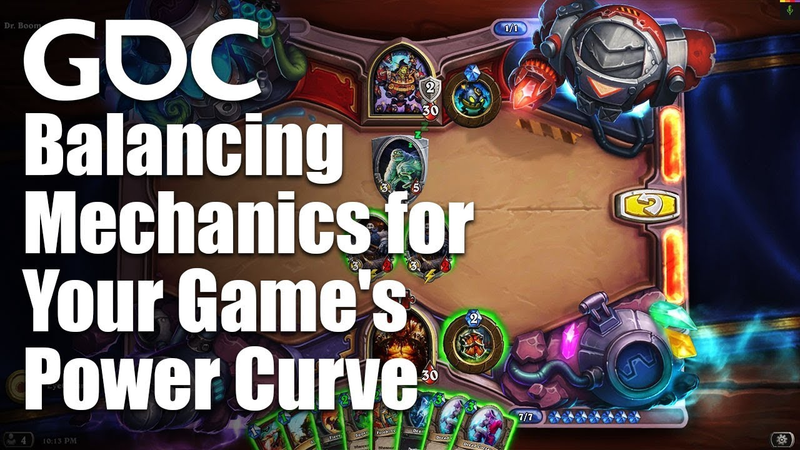
Effective card game design relies on the strategic calibration of power curves, which are inherently non-linear due to the trade-offs between card cost, flexibility, and the risk of game termination.
- The power of a card is defined by its ratio of utility to cost, where higher-cost cards must provide significantly greater impact to justify the lack of flexibility and the difficulty of playing them late in a game.
- Games with automatic resource generation, like Hearthstone, require lower power ceilings for high-cost cards because players are guaranteed to reach those mana thresholds, whereas games like Magic: The Gathering must offer massive power payoffs to incentivize players to reach higher costs.
- Granularity in resource systems—such as Magic's ability to use color-specific mana or decimal-like cost adjustments—provides designers with more balancing 'knobs' compared to systems with rigid, chunky cost structures like Pokémon.
Companies behind it

As the documents state it.