1 free read left. Create a free account for unlimited reading + AI research.
Create free accountWhitepaper Bina Nusantara University
1 free read left. Create a free account for unlimited reading + AI research.
Create free accountWhitepaperBina Nusantara University
They also frequently restrict the range of musical notes available to users.
Key Problem. Existing mobile Angklung applications have limitations in educational features or note ranges.
The development of a desktop-based Virtual Angklung simulator serves to modernize the preservation of traditional Indonesian music by increasing accessibility and portability. By leveraging Adobe Flash, this interactive multimedia platform addresses the limitations of existing mobile alternatives, which frequently lack comprehensive educational components or restricted note ranges. The primary objective is to provide a robust digital environment that facilitates both individual practice and collaborative group performance, effectively bridging the gap between cultural heritage and contemporary digital learning tools.
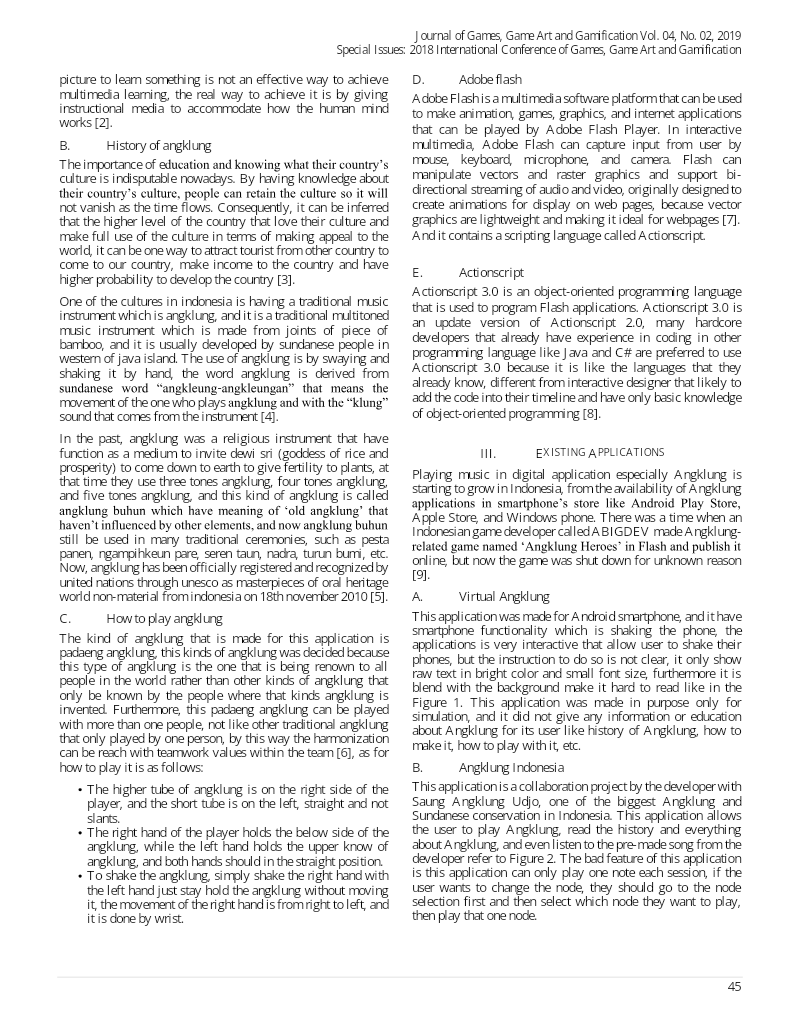
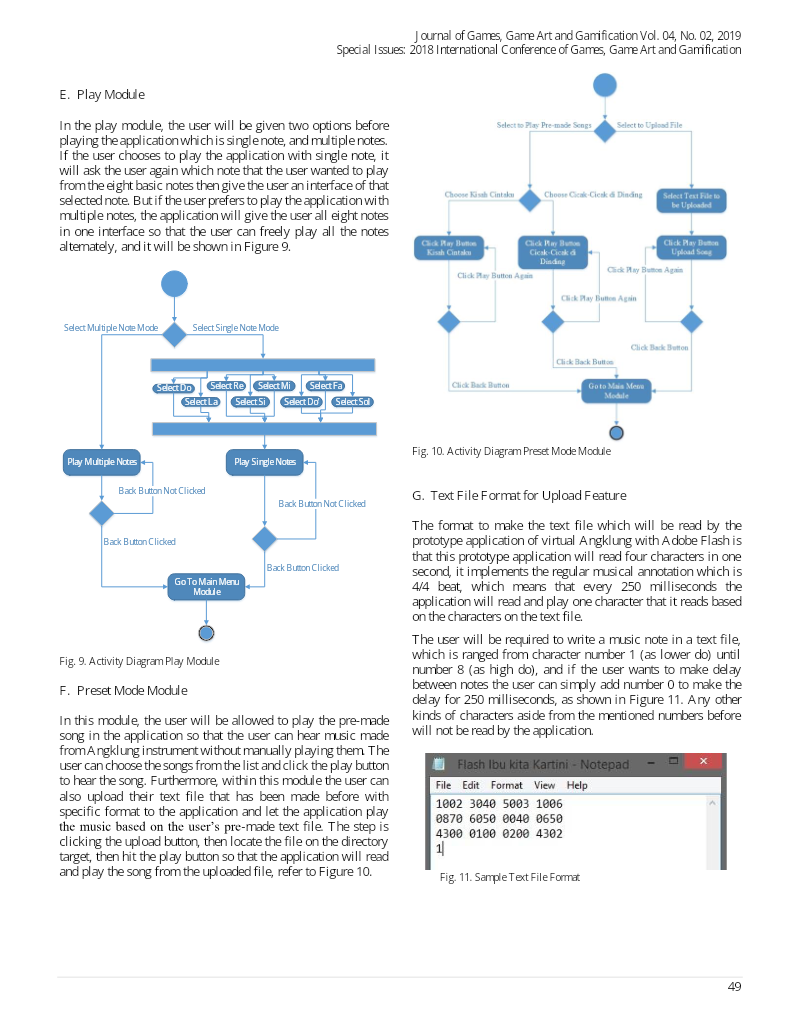
The application architecture integrates several core modules, including manual performance modes, preset song playback, and structured tutorials. A key technical feature is the implementation of a custom annotation system, where numerical inputs represent specific musical notes and temporal delays, enabling users to compose and upload original musical arrangements. This functionality transforms the software from a passive simulation into an active creative tool, allowing for a more nuanced engagement with the instrument’s unique sonic properties.
Evaluations conducted with a cohort of 34 participants confirm the efficacy of the design, with 94 percent of users identifying the instructional features as highly beneficial. Quantitative feedback indicates strong user acceptance, as 91 percent of respondents expressed overall satisfaction with the prototype and 88 percent reported a high degree of usability and continued interest. These findings demonstrate that the application successfully meets its functional requirements, offering an intuitive interface that effectively supports the pedagogical needs of learners while maintaining the cultural integrity of the Angklung.
Bina Nusantara University · 2026
Bina Nusantara University · 2025
Bina Nusantara University · 2024
Bina Nusantara University · 2023
Bina Nusantara University · 2023
Bina Nusantara University · 2021
Bina Nusantara University · 2021
Bina Nusantara University · 2021
Bina Nusantara University · 2021
Bina Nusantara University · 2021
Bina Nusantara University · 2021
Journal of Games, Game Art, and Gamification · 2021
Journal of Games, Game Art, and Gamification · 2025