1 free read left. Create a free account for unlimited reading + AI research.
Create free accountWhitepaper Bina Nusantara University
1 free read left. Create a free account for unlimited reading + AI research.
Create free accountWhitepaperBina Nusantara University
This study examines the implementation of a structural gamification system within an entrepreneurship course at Bina Nusantara University in Indonesia. The primary objective is to address the common challenge of low in-class participation among Asian students by utilizing game-based mechanics—specifically points, quests, and leveling systems—to foster active learning, improve discipline, and increase student engagement.
The research employs a qualitative methodology, utilizing in-depth interviews with seven students following a three-month implementation period during the 2016 spring semester. The gamification framework was structured around five key steps: understanding the audience, defining learning objectives, structuring the experience, identifying resources, and applying game elements. The system tracked student progress through an online spreadsheet, rewarding participation, teamwork, and punctuality with points that could be converted into final exam bonuses.
Findings indicate that the gamification system successfully increased student motivation and classroom discipline, particularly among competitive and active learners. Participants reported that the system made the course more engaging and helped develop leadership and teamwork skills. However, the study identifies significant limitations, noting that the current design was less effective for introverted students or those uninterested in the gamified structure.
The research concludes that successful implementation requires clear communication of rules, a balance of individual and team-based quests, and a creative, flexible approach from the lecturer. While gamification is highly effective for courses requiring high levels of interaction or complex material, the study emphasizes the need for future iterations to better accommodate diverse student personality types and learning styles to ensure inclusivity.
Bina Nusantara University · 2026
Bina Nusantara University · 2025
Bina Nusantara University · 2024
Bina Nusantara University · 2023
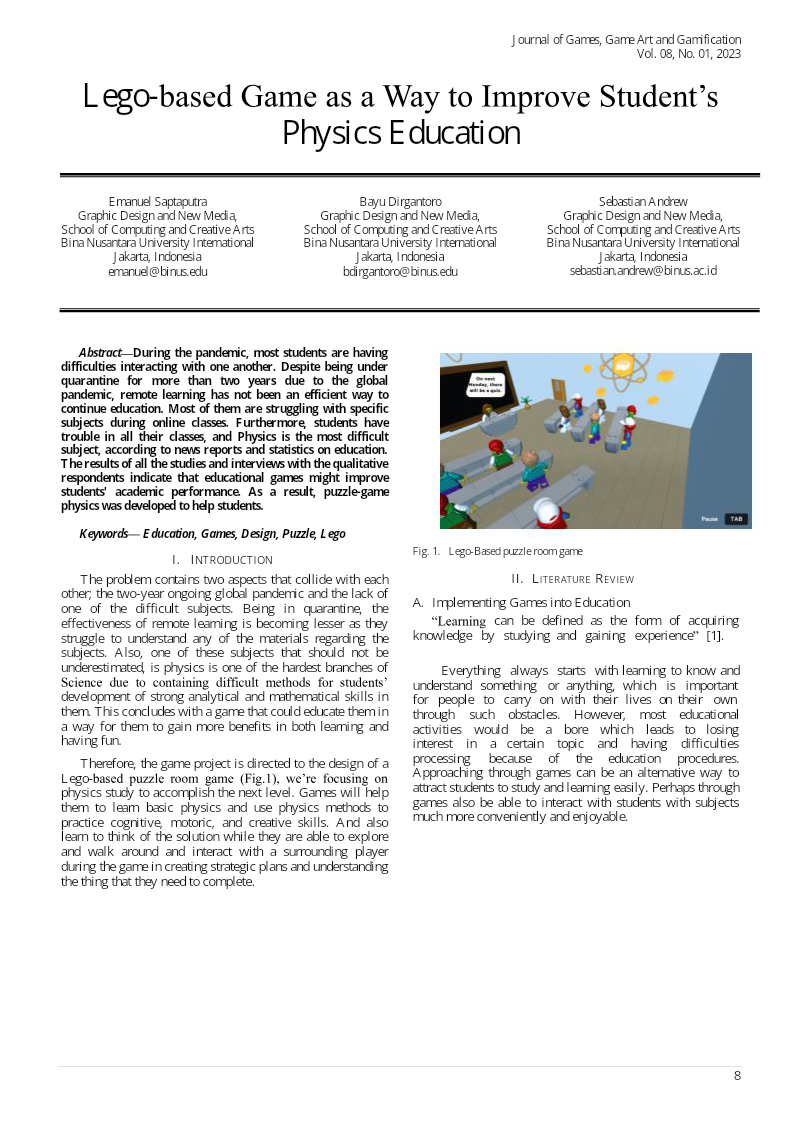
Bina Nusantara University · 2023
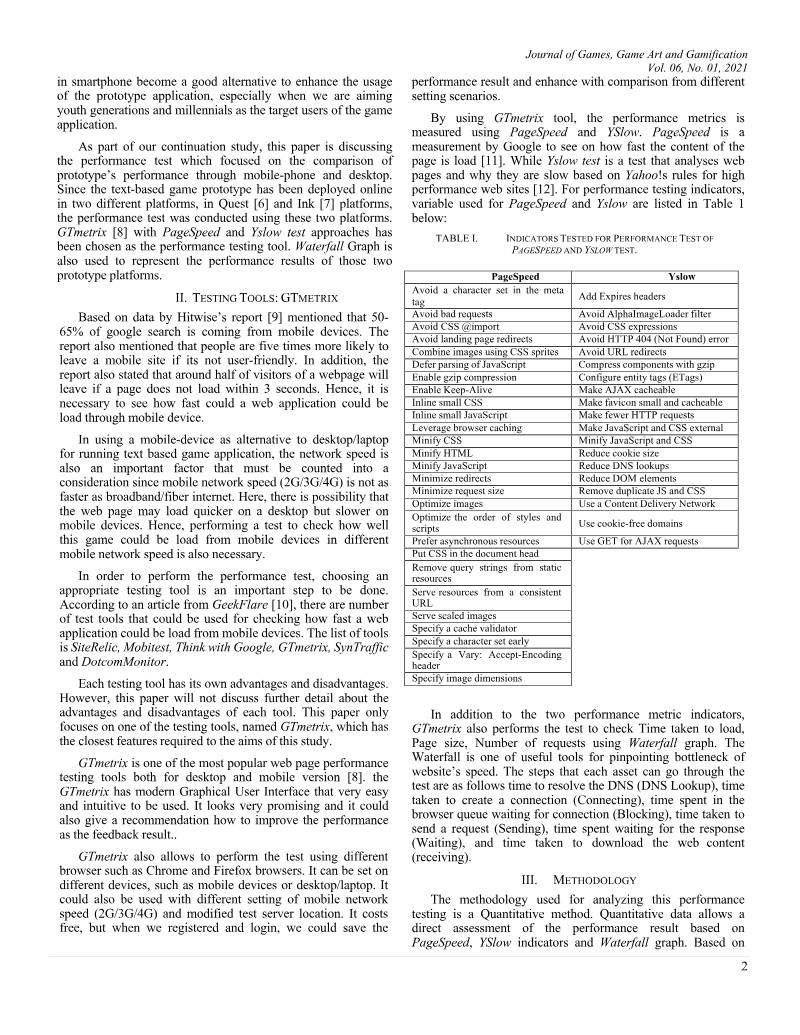
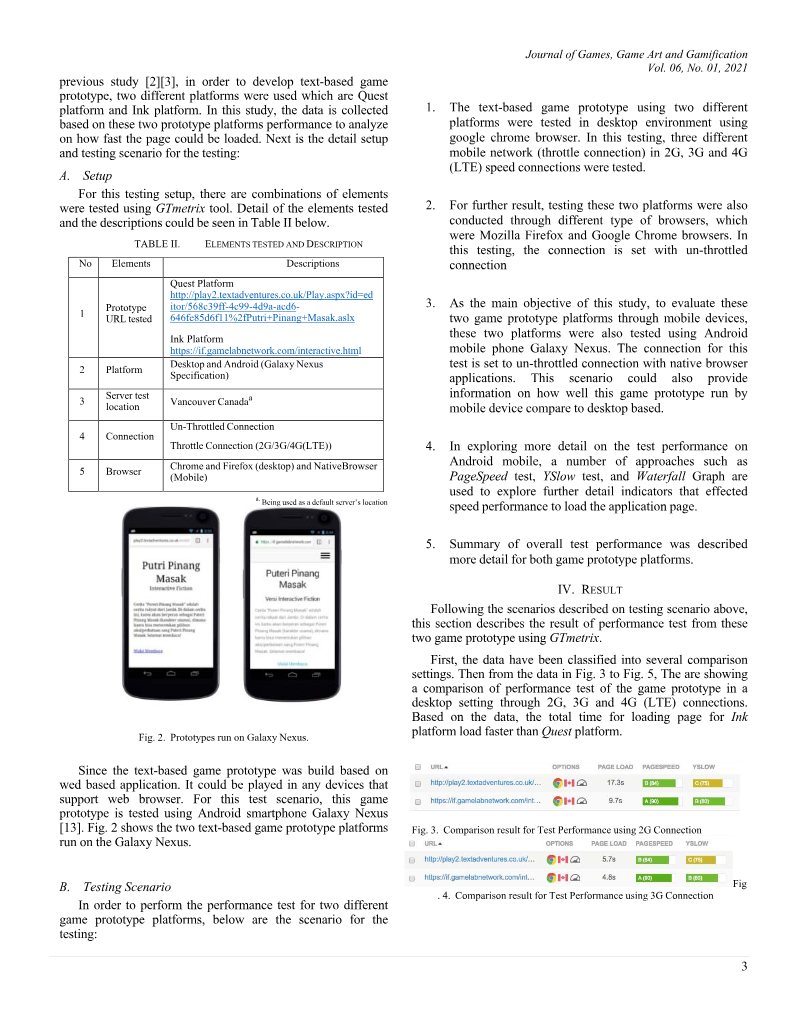
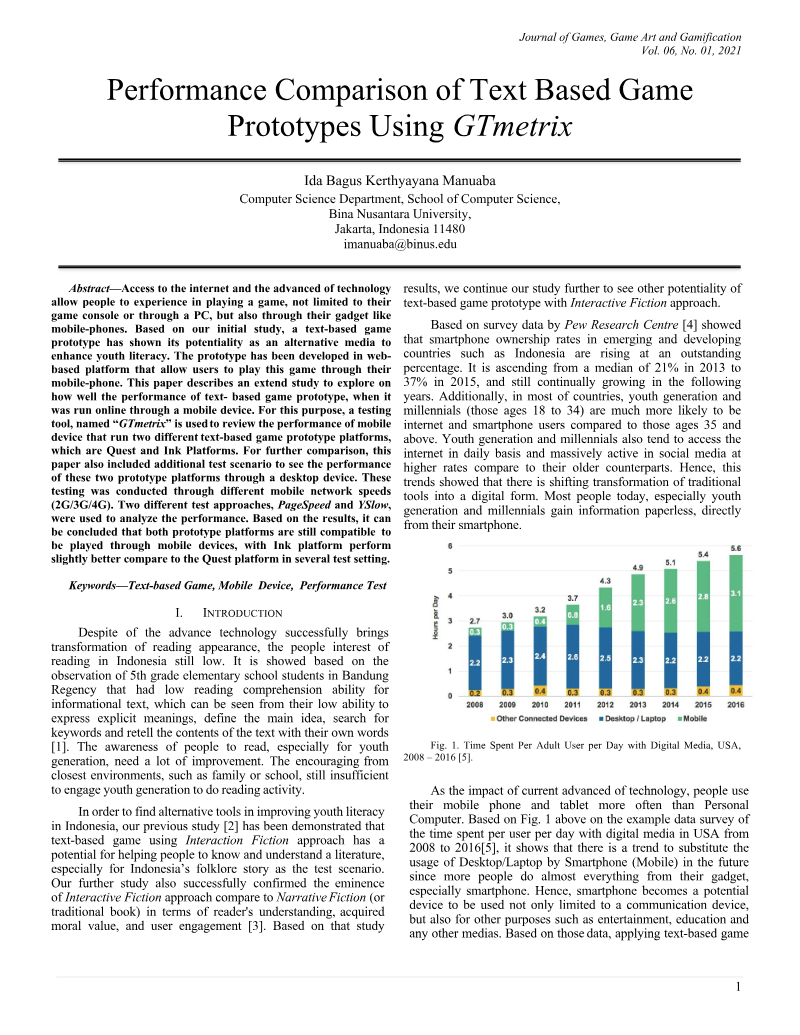
Bina Nusantara University · 2021
Bina Nusantara University · 2021
Bina Nusantara University · 2021
Bina Nusantara University · 2021
Bina Nusantara University · 2021
Bina Nusantara University · 2021
Journal of Games, Game Art, and Gamification · 2021
Serious Games Society · 2026