1 free read left. Create a free account for unlimited reading + AI research.
Create free account
Rethinking the internet
Key insights
6 takeaways- 01The industry's reliance on streaming compressed video creates unnecessary latency, high bandwidth consumption, and prohibitive operational costs that prevent mass-market scalability.
- 02Current cloud gaming models are economically unsustainable because they rely on expensive, centralized hardware that requires dedicated, high-powered servers for every concurrent user.
- 03A distributed architecture leveraging existing public cloud utility compute and local device capabilities reduces the need for centralized, power-intensive data centers.
- 04Treating the cloud as a scalable, elastic resource rather than a collection of remote consoles is essential for creating high-performance gaming experiences that function globally.
- 05To achieve sustainability, the industry must transition from streaming video to transmitting raw data and draw commands that utilize the end-user's local GPU for final rendering.
- 06The evolution of 5G and fiber infrastructure will facilitate an edge-based internet, allowing game engines to be distributed closer to the user to improve performance.
Ask AI about this video
Transcript
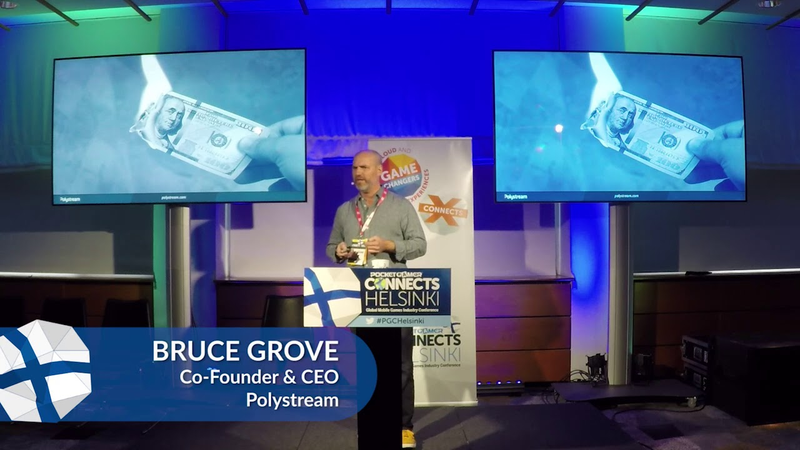
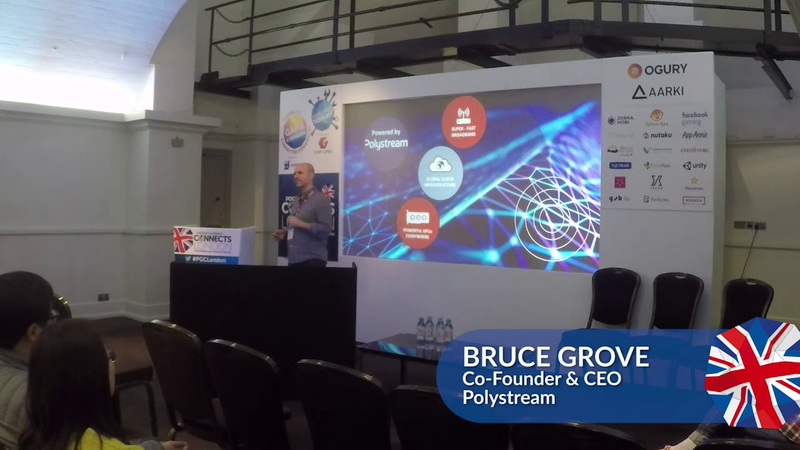
[Music] good morning thank you all for coming along here I am Bruce Grover and CEO and co-founder of poly stream and I'm here to talk a little bit about cloud gaming and how poly stream is rethinking how we need to reinvent the internet how we need to really design it if we want to actually make cloud gaming there the vision that everybody has for it so we believe that all digital content should be streamed we believe that what we have seen with music what we have seen with media should be just as available to games interactive entertainment and high-end applications as it is for all the other kind of content that we have
today over the last 15 years we've seen a lot of push into interactive entertainment into cloud gaming we've seen the early pioneers of cloud gaming come along make a big impact talk a lot about how they're really going to change the world how they're going to be the last console you will ever see but one of the things you'll notice is all of the names that were part of that first wave of cloud gaming aren't here anymore and so one of the challenges is what is it going to take for us to really break the back of how do we produce cloud gaming how do we make it what we want and so Polly Stream believes we need to completely rethink how we do it streaming is coming back again we're seeing all of the big names talking about it we've got Google we've got Microsoft with X cloud we've got the big game publishers like Ubisoft coming in and saying we want to be part of this we want to deliver our games square-enix
doing trials all around the world we're seeing not just small games but big games and big franchises really thinking about the future but we're not there yet we're still hitting some of the same challenges we're still making a lot of the mistakes that people are made before when they go out to build a cloud gaming solution if we take latency everyone likes to say latency lag as one of the problems let's take that one apart a bit the first thing that creates latency is your controller when you're using your controller your keyboard your mouse you're looking at two to three frames of input your game pipeline we've seen games like Street Fighter talk about how they're happy to get from nine frames down to six frames in the game pipeline we're talking about adding nearly 100 milliseconds of latency in some cases high-end games depending how they've been optimized maybe two or three frames
but we're still talking 32 to 96 milliseconds then we get to the crux of how do you do cloud gaming you're encoding it into video typically you're doing that in about 8 milliseconds now it's a very small chunk of time it's done in the GPU it's very rapid and it's all done as part of the pipeline of gaya cloud gaming and if you have a good isp if you have a good broadband connection you're looking at somewhere typically around 20 milliseconds for latency on your network to the data center this is the delay this is the latency that you have to the edge where most people start to see problems is when they're trying to connect to a cloud gaming server that isn't close to them and also if their home network isn't very good now we start to see problems with your in-home Wi-Fi where you can be adding far more but now your cloud gaming has to be decoded it's another few milliseconds it's done on your local device and it's decoded in
exactly the same way that we decode something like Netflix or decode something like Amazon Prime it's just video it's easy your machines can do that very quickly and then we have your display your display can add a huge amount of latency a high end gaming monitor might be running at around about 4 to 8 milliseconds of refresh but a nice TV with all of its features turned on and it's smoothing and it's color correction you can easily see 80 90 milliseconds in the pipeline there when you see some of these machines some of these TVs saying they're turning them to game mode that's not even consistent as to what they do some of them will just turn up the contrast and the brightness while others will actually turn off a lot of those additional features so you don't even know what your getting when you talk about things like turn on game mode so here we have a pipeline 180 milliseconds into end for most people that's still going to provide a perfectly acceptable gaming
experience particularly on most games we're not talking about the highest end of twitch games we're not talking about eSports here but we are talking about how does the mass market want to consume games and we noticed from that it really isn't about encoding and decoding it's about all of the other pieces in the pipeline the problem is the cost of operation it's never really been about the latency latency has only ever been a symptom today we take a high-end gaming experience we take a console and we build it into a server Sony puts Playstations in the cloud Microsoft is talking about X cloud as building X boxes into racks in servers and you then decode that you then encode that into video you're giving people a compressed video experience but really think about the cost of running at capacity for millions and millions of players around the world if every single one of them needs their
own console in the cloud if I say I want to run a Playstation in the cloud we've just been looking at Resident Evil Resident Evil launched a demo a couple of weeks ago 2.5 million people have played that think about how many consoles in the cloud you now need to play that game and that costs you power it costs you dollars per hour per user and that cost just becomes unsustainable how do I build a service how do I build a subscription service how do I build a premium service how do I create an experience for 3.4 million concurrent Fortnight players from the cloud if I need 3.4 million consoles in the cloud that isn't a sustainable model if it's built on something that is just moving the problem from one play a poly stream we've thought about the problem differently we're looking at the Internet we're looking at the next generation of Internet we're looking at all of the pieces the Internet is a
distributed piece of architecture everything from the edge to the servers to the storage to the device in your hands all have a place to play in this we don't want to ship you encoded video because you've actually got a GPU on your device whether it's your console your PC it's your phone why wouldn't we tell that what to draw it's the thing that's going to give you a high-res experience it's the thing that's going to give you the highest quality so poly stream we're running the game engines in the cloud we're thinking about the edge as a place to place other parts of the game we're thinking about your device for rendering the game your device is the thing that's mated your graphics processor to your to your screen so that's what's going to give you pixel perfect the colors the game designer created we're going to give you the game as it was meant to be so instead of shipping your video we're shipping you data we're shipping you data that tells your device what to draw we don't want to put the game console in
the cloud we don't want to just move the problem from one place to another it doesn't matter if your Google or if you're a small startup trying to build the next generation of cloud gaming if all you're doing is moving the gaming machine to another place it doesn't matter how much money you have if you cannot make the business and the cost of operation work the cost of operation has to work for the user if you want to build a subscription service has to work for the publisher if you want to make it operate at a scale that actually means that they can ship millions of games and they can have people playing for hundreds of thousands of hours if they want to make that work then we need to think about the cloud as the console not just putting a console in the cloud we're moving to a superfast broadband what does that mean well people keep talking about 5g what is five g 5g is not just a faster broadband pipe that's what it's going to start at but actually it's a completely new architecture it's
a completely different way of building the Internet we're going to see the edge take more have more part to play we're going to see more devices connecting locally to other devices today a typical phone tower can connect a couple of hundred devices together when we move to 5g that's going to be starting at ten thousand devices or having access to gigabit speeds their latency is going to be sub four milliseconds to connect to that for years we've talked about fibre to the home fibre to the curb now we're talking about fiber to the post we're talking about all of your mobile connections being as good as having a fiber broadband connection and as this rolls out we're going to see people thinking differently about how to use the distributed Internet we want to be able to put the game wherever you need it to be we don't want to always be pushing it to the furthest point when we always went back to the early days of cloud gaming and talked about latency
latency was distance because we couldn't afford to put the game in every data center we couldn't afford to build servers as if they were consoles and fill the cloud with them so in a poly stream world poly streams the connector poly stream is here to build all of the pieces that glue all of the different parts of the gaming experience together to create what will truly be a scalable gaming solution so that we can now think about cloud gaming as an actual way a viable way of reaching hundreds of millions of people around the world when you hear the big three talking about building a cloud gaming solution all of them have a footprint their footprint is growing but this is a very common cloud public provider this is one of the largest in the world and you'll notice their footprint is still very limited if
I want to reach the west coast of Australia and 3,000 kilometers away from the nearest data center well that's latency that's where your latency comes from if I want to reach Hawaii well there's a submarine cable that can take me to California and that submarine cable is several thousand kilometres I don't have a footprint that enables me no matter which of the big providers I am to really give a global cloud gaming solution Station now has been running for about four years and they still only have four or five data center deployments around the world they're still limited to a handful of deployments in Europe and the US and they've been doing this for quite a while now this isn't because they don't have the expertise this is because they can't make the cost work you simply can't afford to populate every data center in the world with cloud gaming but Polly Stream can because Polly Stream is just using the cloud that's already there we're not creating new
hardware we're not putting consoles in the cloud we're using the cloud wherever it is using the CPUs the memory the storage and we're using your GPUs we're using the edge we're using the networks this is how you solve latency this is how you solve cost and this is how you solve scale you do it by using utility compute you do it by using elastic compute on demand and you do it by building it close to where the users are if I want to stream to you in Hawaii Hawaii has a cloud there they were infrastructure there if I want to stream to Brisbane there's infrastructure in Brisbane we can already stand up cloud wherever we need it in the world and that population will that density of data centers will continue to grow and we see great things in what public cloud is doing not cloud gaming but public cloud we see Microsoft and Amazon talking about how they're going to
populate all around Africa we see the growth wherever there is population density but then it spreads out and then we see next-generation network technologies like 5g acting as the connector for all of those so ultimately for poly stream what we want to be is the connector behind all of these cloud gaming companies we're a SAS platform we're a b2b and everyone that wants to do cloud gaming at scale is going to want to be able to connect to any data center anywhere in the world to any gamer anywhere in the world over any network anywhere in the world and to do that you're going to be looking at poly stream and you're going to be looking at streaming to your device to let your device be the gaming device we're going to make the cloud the game console not just push it away again that's poly stream thank you so we have
time for a couple of questions if anyone has any acting under hanging you the mic anyone so you say the GPU still has to process that data and then put it onto the screen how powerful the GPU is required in order to do that on a device yep that's one of the first questions we often get asked and so one of the things that I think we we look at is we always look back when we're thinking about some of these technical challenges people go I need a big GPU to render the game at 4k so I can stream it over an 80 megabit connection and instead we want to think about it differently and think about well actually if we want to build it at scale how do we start thinking about our devices as well not just the fact that we want to make all of these devices rendering but what do we think about if
I can run an application from the cloud do I build a netbook differently do I put a more powerful GPU in a netbook so that I can now remote my applications do I look at when people talk about building low-end consoles when we talk about diskless X boxes that X Box still has a GPU in it it's a perfect streaming device but I down don't have to fill it with as much storage I don't now have to give it as much memory I don't even have to make the CPU as powerful so I can read balance I can refactor some of my hardware if I want to give a 4k streaming experience as a game then we're talking about 80 megabits a second if bandwidth and again that's part of the unsustainable problem if instead what we're doing is we're sending draw commands we're sending data to your GPU that's much lower bandwidth that can be compressed more easily and now we can send 4k as 20 megabits so it's really it's about this whole idea
of distributed Internet every piece has a piece to play I want the edge caches to do more I don't want to run a game remotely and then send it all the way down to this device I want the edge to have a part to play in this I want the computer to be where I can build infinite game engines and infinite physics I want the GPU to be able to render at whatever resolution and that's best done locally on the GPU so we can't make a GPU faster but what we can do is ease the burden on the rest of the machine and use the GPU now as a more powerful device and think about architectures like speed boost on CPUs what happens if we now have speed boost on GPUs because I can now take advantage of when I want to run a high-end application I just put all in my compute resource over to drawing thank you we have a little bit
more time if we have one more quick question about two minutes for the next cool so you mentioned 5g to what extent is 5g necessary for you as a platform to reach its full potential and and my second question do you think 5g will already have a sort of effect on you and your platform this year or next year I think for us this year there will be very little impact from 5g and I think that's probably true for the next couple of years anyway any new infrastructure like that's going to take time to roll out but I think what the when we look at the sort of behind the sort of headlines of what five years and we start to look at the architecture and we think about what that's going to mean for everything from a telco operator to a CDN operator everyone's going to be starting to rethink how they develop their networks their infrastructure and their
architectures around that and 5g will have an effect that then knocks back into a fiber knocks back into cave and all of the other infrastructure so one way to think about it is today the edge is a fairly benign part of the Internet it's where we do switching it's where we move data around but we don't really do much more than that if we step back a little bit from that we have CD ends that are used for caching particular kinds of data when we look at 5g5 G's going to be starting to interconnect those things far more than they are today we're going to start to see data being able to move sideways rather than just up to a server and back down today it's very much a messaging service client to server and back again and what we'll see is we'll see far more about each device being connected each device is now a node and that will be from 5g but it will have that same
effect with everything from your fridge to your thermostat and it will just accelerate that kind of thinking and that in turn will lead into how do we develop applications for that environment where do I want my CDN to be now and how do I want my CDN to perform do I want my CDN to perform as a one-second buffer or as a 16 millisecond buffer right and if my CDN is now 10 milliseconds away from the endpoint then it's far more usable for things like interactive gaming so hatch has already been doing some great work in streaming over 5g and testing that and we're already seeing that the performance of the network meets that now we've got to see the architecture built out by the telcos and some of that will also come from insuring for once that the telcos will work together on this as standards and that we develop it so that we have a common infrastructure and architecture so that we as developers are creating
the next generation of applications that just work seamlessly across all of these networks [Music]
Summary
The internet was originally engineered as a decentralized messaging system rather than a platform for high-end interactive entertainment. This fundamental architecture creates significant challenges for cloud gaming, as current industry approaches—which rely on streaming compressed video from centralized server-based consoles—are hampered by high operational costs and latency issues. Because these models require dedicated, high-powered hardware in the cloud for every concurrent user, they struggle to achieve the scale necessary for mass-market adoption.
The primary obstacle to effective cloud gaming is not latency, which is often a symptom of inefficient infrastructure, but rather the unsustainable cost of operation. By attempting to replicate a console experience by placing physical gaming hardware into data centers, providers face prohibitive power and hardware expenses that prevent global deployment. Furthermore, the reliance on video encoding and decoding introduces unnecessary delays and bandwidth consumption, particularly when data must travel long distances from limited, centralized server locations to the end user.
To address these limitations, the industry must shift toward a distributed architecture that leverages existing public cloud utility compute and local device capabilities. Instead of streaming video, the next generation of cloud gaming should transmit data and draw commands, allowing the user’s local device—whether a PC, phone, or console—to handle the final rendering. This approach utilizes the GPU already present in the consumer's hardware to ensure pixel-perfect quality while significantly reducing bandwidth requirements. As 5G and fiber infrastructure continue to evolve, they will enable a more interconnected, edge-based internet where game engines can be distributed closer to the user. By treating the cloud as a scalable, elastic resource rather than a collection of remote consoles, developers can create sustainable, high-performance gaming experiences that function globally across diverse network environments.