1 free read left. Create a free account for unlimited reading + AI research.
Create free accountWhitepaper DiGRA
1 free read left. Create a free account for unlimited reading + AI research.
Create free accountWhitepaperDiGRA
The paper argues that some free-to-play games monetise lineage as well as characters. It coins the term "genealogical gacha" for this pattern.
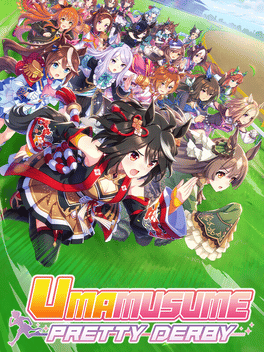
Chelsea Russell's paper examines Uma Musume: Pretty Derby, a Japanese mobile gacha game by Cygames, to argue that some free-to-play systems monetise lineage as well as characters. The author terms this pattern "genealogical gacha," defined by three design moves: referential encoding of real-world thoroughbred pedigrees and biographies into game data, procedural inheritance in which traits pass probabilistically across generations, and monetised access in which paid pulls grant better ancestors and training supports. The central claim is that horse racing's speculative logic is relocated from state-regulated wagering into platform microtransactions, where variance is preserved but resited in repeated attempts and long-horizon saving.
The study's methodology combines an interface walkthrough of the live-service client, analysis of official update communications and paratexts, multisited netnography across Japanese- and English-language player spaces such as fan wikis, Discord servers, social media, and video platforms, and a small set of semi-structured player interviews. The analysis is qualitative and focuses on how players describe spending, with no large-scale survey or quantitative spending data reported.
The paper also argues that optimisation is affectively framed. The "trainer" role encourages care-based routines that make success feel like stewardship, and fan vocabulary such as oshi, drawn from idol culture, rationalises spending as devotion and aligns monetisation with parasocial intimacy. The author concludes that heritage can function as a mechanical component of monetisation rather than mere representational flavour, and raises unresolved concerns about disclosure, odds transparency, and harm mitigation for heritage-driven gacha systems.
Each row is a game or company this document names, each column a document, oldest first. A mark means that document names it. Select a row to see those documents.
DiGRA · 2026



DiGRA · 2026
DiGRA · 2026
DiGRA · 2026