Loading the document
Key insights
6 slides
The solution
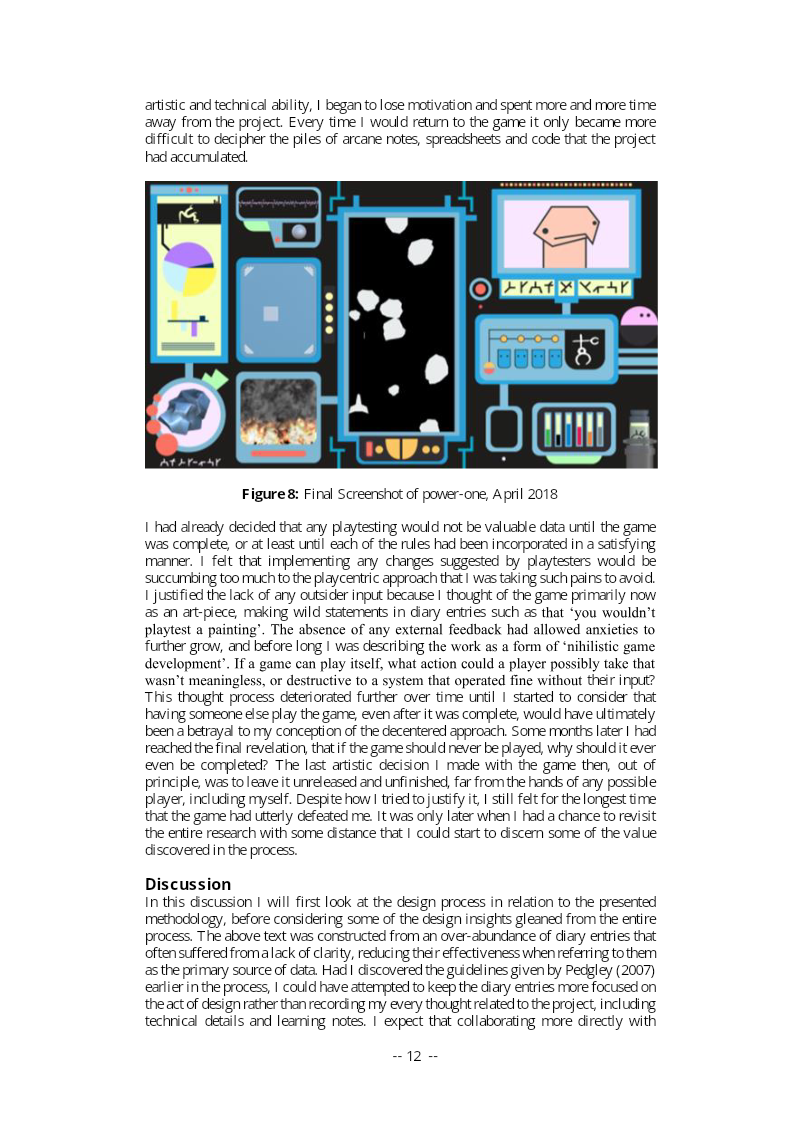
RDA integrates journaling directly into game engines to capture design rationale and playtest data.
This open-source toolset bridges the gap between abstract design decisions and tangible outcomes. It works with engines like Unity and Godot.
1 / 6
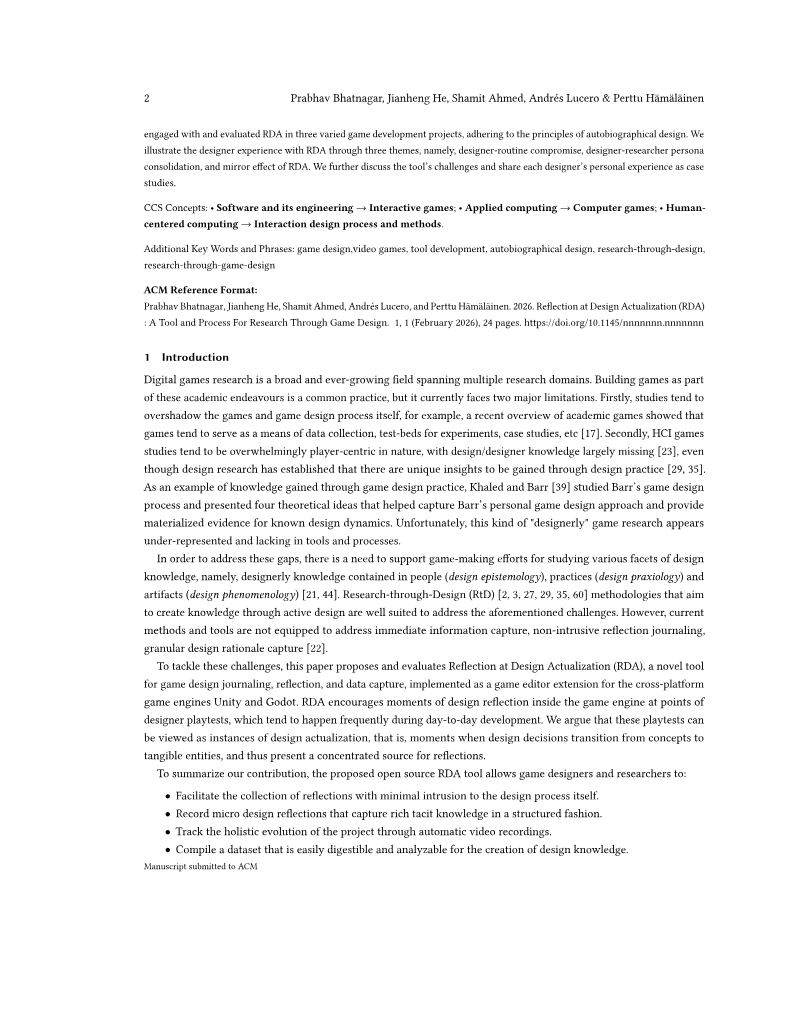
- 01Reflection at Design Actualization (RDA) is a methodology and open-source toolset that integrates journaling directly into game engines like Unity and Godot to capture design rationale alongside playtest data.See it on page 2
- 02The system automates the documentation of tacit design knowledge by linking granular, tag-based in-engine reflections with synchronized video recordings.See it on page 2
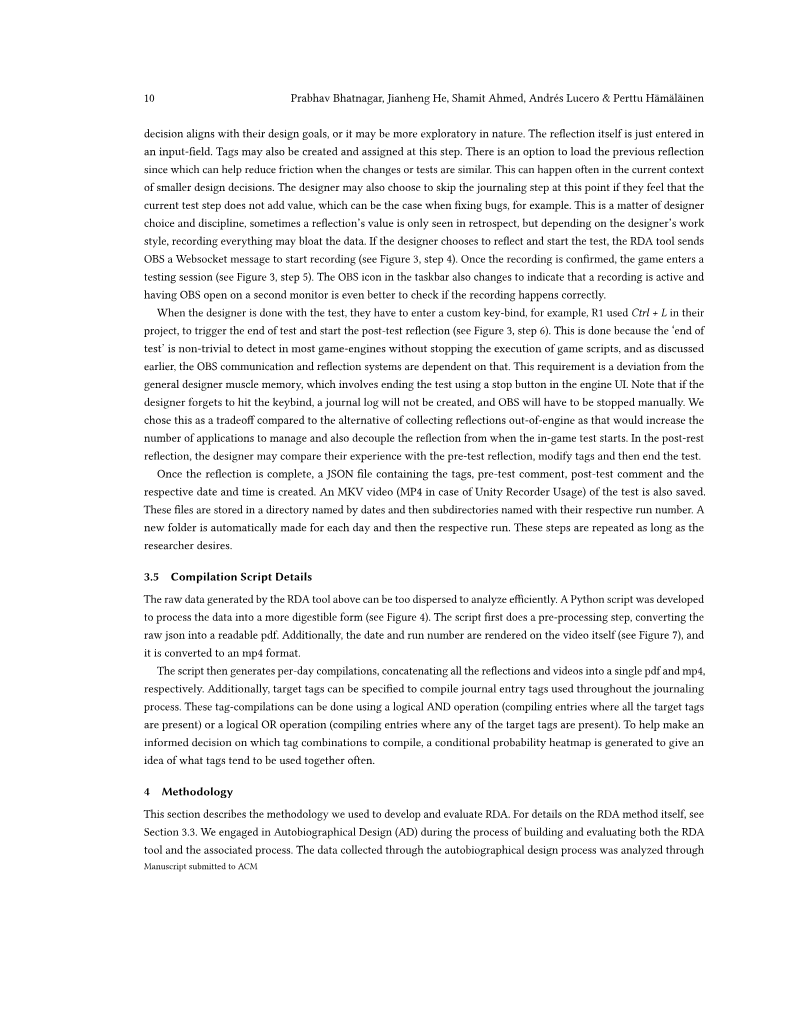
- 03RDA utilizes Python-based scripts to process raw logs into structured PDFs and video files, facilitating reflexive thematic analysis of the iterative design process.See it on page 10
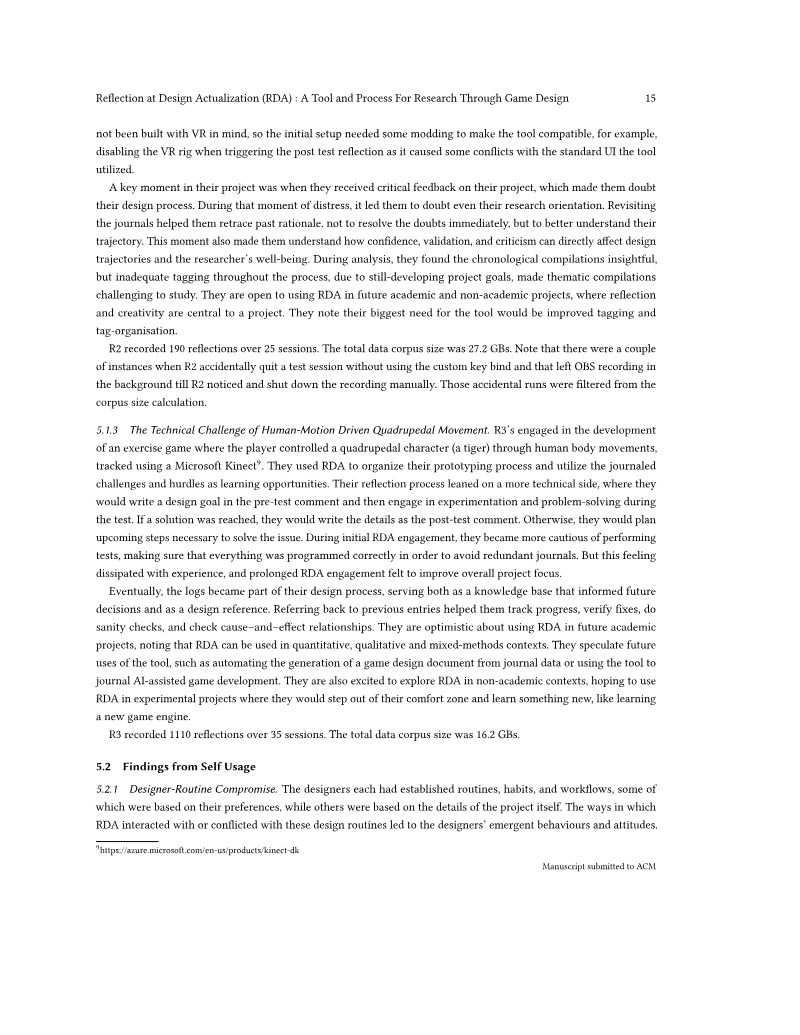
- 04The tool improves analytical rigor in academic and independent design environments, though it introduces cognitive friction that can disrupt creative flow.See it on page 17
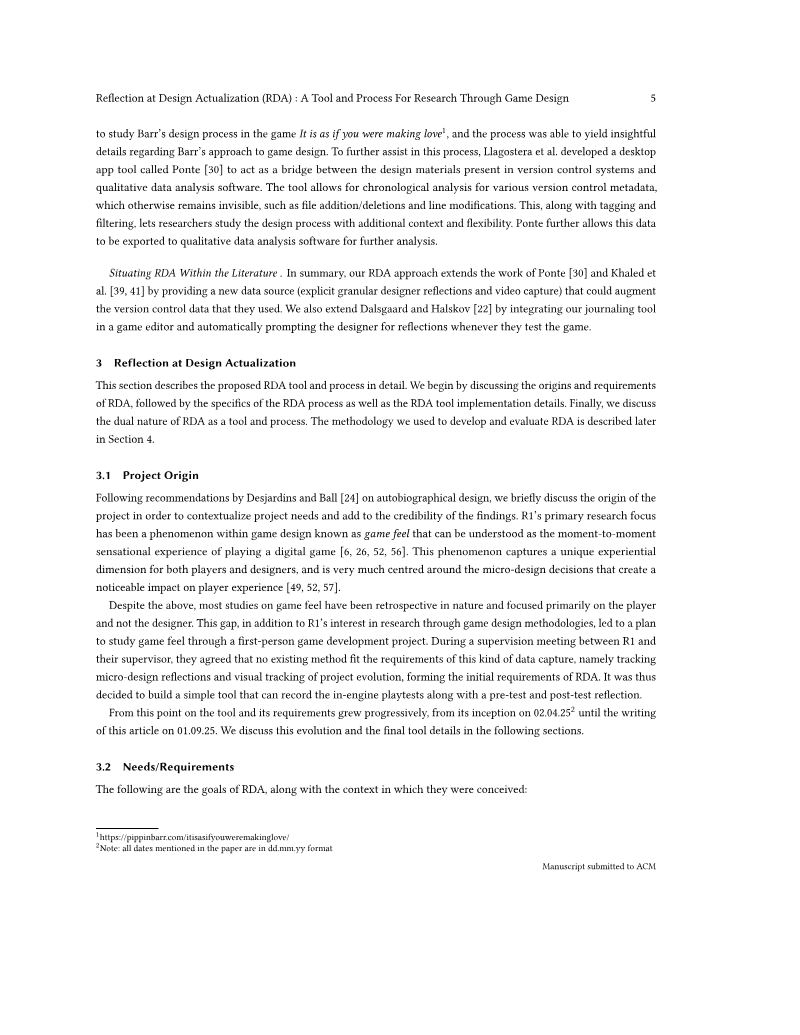
- 05Designers often adopt selective usage patterns for the tool to balance the demands of academic documentation with the requirements of active creative production.See it on page 15
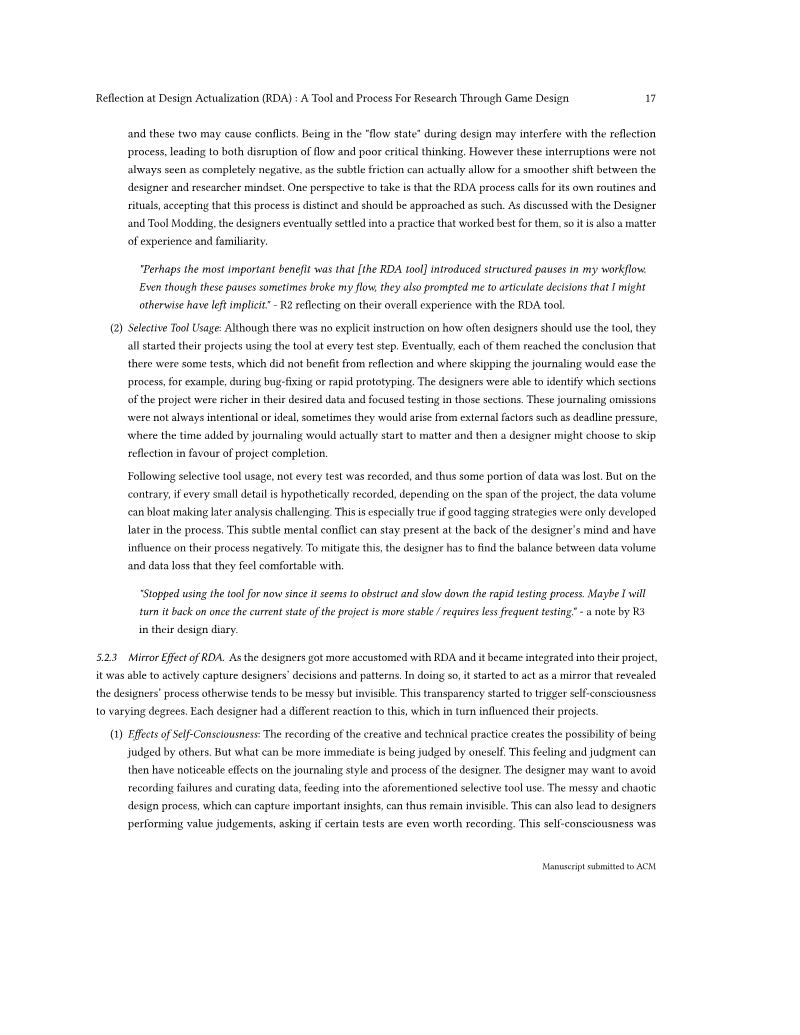
- 06Future development of the RDA framework is focused on scaling the tool for multi-designer environments and integrating it into game design curricula.See it on page 5
Ask AI about this report
Summary
Reflection at Design Actualization (RDA) serves as a specialized methodology and open-source toolset designed to bridge the gap between abstract design decisions and tangible outcomes in game development. By integrating a journaling interface directly into game engines such as Unity and Godot, the system captures granular, in-engine reflections alongside automated playtest video recordings. This approach addresses the historical difficulty of documenting tacit design knowledge, providing a structured framework for researchers to track the evolution of their projects through systematic, tag-based data collection.
The implementation of RDA relies on custom key-binds and Python-based processing scripts that organize raw logs into structured PDFs and video files. Through the application of autobiographical design and reflexive thematic analysis, the tool functions as a mirror for the designer-researcher, facilitating deeper insights into the rationale behind specific design choices. Evaluation of the system reveals that while it significantly enhances analytical rigor and provides a robust dataset for qualitative study, it also introduces a degree of friction. Designers must navigate the cognitive shift between creative production and academic documentation, often leading to selective usage patterns to maintain creative flow.
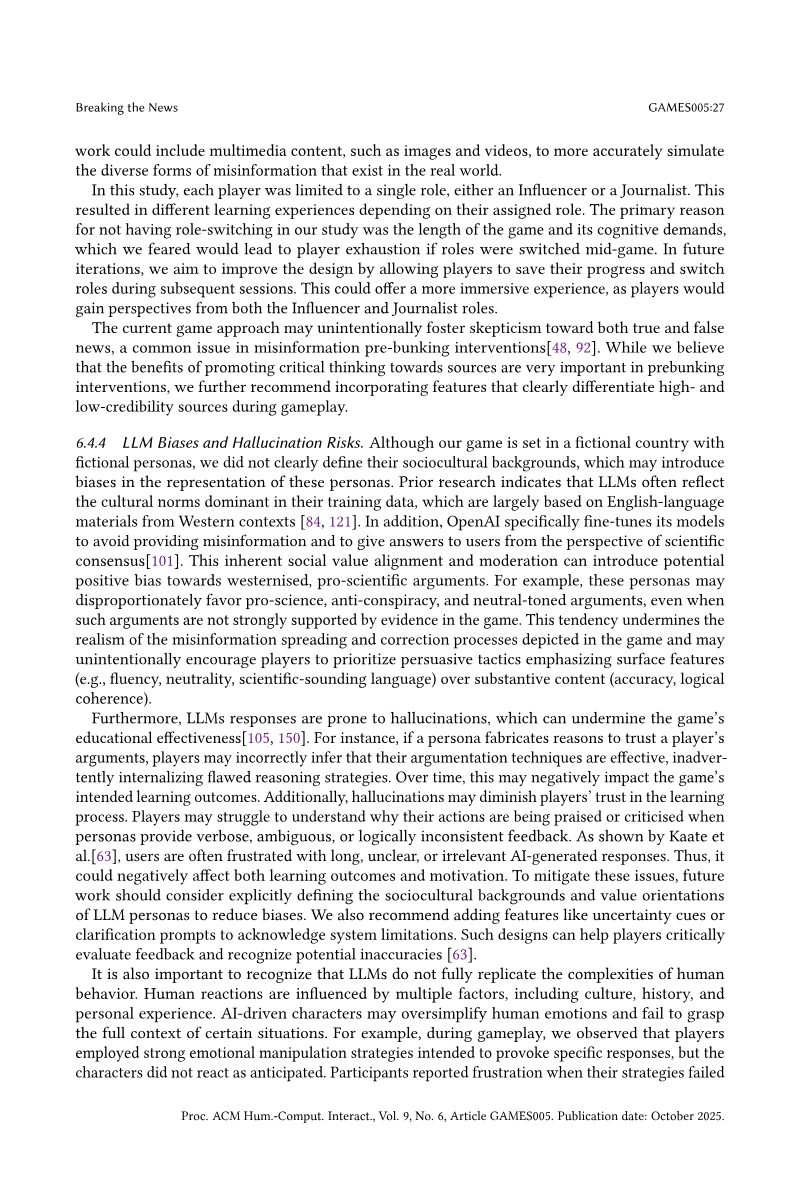
The scope of this research encompasses the intersection of human-computer interaction and game studies, focusing on the iterative development process within academic and independent design environments. While technical challenges regarding data synchronization and the learning curve of the interface persist, the findings suggest that RDA is a potent instrument for formalizing design research. Future development aims to expand the tool’s utility for multi-designer environments and explore its potential as a pedagogical resource in game design education, ultimately aiming to standardize the documentation of complex, iterative creative processes.