Loading the document
Key insights
6 slides
Industry shift
Game design education is moving beyond superficial environmental themes.
Curricula are now focusing on deep ecoliteracy and critical design thinking. This addresses the systemic complexities of the climate crisis.
1 / 6
- 01Game design education is shifting from superficial environmental themes toward a framework of deep ecoliteracy and critical design thinking to address systemic climate complexities.See it on page 9
- 02Sustainability instruction must integrate energy-efficient development platforms and labor practices that discourage crunch to align operational realities with creative output.See it on page 6
- 03Effective pedagogy requires focusing on local, actionable environmental challenges to help students move beyond greenwashing.See it on page 5
- 04Educators must balance the urgency of the climate crisis with actionable hope to prevent student disengagement and pessimism.See it on page 9
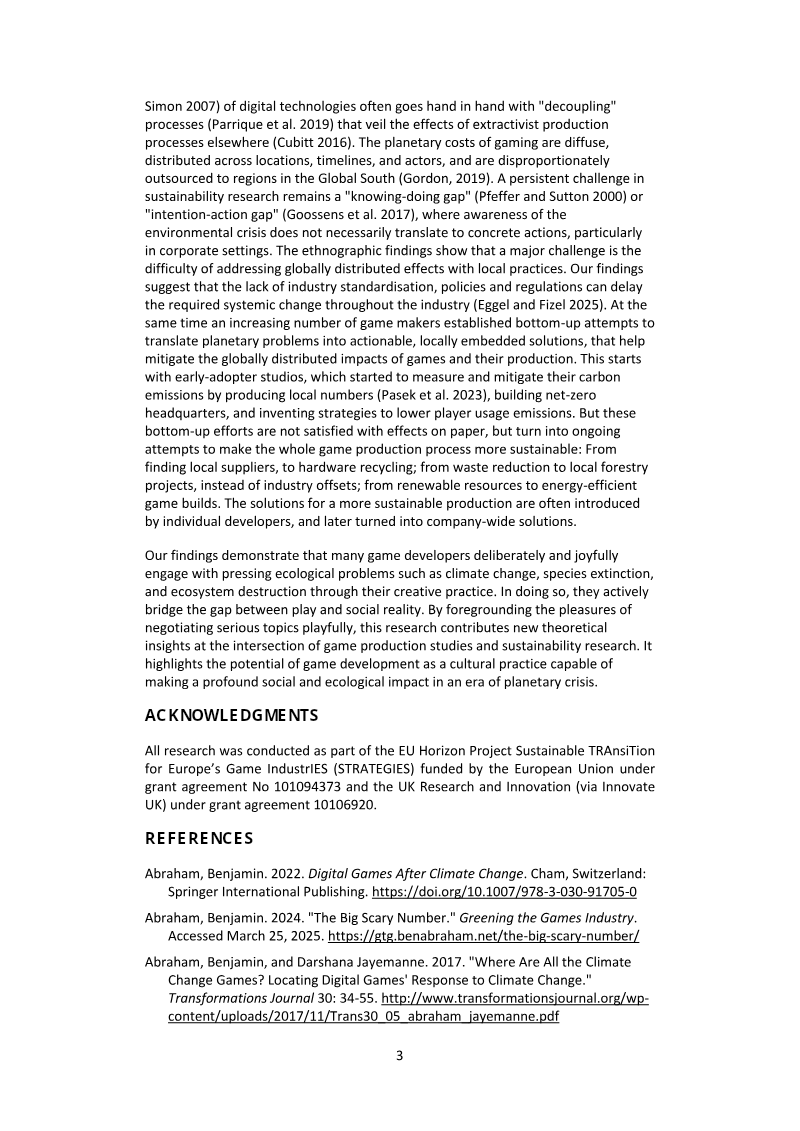
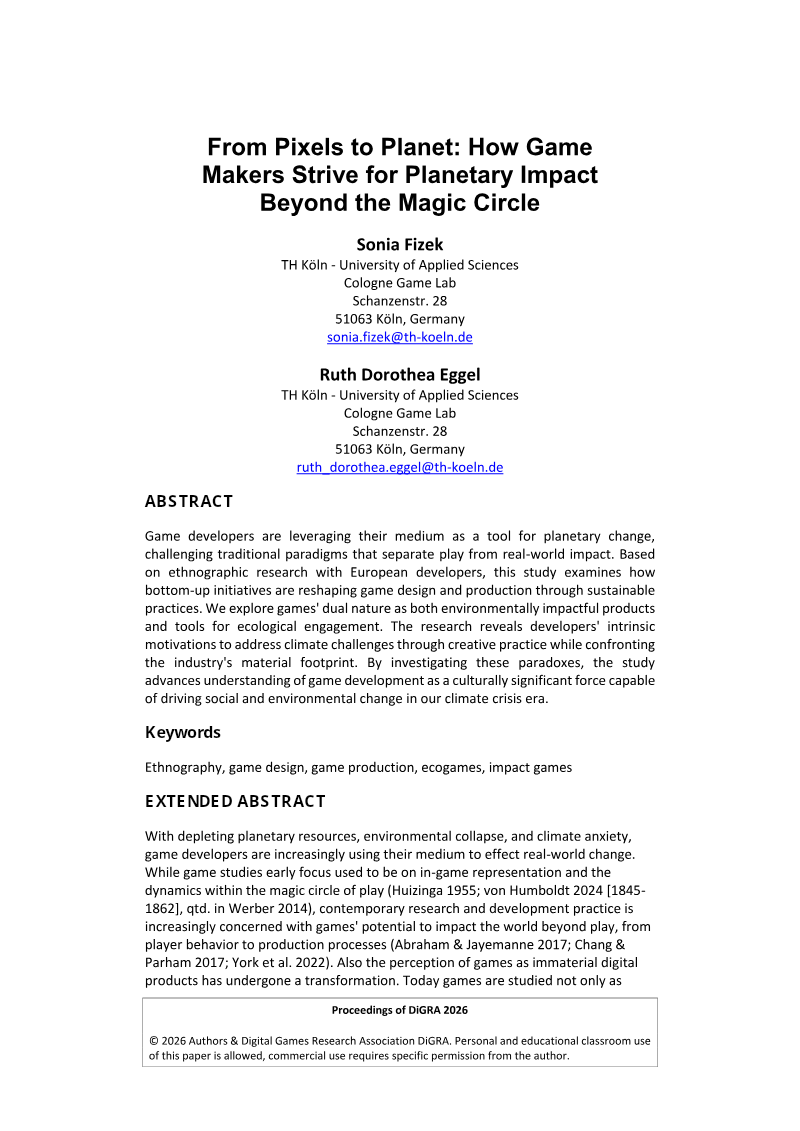
- 05Initiatives like the Nordic Alliance for Sustainability in Gaming and the Greening Games project serve as primary models for integrating environmental consciousness into curricula.See it on page 1
- 06These findings were published in the inaugural issue of ACM Games: Research and Practice in March 2023, highlighting a professional consensus on the need for environmental stewardship in the sector.See it on page 9
Ask AI about this report
Summary
Higher education curricula in game design are increasingly tasked with integrating environmental sustainability to address the industry’s significant ecological footprint. By analyzing initiatives such as the Nordic Alliance for Sustainability in Gaming and the Greening Games project, it becomes clear that effective instruction requires a transition from superficial, cosmetic environmental themes toward a framework of conscious game design. This pedagogical shift prioritizes deep ecoliteracy, critical design thinking, and a focus on local, actionable environmental challenges, ensuring that students move beyond greenwashing to understand the systemic complexities of the climate crisis.
Beyond thematic content, sustainability must be embedded directly into the production process. Educators are encouraged to promote energy-efficient development platforms and advocate for labor practices that discourage crunch, thereby aligning the industry’s operational realities with its creative output. A central challenge in this educational approach is balancing the urgency of environmental degradation with a sense of actionable hope, preventing student disengagement or climate-related pessimism. By fostering interdisciplinary collaboration and building a shared knowledge community, these programs aim to equip future professionals with the tools necessary to mitigate the environmental impact of digital entertainment.
These findings, published in the inaugural issue of ACM Games: Research and Practice in March 2023, underscore a growing consensus that the gaming industry must reconcile its creative ambitions with its environmental responsibilities. By grounding instruction in foundational texts and practical, systemic frameworks, academic institutions can play a pivotal role in shaping a more sustainable future for the medium. This evolution in game design education represents a critical step toward professionalizing environmental stewardship within the global gaming sector.