1 free read left. Create a free account for unlimited reading + AI research.
Create free accountWhitepaper Kapodistrian University of Athens
1 free read left. Create a free account for unlimited reading + AI research.
Create free accountWhitepaperKapodistrian University of Athens
It aims to bridge the gap between theoretical design principles and practical application.
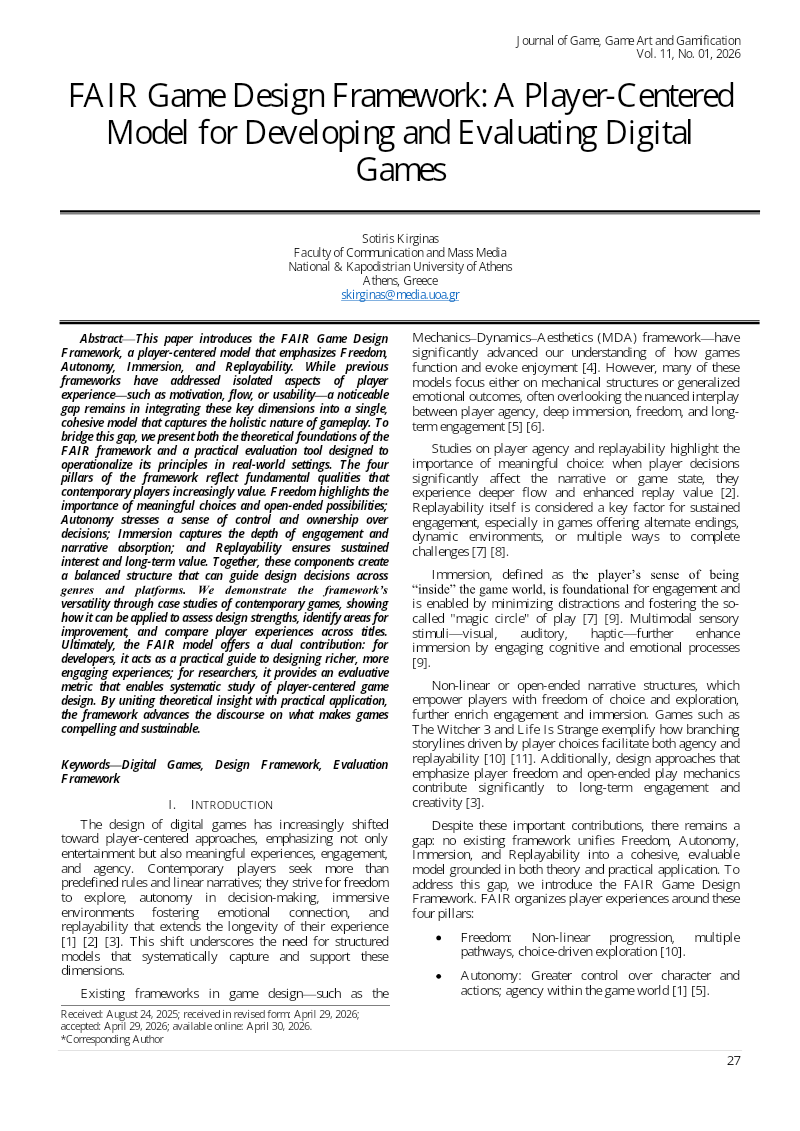
Core purpose. The FAIR framework provides a player-centered methodology for developing and evaluating digital games.
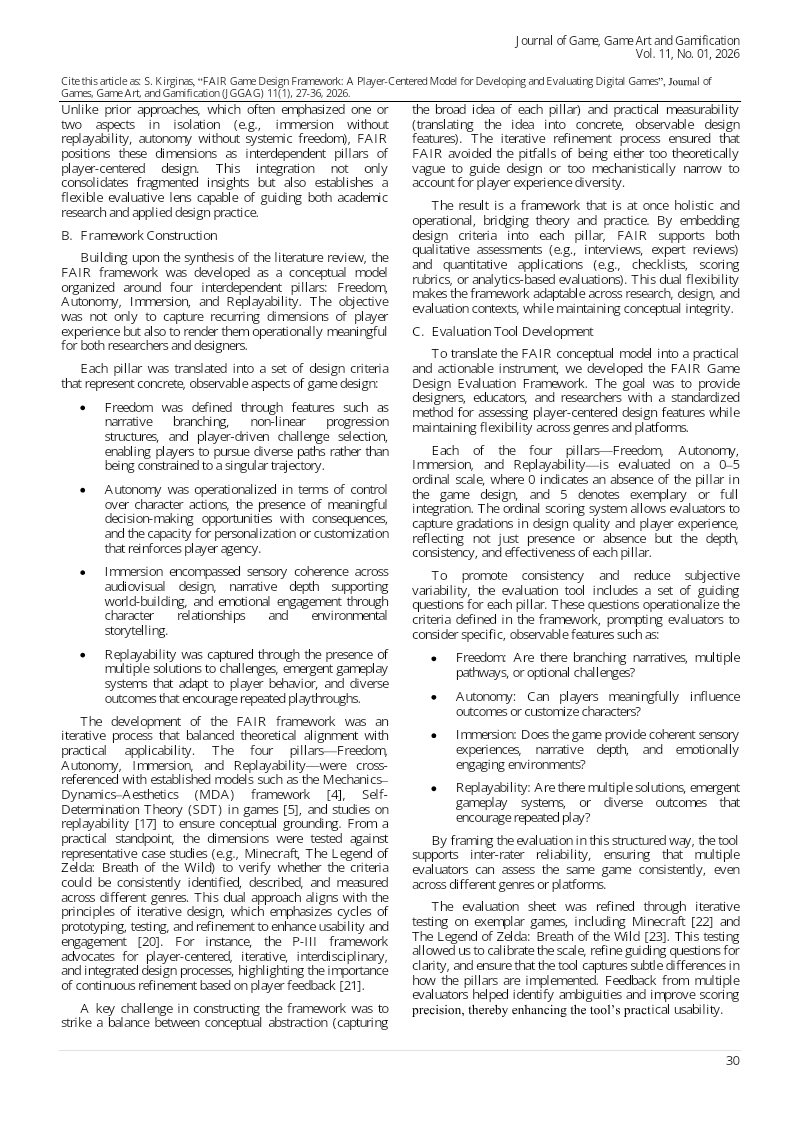
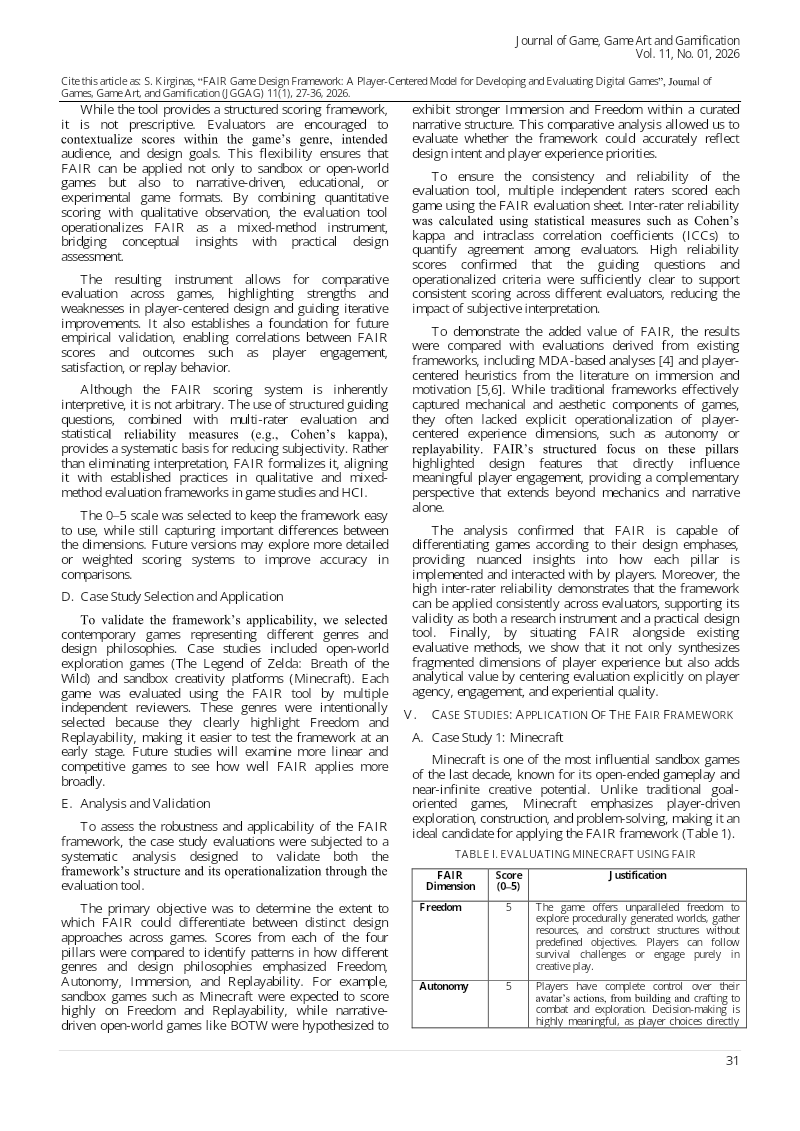
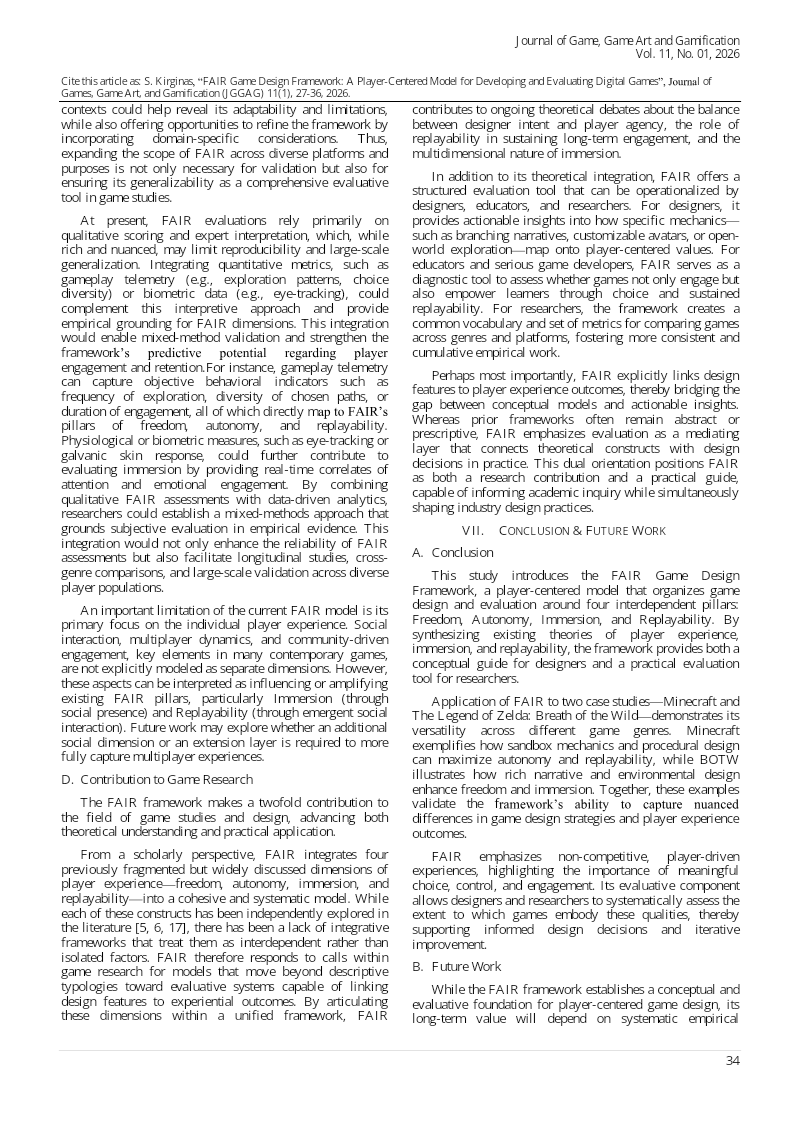
The FAIR Game Design Framework establishes a unified, player-centered methodology for the development and evaluation of digital games. By synthesizing disparate design theories into a cohesive structure, the model centers on four interdependent pillars: Freedom, Autonomy, Immersion, and Replayability. This framework functions as both a conceptual guide for developers seeking to align mechanical choices with intended player experiences and a standardized, 0-5 ordinal scale for researchers to conduct comparative analyses across various genres and platforms.
Empirical testing, including case studies of influential titles such as Minecraft and The Legend of Zelda: Breath of the Wild, demonstrates that the framework provides high inter-rater reliability and offers nuanced insights into player engagement. The model serves as a non-prescriptive, mixed-method instrument capable of bridging the gap between theoretical design principles and practical application. Its utility lies in its ability to provide a structured diagnostic lens, allowing designers to evaluate how specific game mechanics influence the overall player experience.
While the framework currently relies on subjective qualitative assessment, its future evolution aims to incorporate quantitative telemetry and biometric data to enhance its generalizability and precision. By grounding its methodology in established serious games research and industry benchmarks, the framework provides a robust foundation for evaluating game design. As the industry continues to prioritize player-centricity, this model offers a scalable approach to understanding the complex relationship between design intent and user interaction across the global digital gaming landscape.
Each row is a game or company this document names, each column a document, oldest first. A mark means that document names it. Select a row to see those documents.
Journal of Games Criticism · 2025
G|A|M|E – The Italian Journal of Game Studies · 2016
DiGRA · 2011