Key insights
5 slides
New approach
A new AI framework predicts human player behavior and churn rates.
This framework combines Monte Carlo Tree Search with Deep Reinforcement Learning.
1 / 5
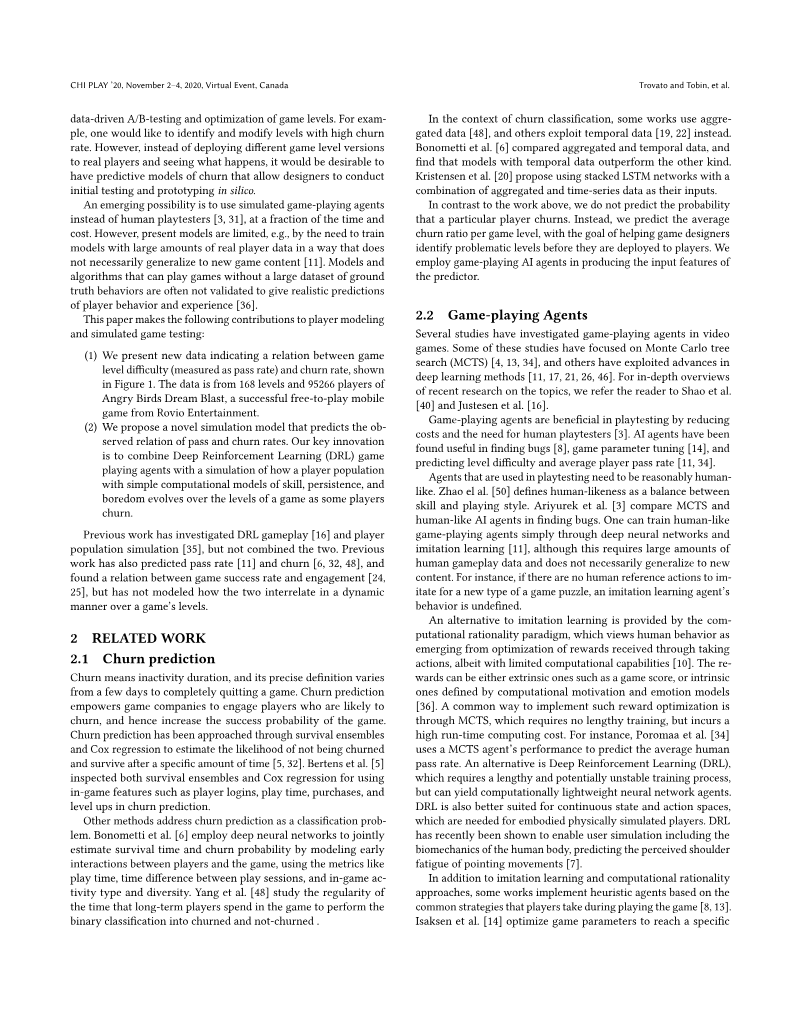
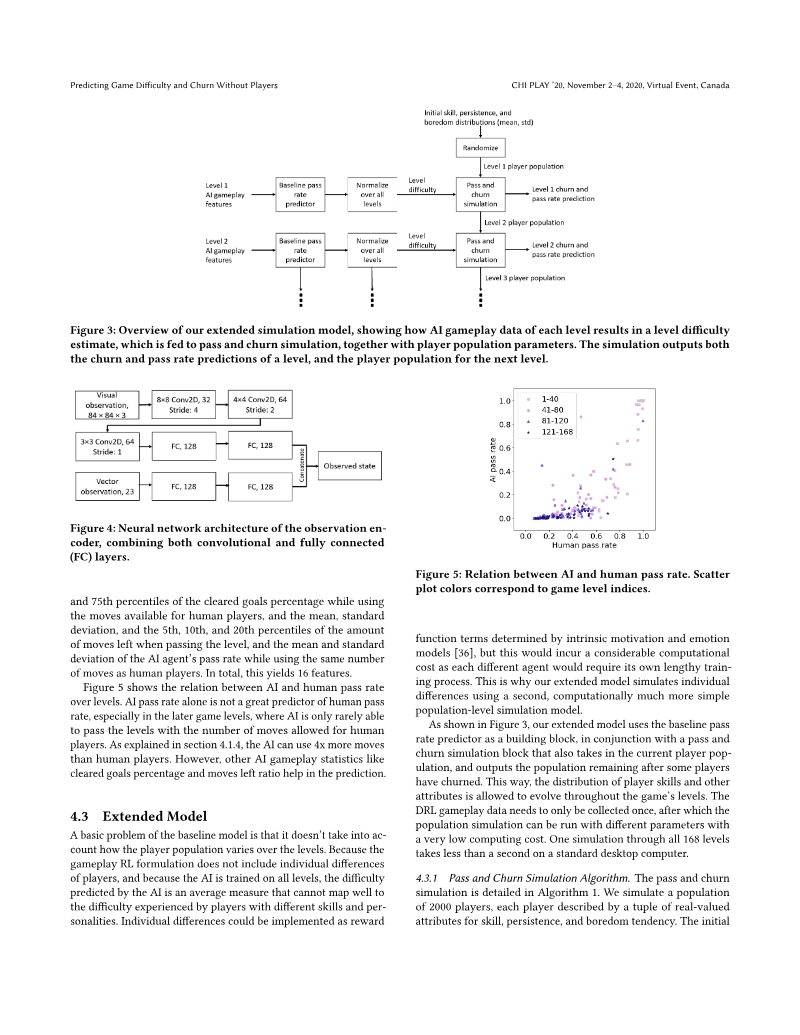
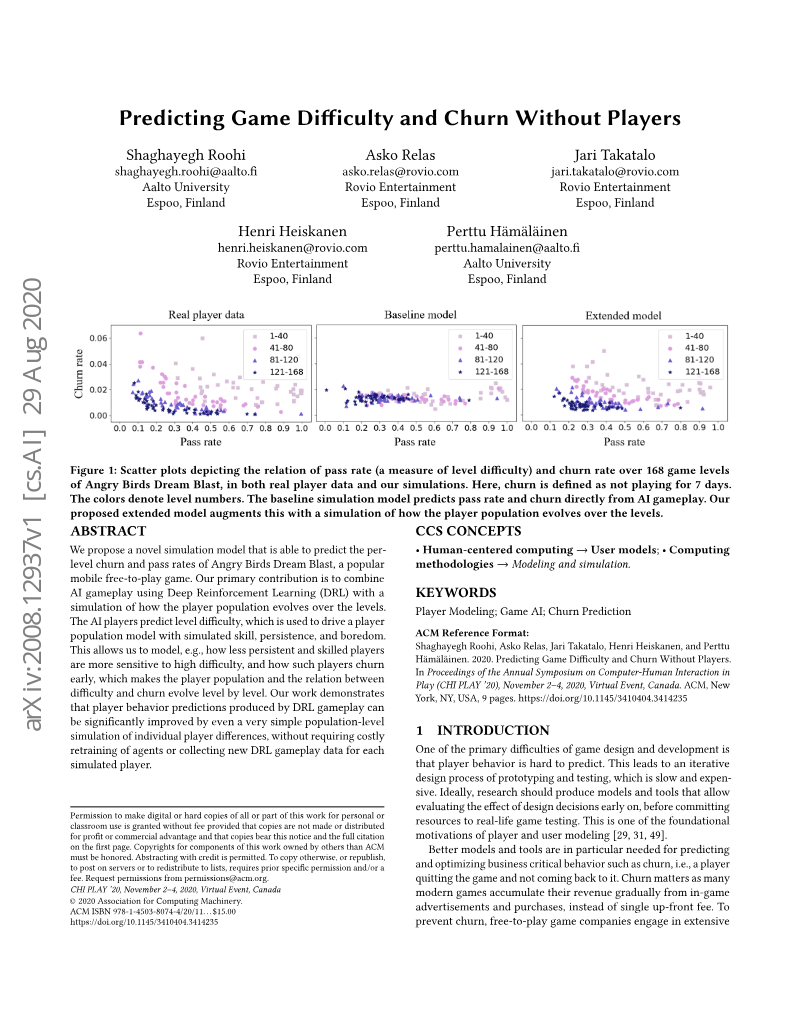
- 01A new framework combining Monte Carlo Tree Search with Deep Reinforcement Learning allows developers to predict human player behavior and churn rates without the logistical overhead of manual playtesting.See it on page 1
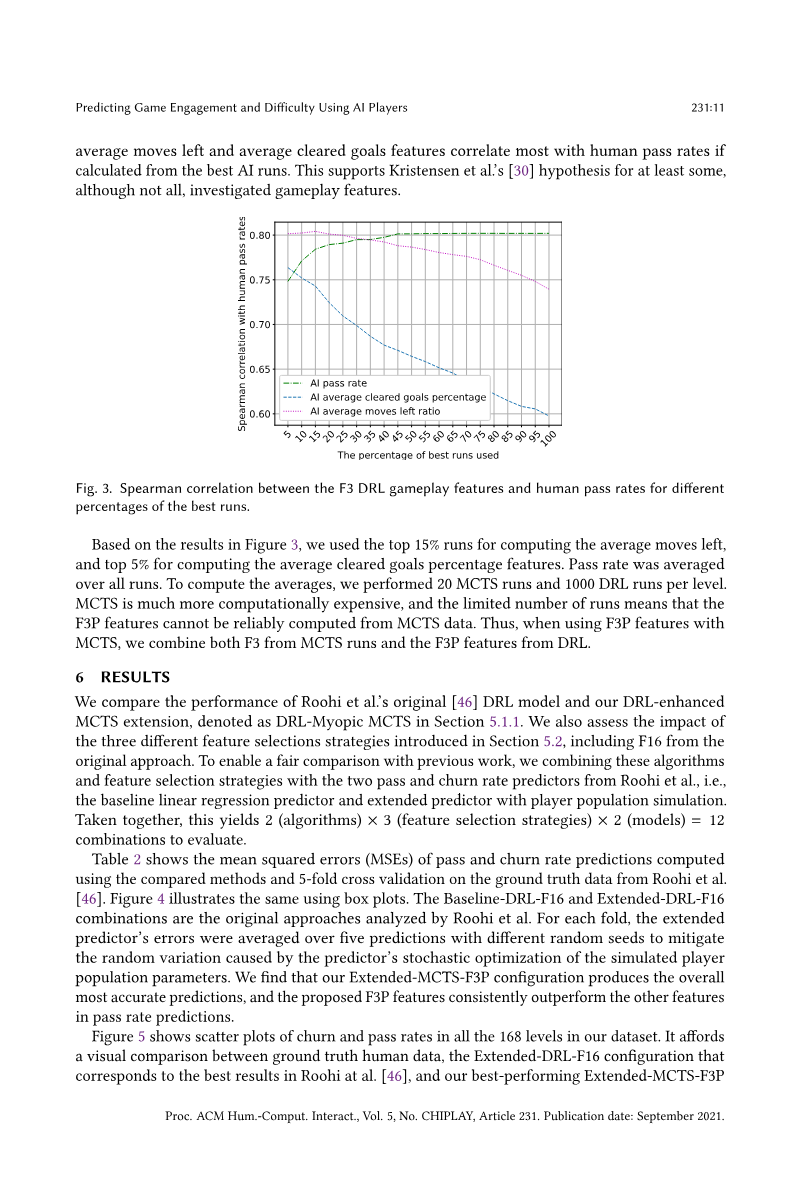
- 02The 'Extended-MCTS-F3P' configuration improves predictive accuracy by prioritizing an AI agent’s best-case performance rather than its average output.See it on page 11
- 03Testing on the puzzle game 'Angry Birds Dream Blast' confirmed that this AI-driven methodology outperforms existing state-of-the-art models in forecasting pass rates and player retention.See it on page 14
- 04By simulating diverse player populations through advanced AI agents, designers can quantitatively assess how specific level design choices impact long-term engagement.See it on page 2
- 05This computational approach enables the calibration of difficulty curves through algorithmic foresight, facilitating more efficient development cycles for mobile puzzle games.See it on page 7
- 06The integration of reinforcement learning and tree-search techniques provides a reliable proxy for human interaction, bridging the gap between artificial intelligence and behavioral modeling.See it on page 1
Ask AI about this report
Summary
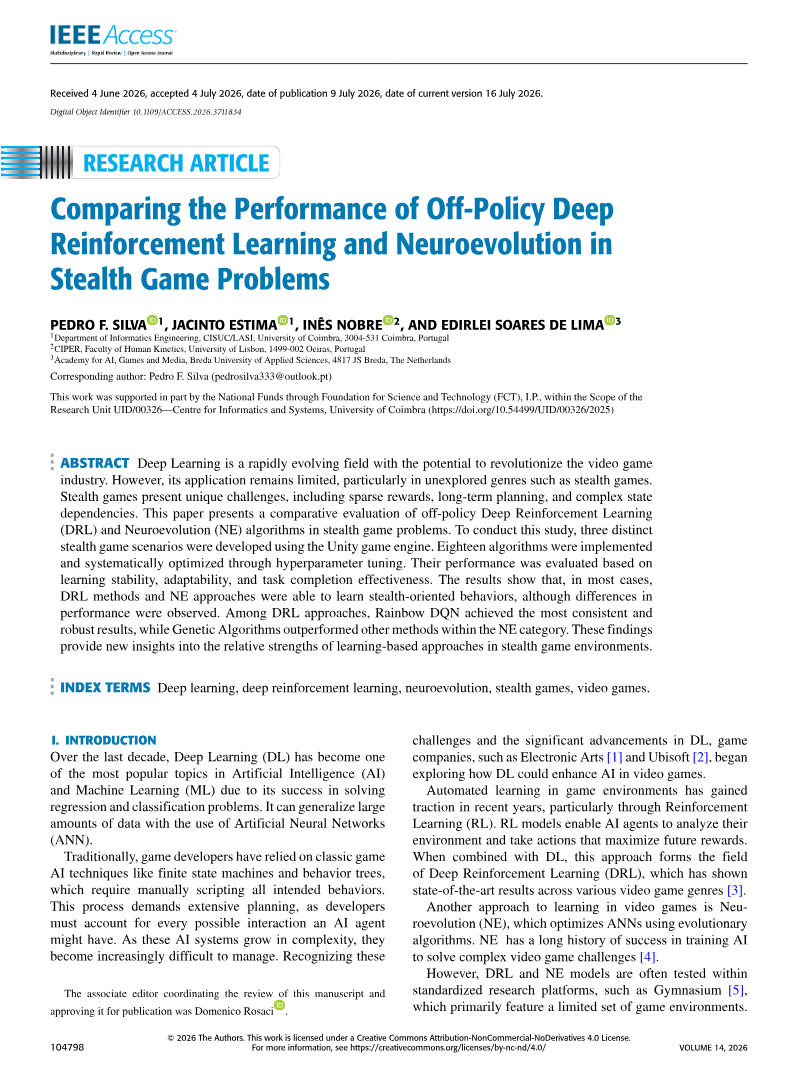
Automated playtesting represents a critical evolution in game design, offering a scalable alternative to traditional human-led testing. By integrating Monte Carlo Tree Search with Deep Reinforcement Learning, researchers have developed a sophisticated framework capable of predicting human player behavior with high precision. This methodology shifts the focus from simple performance metrics to a nuanced analysis of game difficulty and player churn, providing developers with a data-driven mechanism to balance levels and optimize engagement without the logistical constraints of extensive manual playtesting.
The core innovation lies in the implementation of a refined feature selection strategy that prioritizes an AI agent’s best-case performance rather than its average output. When applied to the puzzle game Angry Birds Dream Blast, this Extended-MCTS-F3P configuration demonstrated superior predictive accuracy regarding pass rates and churn compared to existing state-of-the-art models. By simulating diverse player populations through these advanced AI agents, designers can more reliably forecast how specific design choices influence long-term retention and overall player experience.
This research establishes a robust foundation for computational game design, bridging the gap between artificial intelligence and human behavioral modeling. By leveraging these predictive tools, the industry can move toward more efficient development cycles where difficulty curves are calibrated through algorithmic foresight. These findings confirm that combining reinforcement learning with tree-search techniques creates a more accurate proxy for human interaction, ultimately enabling the creation of more balanced and engaging gaming experiences across the mobile puzzle genre.