Key insights
5 slides
Hybrid innovation
Warrior used a hybrid design to overcome graphical limitations.
The 1979 arcade game layered Cinematronics vector-beam digital sprites over a physical Pepper’s Ghost optical illusion. This approach bypassed the graphical limitations of oscilloscope-based hardware.

1 / 5
- 01The 1979 arcade game Warrior utilized a hybrid design, layering Cinematronics vector-beam digital sprites over a physical Pepper’s Ghost optical illusion to bypass the graphical limitations of oscilloscope-based hardware.See it on page 1
- 02The game’s commercial failure was driven by its unconventional two-player-only requirement, which alienated audiences accustomed to single-player arcade experiences.See it on page 9
- 03Industry volatility, specifically the acquisition of the developer Vectorbeam by Exidy and subsequent manufacturing consolidation, severely limited the game's market penetration.See it on page 16
- 04Warrior has evolved from a commercial obscurity into a high-value collector's item due to its technical ingenuity and extreme historical rarity.See it on page 19
- 05The preservation of the game is threatened by the decay of proprietary, non-standardized hardware components that are difficult to replicate or maintain.See it on page 5
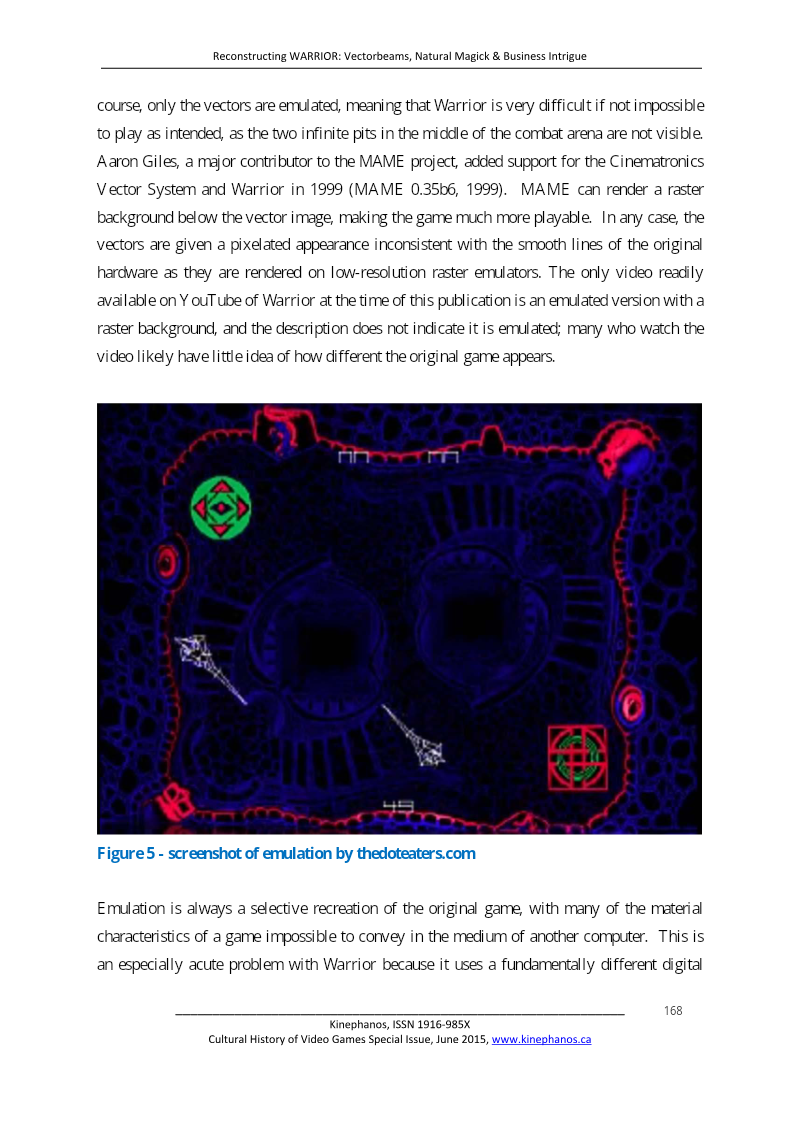
- 06Current emulation and cabinet reconstruction efforts fail to accurately replicate the unique physical interplay of light and art that defined the original 1979 experience.See it on page 21
Ask AI about this report
Summary
The 1979 arcade title Warrior represents a pivotal, albeit ephemeral, moment in the evolution of electronic entertainment, serving as a bridge between traditional electromechanical amusements and the burgeoning digital arcade industry. By integrating Cinematronics’ vector-beam technology with a physical Pepper’s Ghost optical illusion, the game achieved a unique aesthetic that transcended the technical limitations of early high-resolution rendering. This hybrid approach, which layered digital combat sprites over hand-drawn physical backgrounds, illustrates the experimental nature of late 1970s game design, where developers frequently navigated the constraints of oscilloscope-based hardware through creative, analog-digital synthesis.
The development and commercial trajectory of Warrior were defined by significant industry volatility, characterized by the acquisition of Vectorbeam by Exidy and the subsequent consolidation of manufacturing processes. These business maneuvers, combined with the game’s unconventional two-player requirement—which often confused contemporary audiences accustomed to single-player experiences—contributed to its limited market penetration. Consequently, the game has transitioned from a commercial obscurity to a highly sought-after grail for collectors, prized for its technical ingenuity and historical rarity.
Preservation efforts for Warrior underscore the systemic fragility inherent in early arcade history. The reliance on custom, non-standardized hardware components creates significant obstacles for long-term maintenance, as original monitors and circuitry are increasingly prone to irreversible decay. While emulation and cabinet reconstruction offer temporary solutions, these methods struggle to capture the specific physical interplay of light and art that defined the original experience. Ultimately, the history of Warrior serves as a case study in the broader challenges of digital preservation, highlighting how the intersection of proprietary technology and industrial instability can lead to the permanent loss of foundational gaming artifacts.