Key insights
6 slides
A new paradigm
The game engine emerged as a distinct technological paradigm in the early 1990s.
This development fundamentally transformed the industry by separating core software from creative assets. This modularity was a key innovation.

1 / 6
- 01The emergence of the game engine as a distinct technological paradigm in the early 1990s fundamentally transformed the industry by separating core software from creative assets.See it on page 3
- 02Id Software’s architectural innovations in titles like DOOM and Quake established modularity as a foundational industry standard, enabling professional licensing models and player-driven modding.See it on page 11
- 03The shift to modular architecture created a new cultural economy that significantly extended the lifespan and influence of software beyond its initial commercial release.See it on page 10
- 04Game engine history is best understood as a complex negotiation between technical affordances, business imperatives, and user participation rather than simple technological determinism.See it on page 16
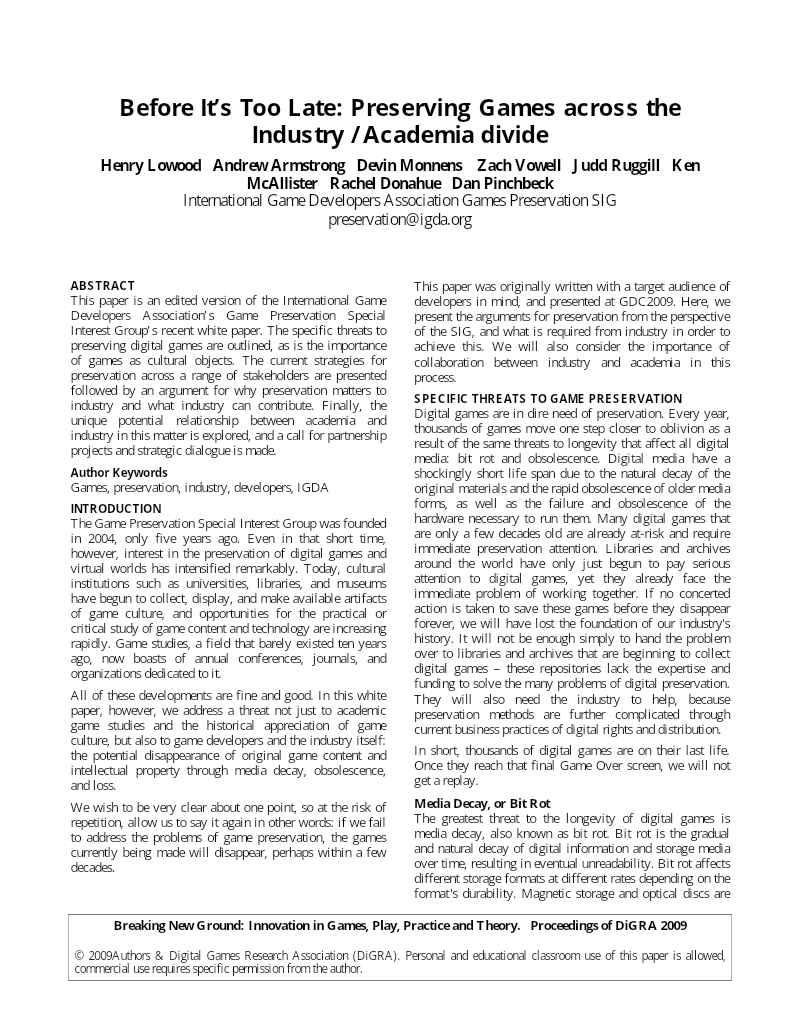
- 05The academic study of video games remains in its infancy, often relying on anecdotal insider accounts rather than the rigorous, narrative-driven analysis required for a mature discipline.See it on page 18
- 06To advance, the field must integrate technological milestones into broader social and intellectual contexts to understand how the engine became the defining infrastructure of the digital landscape.See it on page 18
Ask AI about this report
Summary
The history of video games requires a shift from simple chronological accounts toward rigorous, narrative-driven analysis that situates technological development within broader social and intellectual contexts. At the heart of this evolution lies the emergence of the game engine as a distinct technological paradigm in the early 1990s. By examining the architectural innovations pioneered by id Software, specifically the separation of core software from creative assets in titles like DOOM and Quake, it becomes clear that this modularity functioned as both a technical breakthrough and a foundational industry metaphor.
This shift toward modular architecture fundamentally altered the PC game development landscape by enabling professional licensing models and fostering vibrant player-driven modding communities. Rather than viewing these advancements through the lens of technological determinism, the history of game engines is best understood as a complex negotiation between technical affordances, business imperatives, and the unintended consequences of user participation. This dynamic created a new cultural economy that extended the lifespan and influence of software far beyond its initial release.
Despite the industry’s rapid growth, the academic study of games remains in its infancy, often relying on anecdotal insider accounts rather than comprehensive historical inquiry. To mature as a discipline, the field must move past narrow technical histories and begin addressing the larger questions that connect game development to the wider currents of modern history. By integrating these technological milestones into a more robust analytical framework, researchers can better understand how the engine became the defining infrastructure of the contemporary digital landscape.