1 free read left. Create a free account for unlimited reading + AI research.
Create free account
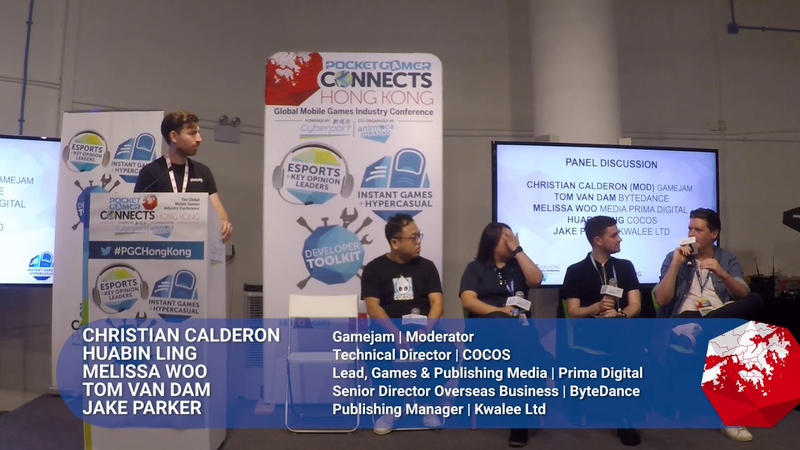
PGC HK2019 - Panel: Instant Games x Hypercasual x Casual
Key insights
6 takeaways- 01Platforms such as WeChat and TikTok serve as critical hubs for user acquisition and social discovery, enabling developers to reach fragmented global audiences.
- 02New entrants are advised to partner with established publishers to navigate the complexities of marketing and to prioritize social sharing as a core design principle.
- 03Hyper-casual and instant games prioritize immediate engagement through intuitive, low-friction gameplay loops that remove complex narratives to appeal to both traditional and non-traditional audiences.
- 04The current monetization model for the sector is heavily dependent on rewarded advertisements to drive revenue from short-term player progression.
- 05Future industry growth is expected to be driven by 5G and cloud gaming, which will allow for higher-fidelity experiences while maintaining the instant-play accessibility of the genre.
- 06Success in the hyper-casual market relies on rapid prototyping and rigorous, data-driven testing to validate game concepts early in the development cycle.
Ask AI about this video
Transcript
All right, hey everyone. How's it going? Great to be here in Hong Kong at Pocket Gamer. So, I guess uh today we're talking about something really exciting to me, hyper casual and instant games. Uh I've I've made both types of games before in my career, so really excited to talk about it. Um So, first I think it'd be great to introduce uh the panelists and let them talk a little bit about themselves and then move on into questions about about hyper casual and instant. Maybe we could start off with uh Jake over there. Yeah. Hey, uh I'm Jake. I'm a publishing manager at Kwalee. Uh we develop and publish hyper casual games and uh most recent release, Draw It Out, was uh it
was number one in the US App Store just yesterday when I checked. So, it's pretty good timing to be doing this panel. Tom? Good. Uh I'm Tom. Um I work for uh ByteDance in China. Uh lived in China for about 11 years now, but I'm originally Dutch. Um ByteDance is recent. Before I was at uh NetEase for 6 years. Um bringing a lot of content to the Chinese market and now ByteDance uh the big Chinese company that owns TikTok, Douyin, Toutiao, and uh also uh having some plans for um gaming. Well, hi. My name is Melissa and I am with a media company in Malaysia. So, we have the traditional platforms like TV and radio, but we also have a digital division right now that looks into mobile games. So, just to be very clear that uh I have not done any uh hyper casual games before, so this is also very much a learning process for me cuz we do a lot of um casual and action adventure games based on our internal IPs.
Well, hi everyone. I'm Robin and I'm from Cocos, the technical director of Cocos Creator. We are the as I said in my keynote, we are the most popular game engine in instant gaming platforms currently. All right. And I'm Christian, former executive at Ketchapp, Dots, and Kicksaw, and now CEO of Game Jam. And so, I guess to start off, hyper-casual how many people have heard of hyper-casual games? Assuming everyone. All right. And how about So, I mean, hyper-casual games is now like a you know, generating more than a hundred hundred millions of dollars per year. So, my question is does that mean that the opportunity is is not there anymore for new entrants? And then I guess to to add on to that, what you know, what are the opportunities today for instant games and hyper-casual games? And
maybe Jake I'll start. Um so, no, I don't think that there are no opportunities. Like the market is constantly changing and evolving and there are new ideas and new kind of games being released. I think there's a misconception that there are used to be quite a lot of clones in the hyper-casual space, but that's not the case so much anymore and it's constantly changing and evolving so there's always room for new ideas. I love I love it. Anyone else have anything to add about the the market, the opportunities today? I mean, I don't think there's no opportunity. So, I agree with him, but at the same time I feel it's a little bit harder to enter the market right now cuz I mean, you get a lot of apps being submitted to stores every day. So, for you for for especially for an indie developer to gain visibility, that's a little bit more harder unless you have a publisher to help you with it. Yeah. I think yeah, there's always a challenge because of what's involved in the hyper-casual market and in self-publishing. Um you you could do it on your own, but there's
a lot of kind of expertise and stuff that a lot of publishers are kind of set up to support you with. Um yeah. Um I I I agree with uh with uh Jack because I think uh especially for hyper-casual games, hyper-casual games have a short lifetime. Uh they change to super fast and even the generations generations generations by generations. So, I think there will be more uh new gameplays, new uh way to attract users. So, if you find that uh you can attract always be be the winner in the market. Got it. But you won't be long. That won't be That won't last. Right, right. So, you are That's That's the challenge. And I think you guys brought up some interesting points. Uh one is that do you Do you actually need a a publisher? Well, I mean, you said it's it's more competitive now. Um you mentioned working with a publisher to to to make these games. Is it Is this kind of Is it dependent if you're making a hyper-casual game? Do you need to work with a publisher or
or do you think that you can self-publish and and still have a great opportunity? I think there's there's still a good level of opportunity there, but a lot of the publishing teams that are like there's You're going to need a lot of marketing expertise and obviously Kwalee started just developing their own games, hyper-casual games, and releasing them, testing things out, seeing what worked. I mean, at at Ketchapp when we were first making these games uh you know, a few years ago, we would have thousands of developers hit us up and they were all like one to two person teams. So, I mean, and today you need all kinds of like user acquisition and stuff like that and it feels like it the publisher model really works well with with hyper-casual. Um so, we're talking about instant games and hyper-casual. What And And And Jack, I'm just going to throw this back to you again. Um, what are the, you know, differences and similarities between these two types of games from a game design perspective? So, uh the one thing I constantly tell
people this, the one thing I love about hyper-casual games is they're so It's like one core gameplay loop, one main mechanic that is so finely tuned that it constantly feels good and fluid and it's nice and rewarding to the to the player. And in terms of instant games um, I I think there's there are some similarities there in that you need to kind of focus on those short gameplay loops, but at the same time you've got a bit more room for depth with uh instant games. Are there any specific types of features that you need in an instant game or hyper-casual game to to scale, to make it a hit, to succeed? Are any type of product features or game features uh for any of the developers out there that are making these games that you absolutely need in in in in either an instant game or a hyper-casual game? Yeah. Uh so, I I think the most uh crucial the crucial part is that your game need to be very intuitive. User get
into your app get into your game and instantly they know how to play it. They don't need to learn. That's how you can uh empower the social networking power. Go on, Melissa. Um, and for me it's more of the social element in the game where you get to compete with your friends and challenge them. So, that that's a product feature for me. So, instant instant gameplay, social features. Yeah, instant gameplay is all right, on top of that being able to quickly pick up how to play the game. So, it's it's quite simple to see someone play the game and you understand how to play it, so you can get straight into it. And And why is that? Why Why do you Why do you need that instant gameplay right away? What is there is there anything that that helps benefit on the like on the marketing side or something? Is that I think people understand it straight away that they're more open to playing it, right? Got it. Okay, that makes sense. And and and that kind of I guess brings me into the next question about marketing and
distribution. What does like a typical launch plan look like for these types of games? Like let's say I'm going to launch a game next week, an instant game or a hyper-casual game. What does my launch plan look like? Am I am I uh you know, spending hundreds of thousands of dollars? Am I talking to a lot of ad networks? What what does a typical launch plan look like? Jake? Um well, there's a lot of prototyping involved. Like you want to try out different things, see what works. You don't want to invest too much straight away. You don't want to like put everything on you know, one thing when you don't know whether it's likely to work or not. I mean, Kwalee have got like a whole team of analysts that dedicated to figuring out how likely something is to succeed. Wow. So, there's there's quite a lot of kind of consideration to be made. You know, I've been quiet so far because what's really the question I want to have an answer to and maybe some input
from the panel is what is a hyper-casual game? Right? Um is it indeed that single gameplay loop um that uh you know, is really easy to get into and as soon as there is a second gameplay element that disqualifies it and makes it a casual game? On the other hand, is it like there cannot be any in-app purchase? It must be all uh advertisement based? Um or for example, instant game because an instant game, we know that instant games are coming up to console-level quality once the streaming revolution is here, right? So, that's definitely not um hyper-casual. And so, this definition, I think, is one that is just becoming more and more vague, right? We We talk about hyper-casual from many different perspectives, but actually what we mean by it could be very different from company to company. So, in terms of launch plan, right? It's totally different for an instant game that it might be, for example, for
that single core gameplay loop. Because I think on Facebook instant games, you can find some pretty advanced games, for example. W- What What What does a launch plan look like for an instant game? Uh to like if let's say I'm Do you just launch it and does Facebook promote the game and it and and are you just relying on the algorithm or do you Are you doing user acquisition? Like what does a typical launch plan look like? I'd say there's there's indeed a lot of user acquisition involved. I mean, like to your question earlier, what's the great advantage of of the instantness? It's well, that there is a certain barrier for a user to change his mind while from the moment he's decided, "Oh, I'm interested in this game because I saw it somewhere or my friend is playing it" to the point in time where he's actually able to start that first gameplay loop, right? And the shorter you can make that time, the the higher your your engagement on that same amount of audience can be. Got it. Got it. Yeah, from the point of view of a game engine, we are collaborating with many
developers and also many publishers and we provide technical to platforms. And we see something very interesting in instant gaming platform. If you want to launch an instant game, it's it's very crucial to to to improve your game quality and to be intuitive, but it's also very very important that you have a uh metrics of product. So, you can working with each other. That That means you can direct redirect your users to from one to another. And that works uh for instant games. Got it. That's That's something very uh interesting that we found in WeChat mini game. Got it. Yeah. And And so, who are who And And maybe let's go back to Tom's question a little bit about like what are these games? What are I guess what are these games and and who's playing them? Who's the audience for these types of games? And And what is a you know, what is a hyper-casual
game? I mean, hyper-casual was a term coined by AppLovin and actually in a Pocket Gamer article in I think 2017. And but these games have always kind of been around, right? Flappy Birds, these types of games have have have been around for a long time. But and and I guess they're kind of evolving. Uh they're they're definitely different a few years ago today from from a few years ago. But what what I guess what are they and and who's who's playing them? Uh As I saw it, um I just uh mentioned in our in my keynote that uh the duty of instant gaming platform is not to improve the game quality, is to reach out to to the non-gamers, to expand the industry. Got it. To bring uh more and more users into this market so that they can be uh transferred to maybe mid-core user, hardcore user. And uh For for starters, the the
uh instant gaming platform's characteristic is that they cover uh from For example, TikTok or WeChat mini game, they are all social networking network. Got it. So, they reach uh almost all kind of people, not only gamers. Right. That's the platform characteristic. You need to focus on that. You don't You can't produce a AAA game on that. It won't be successful because people don't know how to play it. Even if it runs uh smoothly in your internet. Got it. So, instant game uh players are can can be non-gamers on social platforms. How about how about hyper-casual games? I'm going to pass it back to Jake. Who who's Who's playing these games? I think it's pretty similar. Um I think there's quite a lot of crossover between the two. Um it's people who don't necessarily have a lot of time to play games, people who don't necessarily play games all of the time anyway. Um it's things like I've got a few minutes here and there. I'll play through that quick gameplay loop. Then obviously they're not sitting there thinking to themselves, "Well, I wish I
had a quick gameplay loop right now." Got it. So, Yeah, I mean like I was playing hyper-casual 20 years ago on my Nokia phone. You know, when there was Snake, right? It was instant, you know, it was a single gameplay loop. And there just wasn't a video ad in between sessions quite yet, but you know, we've evolved since that. And nobody had quite coined the term hyper-casual at that point. Right. But yeah, exactly. Uh missed chance there. That's That's a great point. Um let's go to a little bit to how So, we know the audience. We we kind of talked about the marketing plan and what these games are. How are these games designed? Um how what is a typical you know, does game design process, game development process look like for for these types of of of games? I mean like uh from from the player perspective or from the developer's perspective, because from a developer's perspective, you know, the more the more often you can put an ad in there and the user doesn't walk away immediately, the
better it is, right? So, if you can get that balance right between immediate satisfaction in terms of the the core gameplay loop, and that there's enough satisfaction for you to say, "Well, I'll sit through another 30-second ad um before I can try again." I mean, that's the eventual balance you're you're trying to aim for. I mean, especially on the the very hyper-casual uh end of the spectrum, you know, the amount of ads served is what it's all about. But, who who are these people watching all these ads? I mean, is there is there a specific audience of people that I mean that just like playing games with ads or who who's So, I think the audience is quite wide, so it's not like a specific type of person that is sitting there like like wants to play a game that's got a lot of ads in. I think people you know, they're they're happy to watch ads if they're enjoying the game and that gameplay loop is keeping them satisfied, it's keeping them having fun, right? Got it. And that's that's part of the game
design as well, is making sure that that core gameplay loop is fun and keeps people entertained and involved to the point where they're happy to watch an ad to play it again, play a bit more. And for the people in the game industry, it's a great way to keep track who's spending money where, right? So, Do you think about time at all? Like when when I guess when you're you're watching an ad, the the time to of gameplay of that you're consuming, that core funness, and then when you when you see an ad or are there any specific like things that you you look at generally that you that you try to accommodate for when designing these games that are different from let's say an IAP based game? You mentioned there's a lot of ad consumption. So, I'm and that affects the how we design the games. But, what what is exactly What is it that we're changing in the game to accommodate for this this that massive ad viewing? I think one of the key things is
meaningful short-term rewards. Um because besides, you know, putting an ad between each gameplay session, you also want to put an ad to multiply the rewards gained and, you know, for a user to find it interesting to spend another 30 seconds watching an ad in order to multiply his gains. There needs to be a mechanic in the game that actually makes him think, "Well, that that is a worthwhile trade-off. I'd rather do that than grind longer to get those same amount of rewards." So, that is a, you know, a really short-term attention span loop that you would probably see less in in well, other types of game development. Got it. I actually agree with Tom. Like, as a player would I'll be more willing to watch an ad if I'm at my highest score or I'm going to beat my highest score and then I died like I want to watch that ad to to just get further. So, that's for me that the rewarded aspect of it. Got it. You want to reward the player to to keep going. Yep. And and most of you're from
your company is based in Malaysia, right? And I know that there's there's differences. We're here in in Hong Kong. I'm from Brooklyn. And you know, when I'm designing games and and and I'm seeing people play the games on on the phone and Brooklyn and I see people you know, in the subway people see people in the train here playing games. It feels like there's different activities going on. How do you like in terms of user behavior? How do Bridget and how so how do developers bridge the gap between, you know, East and West? Certainly over the last year or 2 years we've seen a lot of diversity amongst publishers, where the publishers are from, the the the players where the players are from. How are developers today bridging the gap between East and West and actually across the globe? You I know you have a experience with the Malaysian market. Do you do you uh um do you have any experience with like culturalizing or localizing the game for
We don't have that experience, but um maybe you want to go first? Uh yeah, actually we we are collaborating with Facebook to publish Chinese games to Facebook Instant Game and we actually it's the gap I don't think the gap is so big. Because there is already like many many games Chinese games in US market just people don't know user don't know it's not visible to to the users and I think there is one company who have released like more than 1000 games in Facebook Instant Game. Wow. Yeah. And hyper casual easy easy general for developers to go west or go east because you the humanity is the same what human interesting is it's there is a common part you can design something very intuitive and you don't need to explain a lot you just
based on the same the common philosophy of all human kind. Got it. So is that is that kind of why hyper casual games do really really well I mean they're so simple the the main characters are Yeah exactly when there is a story involved it's it's much more difficult because it's Eastern story or Western story we we share different culture and everything is different. Got it. And you mentioned some fragmentation across distribution so basically some some players just don't have access to the content. From your perspective is instant for instant games being hosted in in in the cloud is that a solution to the fragmentation or is that just another store adding to the fragmentation? I mean fragmentation is only important in user perspective. If they don't see the
fragmentation it's okay developers can put their effort game engines can put their effort in to to ease the pop the distribution and from the user perspective I don't know if there is a lot of fragmentation currently. I'm not a pro pro of game design. Right, right. Yeah, so maybe Jack has better answer. Excuse me. I think I'm good. So in terms of bridging that gap between East and West, I think yeah, localization is definitely something you want to consider but it it kind of varies from game to game as Robin was saying if you've got this bigger kind of story driven game then you're not necessarily going to be able to culturalize it easily. So culturalization is something that I
heard just this week. As like this concept of tweaking a few things to to fit a different culture. I think some of the the regular differences that apply to mobile games East to West still apply. When we talk about graphics fidelity, when we talk about competitive elements like if you look at what's developed in Asia versus what is developed in the West, there are differences that are very apparent in this area where it's more in Asia the concept of the game that counts and how it relates to other players competitively as opposed to a wonderful colorful high polished environment that we perhaps see more on the Western side. And also a little bit to your question earlier, you know, do you need a publisher? Do you how do you put these games in in the market? I think you know, the ways to acquire traffic are also still different across markets and that how traffic is being distributed there
are key players in different regions of the world that require a localized approach. Is there Is there anything from a a game design process? I mean, we kind of talked about this a little bit that when we're designing our game that we can do that makes our game kind of appealing to all countries in the world? Is there anything that we can do as game designers to make our games more interesting to everyone as opposed to just certain certain cultures or any anything any tips for the for the audience that we can do as designers to to make our games more appealing to a broader audience? I think that's a really tricky question. Like how how do you please everyone? Yeah, you know, remove all the elements that people could possibly be, you know, turned off by. Like if you have certain style characters, some people might not like that. If you have a, you know, a
non-average color scheme, people could be turned off by that. So, you have to make things as generic as possible and and make sure that you remove as many items in the game that could be culturally perceived. That's a That's great advice. Let's talk a little bit about the technology you mentioned earlier in in the future we're going to have high fidelity console console you know, games streaming over over the device. Is there for technology certainly certainly an enabler for messenger games, right? While for for hyper casual games you can without knowing code you can make make a game, right? Uh Yeah, some of them. Some of them. But hardly. Yeah, yeah, yeah. So, what is from from a technology perspective is, you know, is the the technology there now for for instant games to scale and become a billion-dollar business? Is it or or are we going to have to wait a few
more years? And and for hyper-casual, is the is the technology there today if, you know, for it to scale? It seems like it, but are any changes to technology from the hyper-casual side? You know, for example, where where you're conducting these large-scale user acquisition campaigns, you're monetizing your game with thousands and thousands of advertisers, that certainly takes technology to accomplish. Any Any advancements in technology that you guys could see over over the next couple of years for these types of games? I mean, I think 5G is going to be a game-changer because suddenly this hyper-casual space will receive competition from the regular space um because they can be loaded just as instant. And the experience can be more deeply rewarding. Of course, there will still be space for both types of games because I sometimes just want to have a, you know, a 30-second session or sometimes I just don't care for the storyline. Um but, you know, if there is no longer the
the the hassle of having to choose between something I can play now and something I have to download or start or wait to load for 3 minutes, but if that is the same choice, then I'll probably go for the higher quality experience and that I can play and, you know, be engaged with long term. Uh I don't think exactly the same, but uh generally I agree with you. Uh the problem is I think uh platforms play a bigger role in that because platform platforms have its own characteristic and its own audience. You have to fit the audience needs. So, um for example, Google uh Google's as you Google's new cloud gaming platform, um Stadia, Stadia is uh great choice for game develop game players, gamers. And gamers will play high-quality game, AAA A instantly with uh without uh needing to download them. I think that's a better experience for them in the near future. But uh for TikTok, for example,
I don't think a triple A game is a good fit or best fit for for your audience. You know what I mean? Um I agree with most of your points about TikTok. I don't want to comment immediately. Um but uh this goes all the way back to the first question you asked on this panel, is there still room in in the industry? And I think we're going to see a redesigned landscape. You know, you you're seeing, for example, Google going with with Stadia, but because these distribution methods are going to change, suddenly new companies will see opportunities, and uh very successful companies now might have to reconsider their their strategies. You know, are we still going to be relevant when this um revolution has happened? So So when is the revolution coming? It's already here. All right. So that's that's great. And then uh Jake, back to you. From from
from the hyper-casual uh perspective, technology, uh you're a you guys are a huge publisher. What technologies are you guys using now, and and how do you see that kind of changing over over the future? So uh I mean, we're using ad mediation and stuff like that with with monetizing through ad mediation, with kind of using Facebook to support how we're uh running these ads to to run those user acquisition campaigns. And I think as uh Tom was saying, the 5G revolution, when that comes, I think there's going to be some adaption needed, but I I think there'll still be a place for this idea of a hyper-casual game where it's this satisfying core gameplay loop that you can play straight away. It might be a higher fidelity, but I think that people are still going to be having small chunks of time to play. There's still going to be a wide audience that don't necessarily play games or like hardcore games and and
they're still going to be there. They're still going to want to play something, right? So, uh I'm just going to ask each of you guys one more question and then we're going to go to the the audience for questions. So, if you guys have any questions, start thinking about them now cuz we have a a great panel here that could could give you some some excellent insight. Um so, Pocket Gamer is known for bringing a lot of indie developers to to in into the community. So, I wanted to ask a question for the indie developers here. Um if I'm a new developer entering the market and I have a choice of I have a small team. I have a choice of making either a hyper-casual game or an instant game, which one which one should I pick? Well, I say you can pick both. It's the same thing. I As I said, hyper-casual is best fit for instant gaming platforms because the platform is played in fragmented time and the user audience is best fit. So, just make a great
hyper-casual games based on the simplest idea and just uh make it fun and I think you will have your audience. Uh there are two things very important. First of all, you have to try to reach out to as much audience as possible. So, that means cross-platform. Uh all everywhere you you need to to be. Yeah, and uh second thing is that um you need to use the social networking power. You need You need to make your game um interesting for for for for users to share to share with uh their friends or uh even directly play with their friends. And uh then you will have a great social networking. You don't need to buy ads. You need to buy your initial users and the users will will do ads for you. That's what I I think.
Thank you. I agree with Robin actually, but if I actually really had to pick one, I would pick a hypercasual instead of instant um but I like the whole idea of making a hypercasual game and porting it into different um messengers, right? And and that also comes back to my original point of getting a publisher to publish your games for you because making games is your forte, right? You leave the marketing part to the the ones and I mean for publishers that is their forte, marketing it. So, get a publisher and you focus on just doing games on your own. And and which publisher would you pick? Wally? This is a little bit of a sensitive topic there. Jake's Jake's giving you the eye. Just like staring. Who? Buy me a drink, right? Tom. Um I think that uh instant is uh is just a method of just distribution. So, it's not something you can be de- termined to be good at in a sense. So, I'd say uh look at the strengths of your
your particular studio, the people in your studio. Hypercasual is a is a genre that you might be good at. What are your strengths? Are you monetization king? You know, do you have the most creative idea in the world, then then use that. But I'd say there's a ton of best practice that is known um that you need to implement. You know, there's not necessarily uh the need to do everything different than everyone has done. So, I'd say validate often and validate as early as possible. Don't go off first for 6 months and then hope that everything you done will will have paid off. I think you know Um yeah, I'd say hyper casual, but as uh Tom said, instant games is essentially a distribution platform, so you can you can make a hyper casual game and try a bit of both. And yeah, definitely get a publisher. All right. All right, that was excellent. Uh so, I guess let's let's open it up to the audience. Does anyone have any questions? Any questions for the
panelists? Don't be shy, just raise your hand. All right. Uh so, there's one that I can't tell you about that I'm playing for fun. And the other one I'm playing for fun is called Shootout. It's the most recent release of Quali's. And yeah, and I'm really enjoying it. Uh for me, um one is a Virus War, a sort of arcade shooter type, and the other one is I'm ashamed to say idle farming. I'm playing Words With Friends. Uh actually, I I can't say it in English because it's a Chinese game. Yeah, it's uh it's a match
match three game, but uh via match three play game play, you can generate new characters on the main screen, and your mask and these characters will will will start your start the battle with you for you. Yeah, so it costs Zhaohuan Yuhecheng. It's just released the uh WeChat mini game. It had a huge success on iOS and Android. I'm also playing Dr. Mario for fun. So good. All right. Any other questions? Is that a hand back there? No? All right. I have I actually uh someone just pinged me a question. Oh, okay. So, uh if we receive a submission, I'll
review it and if I think it's got potential, I'd like to talk to the the rest of the publishing team and we'll kind of come to an agreement that we should give this a try, we should test it out. And and at that point we'll see what happens. Any other questions? Someone just texted me a question. This one's for Tom. Uh they want to Can you ask Tom is he related to Jean-Claude Van Damme? Any relation Any relation there? Uh that's an extra M and an extra E. Okay, I guess not. All right. All right. Any other questions from the audience? All right. Let's give them a round of applause. Thank you so much. All right. Thank you. Thank you.
Summary
Hyper-casual and instant games represent a dominant sector of the modern mobile gaming landscape, defined by highly accessible, intuitive gameplay loops that prioritize immediate engagement. These titles are designed to appeal to both traditional gamers and non-traditional audiences by minimizing friction and removing complex narratives or culturally specific elements. By focusing on universal mechanics, developers can achieve broad global reach, utilizing platforms like WeChat and TikTok as critical hubs for user acquisition and social discovery.
Success in this competitive market is predicated on rapid prototyping and rigorous, data-driven testing. Developers are encouraged to validate concepts early and leverage partnerships with established publishers to navigate the complexities of marketing and user acquisition. While the current model relies heavily on rewarded advertisements to monetize short-term player progression, the industry is poised for technological shifts. The integration of 5G and cloud gaming is expected to enable higher-fidelity experiences that maintain the instant-play accessibility that defines the genre.
Despite the rapid evolution of mobile technology, the demand for low-friction, casual entertainment remains a constant. Instant games function effectively as a distribution channel rather than a standalone genre, providing a gateway for developers to reach fragmented audiences. For new entrants, the most viable path to growth involves aligning development efforts with proven industry best practices, such as prioritizing social sharing and iterative design. By focusing on these core principles, developers can sustain engagement and capitalize on the ongoing expansion of the global gaming audience.

















Comments