1 free read left. Create a free account for unlimited reading + AI research.
Create free account
King's Tommy Palm on heading east and tapping into the next generation

Key insights
7 takeaways- 01Casual games are the most effective vehicle for global expansion because their focus on immediate mechanics transcends the cultural and narrative barriers that often hinder RPGs.
- 02Successful entry into Asian markets requires abandoning the 'monolithic' view of the region in favor of hiring local experts to manage specific cultural, marketing, and technical nuances.
- 03The democratization of gaming through smartphones has expanded the core demographic to include older age groups previously categorized as non-gamers.
- 04Direct-to-consumer distribution models allow developers to retain greater product control, provided they can successfully navigate the complexities of global data management.
- 05Developers should utilize soft-launch strategies in smaller, representative markets like Canada to validate performance and marketing efficacy before committing to a full global release.
- 06Technical localization for Eastern markets necessitates careful management of character sets and font sizes to prevent excessive file bloat and ensure optimal performance.
- 07Data-driven analytics are essential for maintaining control and understanding player behavior in international regions where the developer lacks a physical presence.
Ask AI about this video
Transcript
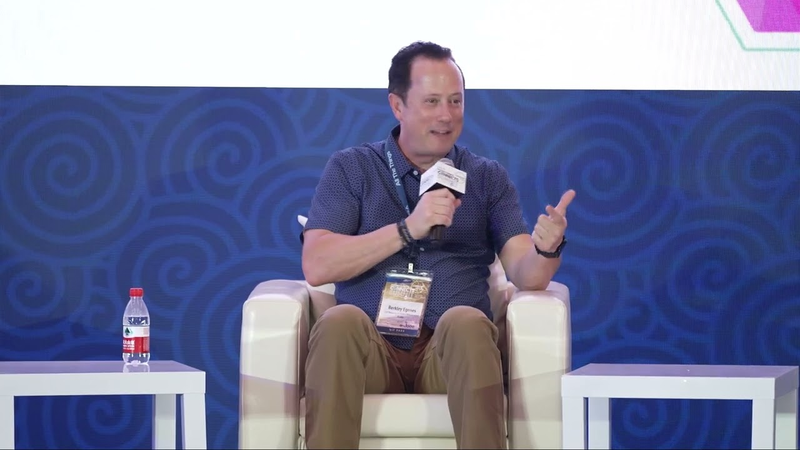
and so my name is Tommy Paul and as Chris said I'm the game's guru King and I'm here today to share some some lessons that we learned from King on our expanding our games to the east this is a picture that we took in Beijing recently this is my colleague Alexander standing out from the crowd as we were there visiting 10 sets office and announcing our partnership with them in weed candy crush the summer many of you have probably seen the commercial for candy crush on TV but you haven't seen the Korean version so I thought I would kick that off with a 15-second long TV commercial I
I think that illustrates quite well thank you some of the differences between the countries and i'll talk more about that today but first a short update on King where we are today so we're currently the leader in cross-platform social games and we have about 800 employees across seven studios and four offices and today our games reach 352 million monthly unique players or 143 million daily active players around the world and King has been around for 11 years now and we have transitioned from from being focused on online simpler flash games and going over to to social games and the Facebook in 2011
and in 2012 when i joined king started with these cross platform games and some of the games that we have today you can see here candy crush saga farm heroes saga pet rescue that is made in mal my office in Sweden and the read most recent addition is bubble witch to and which is a sequel for bubble witch saga which was our first really big Facebook hit so if you look at the top short across the globe you can see that the Nordic countries over-represented especially if you compare it with the number of people who actually live here and dovid pool felt had some the the CEO of massive entertainment had some really interesting views on that on the Nordic game conference a month ago but i think that one
interesting advantage that we have here in Finland and Sweden is that our home regions are so small so very few of us would go out and make a game for this region we most of the games are in English from the beginning and we kind of aim for for a global appeal originally a common perception in the games industry has been that the Asian Games market is very really different from from the Western games market which in in a way is an old statement because many of the IPS big IPS come from Japan originally but i think it was especially true for the RPG genre for pc about 10 years ago i met with lot many chinese and korean developers that wanted to was looking for distribution in west and looking at those RPG games it was obvious that they were very different from what we were playing in the Western market I think that the deeper the gameplay is in the
more story the more local the game seems to be and which is not very strength because you tend to tys stories and characters to things that is familiar and local luarin and background this old belief has has changed a little bit with casual games casual games are much more about getting placed directly into the actual game mechanics early on and in a game like candy crush there's still a little bit of background story but we portion that out as as a sort of reward when you have played through many levels and we've seen that at king that our players like to get straight into the gameplay as as soon as possible and that it's voluntary to see these cutscenes that that come as as a sort of visual reward for for achieving something and it can't be a higher meaning to to the to the game absolutely but it's important that you don't have to follow what's going on in order to enjoy the game if you look at the top
three countries by revenue on the App Store according to app Annie last year the first country was Japan second country was USA and then was Korea and China is of course one of the strongest growing markets for mobile games so that there is a good reason for game developer here in the West to look at those markets it doesn't necessarily mean that your game will make more money there and then it will in in the Western world of course but let's take a deeper look at that the east and I think that mobile games today can certainly reach around the world but it's not easy to be an expert on all these markets and there is a lot of differences and King has been focusing on expanding to to these regions for some time now and I want to share some of the learnings one of the most obvious is one of course is that Asia is binomial one
country or one region it's it's many different cultures and that you need to treat separately in one way we have been doing that is by opening up offices in Japan and Korea with with local experts that that knows how that region works properly and can can help us with with making market adjustments so the the TV commercial that we saw earlier is an example of that for instance perhaps even more interesting than than geographical expansion is the fact that new target groups are now being reached thanks to smart phones I always thought that the generation that was about ten years older than me would never convert to gamers that from from trying to show fantastic game 2 to my immediate family but with with casual games it's now starting to become obvious that that everybody can be a gamer if you're
really good at making your games accessible and easy to to get into once the hurdle has gone that you don't have to make an upfront investment to try out games it becomes so much more accessible to to everybody I found this third-party research online that is comparing the target groups of clash of clans and candy crush so this is not just a point about especially this is not from King or from supercell it's it's a news sue that is releasing this so I'm not vouching for for the egg sacs of these findings but according to these seven percent of the people playing candy crush or between 51 and 65 and I definitely think that there is more room for expansion in that segment going forward
one of the big inventions with App Store was that developers could now go straight to the consumers and removing a lot of middle hands in between and I if you look at the top short now you will see a lot of the companies behind that are the developers and also publishers of their game and this is a fantastic opportunity for for developers to get more of the cake of course but it also comes with some some new responsibilities one thing that game developers needs to master today is is properly gathering data and being able to draw a conclusion from that as a game designer I've always felt that I learned most about the games that I've been working on when I stand behind the shoulders of somebody who gets the game in their hands for the first time and I'm just quietly absorbing what's
going on and if you want to reach to the whole globe it's very difficult to do that in all the regions of course so analytics in a way is one one way where you can can get that type of insights without having to be there but it also puts a lot of demand on developing these resources marketing is another big challenge for mobile game developers especially I think this is difficult for smaller companies one of the reason is that marketing is never a linear equation where you can try out with with a hundred dollars and assume that you will get double the result if you double your investment one thing I hear often hear from small developers is that only thing that really worked for us is cross promotion when we got players into one game they tend to to love going over to the next game but I think that it's important for even for small developers not to to give
up this the owning the marketing segment is really important and one way you can can do that is by soft launching and this is something that bigger companies do all the time and soft launching of course means that we go to to a smaller market originally and test the games and the numbers out there and one question I get this is what country is best to do this in and and it depends on where you have your target audience you want a small country that acts the same way as the rest of the world and Canada is widely used as a test market because it accurately reflects gaming behaviors in english-speaking regions and by understanding how people react to gay men to-to marketing efforts you can you can scale up a really nice example of when soft launching is really good is what we had
from when we read released bubble witch saga on mobile we had something we called the black screen of death bug that snacks through three layers of extensive testing we did a lot of of a QA before we release the game and yet here's a user comment just a black screen i tried three times to install this app on my iPad and all i got was black screen and this was really awful from us from the inside because we couldn't reproduce this bug and we were struggling a lot and it r rating was taking quite a beating and the the gamers that got this couldn't play the game at all so there is a little understanding that we were very frustrated and we kept on trying to to reach out to these consumers and try to get a hold of one of these devices that it worked finally we got I actually called some poor lady in Canada and try to convince her to come to Sweden with her advice she
didn't think that was a good or trust me I'm from the internet another point I wanted to share is from localizing our game to different languages our in-house engine support bits maps font this is from from candy crush saga so we basically package all the characters that we are using in big image files and then we use the signs as we need them and it's great for flexibility and for exact controller where you have your pixels and it works great for EF figs you know English French Italian German Spanish but it becomes really complex when you deal with with these Eastern languages where you have many different character sets so what we have done in those cases is that we include a true type font for for those languages and it's very important to to look at
the size of that the first font we looked at with 20 megabytes which is basically half the game size of the entire game half the size of the entire game so you have to be selective and only use a certain number of characters other difficulties can be to find a good gaming font if you don't understand the character set there is no way for me to see what looks cool and what is a classic system font so they're typical where you need local experts who can help you out other things that we have is too so that developers can see easily where where the line breaks and how you can work with buttons and things like this so just to summarize I definitely think that smartphones is helping the world to shrink we are getting common stories now with people around the globe
or learning that chocolate is evil for instance marketing in analytics needs to be local whereas gameplay definitely can be global or even Universal when reaching out to everybody thank you very much [Applause]
Summary
The mobile gaming industry is increasingly focused on global expansion, with a particular emphasis on Asian markets such as Japan, South Korea, and China. Because these regions represent significant revenue potential, developers are shifting away from the traditional belief that Asian and Western gaming preferences are fundamentally incompatible. While complex, story-heavy RPGs often require deep localization to resonate with local audiences, casual games—which prioritize immediate gameplay mechanics over narrative—possess a universal appeal that transcends cultural boundaries.
Success in these diverse markets requires a nuanced approach to localization and operations. Rather than treating Asia as a monolithic entity, developers must employ local experts to navigate cultural differences, marketing strategies, and technical challenges. For instance, technical localization for Eastern languages requires careful management of character sets and font sizes to avoid excessive file bloat. Furthermore, data-driven insights and analytics are essential for understanding player behavior in regions where developers lack a physical presence.
The rise of smartphones has democratized gaming, expanding the target demographic to include older age groups who were previously considered non-gamers. To capitalize on this, developers should prioritize accessibility and utilize soft-launch strategies in smaller, representative markets like Canada to test performance and marketing efficacy before a global release. By mastering the balance between universal gameplay mechanics and localized marketing and analytics, developers can effectively scale their titles to reach a worldwide audience. Ultimately, the industry is moving toward a model where direct-to-consumer distribution allows developers to retain greater control over their products, provided they can successfully navigate the complexities of global data management and regional market nuances.




















Comments