1 free read left. Create a free account for unlimited reading + AI research.
Create free account
Ride the "Hybrid-Casual" Wave to Enhance User Engagement & Monetization - Kazutomo Niwa & Don Mesa.
Key insights
6 takeaways- 01The United States is currently the fastest-growing market for hybrid-casual titles, while Japan continues to lead in the development of the core mechanics that drive the genre.
- 02Hybrid-casual monetization shifts the industry model away from ad-only revenue toward a mix of microtransactions and chargeable in-game elements.
- 03The hybrid-casual genre addresses hyper-casual retention issues by integrating deep progression systems, character customization, and sophisticated economy management.
- 04Successful hybrid-casual titles like Archero, survivor.io, and Legend of Slime utilize long-term engagement mechanics such as login rewards and balanced resource economies to extend player lifetime value.
- 05In 2022, the hybrid-casual market reached 5.1 billion downloads and generated $1.4 billion in revenue.
- 06Developers can utilize specialized infrastructure services, such as Game Server Services, to manage live-ops functions like event scheduling and mission management, allowing teams to focus on game balance rather than server maintenance.
Ask AI about this video
Transcript
[Music] thank you [Music] thank you all for your patience really appreciate it my name is Don I'm with game server services and I am actually speaking on behalf of Nua who's the CEO of game server Services he's over there sitting in the back yeah he's a little bit shy but uh he's uh he's the guy who basically the Amazons are formerly from Nintendo Japan where he developed and ran the game server operations uh for Nintendo and its uh developers he saw an opportunity to really address a big pain point for game developers which was about game server operation and so therefore GS2 sorry therefore GS2 was
born nibasan also saw that there was a shift in the market that was coming and which is something that we'll be talking about today so has anyone heard of hybrid casual let's see every hands okay so you guys are probably already know all this topic so maybe I don't even need to cover it with you all but for those who do not know um I'm going to talk about the hybrid casual momentum this is something that was definitely in the Japan Nation Market that has really been growing rapidly over the past few years and in fact in the mobile gaming space of course and the U.S market believe it or not is the fastest growing Market globally for this type of game but of course most of the success with developers in uh for these type of games actually come from Asia and so probably not well known for developers but again maybe you know the titles but uh we'll talk a little bit about those developers as well so hopefully this session will provide a little bit of that uh Gap
closing there so hyper casual see the we believe it actually ran its course um basically if you think about hyper casuals they tend to often struggle to keep players Beyond day seven because the core gameplay is very basic right you're talking about single swipe single tap and players quickly lose interest so they also because there are games out there there's so many there's a plethora of these hyper casual games so it's easy to jump so what does that mean well we're talking about loss of monetization right because you don't really you have limited monetization opportunity hybrid casual really didn't come out of nowhere but because of this limitation of the high hyper casual games that uh that really came to existence so hyper casual if you think about uh advertising right cost per install has now become much much unprofitable right uh because external factors you could probably imagine what the Privacy Etc but the
fact is that um lifetime value stays the same if you're on hyper casual so you have to look at how do you raise the lifetime value of your game so when it comes to uh how Revenue has been earned in the past it's just primarily from ads or billing elements that basically remove the ads right hypercatcher games are designed to increase the lifetime value by adding chargeable elements right chargeable elements to the game that allows players to enjoy the game more what that means so if you look at the comparison what is hybrid casual versus Hyper casual I know I'm talking casual casual casual but really comes down to this hybrid casual games have more game-like experiences compared to hyper casual which I said was single tap single white hyper casual is probably the easiest way to think of it they're like arcade game right because uh hybrid casual have more core game mechanics and uh and yet you know if you think about the old arcade days right you put in quarters and so there's this whole system that's put in place to let you
play it more and more so hybrid casual games also have that as I was saying about that quarter effect it has that long-term engagement with players without having to constantly recycle players in fact hyper casual games that's exactly what happens they're because they keep losing players their whole Focus about that whole mechanic is around just recycling players over and over again hybrid casual games the best part about it is that you get to retain them and therefore you're going to have better monetization so what that means now is that you can get not just from your advertising but you also get directly from players the revenue I have a feeling you guys know what these three games are hopefully no okay well if for those who don't Archer oil archero is a game that is a Pioneer in this hybrid casual segment it's developed by Habi of China and uh if you look at the game itself it's actually it's a simple top-down arcade shooter right and it's like uh it's really a shooter Puzzler and they have all these kind of mechanics that
actually has retained and I'll show a little bit about what their revenue looks like later on that same Studio took pretty much the same similar game system mechanics from this game and brought it over to Survivor IO survivor.io and survivor.io is a clone of vampire Survivor but it's also well in my uh the way I kind of look at it's kind of like Robotron for those of you who are old enough to know that uh it's like you know something that could be played on the Sega Genesis although maybe the graphic resolutions maybe a little bit better right um but the color pad is the same but again that's where the Casual aspect comes to it's much more of an arcade type experience and of course seeing these two titles uh and the success of them other companies that followed suit and so there's this game called Legend of slime Idol RPG War this game is actually really stats based you don't actually play the game you actually just go and manage the stat upgrades and uh and while you watch your character the Slime just basically automatically do its actions so for those who are really like big time stat nerds you know you love the grind of the
stats this is your game but that's the thing it's uh in Japan this is also very prevalent you'll see a populist kind of game is uh over in Asia so this is what the revenue looks like right according to sensor Tower right in last year players downloaded hybrid casual games 5.1 billion times I I didn't know that until I looked it up uh this is how popular these games are in fact this category has earned 1.4 billion dollars in Revenue in 2022. so that is a significant growth like just literally a year ago was only it was below 1 billion that's how fast this category is growing and this popular this genre is popular worldwide this is not just some niche market in fact as you could tell the US leads in most of the way here and as I was saying like the uh uh for that Idol RPG game Japan's uh right there too but these are the kind of games that actually you would you know you would have experience in the arcade you would have experience
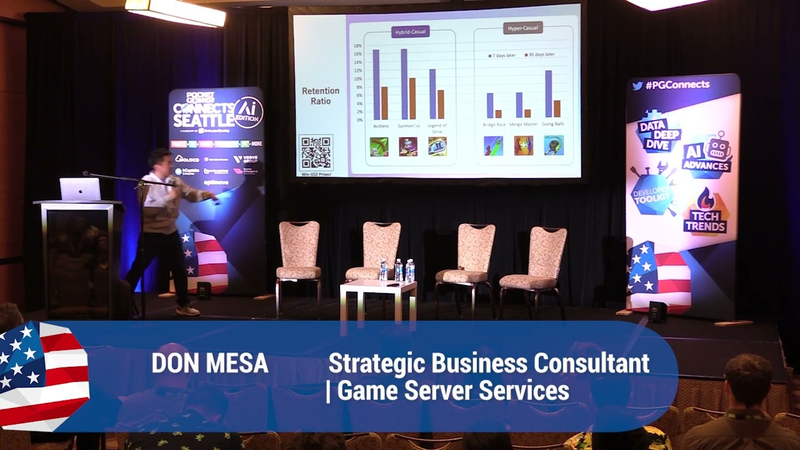
in your probably your Super Nintendo and such these are the type of games that are now starting to come come to the Forefront but with Mobile Mechanics right the mobile game accounts so now you look at retention and you think about day seven so that's the blue that you see here right higher retention or these three types of hybrid casual games versus the hyper casual games which is on the right side and you know you have games like Bridge race merge Master uh what's the other one going balls right so they have day seven but really what's more important is to look at what happens 30 days later right and you'll see that the retention on these hybrid casuals a lot better right because you have retention because you have the engagement because you have the monetization opportunity which I'll talk about in a second here so the game mechanics here so how how do they gain right this long-term engagement and monetization it really comes down believe it or not the origin comes from Japanese social games so um kind of similar to what you have probably seen on Facebook right uh like
with Zynga and such Japanese social games kind of took that to another level right they really played on on Facebook or mixi and these type of other social platforms and really built on it over 10 years they've been refined this game standard and this system has just been around they've really found a way to make this work and that's why Believe It or Not mid-core gains mid-core as they call it which is like one step above hybrid casual are now very popular in Japan and so the three titles that I just mentioned earlier right archero survivor.io and legend of slime these are all using this mechanic here this is what's called the game cycle in Japan very standard phrase but it really comes out to these three components right you have your in-game components and then you have your character progression and you have what's called of course you know unfortunately sometimes it has a little bit of a kind of a negative connotation which is gotcha but if you think of it as a supply Crate or bonus rewards it sounds very different and these three are really what as you build it correctly of
course balance means everything of course for all of you who are developers you know you know how to balance your games this is pretty much the core for whether you know whether whether you have a horse training game or midcore RPG game they all use this type of system here so login rewards let's start there right because I think it's something that's very familiar right you go in your game and then you actually knows like hey I got this bunch of money this is awesome what can I buy now believe it or not that's part of the game system mechanic because the idea there is that you're going to get this bonus and you're actually being taught how to spend your money and you have your choice of how to spend your money so now you know where the game store is right I know it sounds very basic and you know and simple but this is the start of what you know where you start to learn how to use your money and how to customize how you optimize how you upgrade and so forth this is really the beginning so uh so every single yeah whether it's a Japanese social game every game that we're talking about with hybrid casual this is what they're starting off with right and of course this is very important for the free players this is free to play game where
they get that money you know a good chunk of money starting off so they can start to get used to how to play the game and then of course character and Equipment this is important because that's where you're going to get your retention right this is where you're going to get your customization your management you can have your Custom Design it's essential so designing the game in such a way that players gradually build up their characters and Equipment over time you think they're gonna let it go probably not that's why you get that long-term engagement so another critical part of the game each one you can see each one of the examples here with each of the games how they're placing them leveling up upgrading right this is uh pretty much a straightforward part but again the same characters and equipment that you're going to collect and manage and customize each one of those also have an ability to have progression because you're going to want to level up each one of those elements means you'll always come back and uh and that reinforces the user user engagement and of course gotcha bonus rewards
Supply crates treasure chests but you know what I'm saying monetization is actually achieved by this by basically making bonus equipment and characters available to these chance generation generators now we're not talking about gambling here all we're talking about is just making microtransactions you have to have a balanced game economy here so we're talking about Taps right and syncs Taps are like you know where you go get your game resources so that's your currency and then your syncs you know where you're going to spend those resources and then ultimately your pinch points where does your resource get scarce and a lot of that your bonus uh your bonus items here are helping to balance a game economy that's really the main function behind here so it really is a way to not just monetize but it's actually a way of Engagement here and of course you have your in-game currency so of course you need the money to spend but this is also the place where uh you have your new your free players are getting this is where they're going to get there uh where
they're gonna get their currency and then then they're going to figure out where to spend so you need for every game this type of setup and uh so that you can make sure that you have every time you log in you're going to get some currency to come in play and so it's a critical part of the the game cycle that we have here time okay uh not much time left so uh I'll Breeze through the rest here recovery time again pretty straightforward but this is really about um kind of pacing the game right you don't want people to suddenly burn through and get burned out of the game you have to then Pace uh the timing so that they're always wanted to come back for more and of course um probably the average playing time for these three titles are about 20 30 minutes so that's a well-balanced length kind of maintain that long-term engagement and of course you need a message box simple reason because notifications are disruptive and annoying so you want the message box to let let people know hey there's a message waiting for you and usually that message has some kind of bonus or some information about your chance to kind of upgrade and so forth so a message inbox is actually pretty
critical in this cycle so with that where does uh all these you know what what do all these game mechanics have to do with game server Services well game server Services provides the game's system Solutions for developers who want to create hybrid casual titles so I'm going to play a quick video here I hope this works oops [Music] game development has undergone a major change with the Advent of general purpose game engine platforms title specific game engine development is no longer necessary allowing developers to focus on making games more interesting to play on the other hand many game servers for online play are still developed and operated individually with specifications determined by each title with game server Services you can simply call the feature API eliminating the need for operations such as capacity management security measures and debt or
live monitoring unlike most Game servers which are designed primarily for online competition features such as event scheduling Mission setup and in-game store monetization are among the more than 30 liveops functions offered by game server Services game server Services a simpler easier way to manage your game live Ops needs try it out today [Music] so simply put game service Services provides easy to use game system Solutions four games game developers to really who want to bring your if you want to bring your games out to the market quickly save time and cost on your development and operations and want to use a game server well we have over 30 functions that you use that you can easily plug in and play and of course it supports all the latest unity and unreal game engines and it could be on various platforms and really what it comes down to at the end of the day we want to you know with our experience working with
successful game Japanese game developers and as well as knowing these type of functions these are all secure by the way so you know we made sure that these systems are not are as unhackable as possible because we know how important that is as well this is where we believe that we can provide services to help you really increase your user engagement and also monetize your game more easily so how and how that looks is like this so basically every one of these games for every type of mechanic that we just showed right now we have every different function they can simply just apply to your code and simply apply into your Unity or unreal uh background in image background so we also of course have uh analyzing metrics because of course when you're looking to improve your game and increasing your user engagement it's important that you will be able to see the data so that you can improve your game so um ultimately these are the game developers that we work with and it ranges from mobile games to arcade games to other types of
games that you see up here and uh so we do have uh we're fortunate to be able to support uh these type of developers and we hope that we will be able to support you and if you have a chance I know you I don't know if you saw that QR code right there that's our survey if you don't mind filling out uh this survey that you can just grab on your phone it would help us out to improve what we're seeing today and how we're sharing this information to you also uh if you have a chance to come by our booth we actually have a gotcha mechanic that you can actually use that where you have a chance to win a prize maybe it's a Bluetooth speaker maybe it's a USB drive but uh have a if you have a chance again if you want to build your hybrid casual titles and you want to make it so that it's easy and something that you could save time and cost on please check us out right thanks everyone [Applause] I know we had a lot of technical problems but if you guys have one good question uh
there because I I want you to have at least one good question yes sir I didn't notice if your your game if your service works with uh I saw it works the unit does it work with like uh webgl or web3 or um does it work with any kind of other uh game systems I'm going to look at our Tech expert who's also our CEO so uh we do support web3 we do actually have the sdks to support that so we have compatibility with that type of rest of the events thanks [Music]
[Applause] [Music]
Summary
The hybrid-casual gaming genre has emerged as a critical evolution in the mobile market, addressing the limitations of hyper-casual titles that struggle with long-term retention and monetization. While hyper-casual games rely on simple mechanics and high-frequency player recycling, hybrid-casual titles integrate deeper core gameplay loops, character progression, and sophisticated economy management. This shift allows developers to increase lifetime value by moving beyond ad-only revenue models to include microtransactions and chargeable elements, effectively mirroring the engagement cycles found in successful Japanese social and mid-core games.
Market data underscores the rapid growth of this segment, which saw 5.1 billion downloads and $1.4 billion in revenue in 2022. The United States currently serves as the fastest-growing market for these titles, while Japan remains a leader in the underlying mechanics that drive success. Key titles such as Archero, survivor.io, and Legend of Slime demonstrate the efficacy of these systems, which utilize login rewards, character customization, and balanced resource economies to maintain player interest well beyond the initial seven-day window.
To achieve this, developers must implement robust live-ops systems that manage game cycles, including currency sinks, progression pacing, and reward distribution. Game Server Services provides a technical infrastructure designed to facilitate these requirements, offering over 30 API-based functions—such as event scheduling, mission management, and in-game store operations—that integrate with major engines like Unity and Unreal. By offloading server operations, security, and live-monitoring to specialized platforms, developers can focus on balancing game economies and enhancing user engagement. This approach supports a sustainable, long-term monetization strategy that moves away from the high-churn nature of traditional hyper-casual gaming toward a more stable, arcade-inspired experience.