1 free read left. Create a free account for unlimited reading + AI research.
Create free account
What You Need to Know About Hypercasual Games in Asia
Key insights
7 takeaways- 01Hypercasual gameplay sessions in China are longer than in the West, averaging three to five minutes compared to the typical one to two minutes.
- 02The Chinese market offers a significant opportunity for hypercasual developers, supported by an installed base of approximately 250 million iOS devices.
- 03Developers must navigate a complex regulatory environment and a fragmented Android distribution landscape to successfully enter the Chinese market.
- 04Day-seven retention is the primary driver of long-term profitability in the Chinese hypercasual market, providing a tenfold impact on lifetime value compared to day-one retention.
- 05Successful localization for Chinese players requires shifting from abstract Western design to content featuring distinct characters, light storylines, and self-deprecating humor.
- 06Chinese players exhibit higher tolerance for ad-supported monetization models than Western counterparts, with rewarded video formats proving particularly effective.
- 07Social integration via platforms like WeChat and TikTok is a critical engagement driver, as Chinese users are more receptive to social sharing than Western players.
Ask AI about this video
Transcript
[Music] thank you guys for coming today after lunch and just to the conference in general we're excited to be here at Pocket Gamer at their first event here in Hong Kong and today I'm gonna tell you guys a little bit about hyper casual in China and kind of the space we're in here but first is a quick introduction my name is Alison I've been in gaming for eight years now I've always been working in product and analytics teams in games and that that's been the extent of my career oh sorry I'm Alison now I'm with joy Pak where I oversee operations
these are some of the games that I've worked on bejeweled blitz plants vs. zombies and then I moved on to game analytics and then moviestarplanet and now I mention that so about you know the start of my career was back at PopCap games such as the casual gaming company based out of Seattle and I was in Seattle for the Pocket Gamer conference talking with a colleague of mine who no longer works in games but I worked with him six years ago I was telling him what I'm doing now with joy pack and telling him about hyper casual games and he didn't know what hyper casual games were which surprised me and so that really is the basis of this talk kind of how it came about was me explaining to this former colleague of mine who was a founder of popcap games what this whole thing is so hyper casual games really are it is a new term in the industry it's maybe two years old in terms of its
popularity really of coming about as a word but I do want to say that this type of game the games that have really easy simple game play a core loop to them they have very broad appeal and they're pretty viral in terms of their share ability but these games have been around for a long time you can see kind of back to even 2013 with flappy bird success Crossy road and so on so these games have been around it's just a new term that we're calling this particular thing it really is about a business model as well that has come about with mobile advertising so it's games kind of taking advantage of this mobile advertising as well so hyper casual really is a space for developers who play in this rapid development environment so you can see here like voodoo and ketchup who are big publishers in hyper casual they're releasing about a game a week and
they're testing even more than that so hyper casual in terms of a business is about scale and is about getting games out the door now just because the some developers wanted to scale up their business and move even faster with their development that's not the reason why hyper casual is here as a movement hyper casual is here because the players are interested in this type of a game so you can see here that 78% of hyper casual players are playing other games as well so these really short snackable games with hyper casual are kind of filling in some gameplay time they're filling in time when they're waiting for a game to load or they're just really these players are they want gameplay in all parts of their life so they're adding this to their gameplay and their game time so that leaves about 22% of players that are playing hyper casual and only hyper casual games and the reason why they're doing that is because they have very limited time so again these very
snackable play sessions appeal to players who maybe weren't playing games before but want something that they can play on the subway while they're again waiting for something so this really has expanded the pie of players as well in the hyper casual space so hyper casual I will contend that it really started in the West with ketchup in particular and Voodoo this movement started there and I'll talk about why that is and now how it's moving here to the east and to China in particular so Pocket Gamer has a great series of articles on hyper casual how it came about and I do recommend that you guys read those if you want the full history of that but back when I was in pop cap the the environment of the App Store looked a little bit like this where we had casual games where social mechanics really had come about because of Facebook they had really smart in-app
purchase triggers and they were really supplemented with advertising so in-app purchase was the primary a business model but then ads were layered on top then we got into more mid core games and with these gameplay got a little bit more in-depth so they were really again playing to that in-app purchase player making more in depth concepts and also kind of mastering these virtual economies and we also had core games at that time that were part of the competition for these in-app purchase players which you would call a whale right so this was the environment that was happening in the App Store at the time and when hyper casual came about it was kind of back to basics if you will or a backlash and some kind of nostalgia in gameplay that was really facilitated again from the ad monetization that was available to players so sorry available to developers so developers no longer had to rely on in-app purchase mechanics
in their games so they kind of went back to the basics of the core loop of hyper casual of gameplay so in the China market in particular it's been a little bit different about how hyper casual is developing Chinese players are kind of moving from core down the line doing this because of console gaming and PC gaming being so I'm sorry PC gaming being so dominant in the Chinese market so China players didn't have consoles they flocked to PC play where these free to play mechanics were so dominant so they've really kind of been moving down the line in terms of this continuum and that's one reason why the hyper casual trend has been a bit a little bit slower in China so if you look at the top download charts right now in China versus the United States this was last week I called the three games in the top 10 downloads that were hyper casual so in China it's three games and this is a
just a screenshot of each of them that I would deem hyper casual if you look at this in the United States and Canada in Europe and other Western markets it's 10 out of 10 of the top downloaded games right now are hyper casual and that's been the trend in the West for a long time it's very much dominated by these types of games we're in China you see maybe 3 to 5 games in the top 10 being hyper casual so this is just to say that the movement is happening in China we do see these games gain a lot of popularity they move very similarly to hyper casual which if you know about this space that is about kind of trend seeking behavior by players they like to find the latest game they play it for maybe a week and then they move on to the next type of gameplay that they're interested in so we see that same type of thing happening in China it's just with the smaller set of games and in China again their players have been kind of dominated by a different type of gameplay for a long time so it's been slow to come about
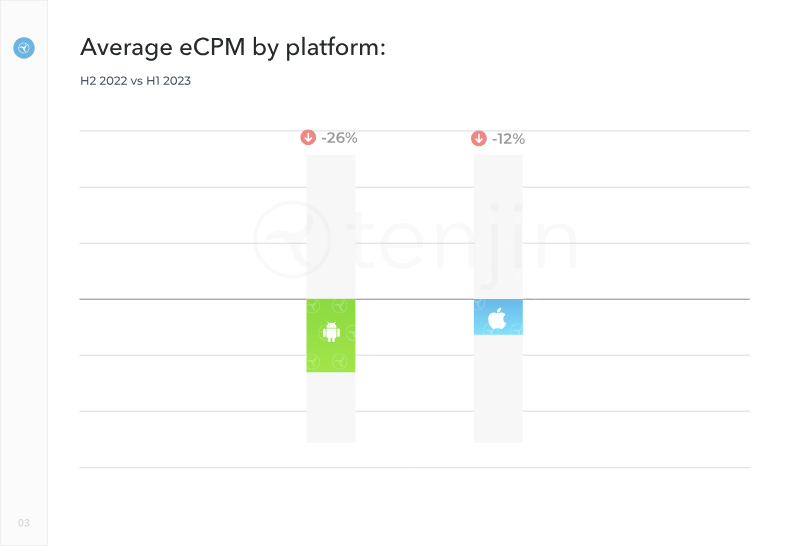
the other reason why hyper casual games have been slow to come about in China is because of the advertising ecosystem there that has also been slower to evolve in China as you know hyper casual games are really dependent on that's how they make their money is by showing advertising in the game so you're getting a lifetime value through showing ads and then you're trying to buy players at a very low cost that's your CPI that's the model that we're talking about in China the eCPM levels around advertising are very similar now especially on iOS between China and the United States so that has allowed the hyper casual movement to start coming about in a more major way in this region the game freeze that happened last year if you guys know about this the Chinese government needs to approve games that go to market last year they put a halt on that activity for maybe a nine-month
period of time they opened it up again they closed it down again it's kind of a nosov what's going on here with this space so China is difficult because of this regulation that is happening it's something we've watched very closely with hyper casual games that monetize through advertising they're a little bit under the radar in terms of all of this activity and what's going on there it's definitely necessary for Android but not necessary for iOS for example so this is just something to show a little bit about the complication and one reason why when you have such a light snackable game developers don't want to go to China to deal with all of this regulation the app store situation in China is another reason why it's been slow to evolve with hyper casual and it's just another complication in the market to be aware of the androids face over there very fragmented at least among the top there are 15 stores that you need to hit in order to get 90% of their market
share in terms of Android that said there are many many many more Android stores that you also need to be aware of for your IP protection so when we publish a game we're definitely looking to get it on many Android stores so that we protect that IP and also of course so that we reach this market as well so China I don't want to scare you off too much about China and publishing there you know it's it's a huge opportunity I think as this region in particular knows just the size of what's going on there there are 250 million approximately iOS devices in China and that's the same number of devices in total between Android and iOS that are in the United States so it really is a huge opportunity to tap into China as well I think again as this audience likely knows it's very mobile first culture so as the rise of China's economy has been
happening the mobile rise has happened at the same time so phones and mobile Internet has been really integrated into people's lives there so they're very happy to be downloading games they spend a lot more time on their phones in general and therefore they spend a lot more time playing games than other players so just quickly since I have five minutes problem solved joy pack offers kind of a west and east blend we like to talk about how we do both and have that in our business practices so we would love to talk with you I have two colleagues here as well we would love to talk to you about the games that you're developing so we can give you more detail about what we do exactly but I want to talk about the traction we've had and the games we've launched in particular to give you some tips of what works with hyper casual in this market we've launched 28 games we've had 33 million at this point and as a data person I
love this because there's so many insights that we can get from these launches the first thing that's important in this region is about the look and feel of a game so as you might see in the West there's a lot of games with blocks and balls and geometric shapes that doesn't work as well in China and Asia as a whole particularly for the marketing of the game you really need a little bit of character a little bit of storyline and this can be very it and it should be for a hyper casual game stay very very light but nonetheless some character really helps a game be pushed in this region so an example of that is fluffy fall which is a game we did with what games out of Paris we adapted a few of their fluffy characters to reflect Chinese characters around the Lunar New Year and it really helped us to push away for this particular game there's a self-deprecating humor in kind of awkward scenarios that we've seen work really well in China this game was
developed by a Japanese developer and put over there it's called skip school so there's a sense of kind of nostalgia and humor and it became very viral which is when you talk about viral in China the viral factor there is so huge and so having a little bit of virality or thinking about how that could be the case in your game is important as you're developing it as well now there are some things you can do too you can't necessarily just have something be viral but to support that of course you need to be thinking about social sharing and the channel so you need to be allowing for talking about your game like tick tock and WeChat as well Dave Simon retention is something else that's very important this is industry-wide I think but in hyper casual it's especially important your de7 retention is the key number that's going to tell you if you will make money in your game day 1 retention tells you that your core gameplay loop is working but day 7 retention really tells you how much you
could potentially make from this game so if you increase day one tension by one percentage point like from 40 to 41 for example versus increasing your seven-day retention by from 10 to 11 if you increase your day 7 retention you actually have a 10x lift on lifetime value as opposed to increasing your day 1 so day 7 if you focus on that number it's super important again for that monetization and lifetime value of your players aversive gameplay the snack ability of gameplay for hyper casual is what drives people to them in China in particular the session lengths I just want to note are slightly longer so we're talking about 3 to 5 minutes instead of 1 to 2 minutes in China it's just something to be thinking about in terms of your gameplay what you're allowing for and then of course building in some smart advertising opportunities within that time localization is an important piece
of that you do need to adapt the game slightly with hyper casual it's it's not so much but we definitely look to cultural izing and localizing the games when we launch them here it's important but I want to note that it's it's a light amount what we see a lot of is games going out with like a Google Translate to Chinese in terms of the language so I wouldn't recommend doing that get a local person to help you do that and also to just take a look at the look and feel some colors some of the characters and things like that might need to be adapted my last point is that Chinese players really have a high threshold for seeing advertising we don't see retention there's kind of a trade-off between how many ads you can show and your retention and that trade-off in China is so so in building games for this market really think about opportunities to put advertising in don't be shy about it
because it is an experience that the players engage with and they don't mind so that's what I wanted to share today about hyper casual some of the what we've seen work in games and how we've seen this evolving in this region so it's great to be here again in Hong Kong to talk with you guys about what you're building see if we can help and if you have games that you would like to present to us definitely come up and have a chat thank you and we have time for questions if you guys want to ask something apparently everybody wants to contact you after this one yeah do you have questions if they are over quiet I would like to make one yeah China before didn't have much much tradition with eggs
what kind of ads are more popular in China at the moment when you are talking about hyper cares or what are the ads that they are more acceptable to to engage I mean it's the same everywhere that rewarded video is a great ad format because it's integrated into your gameplay rewards the player if you can think of opportunities one game that we published for chimp works in China for them was called power painter I totally recommend playing this game and looking at how they've integrated advertising because they've done it so elegantly and it's a really nice format I think for the players as well let's chance do one there just I run but just like in terms of social social sharing of results and things like that in China you know people posting to their social accounts you know how well they've done and past levels and stuff
like that Deepti see difference in how that's treated you know outside of China and had this treated in China I think that you like the the Western markets here at the US Canada kind of had a backlash against social sharing because of Facebook quite honestly and so right remember Weiner I don't if you use Facebook your Facebook feed was like full of gaming stuff and so they had to scale that back because players didn't like that the users of Facebook really hated it and kind of backlash against it so I think it's a little bit faux pas in the West to share content like that gaming content in particular which is interest interesting whereas that's less so from what we see in China and the Asian markets as well that there's just more more opportunity around that they're happy to do it there may be appropriate channels for sharing that as well that the players tap into as well
so yeah I think it's there's a little more activity behind that that's just my sense that there's more activity behind that here [Music]
Summary
The hypercasual gaming sector is experiencing a significant expansion into the Asian market, particularly China, as the region’s mobile-first culture increasingly embraces snackable, high-frequency gameplay. While Western markets have been dominated by hypercasual titles for several years, China’s transition has been more gradual due to a historical preference for mid-core and strategy games, as well as a complex regulatory environment and a fragmented Android distribution landscape. Despite these barriers, the market represents a massive opportunity, supported by approximately 250 million iOS devices and a growing appetite for lightweight, viral content.
Key findings indicate that successful hypercasual titles in China require specific cultural adaptations. Unlike Western games, which often rely on abstract geometric shapes, Chinese players respond better to games featuring distinct characters, light storylines, and self-deprecating humor. Furthermore, while Western players may exhibit a backlash against aggressive social sharing or excessive advertising, Chinese players demonstrate a higher tolerance for ad-supported models and are more receptive to social integration via platforms like WeChat and TikTok. Session lengths in China also tend to be slightly longer, averaging three to five minutes compared to the one to two minutes typical in the West.
Data from recent launches highlights that day-seven retention is the most critical metric for long-term profitability, offering a tenfold impact on lifetime value compared to day-one retention. Developers are advised to prioritize rewarded video formats, which are highly effective and well-received by local audiences. Ultimately, while the Chinese market presents unique challenges regarding app store fragmentation and government oversight, the high engagement levels and mobile-centric habits of the population make it a vital frontier for developers capable of localizing their content and optimizing for high-frequency ad monetization.



















Comments