Key insights
6 slides
Market Share
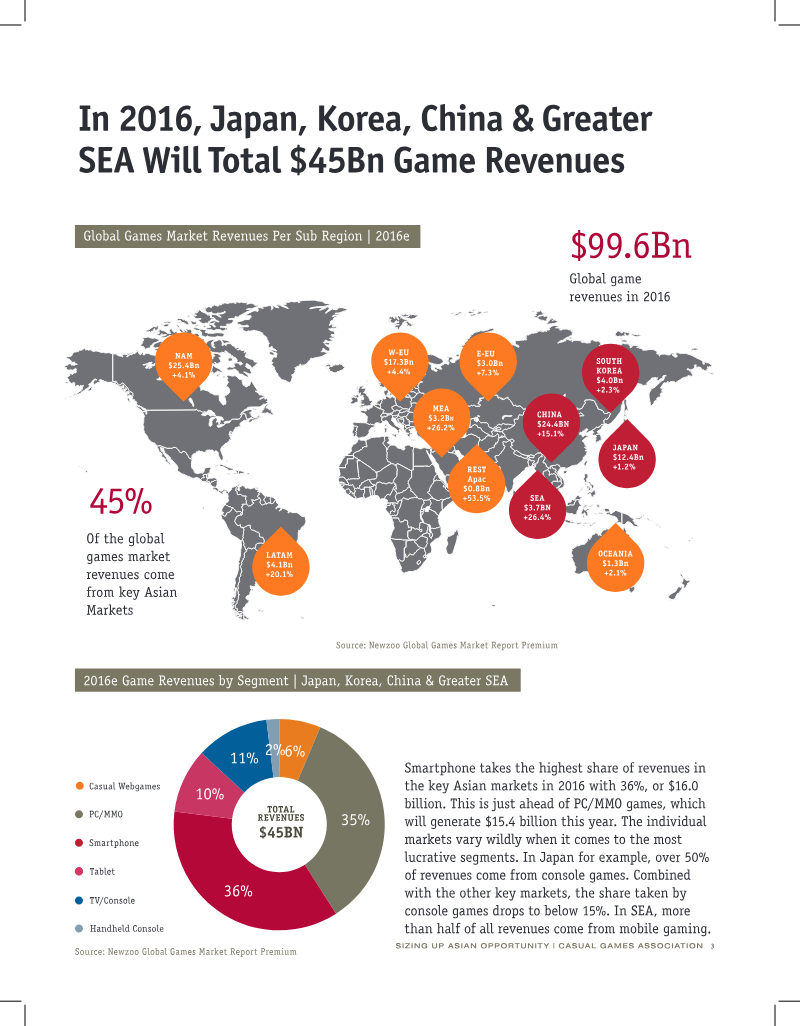
Asian markets generated $45 billion in game revenue in 2016.
This figure represents 45% of the total global market. The region includes China, Japan, South Korea, and Southeast Asia.
Growth Engine
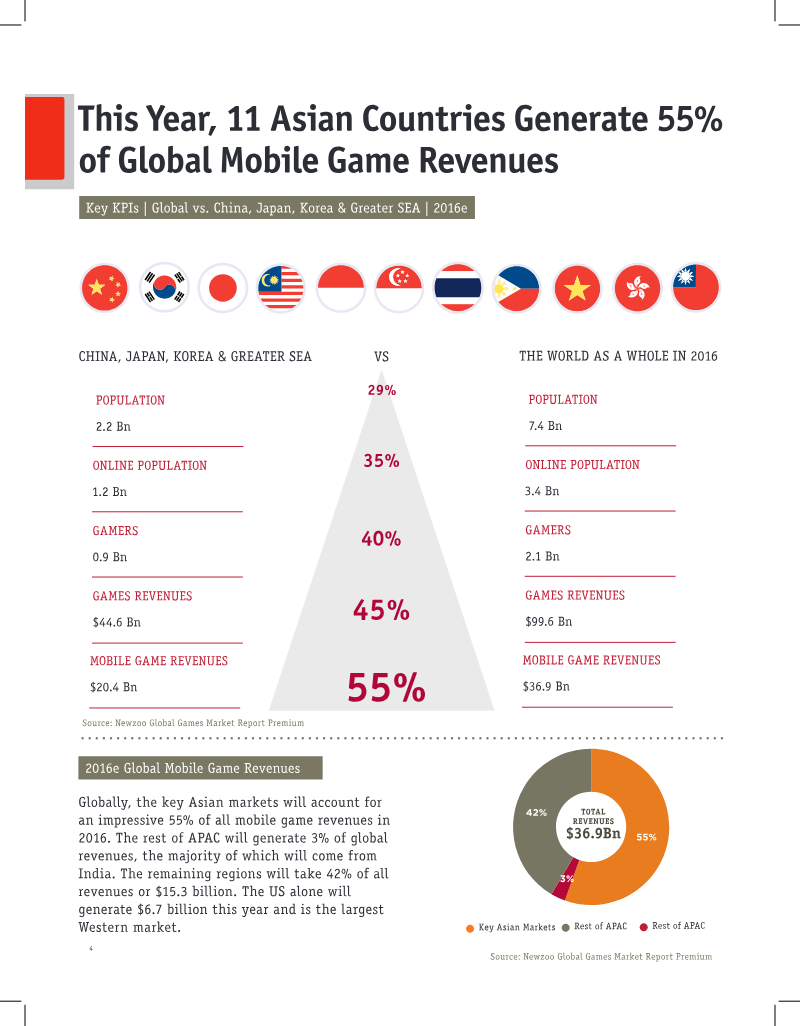
Asia is the primary engine for global mobile gaming.
The region contributes 55% of all worldwide mobile game revenues. Mobile gaming is identified as the primary growth engine.
Platform Share
Mobile platforms command over 50% of revenue in Southeast Asia.
In contrast, console gaming remains the dominant platform in Japan. Regional preferences vary significantly across Asian markets.
Market Access
Western companies face significant barriers to entry in Asia.
This results in a disproportionately small percentage of their total revenues being derived from the region. The trade balance shows a widening gap.
It's like trying to sell ice to an Eskimo; the local market is already well-served and culturally distinct.
Trade Balance
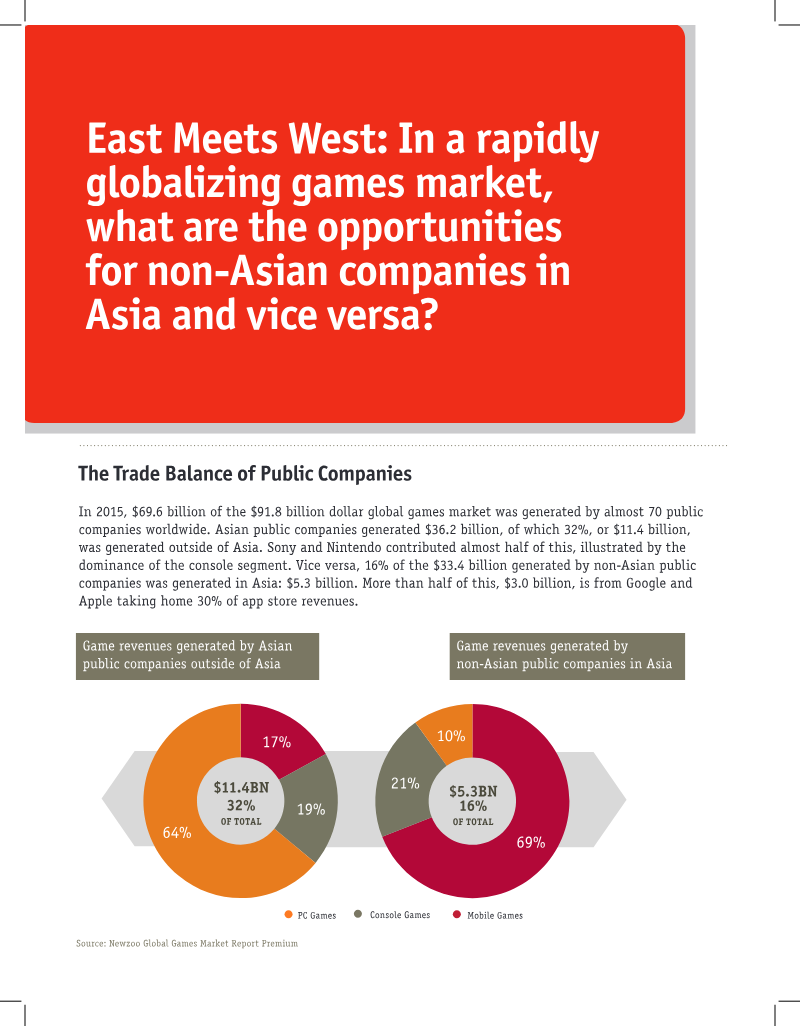
Asian companies expanded their global footprint more effectively than Western counterparts.
The 2015–2016 period highlights a widening gap in the trade balance. Western companies have struggled to penetrate Asian markets.
Key Players
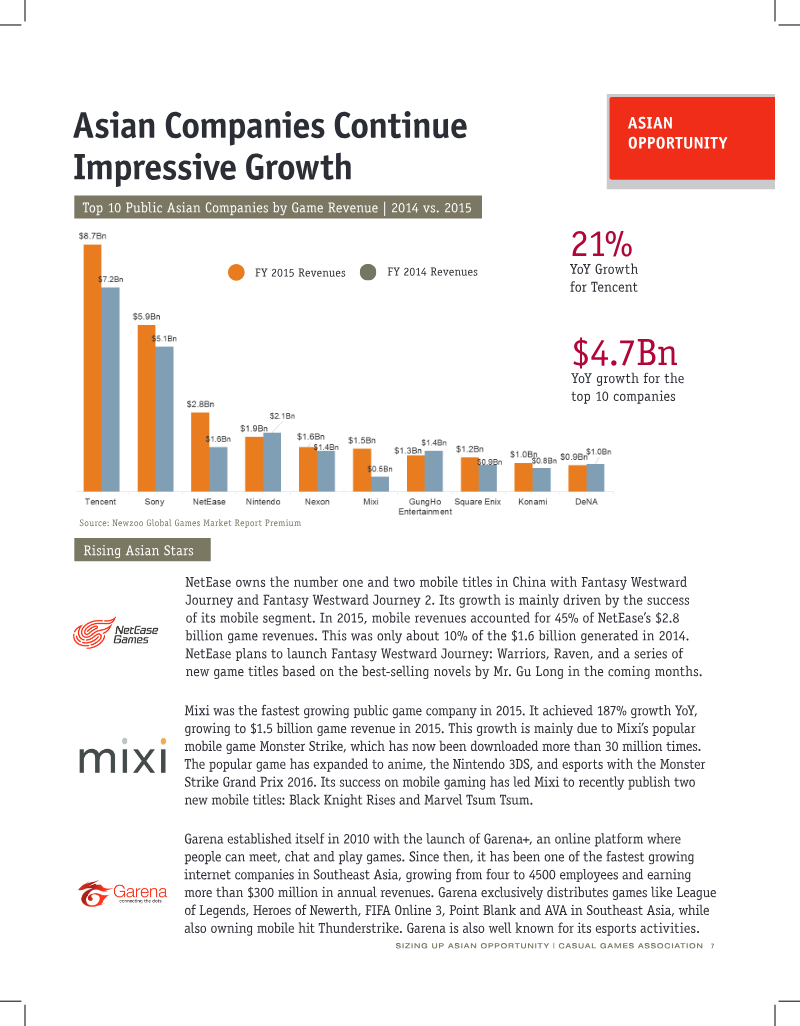
Tencent, NetEase, and Mixi are leading high-growth firms.
These companies drive regional expansion through mobile-first strategies and localized content. They are shaping the future of the global gaming ecosystem.
1 / 6
Ask AI about this report