
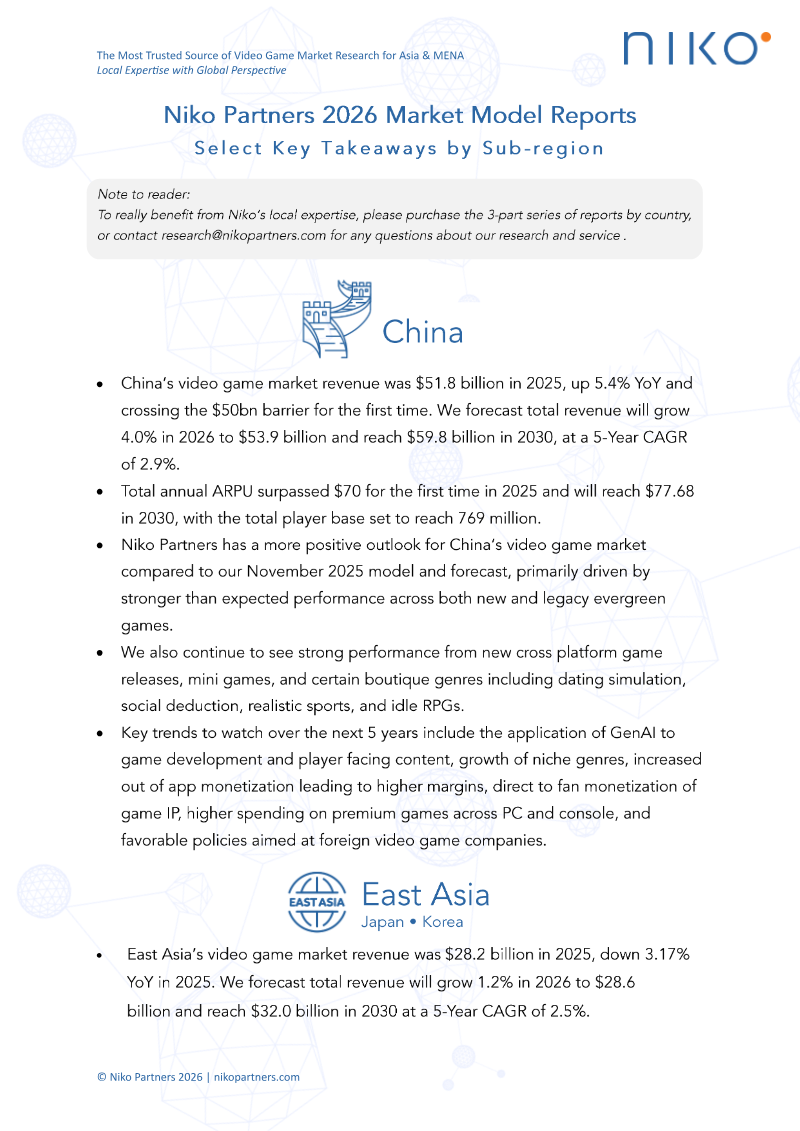
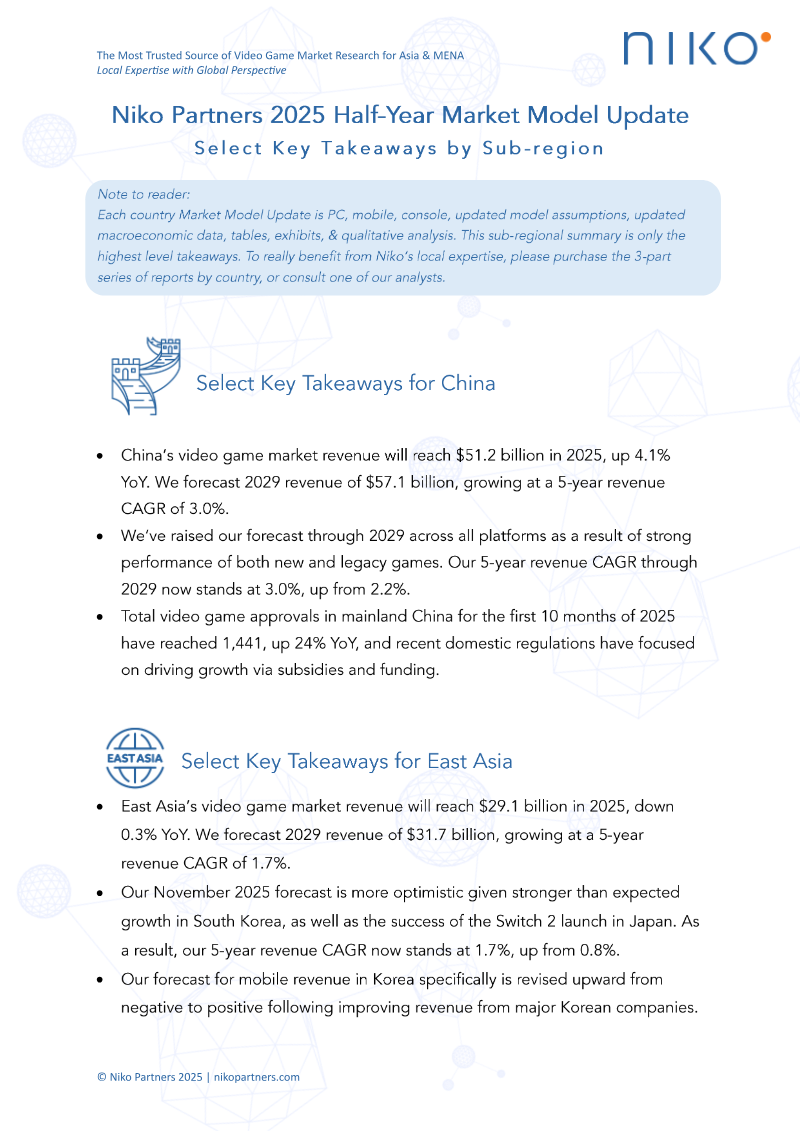
The Chinese gaming market reached a significant milestone in 2025, surpassing $50 billion in total player spending for the first time. Analysts project continued, albeit moderate, growth for the sector, forecasting a market value of $53.9 billion in 2026 and reaching $59.8 billion by 2030. This expansion is supported by a growing player base, which is expected to reach 769 million by 2030, solidifying China’s position as the world’s largest gaming market by population. Average revenue per user (ARPU) is also on an upward trajectory, rising from $68 in 2024 to over $70 in 2025, with further increases anticipated.
Industry trends indicate a shift toward more integrated digital ecosystems. Generative AI is being widely adopted for content production and operations, while live-service titles are increasingly functioning as platforms for user-generated content. Mini games have emerged as a particularly high-growth segment, now accounting for nearly 20% of mobile game spending. Furthermore, the regulatory environment appears favorable, with the 15th Five-Year Plan emphasizing digital innovation and a notable increase in the issuance of game licenses.
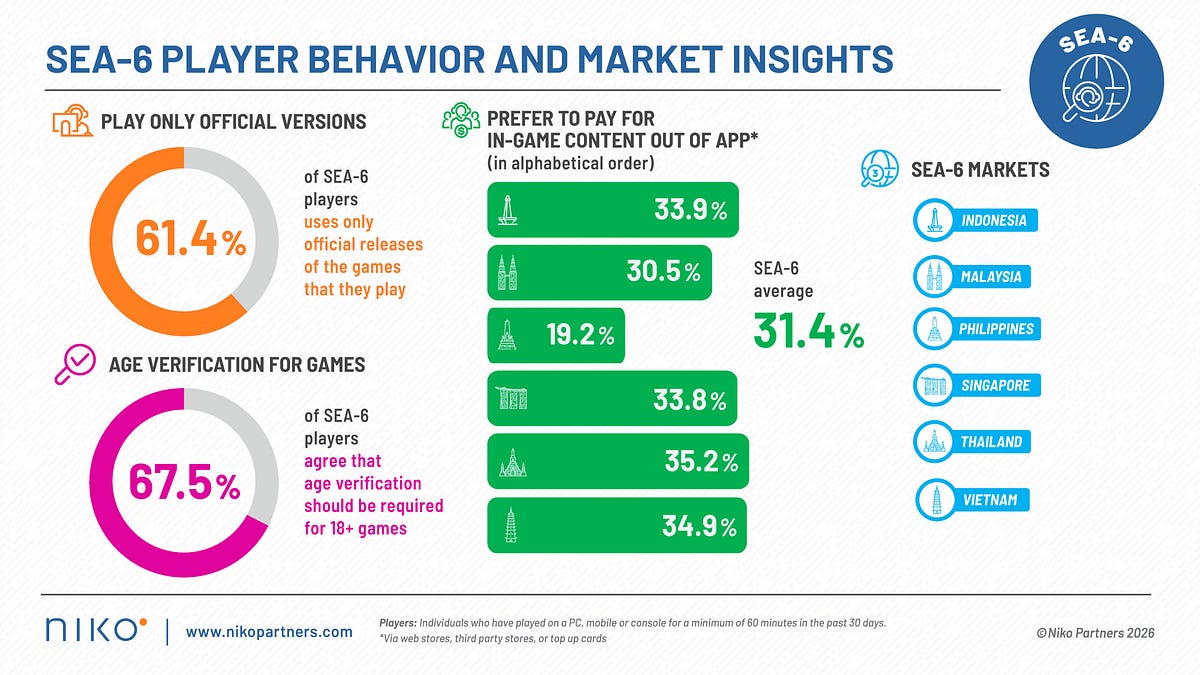
Methodologically, these insights are derived from a combination of market modeling and consumer surveys, where players are defined as individuals who have engaged in at least 60 minutes of gaming on PC, mobile, or console within a 30-day period. Data reveals that short-video platforms like Douyin and Kuaishou serve as the primary discovery channels for new titles. Despite domestic growth, the global connectivity of the Chinese audience remains high, with two-thirds of players utilizing tools such as VPNs, boosters, or global servers to access games outside the domestic market. Challenges persist, however, as the infrastructure boom in AI has constrained the supply of semiconductors, leading to increased hardware costs for consumers.
Niko Partners · 2026

Niko Partners · 2026
Niko Partners · 2026

Niko Partners · 2026
Niko Partners · 2026
Niko Partners · 2026

Deconstructor of Fun · 2026

Niko Partners · 2026

Niko Partners · 2026
Niko Partners · 2025
Niko Partners · 2025

Niko Partners · 2025

Meridian Play · 2025

GameAnalytics · 2026
Giant Network Group · 2026
Aream & Co · 2026
Epyllion · 2026
Newzoo · 2025

Aldora · 2024

Newzoo · 2023
Newzoo · 2022
Niko Partners · 2020
Tencent Holdings Limited
Tencent